What Is Breakeven Inflation (BEI)? Why It Matters for Investors and Financial Markets


Hello, this is MasterMind.
How do professional investors estimate inflation before it shows up in the Consumer Price Index (CPI)?
Most investors pay close attention to monthly inflation reports, but those numbers describe what has already happened. By the time CPI is released, financial markets have often priced in the information weeks or even months earlier.
That is why Wall Street closely watches Breakeven Inflation (BEI).
Rather than relying on surveys or forecasts, BEI reflects where billions of dollars are actually being invested in the U.S. Treasury market. It provides one of the clearest real-time signals of how investors expect inflation to evolve over the coming years.
Understanding BEI isn't just about inflation. It helps explain movements in Treasury yields, Federal Reserve policy, stock valuations, commodities, gold, and even Bitcoin.
Key Takeaway
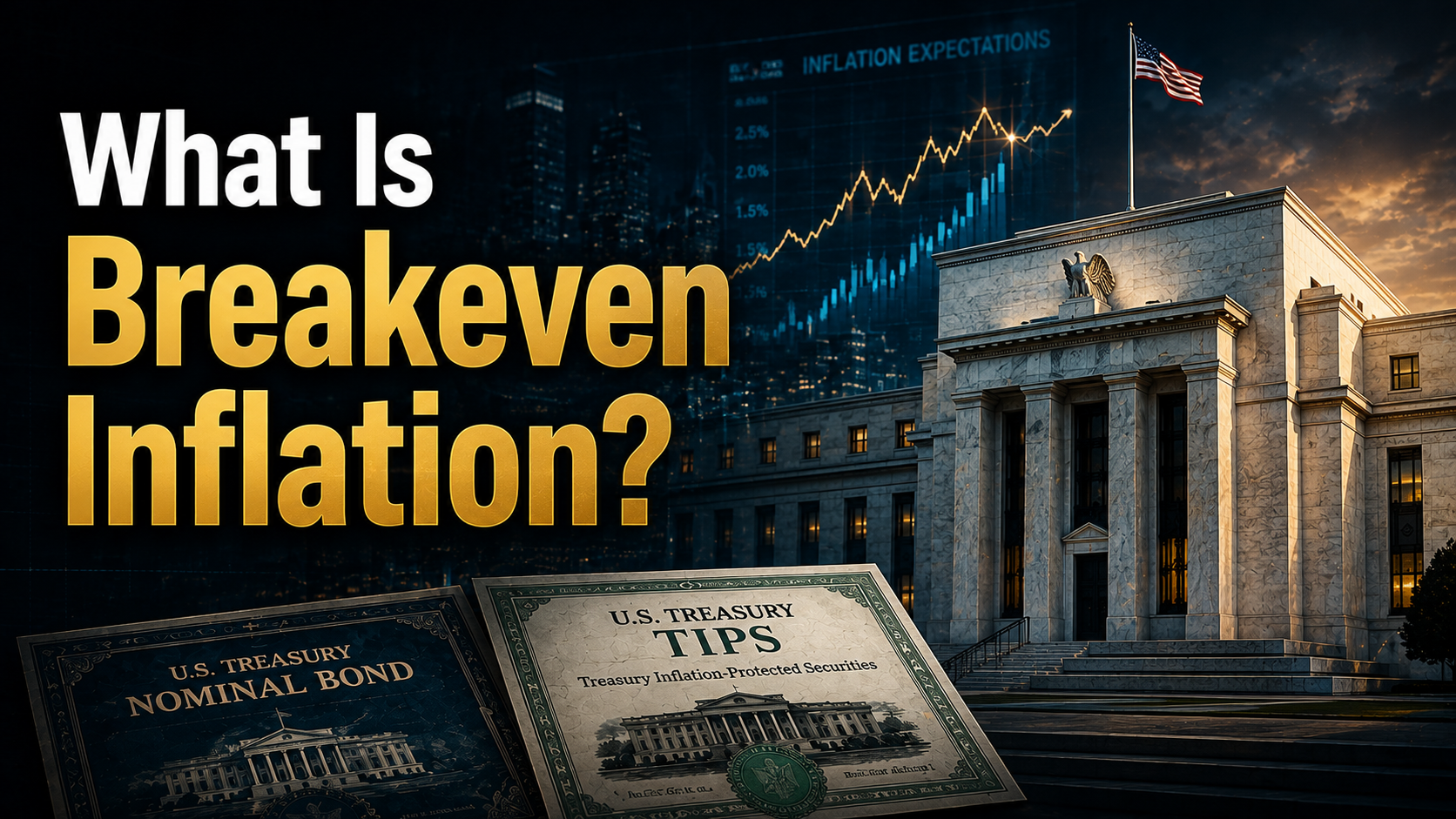
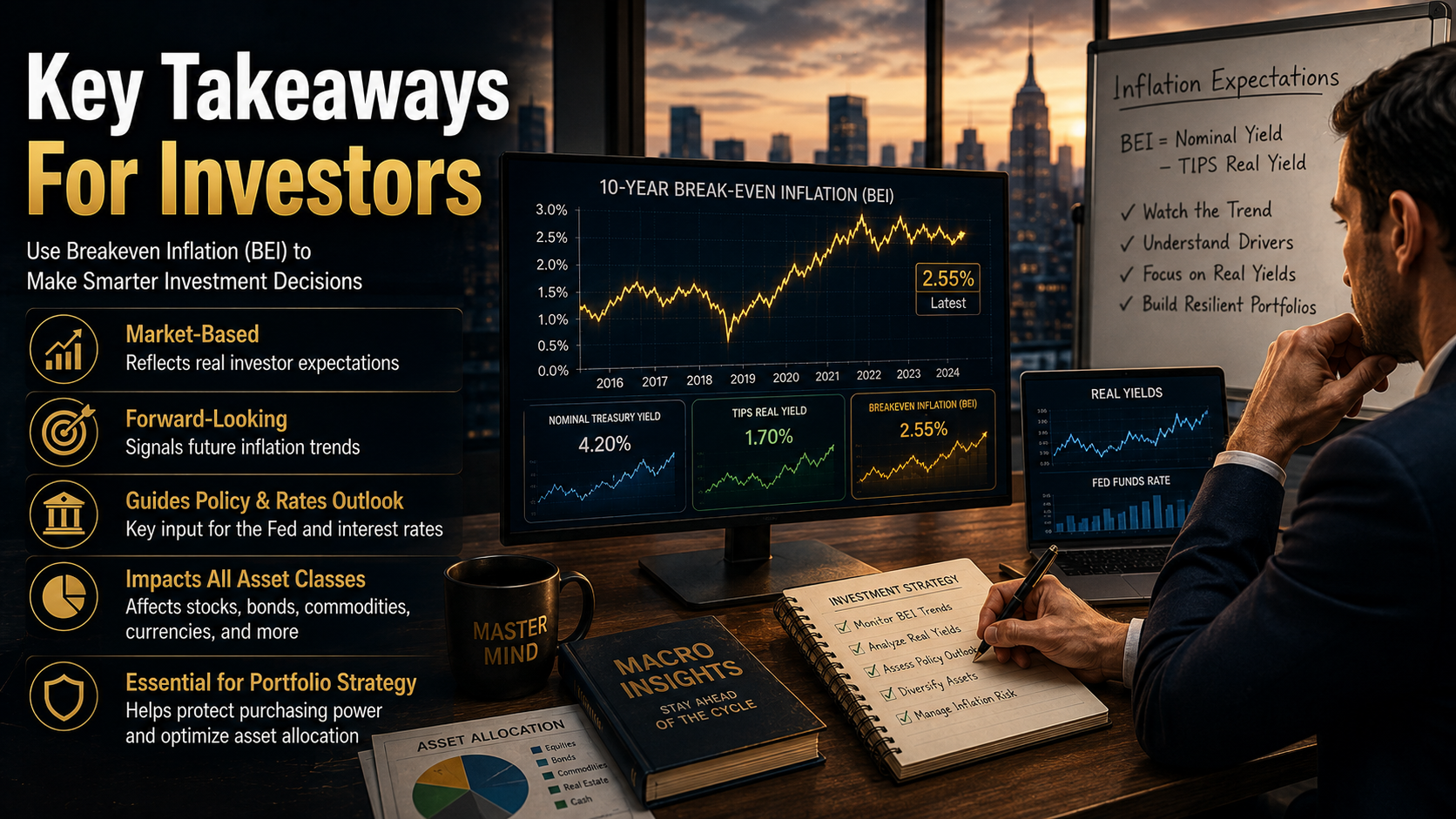
Breakeven Inflation (BEI) represents the inflation rate currently priced into the U.S. bond market. Calculated from the difference between Treasury yields and Treasury Inflation-Protected Securities (TIPS), it reveals the market's collective expectation for future inflation.
What Is Breakeven Inflation (BEI)?
Breakeven Inflation is the average annual inflation rate investors expect over a specific period, as implied by the bond market.
Instead of asking economists where inflation might go, investors compare the yields of two government securities
- U.S. Treasury Notes (Nominal Treasury Yields)
- Treasury Inflation-Protected Securities (TIPS)
The difference between these two yields becomes the market's expected inflation rate.
Formula
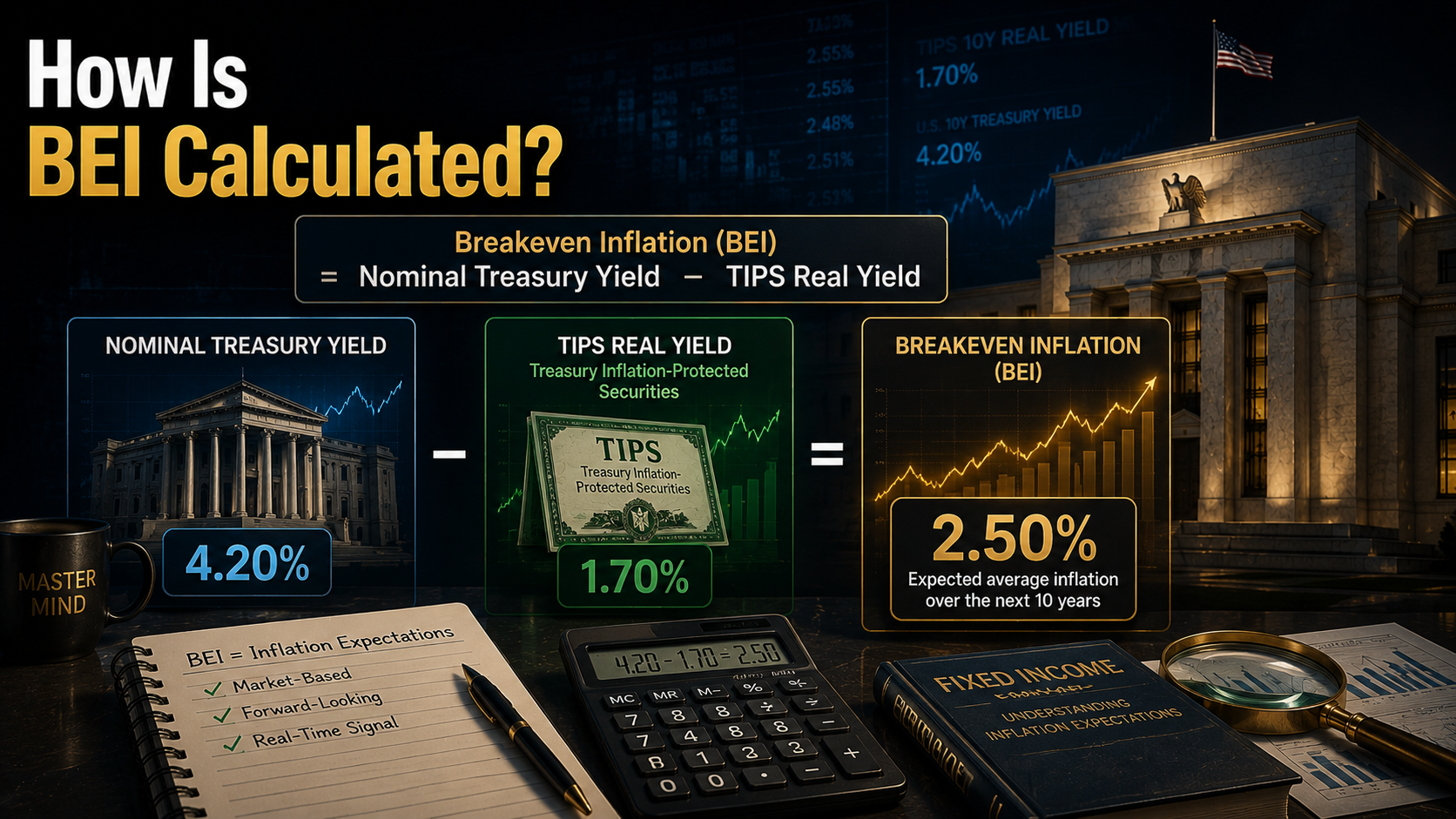
Breakeven Inflation = Nominal Treasury Yield − TIPS Real Yield
For example
- 10-Year Treasury Yield: 4.20%
- 10-Year TIPS Yield: 1.70%
Breakeven Inflation
2.50%
This suggests investors expect inflation to average approximately 2.5% annually over the next decade.
Unlike government forecasts, this figure is created through actual buying and selling by institutional investors managing trillions of dollars.
Why Is It Called "Breakeven"?
Imagine two investors.
Investor A buys a traditional Treasury.
- Fixed interest payments
- Purchasing power declines if inflation rises sharply
Investor B buys TIPS.
- Lower stated yield
- Principal increases with inflation
If inflation averages exactly 2.5%, both investors earn essentially the same real return.
That inflation rate becomes the breakeven point.
If inflation exceeds 2.5%
TIPS outperform.
If inflation remains below 2.5%
Traditional Treasuries deliver higher returns.
As millions of investors make these decisions every day, the resulting yield spread becomes one of the market's best estimates of future inflation.
Why Does Breakeven Inflation Matter?
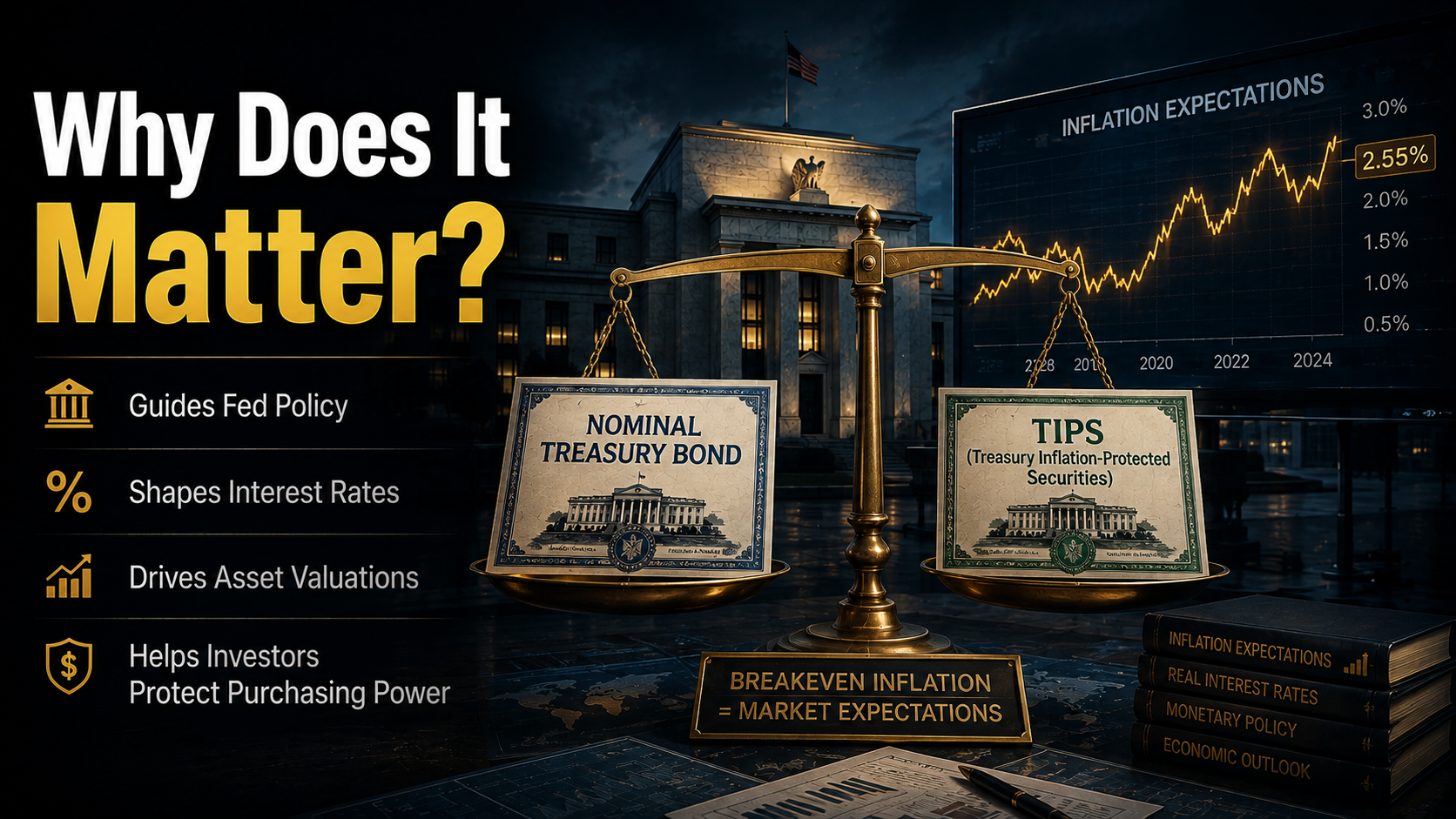
Markets trade expectations—not historical data.
While CPI measures inflation that has already occurred, BEI reflects what investors believe inflation will be.
This forward-looking nature makes it particularly valuable.
Institutional investors monitor BEI because changes in inflation expectations influence nearly every major asset class.
1. Federal Reserve Policy
The Federal Reserve pays close attention to inflation expectations.
One of the Fed's biggest concerns is that inflation expectations become "unanchored."
If businesses and consumers expect prices to keep rising indefinitely, they tend to
- Demand higher wages
- Raise prices
- Accelerate spending
These behaviors can make inflation more persistent.
Stable inflation expectations help the Fed maintain credibility.
2. Real Interest Rates
Investors don't earn returns in nominal dollars.
They earn returns in purchasing power.
That makes real interest rates far more important than nominal yields.
Breakeven Inflation allows investors to separate inflation expectations from real yields and better evaluate whether financial conditions are becoming tighter or looser.
3. Asset Valuation
Changes in inflation expectations affect discount rates.
Higher discount rates generally reduce the present value of future corporate earnings.
As a result, shifts in BEI can influence
- Growth stock valuations
- Treasury prices
- Gold
- Energy markets
- Real estate
- The U.S. Dollar
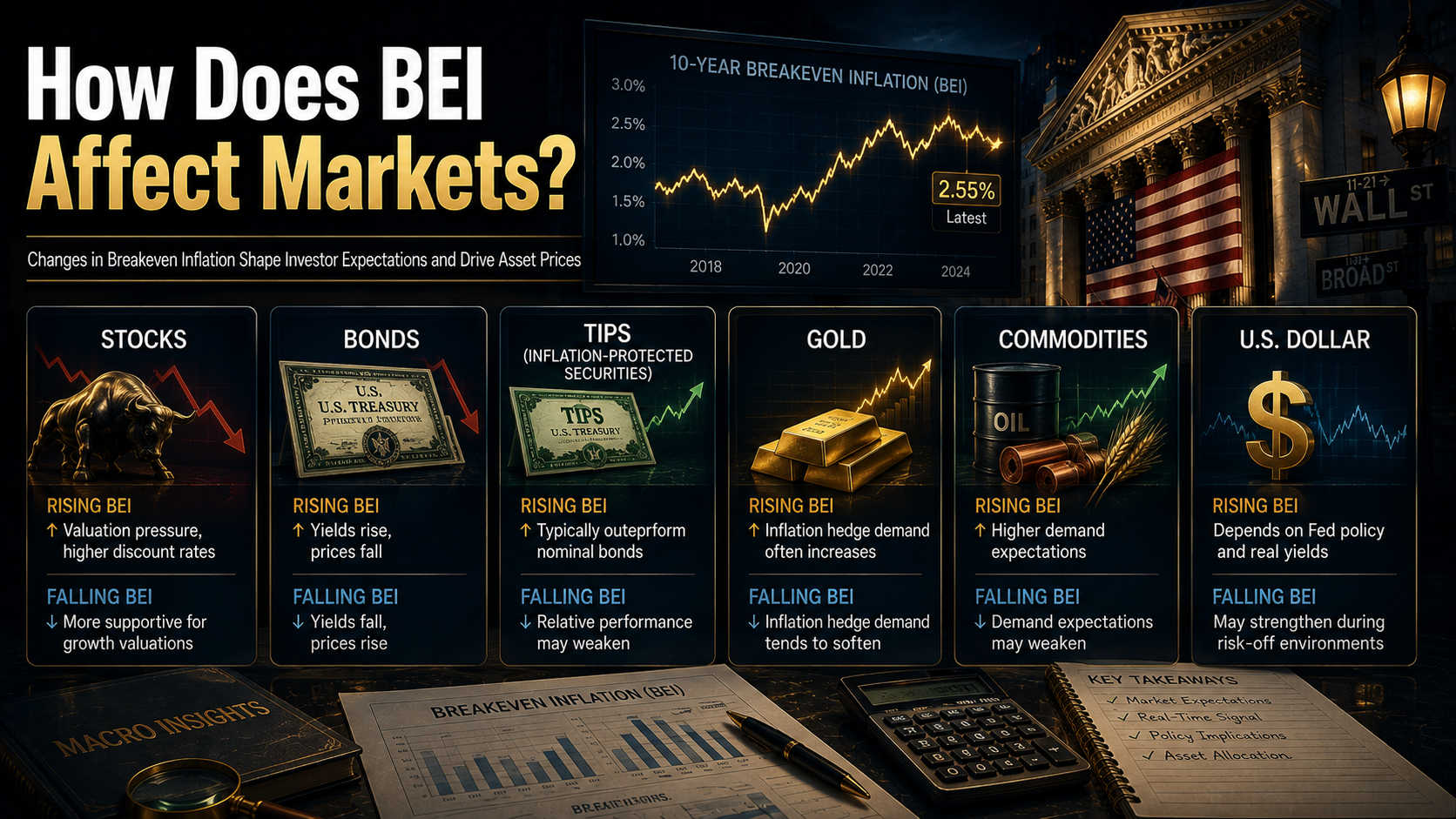
How Higher or Lower BEI Affects Financial Markets
| Asset Class | Rising BEI | Falling BEI |
| Growth Stocks | Valuation pressure from higher discount rates | More supportive valuation environment |
| Value Stocks | Often outperform during reflation | Relative advantage may decline |
| U.S. Treasuries | Prices tend to fall as yields rise | Prices often rise |
| TIPS | Generally outperform nominal bonds | Relative performance weakens |
| Gold | Often benefits from inflation concerns | Inflation hedge demand softens |
| Commodities | Typically strengthen | Demand expectations may weaken |
| U.S. Dollar | Depends on Fed expectations and real yields | Can strengthen during risk-off periods |
| Bitcoin | Influenced by liquidity and real yields | Mixed impact depending on macro conditions |
No single indicator determines market direction.
BEI should always be analyzed alongside Treasury yields, real yields, Federal Reserve policy, corporate earnings, and overall economic growth.
What Investors Should Watch
Market Liquidity
The TIPS market is smaller than the nominal Treasury market.
Periods of financial stress can temporarily distort BEI because of liquidity differences rather than genuine inflation expectations.
Energy Prices
Oil prices heavily influence inflation expectations.
A spike in crude oil can push BEI higher even if underlying inflation trends remain stable.
Understanding whether inflation is structural or temporary is essential.
Inflation Expectations
Markets care less about today's inflation than tomorrow's expectations.
If long-term BEI remains near the Federal Reserve's inflation target, investors generally believe inflation is under control.
Persistent increases, however, may indicate growing concerns about inflation becoming entrenched.
Watch the Rate of Change
Professional investors often focus more on how quickly BEI changes than on its absolute level.
A move from 2.0% to 2.1% attracts little attention.
A rapid jump from 2.1% to 2.8%, however, can trigger major repricing across financial markets.
Combine BEI with Real Yields
Breakeven Inflation becomes much more informative when viewed together with TIPS yields.
- Rising BEI + Rising Real Yields → Strong growth with inflation
- Rising BEI + Falling Real Yields → Growing stagflation risk
The same inflation expectation can signal very different macroeconomic environments depending on real interest rates.
What Wealthy Investors See That Others Often Miss
Successful investors rarely focus on inflation alone.
Instead, they watch where capital is flowing.
When inflation expectations rise, institutional investors often rotate toward businesses with strong pricing power, commodity producers, infrastructure, and inflation-protected assets.
When expectations fall, capital frequently shifts toward high-quality bonds, defensive sectors, or long-duration growth companies.
The objective isn't to predict every inflation report.
It's to preserve purchasing power and own assets capable of generating resilient cash flow across different economic environments.
Ask yourself
- Can the companies I own pass higher costs on to customers?
- Is my portfolio protecting purchasing power over the long run?
- Am I following headlines—or following capital flows?
- Would my investments remain resilient under both higher and lower inflation scenarios?
Long-term investing is less about predicting the future and more about building a portfolio that can survive multiple macroeconomic outcomes.
Final Thoughts
Breakeven Inflation is far more than another economic statistic.
It represents the collective judgment of the world's largest bond market regarding future inflation.
Understanding BEI helps investors move beyond backward-looking economic reports and focus on the expectations that actually drive financial markets.
Markets don't wait for inflation data.
They price tomorrow's economy today.
The most successful investors aren't those who perfectly forecast inflation.
They're the ones who build portfolios capable of adapting regardless of where inflation ultimately goes.
Remember this one key idea: Breakeven Inflation isn't a prediction made by economists—it's the inflation outlook currently priced into the world's largest bond market.
Thank you for reading.
This was MasterMind.
'[Global] Success Blueprints' 카테고리의 다른 글