What Is the Put/Call Ratio? How It Measures Market Sentiment and Why It Matters


Hello, this is MasterMind.
Why do professional investors sometimes become more optimistic when the market is gripped by fear? And why do experienced traders often grow cautious when everyone else seems convinced that stocks can only move higher?
The answer often lies beneath the surface of the stock market—in the options market.
While stock prices tell us what has already happened, the options market reveals what investors are expecting to happen next. One of the most widely followed indicators in that market is the Put/Call Ratio (PCR).
Rather than measuring opinions or emotions through surveys, the Put/Call Ratio reflects where investors are actually committing capital. That makes it one of the most valuable tools for understanding market psychology, risk appetite, and potential turning points.
In this article, we'll explain what the Put/Call Ratio is, how it works, why Wall Street pays close attention to it, and how long-term investors can use it without falling into the trap of trying to predict every market move.
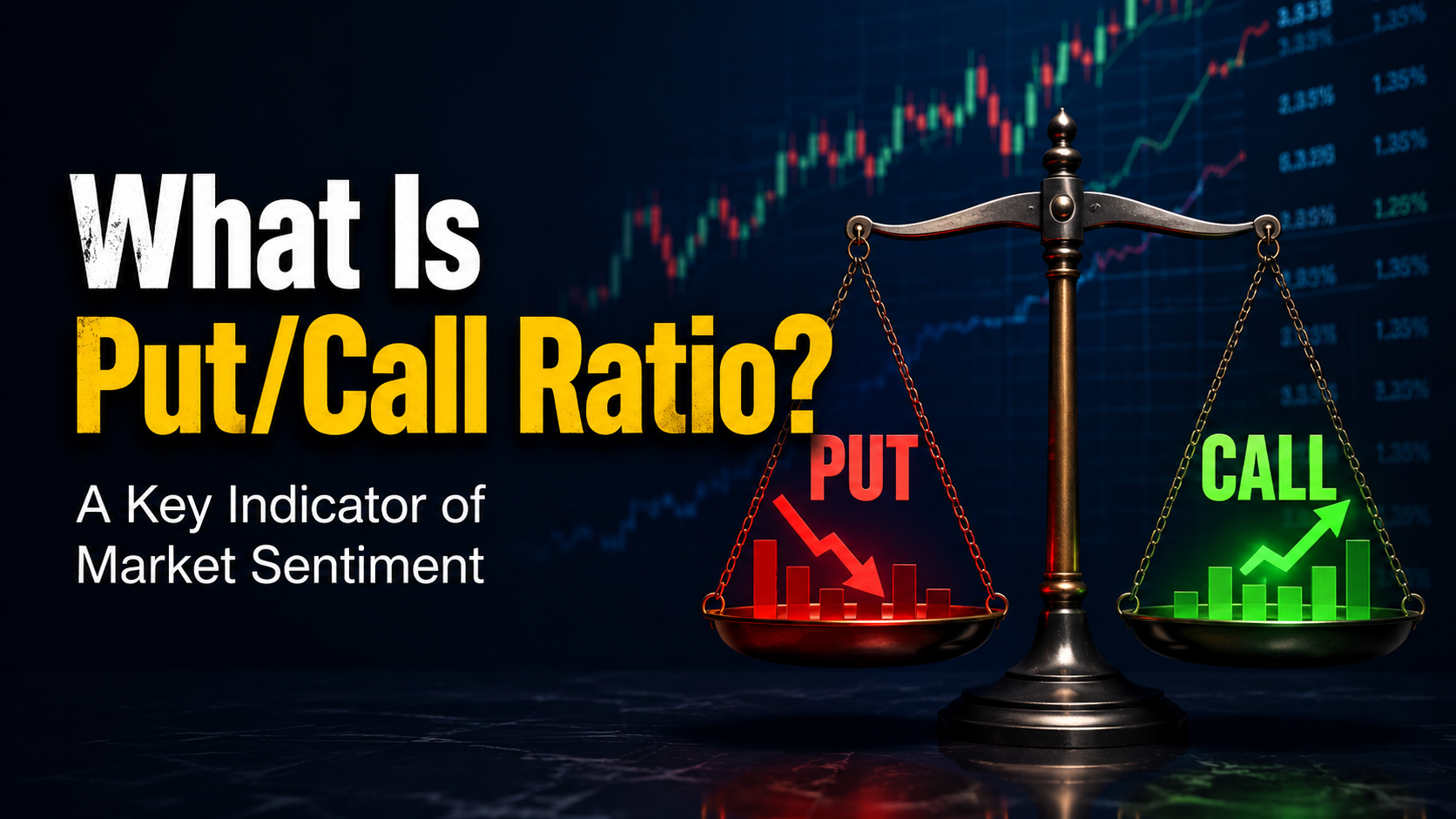
Key Takeaway
The Put/Call Ratio is a market sentiment indicator that measures whether investors are positioning for gains or protecting against losses, making it one of the most effective ways to gauge fear, optimism, and potential market extremes.
What Is the Put/Call Ratio?
The Put/Call Ratio (PCR) compares the number of put options traded (or outstanding) with the number of call options traded over the same period.
Its basic formula is straightforward
Put/Call Ratio = Put Option Volume (or Open Interest) ÷ Call Option Volume (or Open Interest)
The calculation itself is simple.
The interpretation is what makes it powerful.
Instead of asking investors how they feel about the market, the Put/Call Ratio shows how they are actually positioning their money.
Because options involve real capital and real risk management decisions, many institutional investors consider the PCR a more meaningful measure of market sentiment than surveys or opinion polls.
Understanding Put and Call Options
Before interpreting the Put/Call Ratio, it's important to understand the two types of options it compares.
Call Options
A call option gives the buyer the right to purchase an asset at a predetermined price before expiration.
Investors typically buy call options when they expect stock prices to rise.
In simple terms
- Bullish expectation
- Upside speculation
- Leveraged exposure to rising prices
Put Options
A put option gives the buyer the right to sell an asset at a predetermined price before expiration.
Investors generally purchase put options when they expect prices to fall or when they want to hedge an existing portfolio against downside risk.
In other words
- Bearish expectation
- Portfolio protection
- Insurance against market declines
This distinction is why the Put/Call Ratio has become a useful proxy for overall market psychology.

How Does the Put/Call Ratio Work?
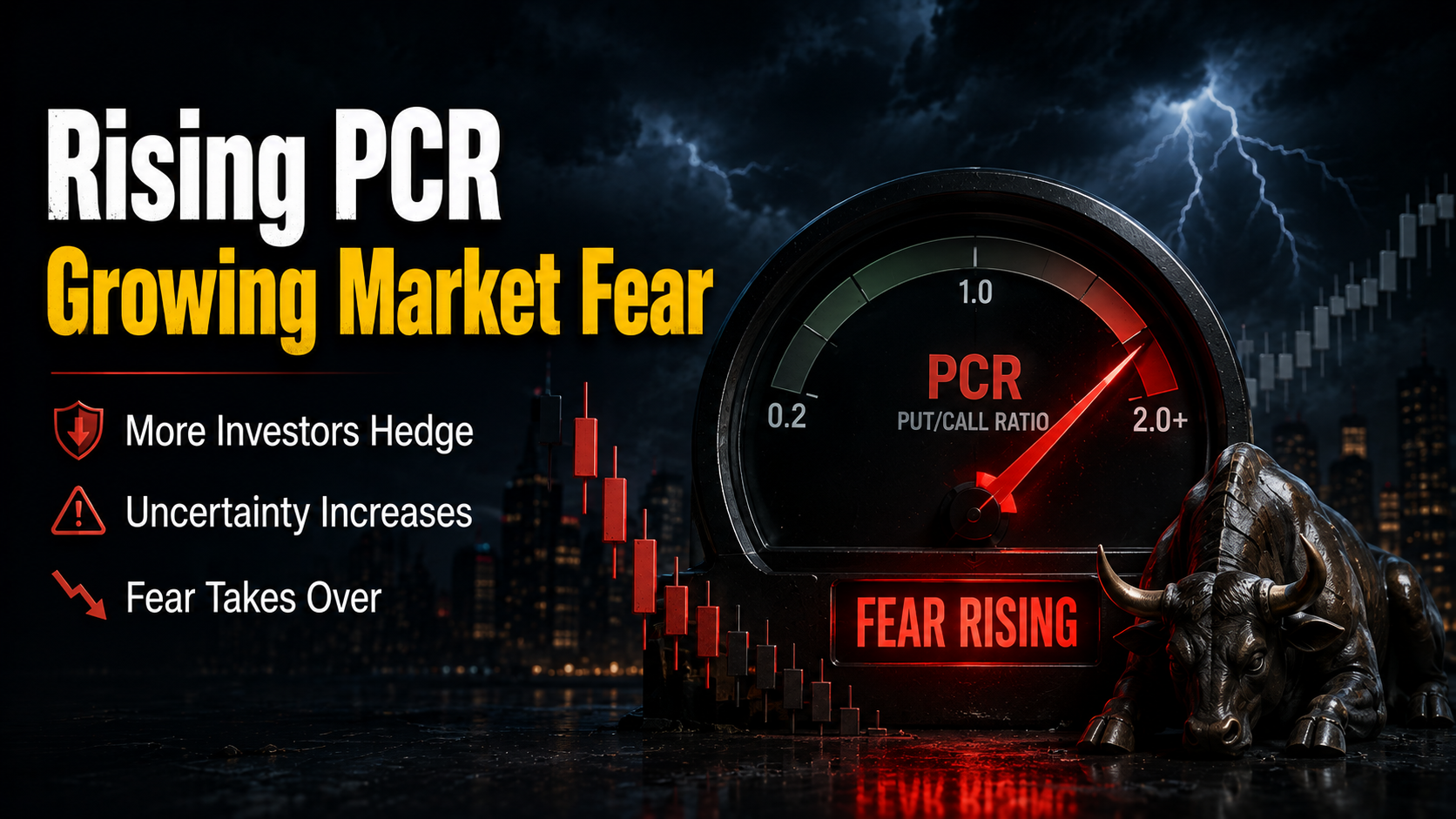
The Put/Call Ratio rises when investors increasingly buy put options and falls when call option activity dominates.
Generally speaking
Rising Put/Call Ratio
A higher ratio suggests that investors are becoming more defensive.
Demand for downside protection is increasing, and market participants are allocating more capital toward hedging potential losses.
This usually reflects
- Growing uncertainty
- Higher perceived risk
- Increasing demand for portfolio insurance
Falling Put/Call Ratio
A lower ratio indicates that investors are becoming more optimistic.
Call buying accelerates as traders expect higher stock prices and become more comfortable taking risk.
This often accompanies
- Strong bullish sentiment
- Rising confidence
- Increased speculation
However, experienced investors rarely stop their analysis here.
Why Is the Put/Call Ratio Considered a Contrarian Indicator?
One of the most fascinating characteristics of the Put/Call Ratio is that it often becomes most valuable when it reaches extreme levels.
Markets rarely reverse because of good or bad news alone.
They reverse when expectations become too one-sided.
If nearly everyone has already purchased put options, much of the fear may already be reflected in market prices. At that point, even modest positive news can trigger a sharp rebound as excessive pessimism begins to unwind.
Conversely, when call buying becomes overwhelmingly dominant, investors may have become overly confident. If most market participants are already positioned for further gains, there may be fewer new buyers left to sustain the rally.
This is why professional investors often describe the Put/Call Ratio as a contrarian sentiment indicator rather than a straightforward bullish or bearish signal.
Extreme fear does not automatically mean prices will rise tomorrow.
Extreme optimism does not guarantee an immediate decline.
Instead, these conditions suggest that market expectations may have become stretched, increasing the probability of a shift in sentiment.

Why Wall Street Pays Attention to the Put/Call Ratio
The options market is dominated by institutional investors, hedge funds, professional traders, and sophisticated risk managers.
Unlike retail sentiment surveys, options activity represents actual financial commitments.
Every put or call purchased reflects a decision involving real capital, real expectations, and real risk management.
For this reason, many professionals view the options market as one of the earliest places where changes in investor psychology become visible.
In many cases, option positioning begins shifting before those expectations are fully reflected in stock prices.
That is why the Put/Call Ratio is frequently monitored alongside earnings expectations, Treasury yields, Federal Reserve policy, and overall market liquidity.
How the Put/Call Ratio Affects Financial Markets
Although the Put/Call Ratio is calculated from options trading, its influence extends far beyond the derivatives market. Because options often reflect changes in investor positioning before they appear in stock prices, the PCR can provide valuable context for understanding broader capital flows.
| Asset Class | High Put/Call Ratio (Fear) | Low Put/Call Ratio (Optimism) |
| U.S. Stocks | Panic selling may be nearing exhaustion, increasing the possibility of a short-term rebound | Investor optimism may become excessive, raising the risk of a pullback |
| U.S. Treasuries | Safe-haven demand often increases, supporting bond prices and lowering yields | Investors may rotate out of bonds into equities, putting upward pressure on yields |
| U.S. Dollar | Risk-off sentiment can strengthen demand for the dollar | Risk-on environments may reduce safe-haven demand |
| Gold | Often benefits from increased uncertainty and defensive positioning | Safe-haven demand may soften as investors embrace risk |
| Bitcoin & Other Risk Assets | Volatility may initially increase before selective buying returns | Strong liquidity and optimism can support higher prices but also increase speculative excess |
These relationships are tendencies—not guarantees. Monetary policy, corporate earnings, economic growth, and liquidity conditions remain the primary long-term drivers of asset prices.
Why the Put/Call Ratio Should Never Be Used Alone
One of the biggest mistakes investors make is assuming that an extreme Put/Call Ratio automatically signals an immediate market reversal.
Markets can remain fearful longer than expected.
Likewise, optimism can stay elevated throughout a prolonged bull market.
The Put/Call Ratio is most valuable when combined with other indicators, such as
- The VIX (Volatility Index) to measure implied market fear.
- Market breadth to evaluate how many stocks are participating in a rally.
- Trading volume to confirm conviction behind price movements.
- Moving averages and trend analysis to determine whether momentum supports or contradicts sentiment.
- Macroeconomic conditions, including Federal Reserve policy, inflation, interest rates, and liquidity.
Professional investors rarely rely on a single indicator. Instead, they build a broader picture by combining multiple sources of evidence before making investment decisions.
Key Takeaways for Investors
Focus on Extremes, Not Fixed Numbers
There is no universal "good" or "bad" Put/Call Ratio.
A reading of 0.8 might be unusually high during one period but perfectly normal during another.
What matters most is how today's reading compares with its own historical range.
Understand Institutional Hedging
Not every put option reflects a bearish outlook.
Large institutions frequently buy puts as portfolio insurance rather than outright speculation.
As a result, elevated Put/Call Ratios do not always imply widespread expectations of a market crash.
Understanding who participates in the options market helps prevent oversimplified interpretations.
Think in Probabilities
The Put/Call Ratio does not predict the future.
Instead, it highlights when investor positioning becomes unusually one-sided.
Its purpose is not to forecast exact market turning points but to improve decision-making by providing additional context about market psychology.
What Do Professional Investors See That Others Often Miss?
Experienced investors rarely ask,
"Will the market go up tomorrow?"
Instead, they ask much deeper questions.
- Where is capital flowing?
- Are investors seeking protection or taking additional risk?
- Has fear become excessive?
- Has optimism become complacency?
- Are market prices reflecting fundamentals, or simply emotion?
This difference in perspective separates investing from speculation.
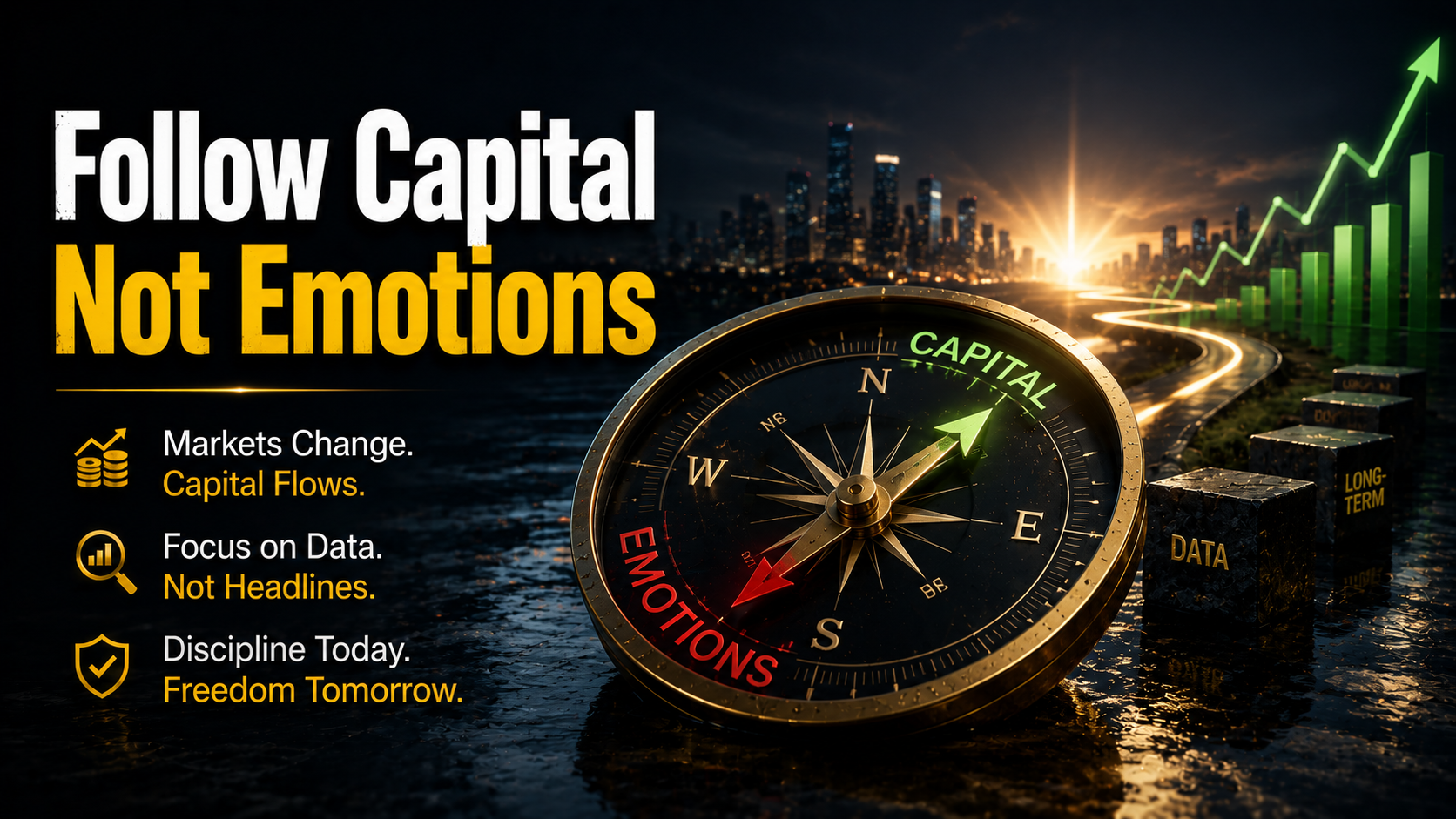
Professional investors understand that markets are driven by capital flows, liquidity, expectations, and positioning—not headlines alone.
When fear reaches an extreme, they begin looking for quality assets that may have been unfairly discounted.
When optimism becomes widespread, they become more disciplined about risk management instead of chasing momentum.
As an investor, consider asking yourself
- Am I reacting to headlines or interpreting market positioning?
- Is today's sentiment supported by fundamentals?
- Where is institutional money moving?
- Would my portfolio remain resilient if market sentiment changed suddenly?
Long-term investing is rarely about predicting every market move.
It is about building a portfolio capable of surviving many different market environments.
Conclusion
The Put/Call Ratio is far more than an options statistic.
It offers a window into how investors are allocating real capital, revealing whether fear or optimism is becoming dominant in financial markets.
Its greatest value lies not in predicting exact market tops or bottoms, but in helping investors recognize when market sentiment may be reaching an unsustainable extreme.
Markets often change direction when expectations become too one-sided.
That is why the smartest investors pay attention not only to prices but also to positioning, liquidity, and psychology.
Ultimately, successful investing is not about making perfect predictions.
It is about understanding how money moves, managing risk with discipline, and staying invested through changing market cycles.
The Put/Call Ratio is one of the most effective tools for developing that broader perspective.
Thank you for reading.
This was MasterMind.
Frequently Asked Questions (FAQ)
What is considered a high Put/Call Ratio?
There is no universal threshold. A "high" reading depends on historical averages, market conditions, and whether the data measures total options, index options, or equity options.
Is a high Put/Call Ratio always bullish?
No. A high ratio reflects elevated fear, but markets can remain fearful for extended periods. It should be interpreted alongside trend, volatility, and macroeconomic conditions.
What is the difference between the Put/Call Ratio and the VIX?
The Put/Call Ratio measures how investors are positioning their capital through options trading, while the VIX measures expected future volatility implied by S&P 500 option prices. Together, they provide a more complete picture of market sentiment.
Can long-term investors use the Put/Call Ratio?
Yes. While it is often associated with short-term trading, long-term investors can use it to understand market psychology, identify periods of excessive optimism or fear, and improve portfolio risk management.
'[Global] Success Blueprints' 카테고리의 다른 글