Why Investors Follow the Crowd: The Psychology Behind Herd Mentality


Hello, this is MasterMind.
Have you ever found yourself buying a stock simply because everyone else seemed to be making money?
Or maybe you've watched a market rally from the sidelines, only to jump in near the peak because you couldn't bear the thought of missing out.
If so, you're not alone.
Financial markets are often portrayed as places where investors make rational decisions based on data and valuation. In reality, emotions frequently drive prices more than fundamentals—especially over the short term. One of the strongest psychological forces behind this behavior is herd mentality.
Whether it's the dot-com bubble, the housing boom, the GameStop frenzy, or Bitcoin's explosive rallies, history repeatedly shows that investors tend to move together. Understanding why this happens can help you avoid emotional decisions and build a more disciplined, long-term investment strategy.

Key Takeaway
Markets are often driven by collective psychology before they are driven by intrinsic value. Investors who recognize herd mentality are better equipped to stay disciplined when emotions dominate the market.
What Is Herd Mentality?
Herd mentality refers to the tendency for people to follow the actions of a larger group instead of making independent decisions.
In investing, this often means buying assets because everyone else is buying or selling simply because panic has spread across the market.
Rather than carefully evaluating a company's earnings, competitive advantages, or long-term prospects, investors often assume that if enough people are making the same decision, it must be the right one.
This behavior isn't limited to inexperienced investors. Even professional fund managers can be influenced by crowd behavior because significantly underperforming peers can create career risk. In many cases, following the crowd feels safer than standing alone—even if the crowd is wrong.
As a result, markets frequently experience periods where prices become disconnected from underlying business value.

Why Humans Naturally Follow the Crowd
Herd mentality is deeply rooted in human evolution.
For most of human history, survival depended on staying with the group. If everyone in a tribe ran away from danger, questioning the decision could be fatal. Following the crowd increased the odds of survival, even when the reason wasn't immediately clear.
Although today's financial markets are vastly different from prehistoric environments, our brains still rely on many of the same instinctive responses.
When investors see stock prices rising rapidly, social media celebrating overnight gains, or financial news highlighting record-breaking markets, the brain often interprets these signals as evidence that joining the crowd is the safest decision.
This instinct becomes even stronger during periods of uncertainty.
When information is incomplete or market conditions are confusing, people naturally look to others for guidance. Psychologists refer to this as social proof—the tendency to assume that the behavior of the majority represents the correct course of action.
In investing, however, the majority is not always right. Markets have repeatedly shown that the largest crowds often become the most emotional near major turning points.
Why Herd Mentality Matters in Financial Markets
Stock prices are influenced by more than corporate earnings and economic data.
They also reflect expectations, confidence, fear, optimism, and uncertainty.
When enough investors become optimistic, buying pressure pushes prices higher. Rising prices then attract even more buyers, creating a self-reinforcing cycle fueled by confidence rather than fundamentals.
The opposite occurs during market declines.
Fear spreads quickly. Investors begin selling because others are selling. Headlines become increasingly negative, and panic accelerates until prices fall well below their intrinsic value.
This is why financial markets often overshoot in both directions.
Prices can climb far above fair value during periods of excessive optimism and fall well below fair value during moments of widespread fear.
For long-term investors, recognizing this psychological cycle is often more valuable than trying to predict every short-term market movement.
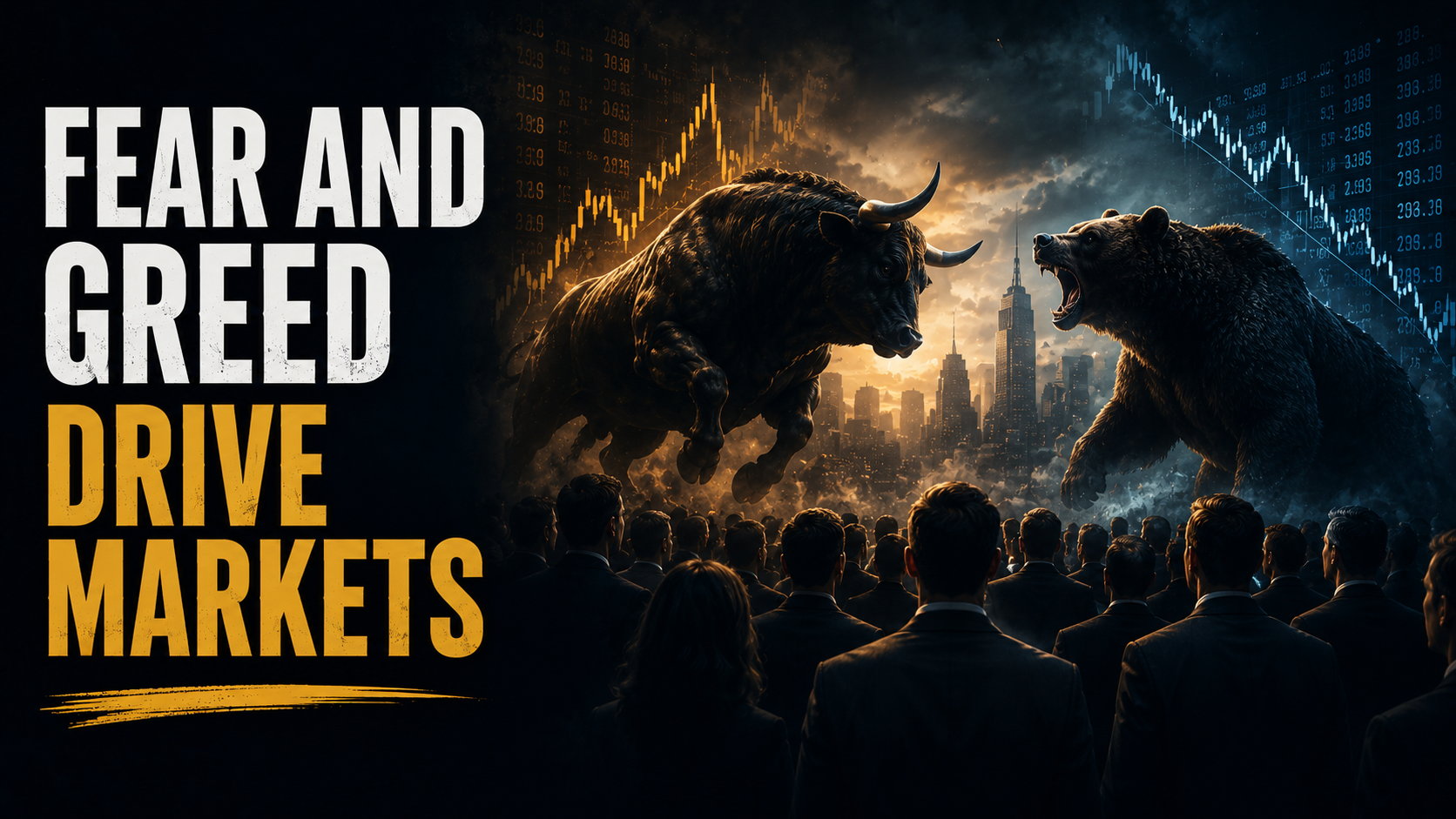
How Herd Mentality Shapes Different Markets
Herd mentality doesn't affect only stocks. It influences nearly every major asset class, often creating opportunities and risks for investors who understand market psychology.
Stocks
The stock market is where herd behavior is most visible.
During bull markets, investors become increasingly optimistic. Strong earnings, positive headlines, and rising prices reinforce each other, attracting more buyers. As momentum builds, valuations can become detached from business fundamentals.
The late-1990s dot-com bubble is a classic example. Many technology companies traded at extraordinary valuations despite having little or no profit. Investors weren't buying because businesses were fundamentally attractive—they were buying because everyone else was.
Bitcoin and Cryptocurrencies
The cryptocurrency market magnifies herd mentality even further.
Because digital assets are highly volatile and trade around the clock, emotions spread rapidly through social media, online communities, and financial news.
As prices surge, fear of missing out (FOMO) encourages new investors to enter the market. During sharp corrections, that same emotional behavior reverses into panic selling.
This emotional cycle has repeated itself throughout Bitcoin's history, creating dramatic boom-and-bust periods.
Gold
Gold often benefits from a different type of herd mentality.
When investors become worried about inflation, geopolitical conflicts, or financial instability, many rush toward traditional safe-haven assets.
Although gold has intrinsic characteristics that support its long-term value, short-term price movements are frequently driven by collective investor sentiment rather than changes in physical demand.
Bonds
Bond markets also reflect shifts in crowd psychology.
When uncertainty rises, institutional investors often move capital into U.S. Treasury securities, seeking stability instead of higher returns.
This "flight to safety" lowers Treasury yields while reducing demand for riskier assets such as equities and high-yield corporate bonds.
Understanding these capital flows helps investors recognize that market movements are often driven by changing perceptions of risk rather than changes in economic reality.
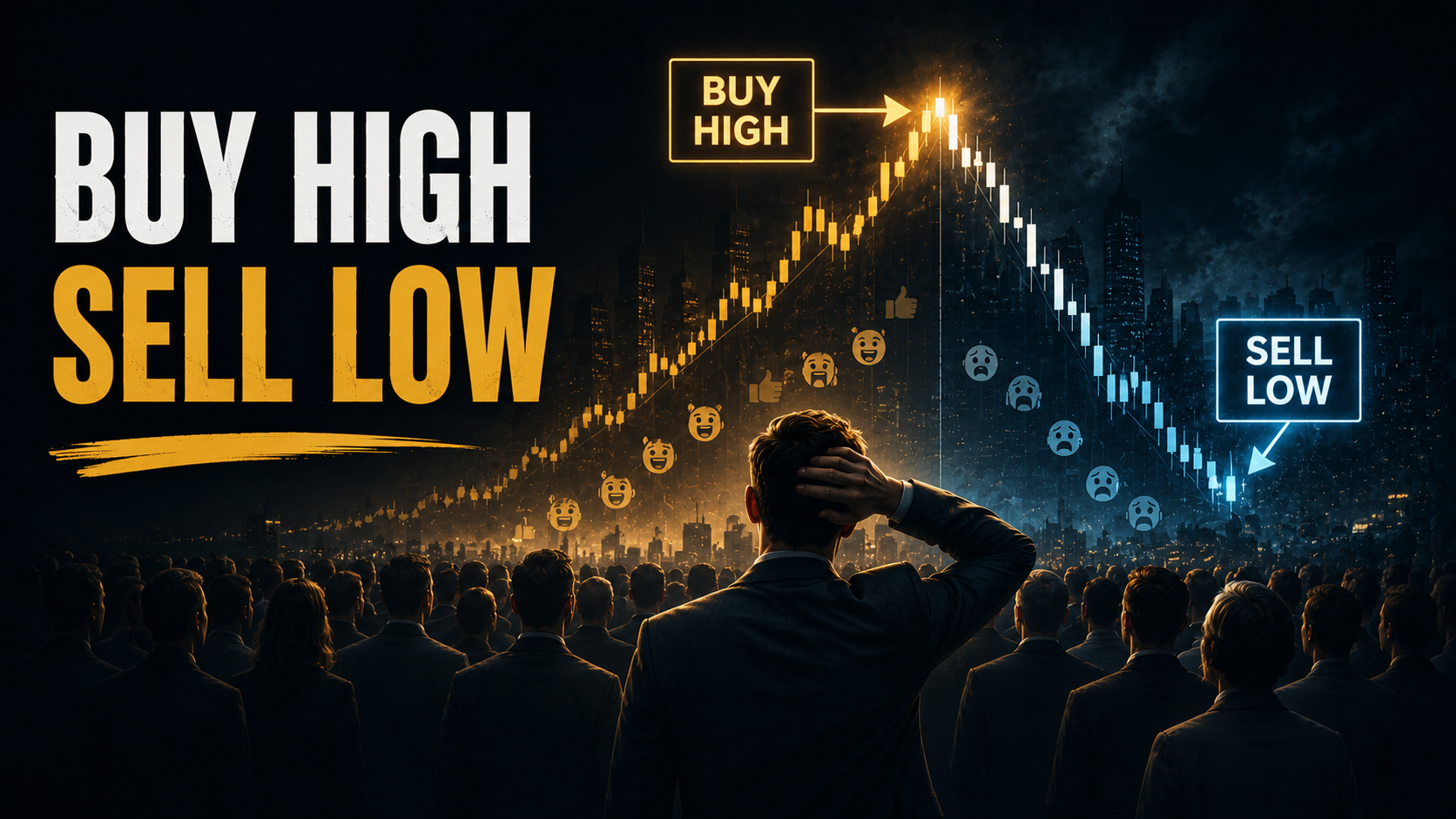
Smart Investors Focus on Psychology, Not Headlines
Legendary investors rarely make decisions based solely on popular opinion.
Instead, they ask a different question
"Is the market reacting emotionally, or is it reacting rationally?"
When optimism becomes excessive, disciplined investors become cautious.
When fear dominates headlines and quality assets are sold indiscriminately, experienced investors often begin looking for opportunities.
Warren Buffett summarized this mindset with one of his most famous investing principles
"Be fearful when others are greedy, and greedy when others are fearful."
This isn't advice to blindly buy every market decline. Instead, it reminds investors that emotional extremes often create the greatest pricing inefficiencies.
Successful investing is less about predicting tomorrow's headlines and more about maintaining discipline while others react emotionally.
Questions Every Investor Should Ask
Before making your next investment decision, pause and ask yourself
- Am I investing based on research or simply following the crowd?
- Would I still buy this investment if no one else were talking about it?
- Has the company's intrinsic value changed, or am I reacting only to price movement?
- Am I making this decision because of fear or because of long-term conviction?
These questions won't eliminate emotion entirely, but they can reduce impulsive decisions that often lead to poor long-term results.
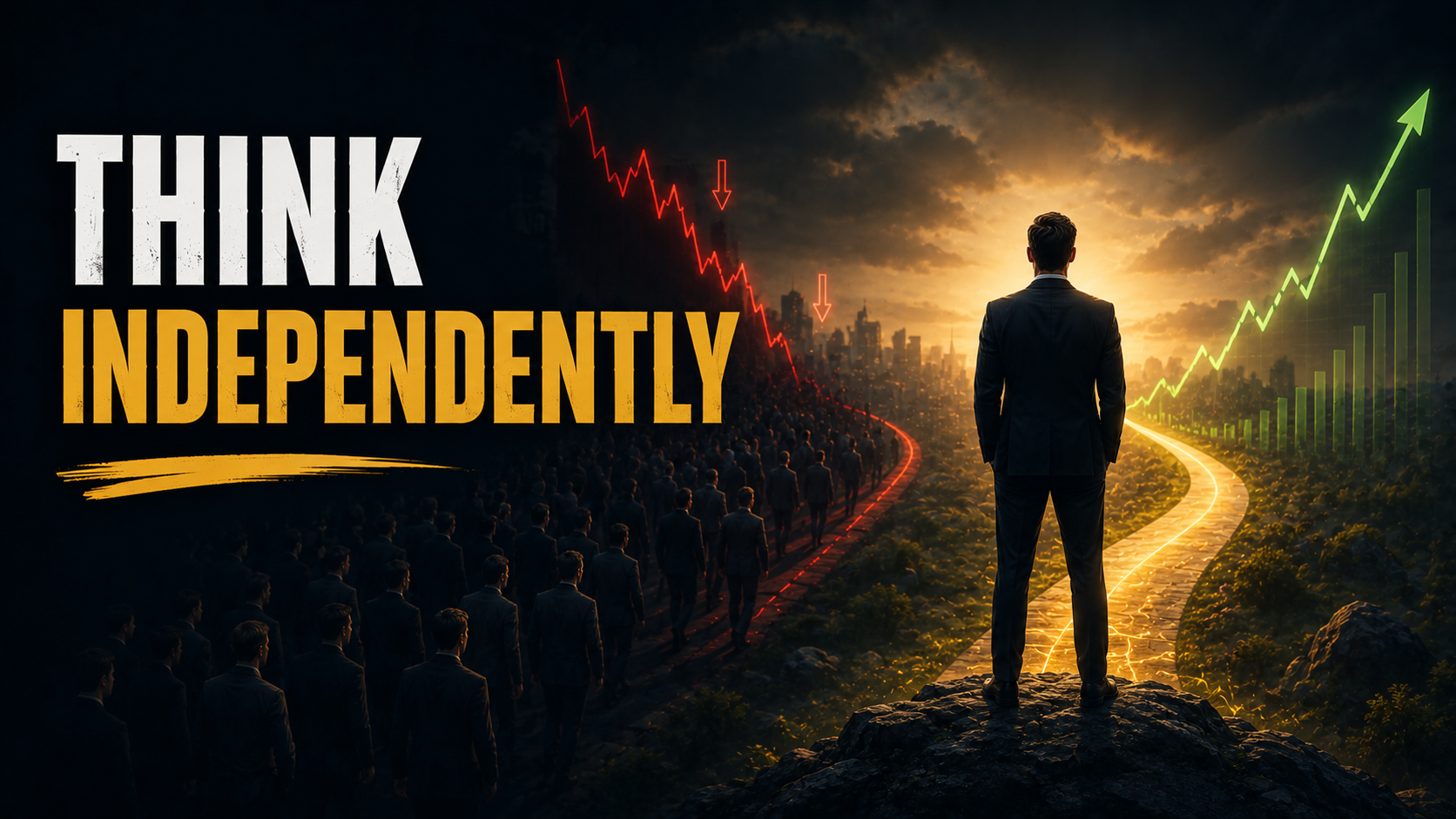
Final Thoughts
Markets will always experience cycles of optimism and fear.
Technology will evolve, industries will change, and new investment trends will emerge. Yet human psychology remains remarkably consistent.
Herd mentality is unlikely to disappear because it is deeply rooted in the way people process uncertainty and seek social validation.
The investors who consistently outperform over the long run are rarely the ones who follow the loudest voices. They are the ones who remain disciplined when others become emotional, evaluate businesses instead of headlines, and stay focused on long-term value rather than short-term excitement.
The next time you see everyone rushing into the same investment—or racing to sell during a market panic—take a step back.
Sometimes the best investment decision is not to follow the crowd at all.
This was MasterMind.
'[Global] Success Blueprints' 카테고리의 다른 글