What Is the Neutral Interest Rate? Why It Matters for Interest Rates, Stocks, and the Economy


Hello, this is MasterMind.
When the Federal Reserve raises or cuts interest rates, investors immediately ask the same question
"How much further can rates go?"
The answer often comes down to a concept that receives far less attention than inflation, jobs reports, or GDP growth
the Neutral Interest Rate.
While it may sound like an obscure economic term, the Neutral Interest Rate plays a critical role in shaping monetary policy, bond yields, stock valuations, and long-term investment returns.
Understanding this concept can help investors better interpret Federal Reserve decisions and identify where capital may flow next.
Key Takeaway
The Neutral Interest Rate is the interest rate level that neither stimulates nor slows the economy. It serves as the Federal Reserve's long-term benchmark for determining whether monetary policy is restrictive, neutral, or accommodative.
What Is the Neutral Interest Rate?
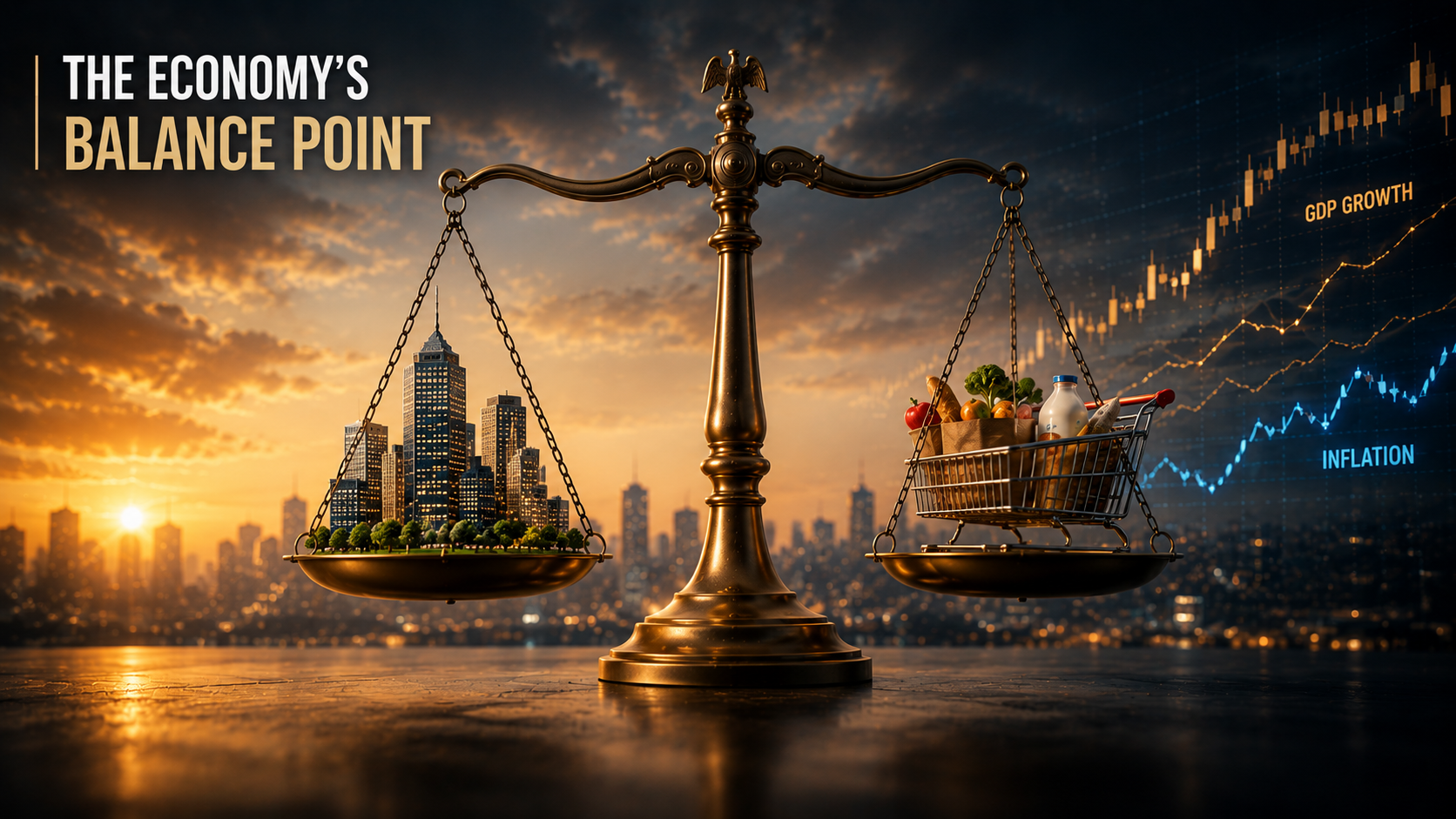
The Neutral Interest Rate, often called the Neutral Rate or R-star (r*), refers to the theoretical interest rate that allows the economy to grow at its long-term potential while keeping inflation stable.
Economists often refer to it as the Natural Rate of Interest.
Think of the economy as a car traveling on a highway.
- If interest rates are too low, the economy accelerates and risks overheating.
- If rates are too high, economic activity slows down.
- The Neutral Interest Rate is the speed at which the economy can move forward without either pressing the accelerator or hitting the brakes.
In practical terms
| Policy Rate Position | Economic Impact |
| Below Neutral Rate | Stimulates growth |
| Near Neutral Rate | Balanced growth |
| Above Neutral Rate | Slows economic activity |
The challenge is that the Neutral Interest Rate cannot be directly observed.
Unlike inflation or unemployment, it is not published as an official statistic. Instead, economists estimate it using data on productivity, demographics, investment demand, savings behavior, and long-term economic growth.
How the Neutral Interest Rate Influences Monetary Policy
The Federal Reserve does not simply raise or lower rates in isolation.
Every policy decision is evaluated relative to where officials believe the Neutral Interest Rate currently stands.
Imagine the Neutral Interest Rate is estimated at 3%.
If the federal funds rate is 5%, monetary policy is considered restrictive. Borrowing becomes more expensive, businesses reduce investment, and consumers tend to spend less.
If the federal funds rate is 2%, policy is considered accommodative. Credit becomes cheaper, spending increases, and economic growth may accelerate.
This is why investors should focus not only on the direction of rates but also on how far current rates are from the Neutral Interest Rate.
The market is constantly trying to answer a critical question
"Is the Fed still applying the brakes, or has policy returned to neutral?"

Why Investors Pay Attention to the Neutral Interest Rate
The Neutral Interest Rate acts as a long-term anchor for financial markets.
One of the most common mistakes investors make is assuming that every rate cut automatically creates a bullish environment for stocks and risk assets.
In reality, rate cuts often represent a move from highly restrictive policy toward neutrality rather than a return to easy money.
For example, if policymakers believe the Neutral Interest Rate is 3.5% and the federal funds rate falls from 5.5% to 4.5%, monetary policy remains restrictive even after multiple rate cuts.
This distinction matters because financial markets frequently react not to the first rate cut itself, but to where policy ultimately settles relative to the Neutral Interest Rate.
Understanding the destination is often more important than focusing on the journey.
Why the Neutral Interest Rate May Be Rising
One of the biggest debates in today's macroeconomic environment is whether the Neutral Interest Rate is higher than it was during the decade following the Global Financial Crisis.
Several structural trends suggest that possibility.
Artificial Intelligence and Productivity Growth
Technological innovation can increase productivity and raise the economy's long-term growth potential.
If AI significantly improves efficiency across industries, higher interest rates may be sustainable without slowing growth.
Larger Government Spending
Federal investment in infrastructure, manufacturing, defense, and industrial policy increases demand for capital.
Greater demand for capital can push equilibrium interest rates higher over time.
Demographic Shifts
Changes in labor force participation and population growth affect the balance between savings and investment throughout the economy.
Energy and Infrastructure Investment
Massive spending on power generation, data centers, semiconductors, and grid modernization requires substantial capital, potentially supporting higher long-term rates.
If these trends persist, the era of ultra-low interest rates that defined much of the 2010s may not return anytime soon.
How the Neutral Interest Rate Affects Financial Markets

Changes in the Neutral Interest Rate can influence the valuation of nearly every major asset class.
| Asset Class | Impact of a Higher Neutral Interest Rate |
| Stocks | Higher discount rates can pressure valuations |
| Growth Stocks | Future earnings become less valuable today |
| Bonds | Long-term yields may remain elevated |
| U.S. Dollar | Higher relative rates can support dollar strength |
| Gold | Higher opportunity costs may reduce attractiveness |
| Bitcoin | Tighter liquidity conditions can create headwinds |
| Real Estate | Borrowing costs remain elevated |
This relationship helps explain why interest rate expectations often move markets even when corporate earnings remain strong.
In many cases, the price of money matters as much as the fundamentals of the assets themselves.
What Investors Should Watch
The Fed's Longer-Run Rate Projection
Within the Federal Open Market Committee's Summary of Economic Projections (SEP), investors often focus on the "Longer Run" estimate.
This figure represents policymakers' view of where interest rates may settle over the long term and serves as one of the best public signals of the Fed's Neutral Interest Rate estimate.
The Difference Between Rate Cuts and Easy Money
Rate cuts do not automatically mean monetary policy is supportive.
Policy can remain restrictive even during a cutting cycle if rates stay above the Neutral Interest Rate.
Cash Flow Matters More in a Higher-Rate World
When interest rates remain elevated, investors tend to place greater value on businesses that generate consistent cash flow today rather than relying on distant future growth.
Don't Anchor to the Post-2008 Environment
Many investors became accustomed to near-zero rates after the financial crisis.
If the Neutral Interest Rate has structurally moved higher, valuation frameworks across markets may need to adjust accordingly.
What Wealthy Investors See in This Trend

Experienced investors often focus less on predicting the next Fed meeting and more on understanding where capital is flowing.
A higher Neutral Interest Rate environment tends to reward financial discipline.
Businesses with strong balance sheets, pricing power, and durable cash flows become more attractive.
Companies dependent on cheap financing may face greater challenges.
Instead of chasing short-term market narratives, long-term investors often ask deeper questions
- Can this business thrive if interest rates remain elevated for years?
- Does it generate reliable cash flow regardless of economic conditions?
- Is its valuation justified in a world with higher capital costs?
- Where is institutional capital moving, and why?
Successful investing is rarely about predicting every market move.
More often, it is about building a portfolio capable of surviving multiple economic environments.
Final Thoughts
The Neutral Interest Rate is invisible, but its influence extends throughout the financial system.
It helps determine whether monetary policy is restrictive or accommodative, influences asset valuations, and shapes long-term expectations for economic growth.
For investors, understanding the Neutral Interest Rate provides a clearer framework for interpreting Federal Reserve policy and evaluating market opportunities.
Markets do not simply react to today's interest rates. They react to expectations about where rates are ultimately headed.
And that is precisely why the Neutral Interest Rate remains one of the most important concepts in modern investing.
This was MasterMind.
'[Global] Success Blueprints' 카테고리의 다른 글