What Is the FOMC? Why Federal Reserve Meetings Move the Market


Hello, this is MasterMind.
Every time the Federal Reserve holds an FOMC meeting, financial markets seem to stop and pay attention. Stocks become volatile, Treasury yields move sharply, the U.S. dollar fluctuates, and even cryptocurrencies react.
But why does a single meeting have such a powerful impact on global markets?
Many investors assume the answer is simple - interest rates.
In reality, the market is not just reacting to today's interest rate decision. It is trying to understand where money will flow in the future.
That is why the Federal Open Market Committee (FOMC) remains one of the most important events for investors worldwide.
What Is the FOMC?
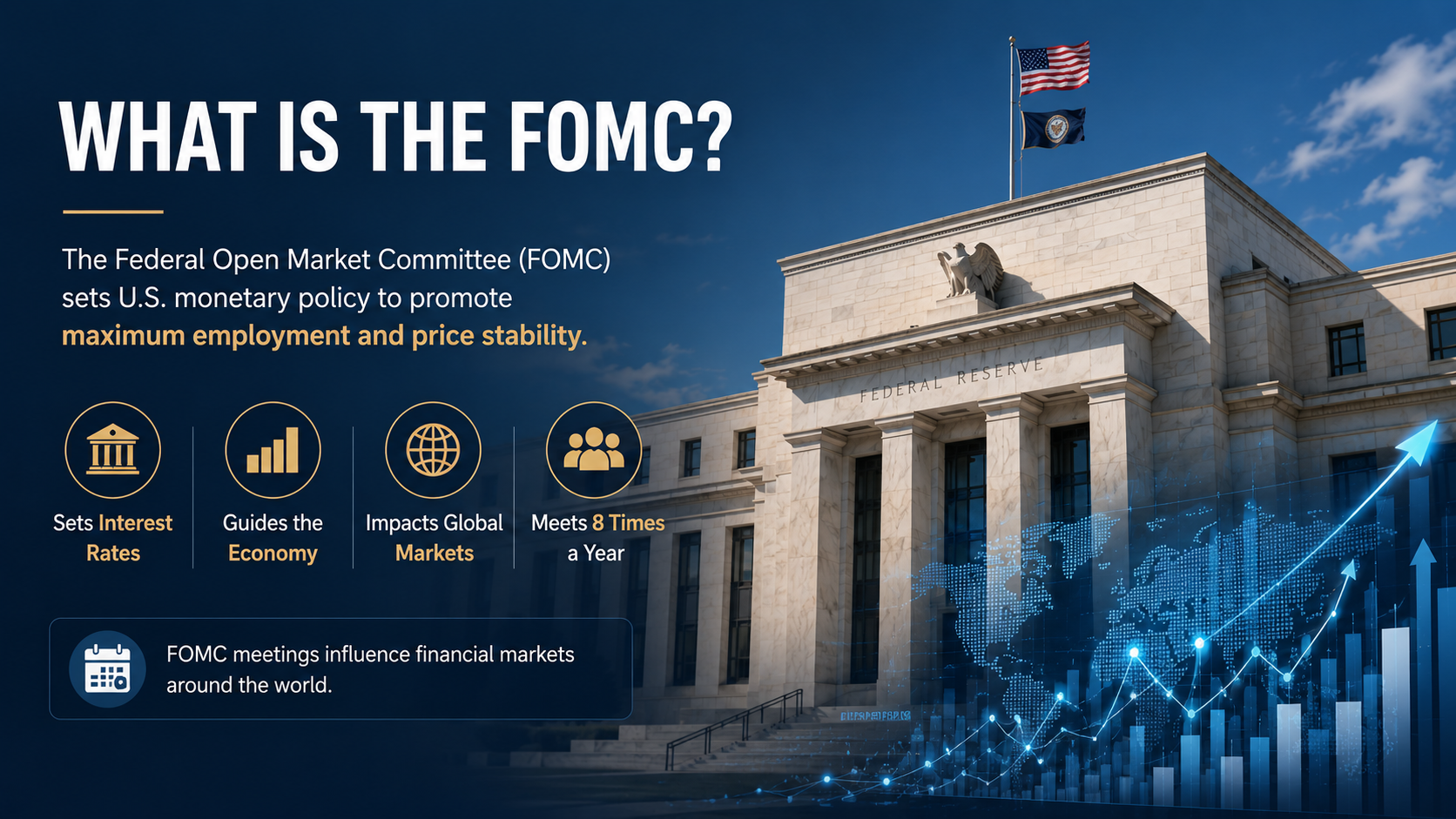
The Federal Open Market Committee (FOMC) is the policy-making body of the Federal Reserve responsible for setting U.S. monetary policy.
The committee meets eight times per year to evaluate economic conditions and determine the appropriate federal funds rate.
Because the U.S. dollar serves as the world's reserve currency, decisions made by the Federal Reserve extend far beyond the United States.
Changes in monetary policy can influence
- Stock markets
- Treasury yields
- Bond prices
- Foreign exchange markets
- Real estate
- Commodities
- Cryptocurrencies
In simple terms, the FOMC helps determine the price of money.
And when the price of money changes, asset prices often follow.
What Does the Federal Reserve Look At?
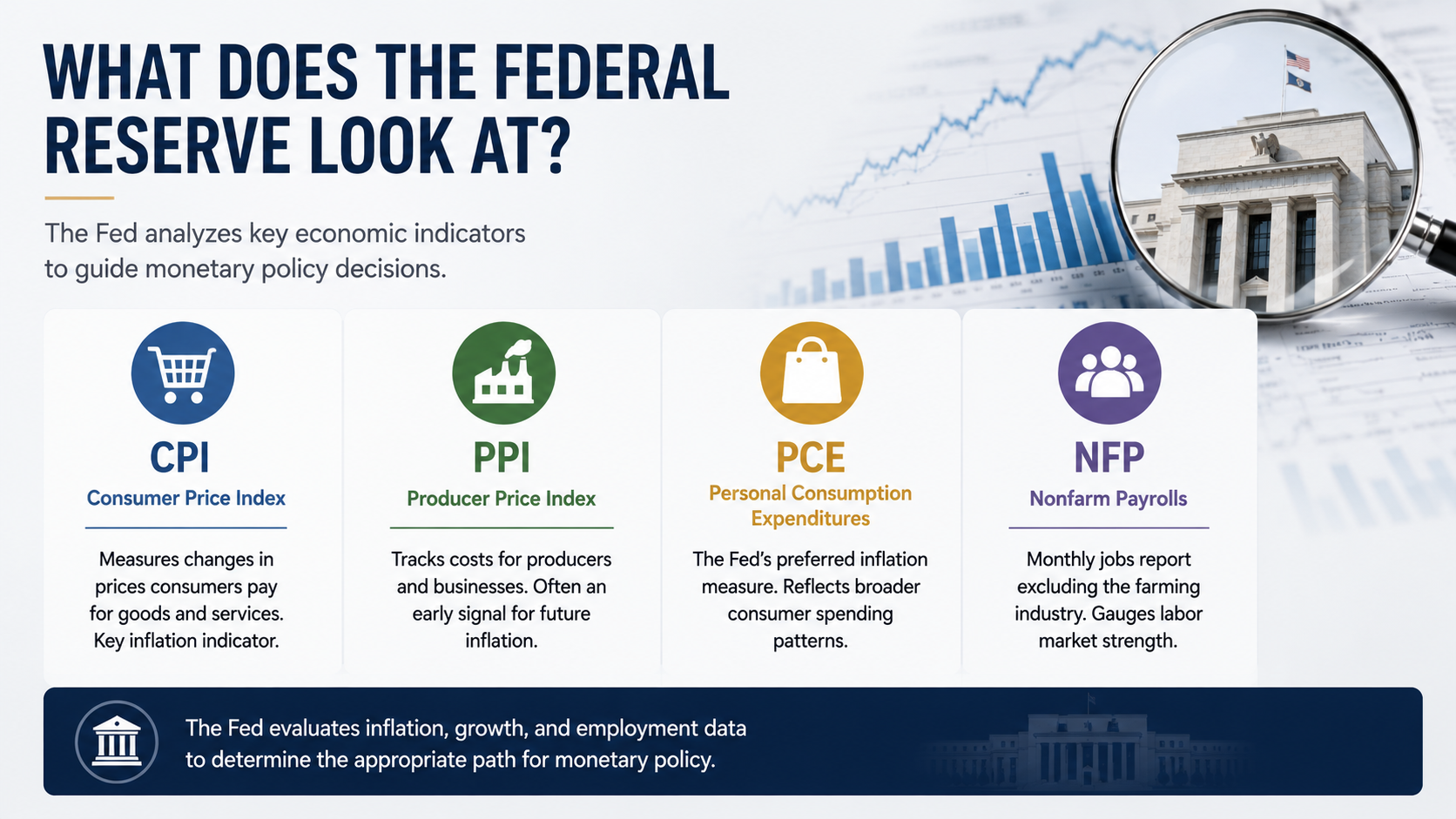
Contrary to popular belief, the Federal Reserve does not make decisions based on a single economic report.
Instead, policymakers analyze a wide range of economic indicators to evaluate inflation, growth, and employment conditions.
Some of the most important indicators include
Consumer Price Index (CPI)
CPI measures changes in the prices consumers pay for goods and services.
Persistent inflation often makes the Federal Reserve more cautious about lowering interest rates.
Producer Price Index (PPI)
PPI tracks costs faced by producers and businesses.
Rising production costs can eventually flow through to consumers, making PPI an important inflation indicator.
Personal Consumption Expenditures (PCE)
PCE is widely regarded as the Federal Reserve's preferred inflation measure.
It provides a broader view of inflation and consumer spending patterns than CPI alone.
Nonfarm Payrolls (NFP)
The monthly jobs report provides insight into the strength of the labor market.
Strong employment growth may support the economy, but it can also contribute to inflationary pressures.
Together, these indicators help policymakers determine the direction of future monetary policy.
Markets Care More About the Future Than the Present

Many beginner investors assume that higher interest rates are always bearish and lower rates are always bullish.
The reality is more complicated.
Financial markets are forward-looking.
The market does not simply react to today's rate decision. It reacts to what that decision suggests about future policy.
A rate pause can trigger a market sell-off if investors believe rates will remain elevated for longer.
Likewise, markets can rally even without a rate cut if investors believe easing may arrive in the future.
Successful investors understand that expectations often matter more than current conditions.
The Four Most Important Parts of an FOMC Meeting

1. Interest Rate Decision
The federal funds rate remains the headline event.
Higher rates generally tighten financial conditions and reduce liquidity, while lower rates can stimulate borrowing, spending, and investment.
However, the rate decision alone rarely tells the full story.
2. FOMC Statement
The official statement reveals how policymakers view inflation, economic growth, employment, and financial conditions.
Even subtle changes in wording can significantly influence investor expectations.
3. Press Conference
For many market participants, the press conference is the most important part of the meeting.
Investors closely analyze every comment from the Federal Reserve Chair for clues about future policy direction.
Major market swings often occur during the question-and-answer session rather than immediately after the rate announcement.
4. Economic Outlook
The Federal Reserve also provides insight into how it views the future path of inflation, growth, employment, and interest rates.
These projections help investors understand not only what policymakers are doing today, but why they are doing it.
Understanding the Fed's outlook is often more valuable than focusing solely on the current rate decision.
Risks Investors Should Watch
One of the biggest mistakes investors make is focusing solely on outcomes rather than expectations.
Markets rarely react strongly to expected news.
They react when reality differs from consensus expectations.
This is why a seemingly positive announcement can trigger a sell-off, while an apparently negative report can lead to a rally.
Investors should pay close attention to
- Inflation trends
- Labor market conditions
- Economic growth expectations
- Liquidity conditions
- Changes in Federal Reserve guidance
Markets are driven by both optimism and fear.
Often, what investors fear matters more than what they hope for.
What Are Wealthy Investors Watching?

During periods of market volatility, experienced investors focus less on daily price movements and more on capital flows.
They ask different questions.
Which assets can survive in a high-rate environment?
Which companies generate consistent cash flow?
Which sectors can thrive even when liquidity becomes scarce?
Historically, businesses with strong balance sheets, durable cash flow, and competitive advantages tend to outperform during periods of monetary tightening.
Liquidity may disappear, but quality often survives.
Investors should ask themselves
- Can my portfolio withstand higher rates for longer?
- Do my investments generate sustainable cash flow?
- Do I have sufficient liquidity for future opportunities?
- Am I investing based on data or emotion?
In investing, survival often matters more than prediction.
Final Thoughts
The FOMC is far more than an interest rate meeting.
It is one of the most important signals guiding global capital flows and investor expectations.
Economic reports such as CPI, PPI, PCE, and Nonfarm Payrolls provide the foundation for Federal Reserve decisions.
Investors who understand how the Federal Reserve interprets these indicators gain a deeper understanding of market movements.
Markets constantly price in the future.
That is why successful investors focus not only on what the Federal Reserve does today, but also on what its actions reveal about tomorrow.
MasterMind's Final Thought
Markets do not simply react to interest rates. They react to the future direction of money. And in investing, survival is often more important than prediction.
This was MasterMind.
'[Global] Success Blueprints' 카테고리의 다른 글