AI Is Growing Fast, So Why Are AI Stocks Falling? The Gap Between Innovation and Valuation


Hello, this is MasterMind.
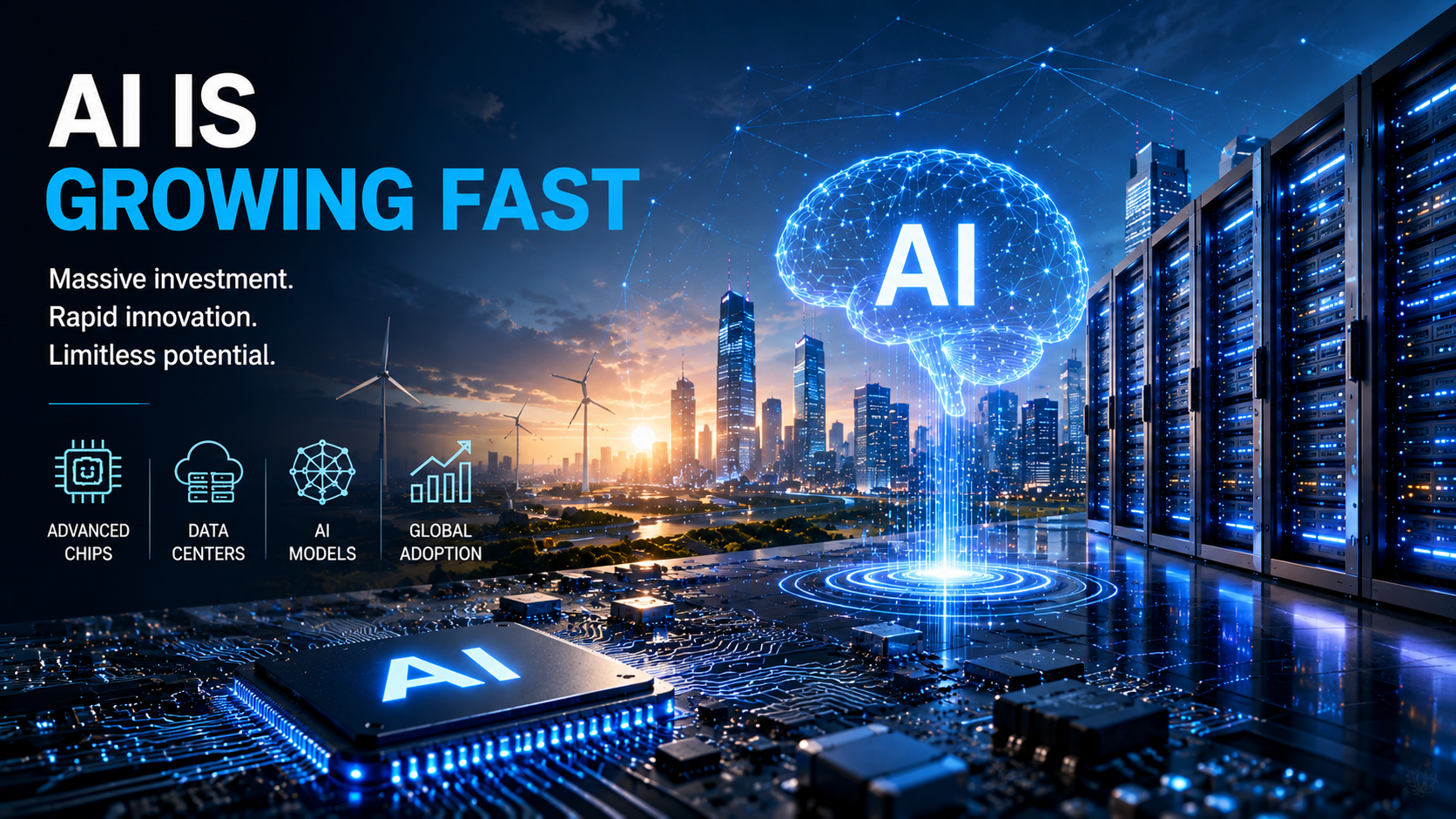
Artificial intelligence continues to transform industries at an unprecedented pace. Major technology companies are investing hundreds of billions of dollars into data centers, AI infrastructure, and next-generation computing systems. AI adoption is accelerating across businesses, and the long-term growth story remains intact.
Yet many investors are asking the same question.
If AI is truly the next technological revolution, why are AI stocks struggling?
Why are companies leading the AI boom experiencing significant volatility despite strong demand and massive investment?
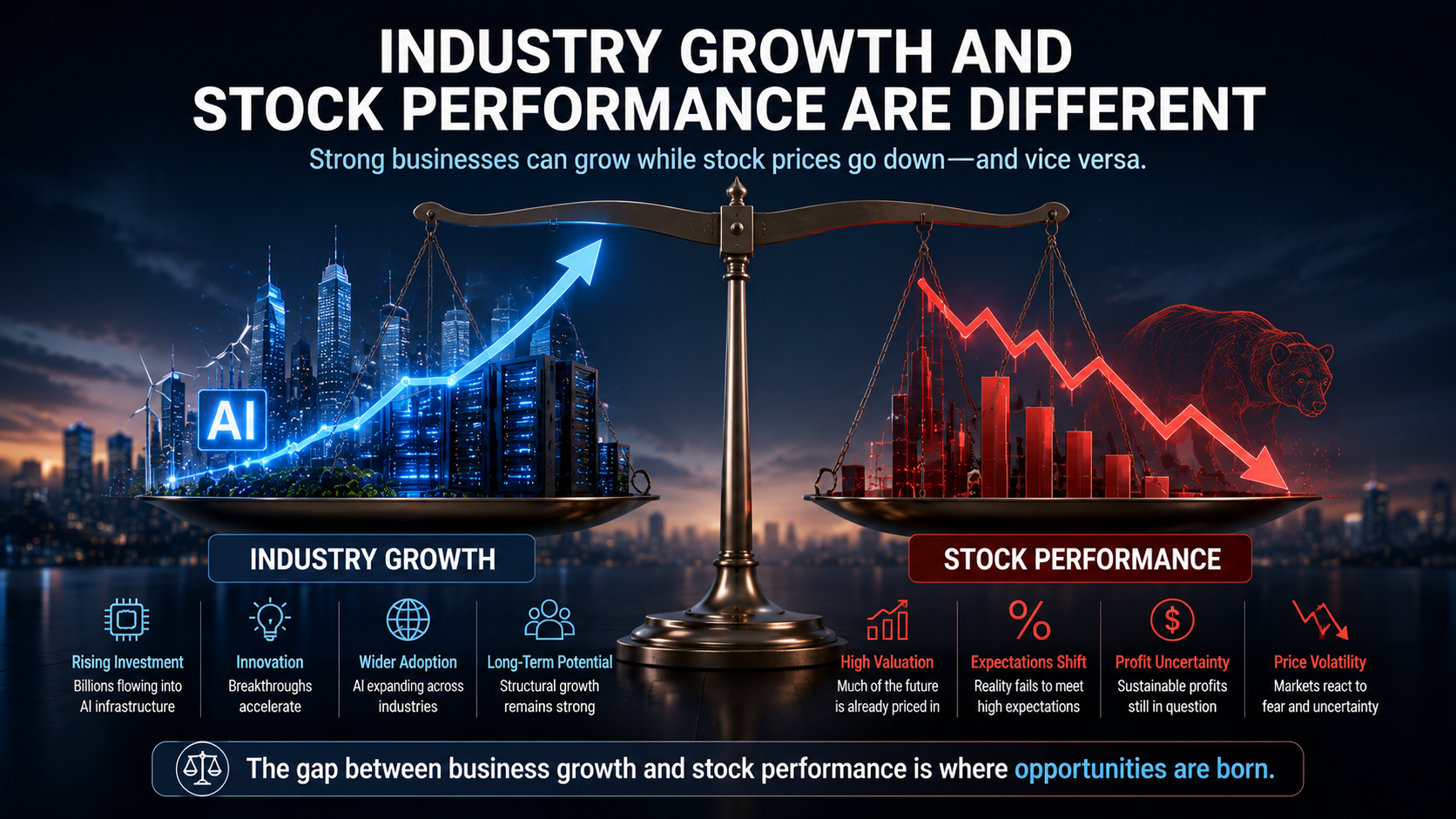
To answer these questions, we need to understand an important truth about financial markets: industry growth and stock performance are not always the same thing.
AI Industry Growth and AI Stock Performance Are Not the Same
Many investors assume that if an industry grows, the stocks within that industry must continue rising.
Markets do not work that way.
Stock prices are driven not by current conditions, but by future expectations.
A company may double its revenue, but if investors expected even faster growth, the stock can still decline.
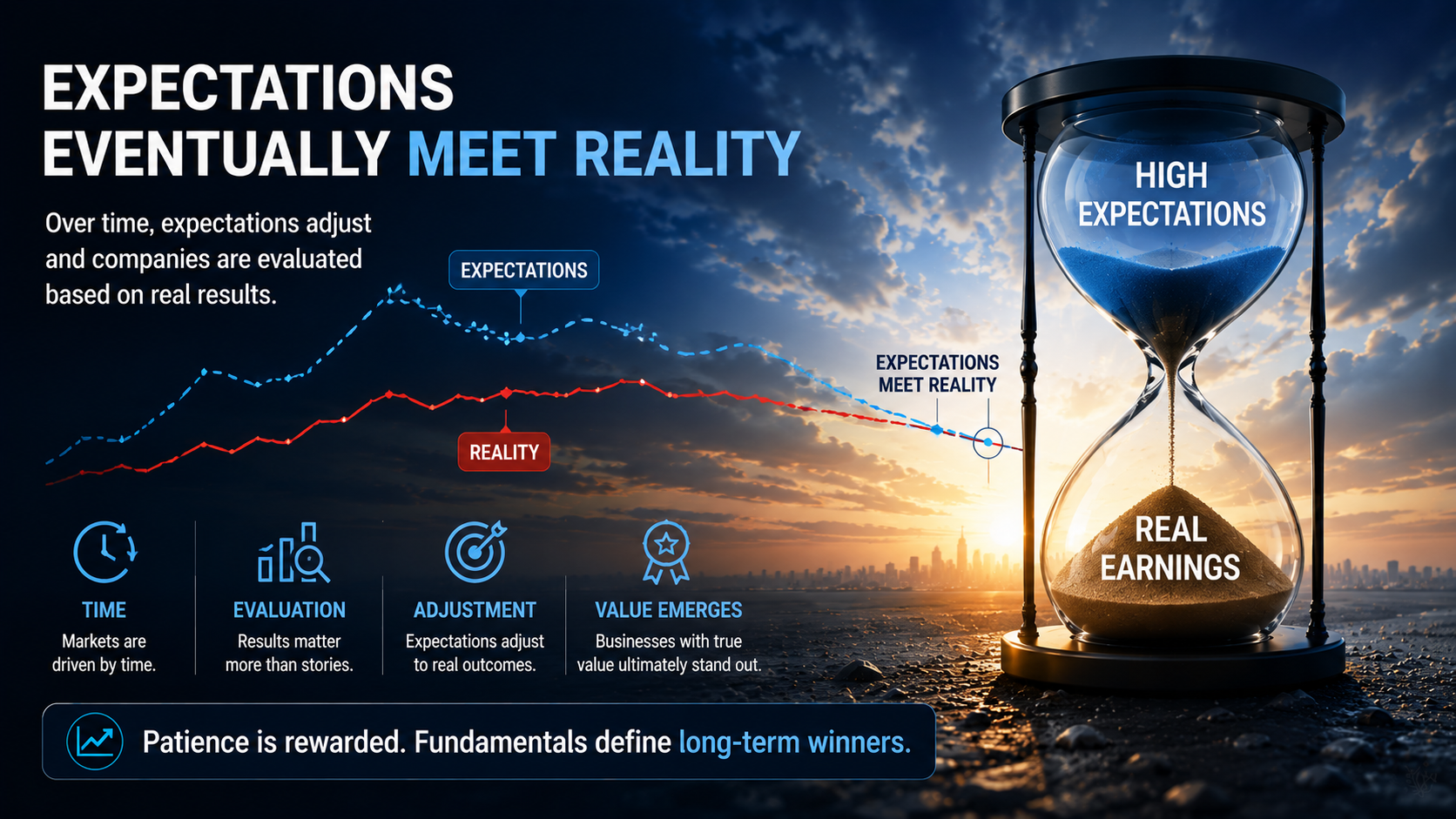
The market constantly compares reality with expectations.
This is exactly what we are seeing in many AI-related stocks today.
The AI industry itself continues to expand, but stock prices are adjusting because expectations may have moved ahead of actual business results.

The Market Always Prices the Future First
Throughout history, every major technological revolution has followed a similar pattern.
Railroads, electricity, the internet, smartphones, and now artificial intelligence all generated enormous excitement during their early stages.
When a transformative technology emerges, investors often price in years of future growth within a very short period of time.
Valuation metrics become secondary.
Narratives, potential, and long-term opportunities begin to dominate investment decisions.
Eventually, however, markets become more selective.
Investors start asking a different question:
"Who is actually generating sustainable profits?"
This transition from excitement to profitability is often where volatility emerges.
The current correction in AI stocks may not be a sign that AI is failing. Instead, it may represent a natural process of aligning valuations with business fundamentals.
Three Major Forces Driving the Current Market
1. The Focus Is Shifting from Infrastructure to Monetization
The first phase of the AI boom was dominated by infrastructure providers.
Semiconductor companies, GPU manufacturers, memory suppliers, and data center operators benefited from massive capital expenditures by technology giants.
Investors were willing to pay premium valuations because demand appeared unlimited.
Today, the market is becoming more focused on monetization.
Investors want evidence that companies can convert AI investments into sustainable revenue and profits.
The market's attention is gradually shifting from building AI to earning money from AI.
2. Higher Interest Rates Put Pressure on Growth Stocks
Many investors focus exclusively on technology while overlooking the importance of monetary policy.
AI companies are often valued based on future earnings potential.
When interest rates remain elevated, future profits become less valuable in today's dollars.
As a result, high-growth technology companies typically face greater valuation pressure during periods of tighter monetary conditions.
Even the most promising technological revolution cannot completely escape the influence of interest rates and liquidity.
When money becomes more expensive, investors demand stronger evidence of profitability.
3. Markets React More Strongly to Fear Than Optimism
One of the most important lessons in investing is that markets are often driven more by fear than by hope.
During bull markets, investors focus on opportunity.
During corrections, investors focus on risk.
Concerns about overvaluation, slower monetization, and excessive optimism become more visible once momentum weakens.
Institutional investors often rebalance positions during these periods, taking profits and reducing concentration risk.
This does not necessarily mean the AI story is over.
It simply means expectations are being reassessed.
Risks Investors Should Watch Carefully
The biggest mistake investors can make is confusing technological success with investment success.
The internet transformed the world.
That prediction was correct.
However, many internet stocks collapsed during the dot-com era because expectations had become disconnected from realistic business outcomes.
A revolutionary technology can succeed while investors still lose money.
The same principle applies to artificial intelligence.
The long-term success of AI does not automatically justify every stock valuation.
Investors should evaluate not only innovation but also profitability, cash flow generation, competitive advantages, and realistic growth expectations.
What Are Wealthy Investors Watching?
When markets become volatile, experienced investors focus on capital flows rather than daily price movements.
The key question is not whether money is leaving AI.
The real question is where that money is going.
Today, capital continues to flow into semiconductors, data centers, power infrastructure, AI software platforms, and enterprise productivity solutions.
The strongest businesses tend to survive even when liquidity conditions tighten.
Companies with durable cash flows, strong balance sheets, and competitive advantages often emerge stronger after periods of market stress.
Investors should ask themselves:
- Does the company generate meaningful cash flow today?
- Can it remain competitive even if AI enthusiasm fades?
- How much future growth is already reflected in the stock price?
- Am I investing in business fundamentals or simply following market excitement?
- Can my portfolio survive periods of significant volatility?

These questions often matter more than short-term predictions.
Final Thoughts
The AI revolution is far from over.
Innovation continues to accelerate, investment remains strong, and the long-term potential of artificial intelligence remains enormous.
However, industry growth and stock prices do not always move in the same direction.
Markets frequently become overly optimistic before reality catches up.
What we may be witnessing today is not the end of AI, but a repricing of expectations.
History shows that every major technological revolution experiences periods of excitement, excess, correction, and consolidation.
The winners ultimately emerge from strong fundamentals, not hype.
A MasterMind perspective:
Believing in the future of technology and paying any price for a technology stock are two very different things. Markets always price the future ahead of reality. The most successful investors focus not only on growth but also on valuation, cash flow, and survival.
This was MasterMind.
'[Global] Success Blueprints' 카테고리의 다른 글