Why the U.S. Dollar Remains the World's Ultimate Safe-Haven Asset


The Real Meaning of Dollar Dominance During Financial Crises
Hello, this is MasterMind.
Whenever financial markets panic, a familiar pattern emerges.
Stocks crash.
Emerging market currencies collapse.
Investors dump risky assets.
And almost without exception, global capital rushes into the U.S. dollar.
At first glance, this seems irrational.
The United States carries trillions of dollars in debt. Fiscal deficits continue to grow, and concerns about long-term government spending never seem to disappear.
Yet when fear dominates the market, investors around the world still seek safety in the dollar.
Why does this happen?
To understand the answer, we need to look beyond exchange rates and examine the foundations of the global financial system itself.
The Dollar Is More Than Just a Currency
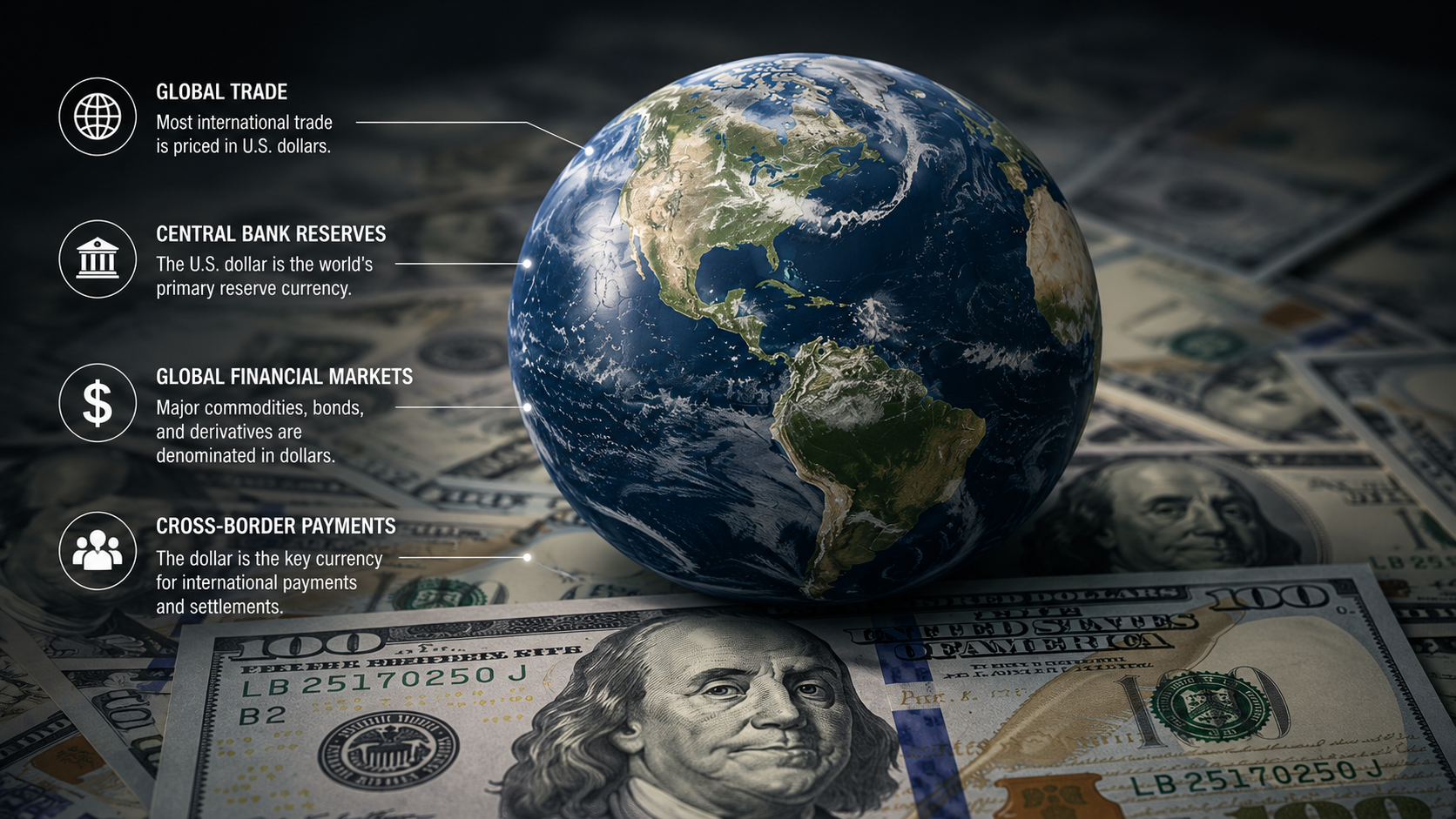
Most people think of the U.S. dollar as America's national currency.
In reality, the dollar functions as the operating system of the global economy.
International trade, commodity markets, sovereign debt, corporate borrowing, and central bank reserves are all deeply connected to the dollar.
More importantly, the modern financial system runs on debt.
And a significant portion of that debt is denominated in U.S. dollars.
Governments borrow in dollars.
Corporations borrow in dollars.
Financial institutions borrow in dollars.
As long as liquidity is abundant, the system operates smoothly.
But when a crisis hits, everything changes.
Markets stop chasing returns and start focusing on survival.
And survival requires liquidity.
That is where the dollar's true strength comes from.
The dollar is not powerful because the United States is perfect.
It is powerful because the global financial system depends on dollar liquidity.
The Four Forces That Drive Capital Into the Dollar
1. During a Crisis, Liquidity Becomes More Important Than Returns
In bull markets, investors focus on maximizing returns.
During crises, priorities shift dramatically.
The question is no longer:
"How much can I make?"
Instead, it becomes:
"Can I survive?"
Businesses need cash to meet obligations.
Banks need liquidity to protect their balance sheets.
Investors need cash to avoid forced selling.
As fear spreads, markets transform into a competition for liquidity.
And the most liquid financial asset in the world remains the U.S. dollar.
2. Dollar Shortages Create Massive Demand

One of the least understood aspects of global finance is the concept of a dollar shortage.
When financial stress increases, banks become more cautious and lending slows down.
At the same time, companies and governments that borrowed in dollars still need to repay those obligations.
This creates a scramble for dollar liquidity.
As demand rises and supply becomes scarce, the value of the dollar increases.
Ironically, a stronger dollar often says less about America's strength and more about global financial stress.
Many investors view a rising dollar as a sign that fear is spreading throughout the system.
3. U.S. Treasuries Remain the Ultimate Safe Haven
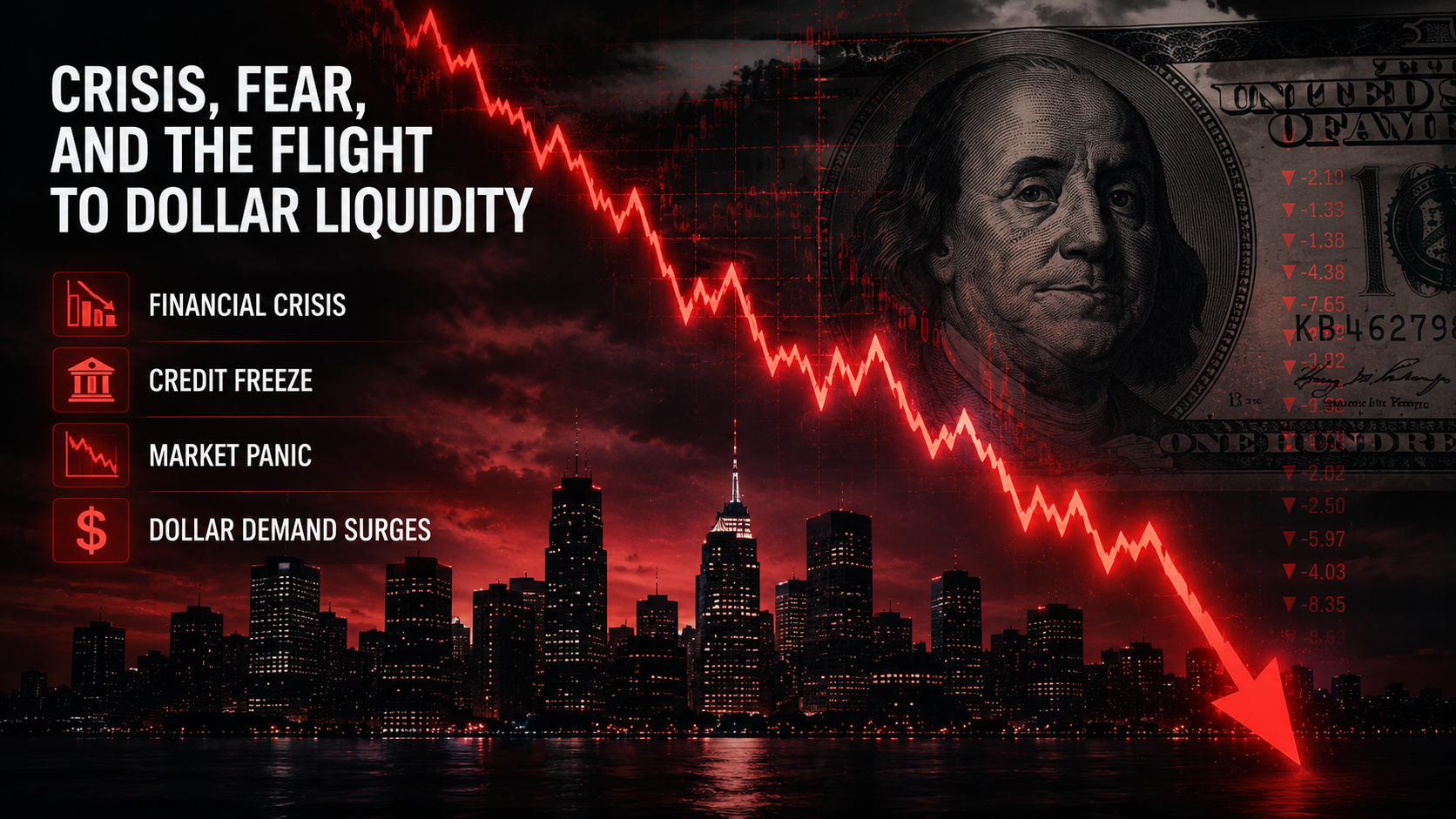
When large pools of capital seek safety, they need more than security.
They need liquidity.
The U.S. Treasury market is the deepest and most liquid financial market in the world.
Pension funds, sovereign wealth funds, central banks, and institutional investors can move billions of dollars into Treasuries without significantly disrupting the market.
This matters during periods of uncertainty.
The greatest fear in a crisis is not necessarily losing money.
It is being unable to access money when it is needed.
That is why capital repeatedly flows toward U.S. Treasuries and the dollar during times of market stress.
4. The Federal Reserve Is the World's Ultimate Liquidity Provider

In moments of extreme panic, global markets ultimately look to one institution.
The Federal Reserve.
The Fed has a unique ability to inject dollar liquidity into the financial system on a massive scale.
During the 2008 Global Financial Crisis and the 2020 pandemic shock, the Federal Reserve played a critical role in stabilizing markets.
Investors understand this reality.
When the global financial system is under pressure, the Federal Reserve remains the final line of defense.
That confidence reinforces the dollar's safe-haven status.
Risks Investors Should Not Ignore
Despite its reputation as a safe-haven asset, the dollar is not without risks.
Markets are forward-looking.
By the time everyone is talking about a strong dollar, fear may already be fully reflected in prices.
Historically, periods of extreme dollar strength have often coincided with important turning points for risk assets.
Investors should also remember that long-term purchasing power is different from short-term safety.
The United States continues to run large fiscal deficits, and money supply growth can eventually erode the value of cash over time.
Holding dollars for protection during a crisis is very different from holding cash indefinitely as a long-term investment strategy.
Understanding that distinction is critical.
What Wealthy Investors See That Others Often Miss
Most retail investors view the dollar through the lens of exchange-rate gains.
Wealthy investors see something entirely different.
They see optionality.
They see purchasing power.
And they see opportunity.
When stocks crash, real estate declines, and panic dominates the market, a strong dollar becomes a powerful tool.
It allows investors to acquire high-quality assets at discounted prices.
This is why experienced investors focus on liquidity before a crisis arrives.
They understand that cash is not merely protection.
It is future buying power.
Many sophisticated investors also avoid leaving large amounts of cash idle.
Instead, they often park capital in short-term Treasury bills or other dollar-denominated assets that generate steady income while preserving liquidity.
The key lesson is simple:
Survival creates opportunity.
Those who maintain liquidity during periods of fear are often the ones who benefit most when confidence eventually returns.
MasterMind's Final Thought
Markets are driven not only by expectations, but by fear.
When uncertainty rises, investors do not search for the highest return.
They search for the highest probability of survival.
That is why money repeatedly flows into the U.S. dollar during times of crisis.
The dollar's strength is not solely a reflection of America's economy.
It is a reflection of a global financial system built around dollar liquidity.
In investing, success is rarely about making perfect predictions.
More often, it is about surviving long enough to take advantage of future opportunities.
Because in every crisis, those who survive are the ones who eventually get to buy the future.
This was MasterMind.
'[Global] Success Blueprints' 카테고리의 다른 글