[Blueprints of Giants #03] Why Warren Buffett Doesn’t Watch Stock Tickers


The Real Meaning of Economic Moats and Contrarian Thinking
Hello, this is Mastermind.
Most people see the stock market as a game of numbers.
Warren Buffett saw something else.
He saw castles.
While millions of investors stared at flashing stock tickers every day — swinging between fear and greed — Buffett kept asking a single question:
“Will this business still matter 10 years from now?”
If Elon Musk saw the world through first principles,
and Jensen Huang saw the future through infrastructure,
then Warren Buffett saw something deeper:
value hidden beneath noise.
And that way of thinking made him one of the greatest investors in history.
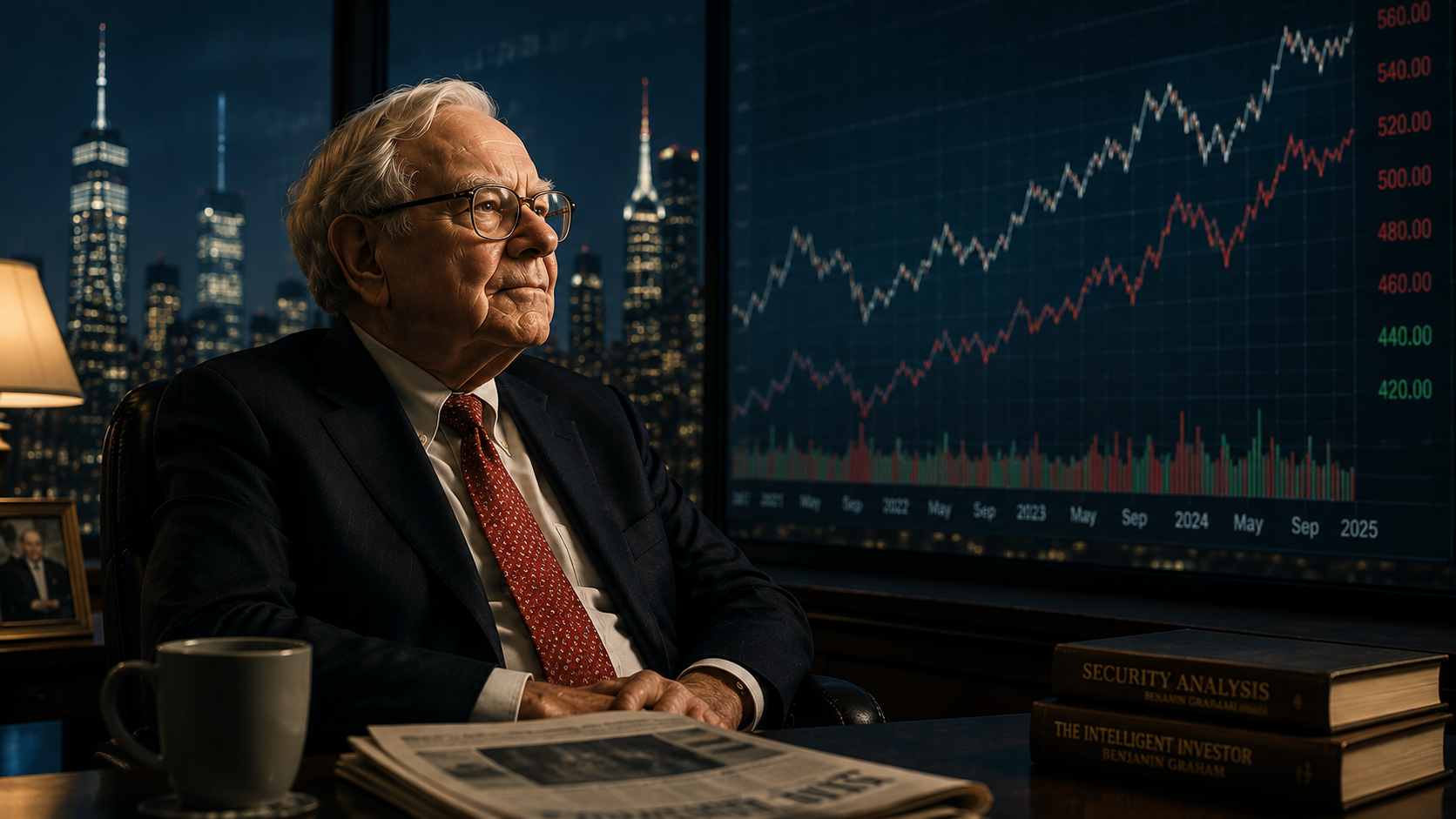
Warren Buffett looking beyond the noise of the market
People call him “The Oracle of Omaha.”
But what truly made Buffett extraordinary was never his trading skill.
It was his mental framework.
While everyone else asked
“Which stock will go up next?”
Buffett asked
“What is this business actually worth?”
That single shift in perspective changed investing forever.
1. Why Humans Become Addicted to Market Noise
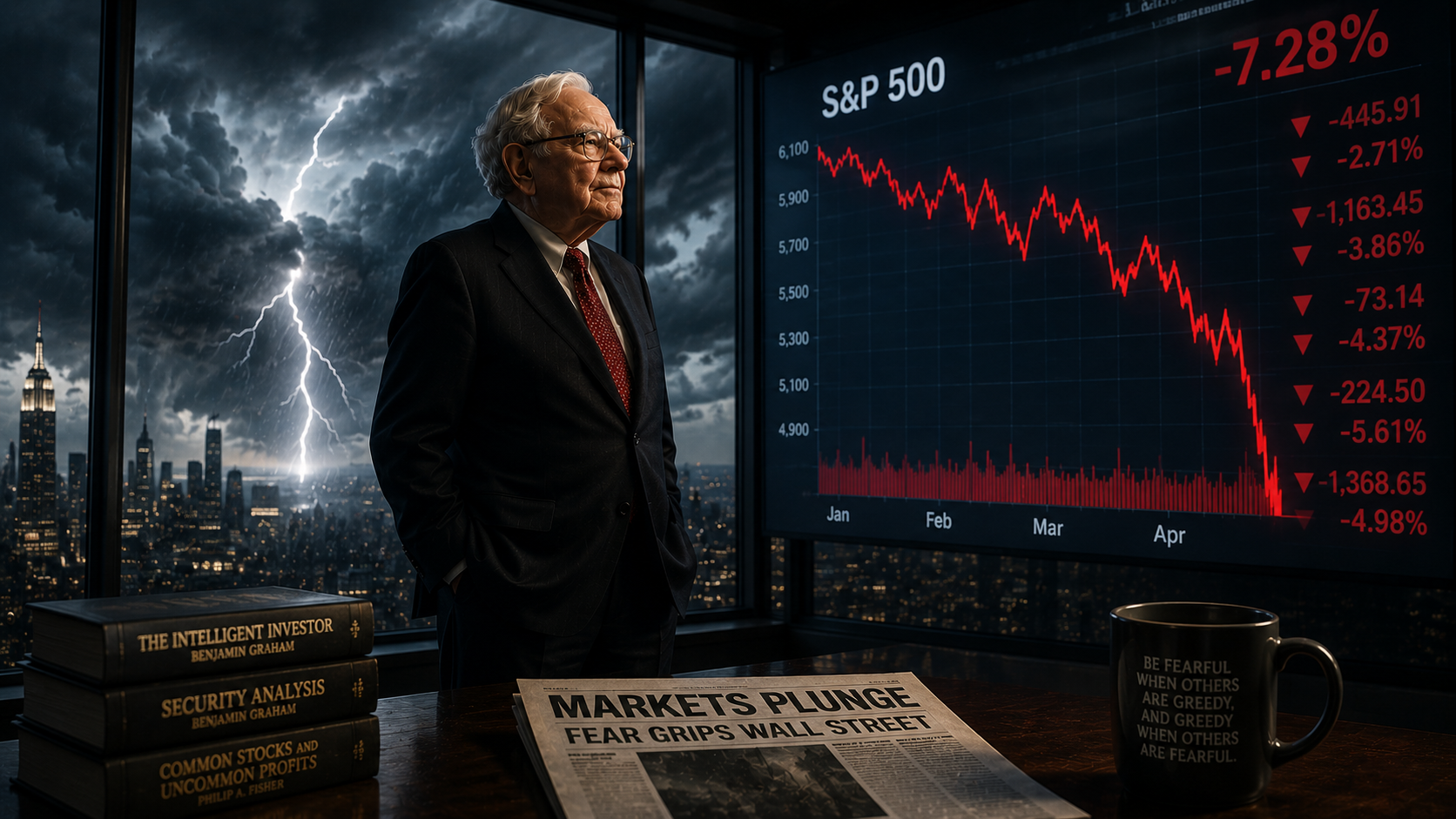
Most investors react to screens.
- Is the stock going up?
- Did positive news just break?
- What is everyone buying right now?
It feels exciting.
But it is also one of the fastest ways to lose money.
Because eventually, people stop analyzing businesses — and start reacting emotionally to crowds.
When markets crash, panic spreads instantly.
“This company is finished.”
“Sell everything before it gets worse.”
Most people follow fear.
Buffett did the opposite.
He stripped away the price action and focused only on the business underneath.
2. Buffett Deconstructed Fear
Warren Buffett focused on one thing:
“Can this business survive the storm?”
And from that question came one of his most famous concepts:
The Economic Moat
① The Secret Behind an Economic Moat
Buffett once said he doesn’t buy stocks.

He buys castles.
A massive castle protected by an economic moat
In medieval times, castles were protected by deep moats designed to keep enemies away.
Buffett believed great businesses work the same way.
The strongest companies build defenses competitors cannot easily cross.
Coca-Cola became one of Buffett’s most iconic investments for this reason.
A brand recognized across the world.
A product people continue to buy decade after decade.
While others wondered
“Will Coca-Cola stock go up tomorrow?”
Buffett asked
“Will people still drink Coca-Cola 10 years from now?”
That difference in thinking created extraordinary long-term returns.
② Cash Becomes a Weapon During Chaos
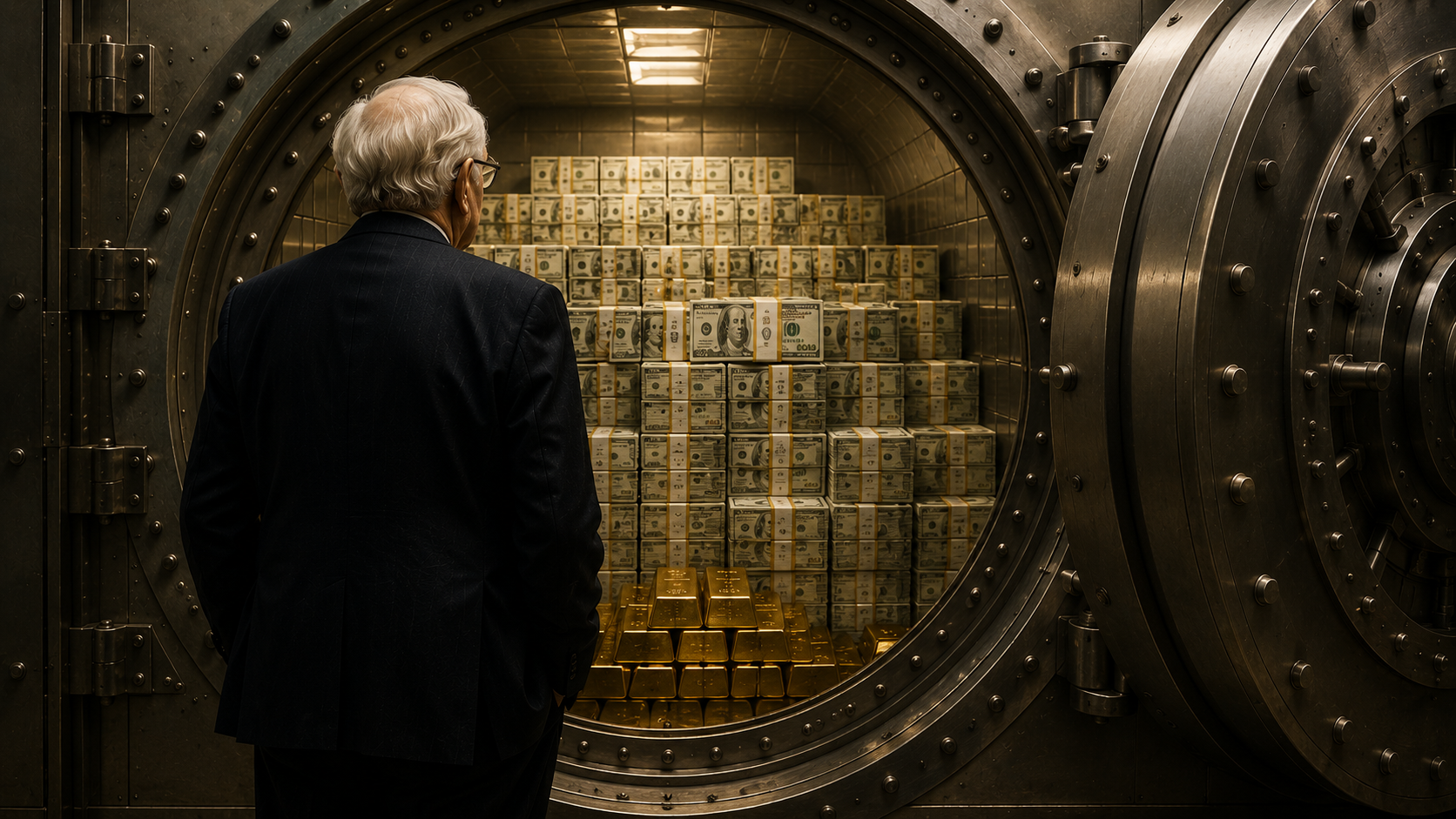
Today, Berkshire Hathaway is holding record levels of cash.
Many investors ask
“Why isn’t Buffett buying aggressively right now?”
But Buffett has always followed the same principle
“Be fearful when others are greedy, and greedy when others are fearful.”
Warren Buffett holding cash while markets become euphoric
Recently, Buffett has even reduced positions in some major technology stocks while building massive cash reserves.
Why?
Because Buffett understands something most investors ignore:
Sometimes the most overpriced asset in the market is not the stock itself —
it is human greed.
3. Buffett’s Real Edge
Buffett’s framework is surprisingly simple.
He removes
- price fluctuations
- short-term predictions
- market sentiment
- emotional reactions
And then asks one final question
“If I could buy this entire business today, what would it truly be worth?”
That philosophy came from his mentor, Benjamin Graham.
Markets behave emotionally.
Value does not.
4. Why Buffett’s Thinking Matters Even More Today
Ironically, Buffett’s approach becomes more powerful during periods of extreme volatility.
Today’s market is filled with
- rising Treasury yields
- inflation fears
- AI bubble debates
- overheated tech stocks
Most people react to every headline and every price swing.
Buffett focuses on something quieter.
“Does this business still have a moat?”
An investor focused on long-term value instead of short-term panic
Interestingly, one of Buffett’s largest positions today is short-term U.S. Treasuries.
Instead of blindly chasing overheated markets, he is patiently waiting while collecting safe yields.
Even the famous Buffett Indicator — the ratio of total market capitalization to GDP — remains near historically elevated levels.
And maybe that forces us to ask harder questions:
- Can my investments survive economic storms?
- Is this decline caused by real business weakness, or temporary macro fear?
- Am I investing rationally — or emotionally?
The moment we begin asking those questions,

we stop becoming price chasers
and start becoming architects of long-term thinking.
Final Thoughts
The real difference is not the size of your portfolio.
It is the quality of your questions.
- How strong is this company’s moat?
- What value still exists beneath market panic?
The world constantly tells us to move faster.
“Buy now.”
“Don’t miss out.”
But history’s greatest investors often did the opposite.
They stepped back when everyone became euphoric.
And quietly moved forward when everyone else panicked.
Maybe the real goal is not chasing every stock chart we see —
but finding something durable enough to survive long after the hype disappears.
One-Line Summary
“Ignore market noise. Buy the castle that will still stand decades from now.”
— Mastermind
'[Global] Success Blueprints' 카테고리의 다른 글
| Why Wall Street Is Suddenly Obsessed With SpaceX IPO (0) | 2026.05.22 |
|---|---|
| NVIDIA Earnings Blowout: $81.6 Billion Revenue Crushes Expectations as AI Boom Accelerates (0) | 2026.05.21 |
| Why Big Tech Is Suddenly Buying Power (0) | 2026.05.20 |
| What Happens When U.S. Treasury Yields Rise? (0) | 2026.05.19 |
| Wall Street Is Betting on Rate Cuts Again — But the Bond Market Isn’t Buying It (0) | 2026.05.18 |