NVIDIA Earnings Blowout: $81.6 Billion Revenue Crushes Expectations as AI Boom Accelerates


Hello, this is MasterMind, where we break down global macro trends, AI, and the future of investing.
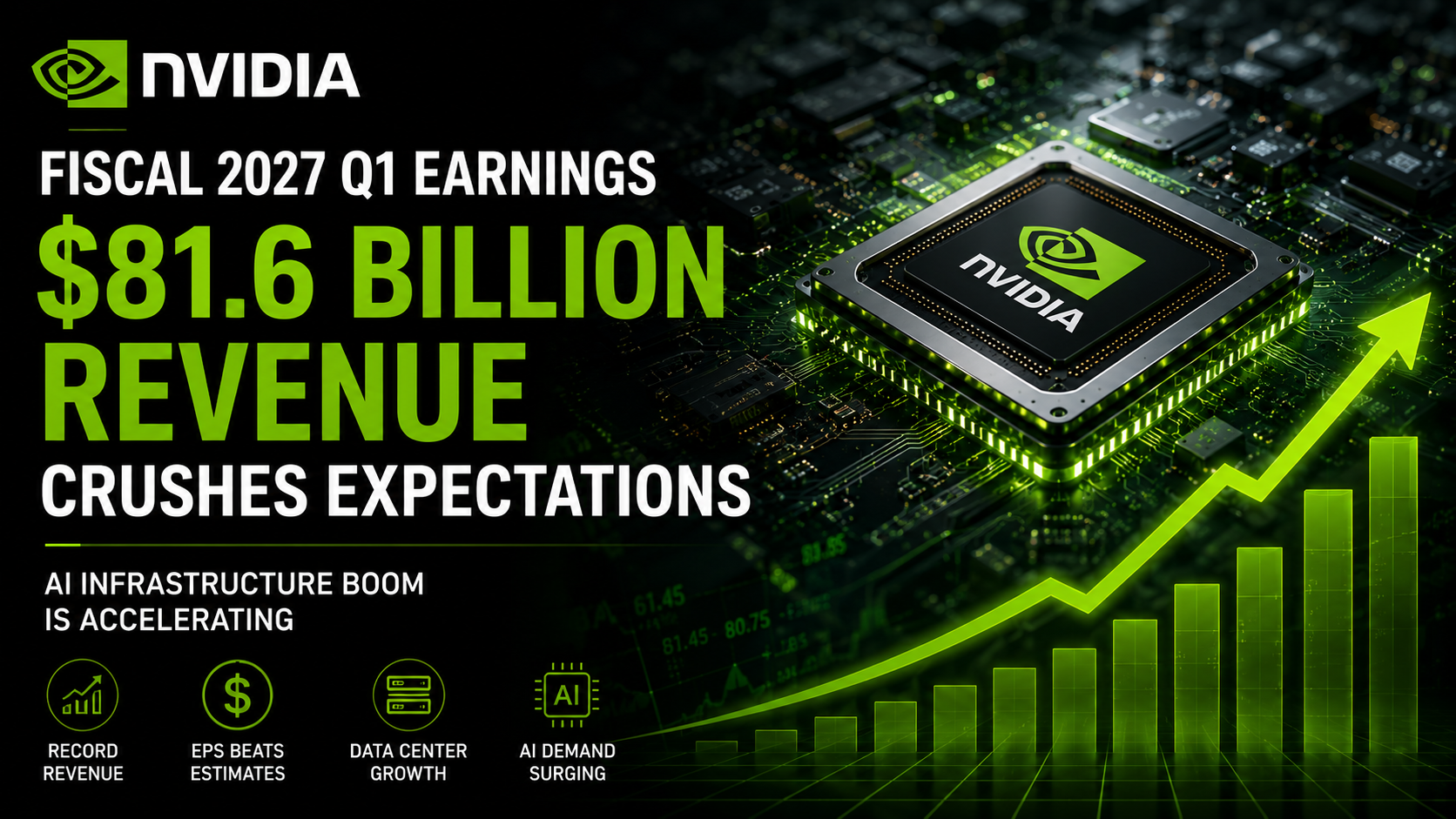
NVIDIA has officially released its fiscal 2027 Q1 earnings results, and the numbers were nothing short of extraordinary.
Not only did the company beat Wall Street expectations across the board, but it also delivered one of the strongest earnings reports in tech history — effectively shutting down much of the recent “AI bubble” narrative.
From explosive data center growth to massive future guidance and Blackwell demand, this earnings report confirmed one thing:
The AI infrastructure race is far from over.
1. NVIDIA Crushed Wall Street Expectations
NVIDIA delivered massive beats on both revenue and earnings per share (EPS).
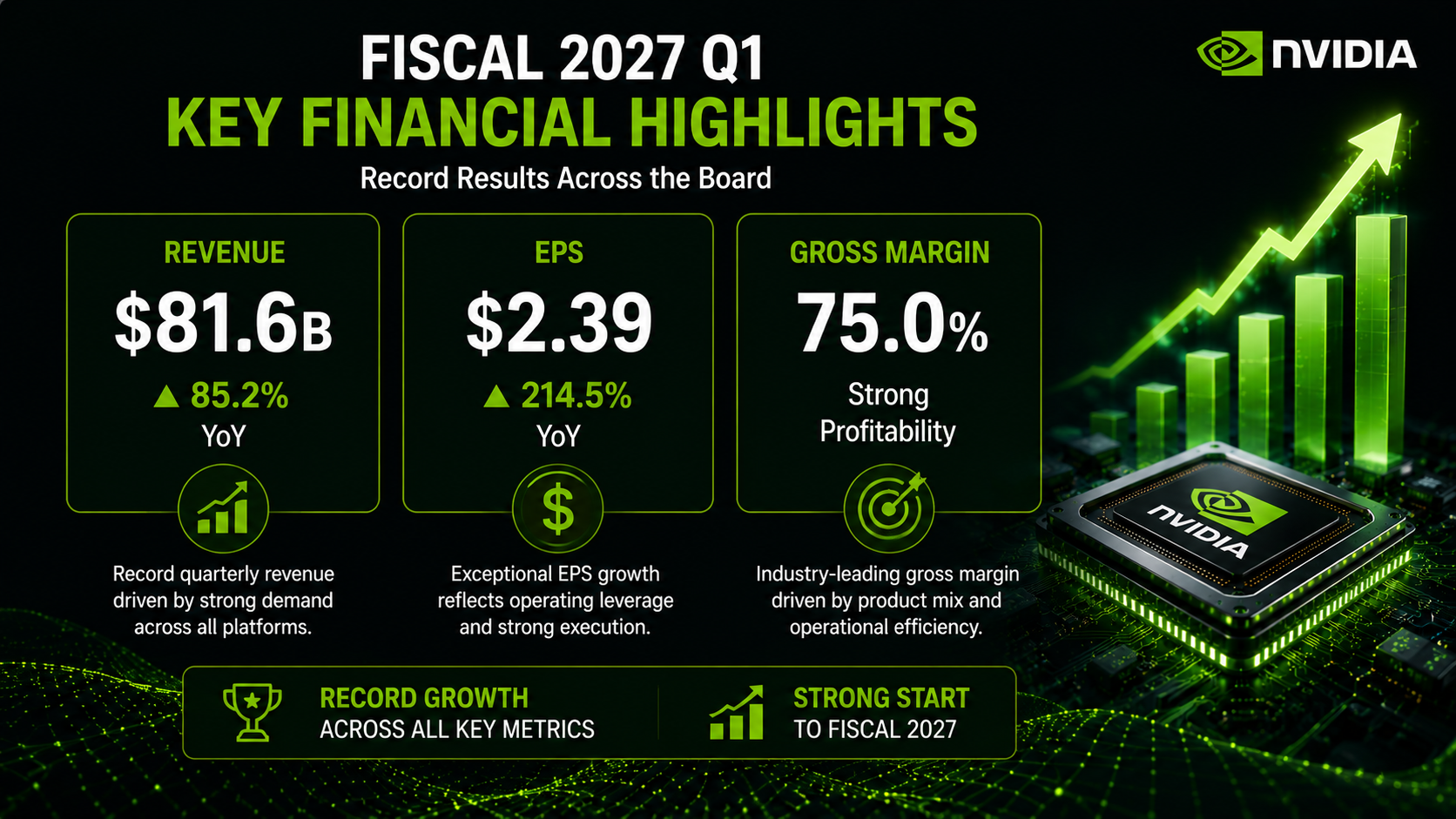
| Revenue | $81.6 Billion | $78.9B–$79.2B | +85.2% |
| EPS | $2.39 | $1.77–$1.78 | +214.5% |
| Gross Margin | 75.0% | ~74.5% | Strong profitability maintained |
The most shocking part was the scale of profitability.
EPS more than tripled year-over-year, proving that NVIDIA is not just growing rapidly — it is scaling with extraordinary efficiency.
For a company already this large, those numbers are historically rare.
2. Data Center Revenue Is the Real Story
The most important takeaway from this report was NVIDIA’s data center business.
- Data Center Revenue: $75.2 Billion
- YoY Growth: +92%
- Share of Total Revenue: Approximately 92%
NVIDIA is no longer simply a GPU company.
It has fully transformed into the backbone of the global AI infrastructure economy.
And this matters because investors have been asking one key question for months:
“Is Big Tech AI spending finally slowing down?”
This earnings report strongly suggests the answer is no.
Companies like Microsoft, Google, Meta, and Amazon continue to aggressively expand AI infrastructure investments.
Demand for NVIDIA AI chips remains incredibly strong, especially for next-generation systems powering large-scale AI models and enterprise workloads.
The AI CAPEX cycle is clearly still accelerating.

3. The Market Was Even More Shocked by NVIDIA’s Guidance
Strong earnings were impressive.
But the real surprise came from NVIDIA’s future outlook.
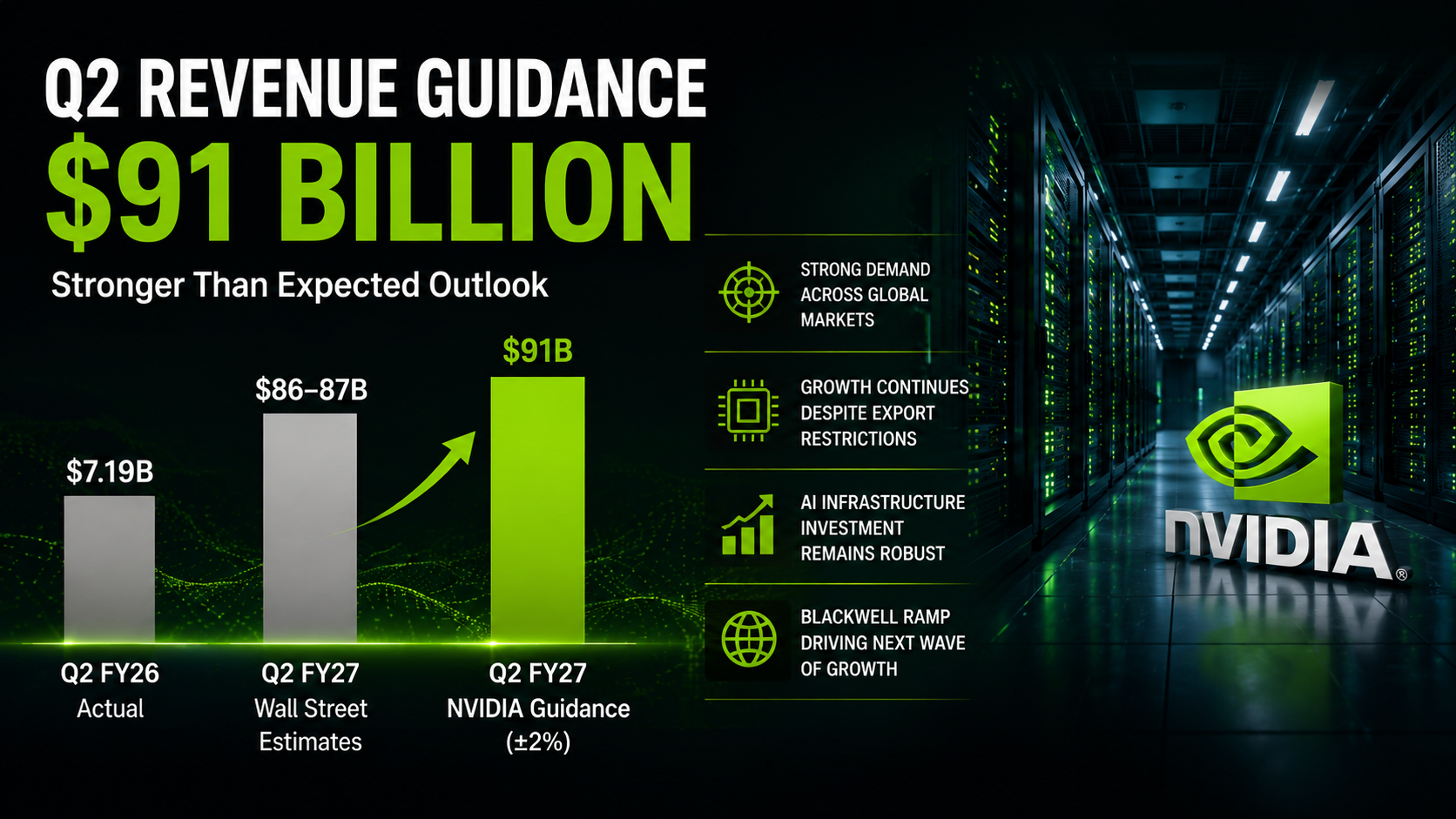
Q2 Revenue Guidance: $91 Billion
NVIDIA projected next-quarter revenue of approximately $91 billion (±2%).
That figure came in well above Wall Street expectations, which were closer to $86B–$87B.
What makes this even more remarkable is that the guidance remains extremely strong despite ongoing U.S. export restrictions affecting China-related data center sales.
In other words, global AI demand alone is powerful enough to sustain extraordinary growth.
4. Blackwell Could Trigger the Next AI Investment Wave
One of the biggest concerns in the market had been whether NVIDIA’s next-generation Blackwell platform could ramp successfully.
During the earnings call, CEO Jensen Huang confirmed that Blackwell production is already scaling and customer deployments are expected to expand later this year.
That statement is critically important.
Why?
Because Blackwell may trigger another massive AI server upgrade cycle across the industry.
If that happens, hyperscalers, enterprises, and governments around the world could dramatically increase AI infrastructure spending once again.
5. NVIDIA Also Announced Aggressive Shareholder Returns
NVIDIA didn’t stop at earnings.
The company also announced major shareholder-friendly actions:
- Quarterly dividend increased 25x
- Additional $8 billion share repurchase authorization approved
These moves signal enormous confidence in future cash flow and long-term growth.
6. Jensen Huang’s Bigger Vision: “Agentic AI”
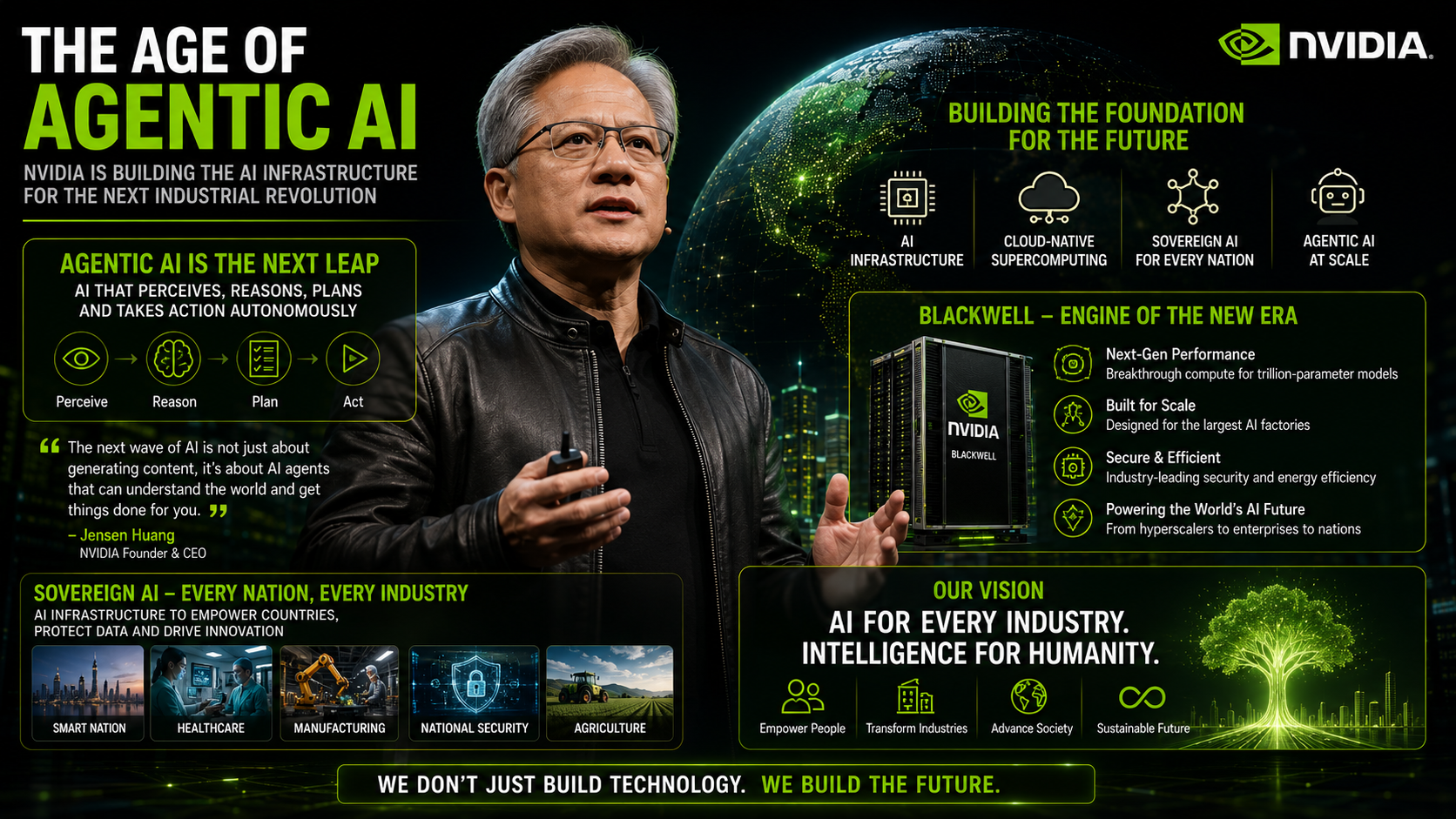
Jensen Huang also emphasized a broader industry transition during the conference call.
According to Huang, the world is now entering the era of “Agentic AI” — AI systems capable of reasoning, decision-making, and autonomous task execution.
He also highlighted the rapid emergence of “Sovereign AI,” where governments and nations build their own AI infrastructure to secure data sovereignty and strategic independence.
That means future AI demand may expand far beyond just U.S. tech giants.
Governments, enterprises, and entire national economies are now entering the AI race.
Final Thoughts: The AI Infrastructure Boom Is Still Early
For months, critics argued that AI spending was overheating and that the market was entering bubble territory.
But NVIDIA’s latest earnings told a very different story.
Capital continues flowing aggressively into AI infrastructure.
And the next phase may be even bigger:
- AI agents
- Enterprise AI automation
- Sovereign AI infrastructure
- Blackwell server upgrades
- Global AI compute expansion
This was not just another “good earnings report.”
It was a reminder that the AI infrastructure war may still be in its early stages.
This was Mastermind.
Disclaimer: This content is for informational purposes only and should not be considered financial advice or investment recommendation.
'[Global] Success Blueprints' 카테고리의 다른 글
| ASML May Be More Important Than Nvidia in the AI Era (0) | 2026.05.22 |
|---|---|
| Why Wall Street Is Suddenly Obsessed With SpaceX IPO (0) | 2026.05.22 |
| [Blueprints of Giants #03] Why Warren Buffett Doesn’t Watch Stock Tickers (0) | 2026.05.21 |
| Why Big Tech Is Suddenly Buying Power (0) | 2026.05.20 |
| What Happens When U.S. Treasury Yields Rise? (0) | 2026.05.19 |