Why Big Tech Is Suddenly Buying Power


The AI revolution is no longer just a technology story.
It’s becoming an energy story.
And quietly, some of the world’s largest tech companies are starting to behave less like software firms — and more like utility companies.
This is MasterMind — designing success through insight.
For years, investors believed the AI race would be won by whoever controlled
- the fastest GPUs,
- the most advanced semiconductors,
- and the largest data centers.
And for a while, that was true.
But something much bigger is now happening beneath the surface.
America’s biggest tech companies are no longer just buying chips.
They’re buying electricity.

Because in the AI era, the real bottleneck may no longer be computing power.
It may be energy itself.
1. AI Is Consuming More Power Than the World Expected
Every time someone opens ChatGPT, thousands of GPUs inside massive data centers immediately begin processing information.
That requires enormous amounts of electricity.
Far more than traditional internet services.
In fact, AI-powered searches can consume roughly 10 times more electricity than a normal web search.
What feels like a simple chatbot is actually powered by infrastructure closer to a continuously running supercomputer.
And demand is exploding.
Fast.
AI models are becoming
- larger,
- more complex,
- and dramatically more energy-intensive every year.
That means
- more servers,
- more cooling systems,
- and much higher electricity consumption.
According to recent Wall Street estimates,
AI data centers could account for nearly half of all new electricity demand growth in the United States over the next several years.
That’s enormous.
And it changes the entire equation for America’s power grid.
Even Silicon Valley is beginning to worry.
Sam Altman has repeatedly warned that future AI systems may require energy breakthroughs the world simply does not have yet.
Silicon Valley wanted infinite AI growth.
Now it’s running into the physical limits of the real world.
2. The AI Race Is Quietly Becoming a Power Race
A few years ago, the AI competition looked simple.
Who could build the best chips?
Who could secure the most GPUs?
Now the question is changing.
“Who can secure enough electricity to run them?”
And that question is creating a serious problem across the United States.
The power grid isn’t ready.
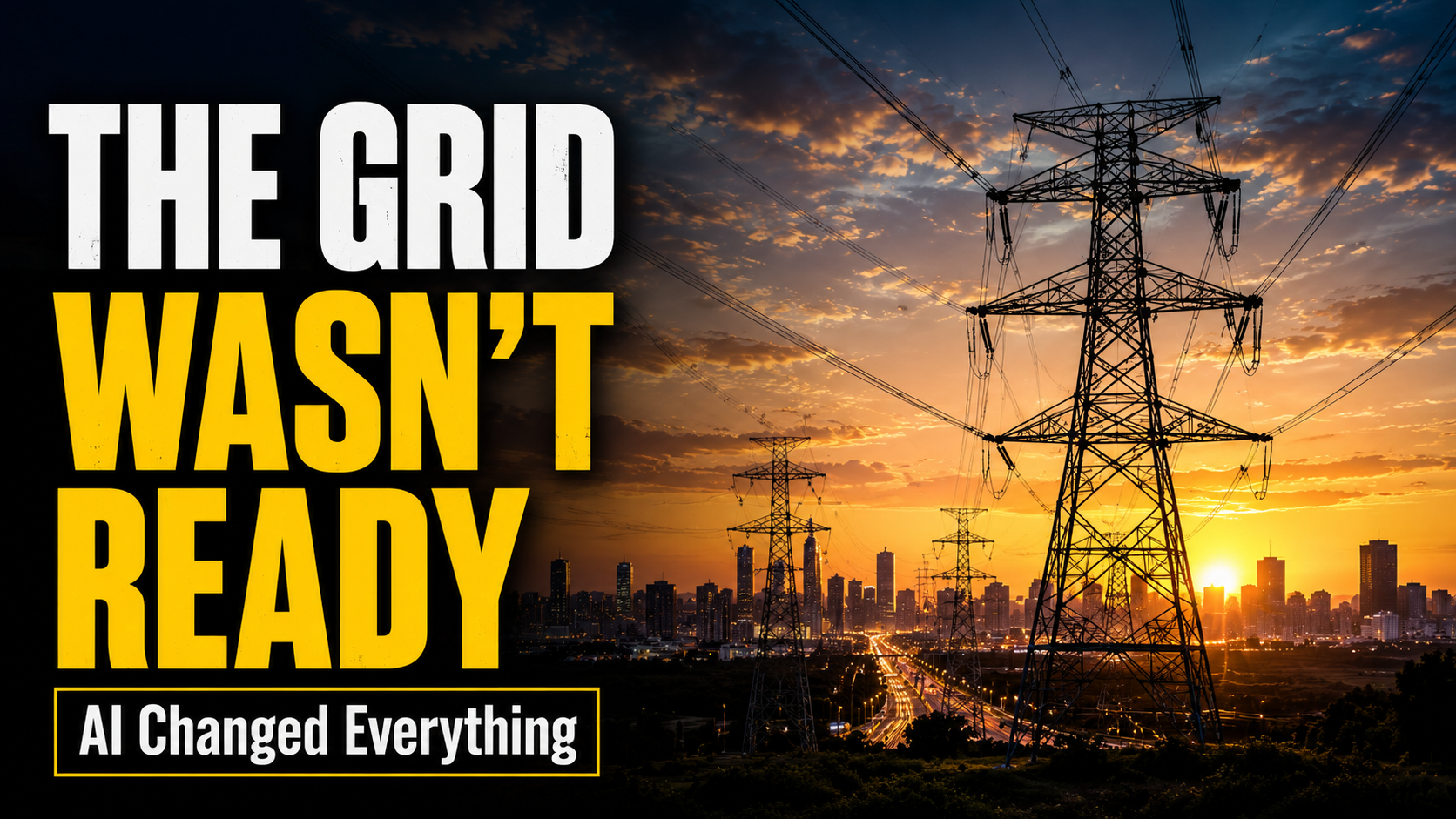
Tech companies are now colliding with something called the Interconnection Queue — the slow and overloaded process required to connect massive new facilities to the American power grid.
A modern AI data center can be built in roughly 12 to 18 months.
Actually connecting it to power?
That can take 5 to 7 years in some regions.
Because America doesn’t just lack power generation.
It also lacks
- transformers,
- transmission lines,
- and grid infrastructure.
That changes the entire equation.
Silicon Valley thought the AI race would be about software.
Instead, it’s becoming a battle over industrial infrastructure.
The power grid wasn’t built for AI.
3. Big Tech Is Now Bringing Its Own Power
To solve the problem, major tech companies are shifting strategies entirely.
Instead of relying on the public grid, they’re moving closer to the source itself.
Some insiders now call this strategy
BYOP — Bring Your Own Power.
Companies like Microsoft, Google, and Amazon are increasingly investing in
- direct energy agreements,
- dedicated infrastructure,
- and data center campuses located next to major power facilities.
The goal is simple.
Lock in electricity before everyone else does.
Because in the AI era, access to power may become just as valuable as access to chips.
4. Why Nuclear Power Is Suddenly Back
For years, nuclear energy was treated like a dying industry.
Now it’s becoming strategically important again.
Why?
Because AI data centers never sleep.
They require
- stable electricity,
- uninterrupted 24/7 power,
- and enormous base-load generation capacity.
Renewables like solar and wind remain important.
But they cannot always provide constant energy at the scale advanced AI systems require.
That reality is pushing Big Tech back toward nuclear energy.
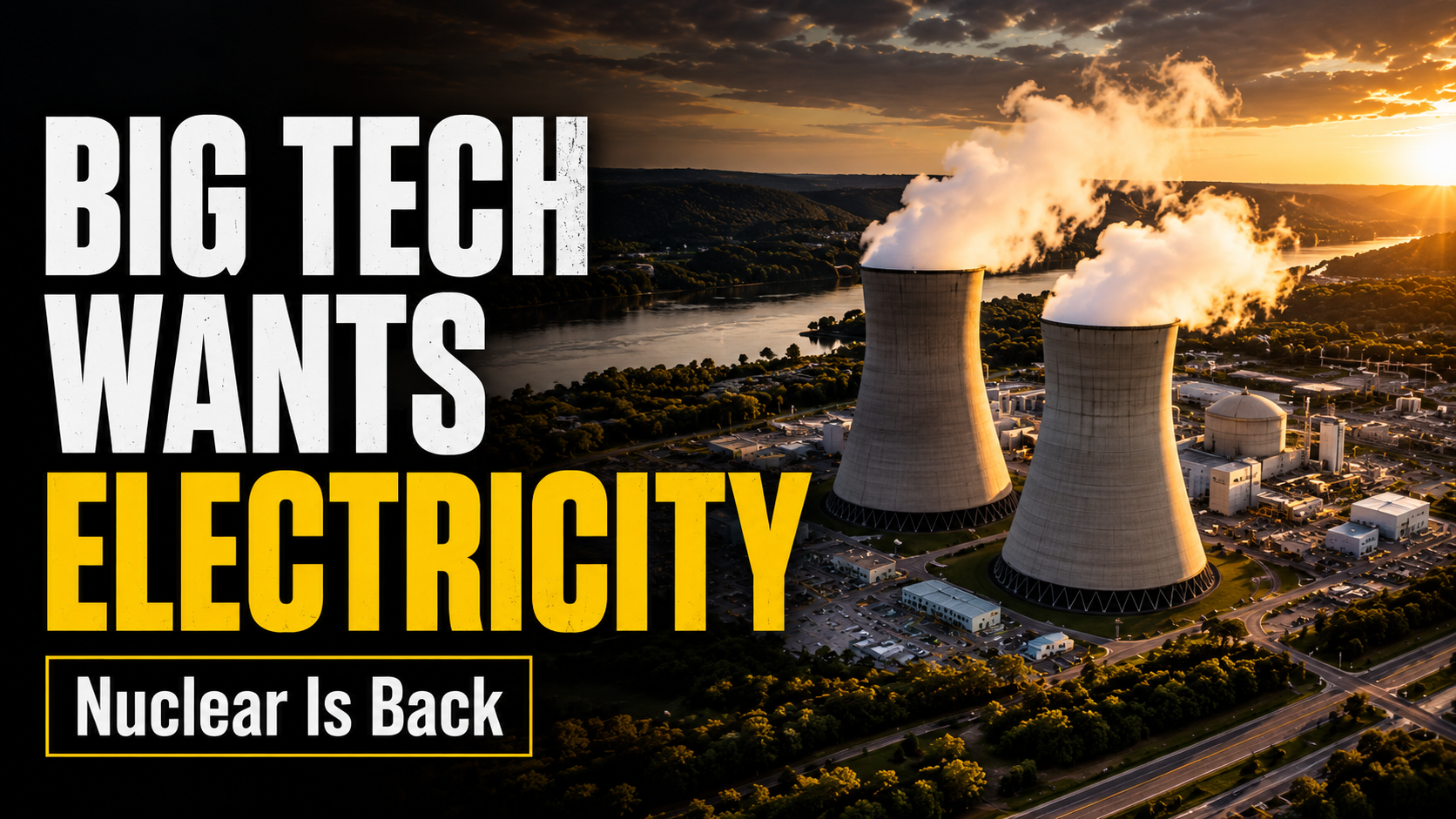
Recently, Amazon made headlines by acquiring a massive data-center campus connected directly to the Susquehanna nuclear power facility in Pennsylvania.
Meanwhile, Microsoft signed agreements tied to reviving parts of the Three Mile Island nuclear site.
And Google has explored partnerships involving SMR technology — small modular nuclear reactors designed for scalable future power generation.
An industry once considered “old economy” is suddenly becoming critical to the future of AI.
Nuclear isn’t back because Silicon Valley suddenly loves nuclear energy.
It’s back because AI needs reliable power.
Constantly.
5. But Natural Gas May Be the Immediate Winner
There’s one major problem with nuclear energy
Time.
Building or restarting nuclear facilities can take years — sometimes more than a decade.
But AI infrastructure growth is happening right now.
Big Tech companies can’t wait ten years for electricity.
And that’s creating another major shift.
Toward natural gas.

Because natural gas infrastructure can be
- deployed faster,
- scaled more realistically,
- and integrated into the grid immediately.
That reality is already reshaping Silicon Valley’s climate ambitions.
Recently, Google revealed that its greenhouse gas emissions surged dramatically as AI-related electricity demand accelerated across its infrastructure.
Silicon Valley wanted clean energy.
AI forced it back into the industrial world.
That’s why many investors now believe the AI boom could become one of the biggest long-term drivers for
- natural gas infrastructure,
- grid expansion,
- transformer manufacturing,
- and industrial power equipment.
The AI revolution may be reviving industries Wall Street had already forgotten.
6. The Smart Money Has Already Started Moving
Financial markets are already beginning to price this shift in.
And the smartest capital on Wall Street is no longer focused only on semiconductors.
Recently, Microsoft partnered with BlackRock and infrastructure investor GIP to launch a massive investment initiative focused on AI-related energy and infrastructure development.
That’s not a small signal.
That’s institutional capital preparing for a long-term transformation.
Money is quietly flowing toward
- power equipment manufacturers,
- uranium and nuclear firms,
- natural gas infrastructure,
- cooling technologies,
- and grid modernization projects.
The internet boom of the 1990s built fiber-optic networks.
The AI boom may end up rebuilding America’s power infrastructure.

And Wall Street knows it.
Final Thought
Markets usually obsess over the most visible technologies first.
But historically, some of the biggest fortunes were built around the infrastructure supporting those technologies.
During gold rushes, fortunes were often made selling the picks and shovels.
The same pattern may be unfolding again today.
While most investors remain hyper-focused on AI software and semiconductors,
capital is quietly flowing toward the energy systems powering the entire AI economy.
And the market may only be beginning to understand how large that shift could become.
This is MasterMind — designing success through insight.
Disclaimer: This article is intended for educational and informational purposes only and should not be considered financial or investment advice.
'[Global] Success Blueprints' 카테고리의 다른 글