Why Wall Street Is Suddenly Obsessed With SpaceX IPO


While most investors remain focused on AI stocks like Nvidia and mega-cap tech, another story has quietly started shaking Wall Street.
And this one may be even bigger.
While no official IPO filing has been confirmed, speculation surrounding a future SpaceX listing continues to intensify.
According to recent reports and growing market expectations, Elon Musk’s SpaceX could be moving closer to a potential Nasdaq IPO.
If it happens, it would not simply be another tech listing.
It could become one of the largest and most influential IPOs in modern market history.
More importantly, Wall Street is no longer viewing SpaceX as “just a rocket company.”
The company is increasingly being discussed as a next-generation AI infrastructure giant.
And that changes everything.
SpaceX Is No Longer Just a Space Company
For years, many people viewed SpaceX as a futuristic aerospace company focused on rockets and Mars missions.
But the company has evolved far beyond that image.
Today, SpaceX sits at the center of several critical industries
- Satellite communications
- Global internet infrastructure
- Defense technology
- AI networking
- Space transportation
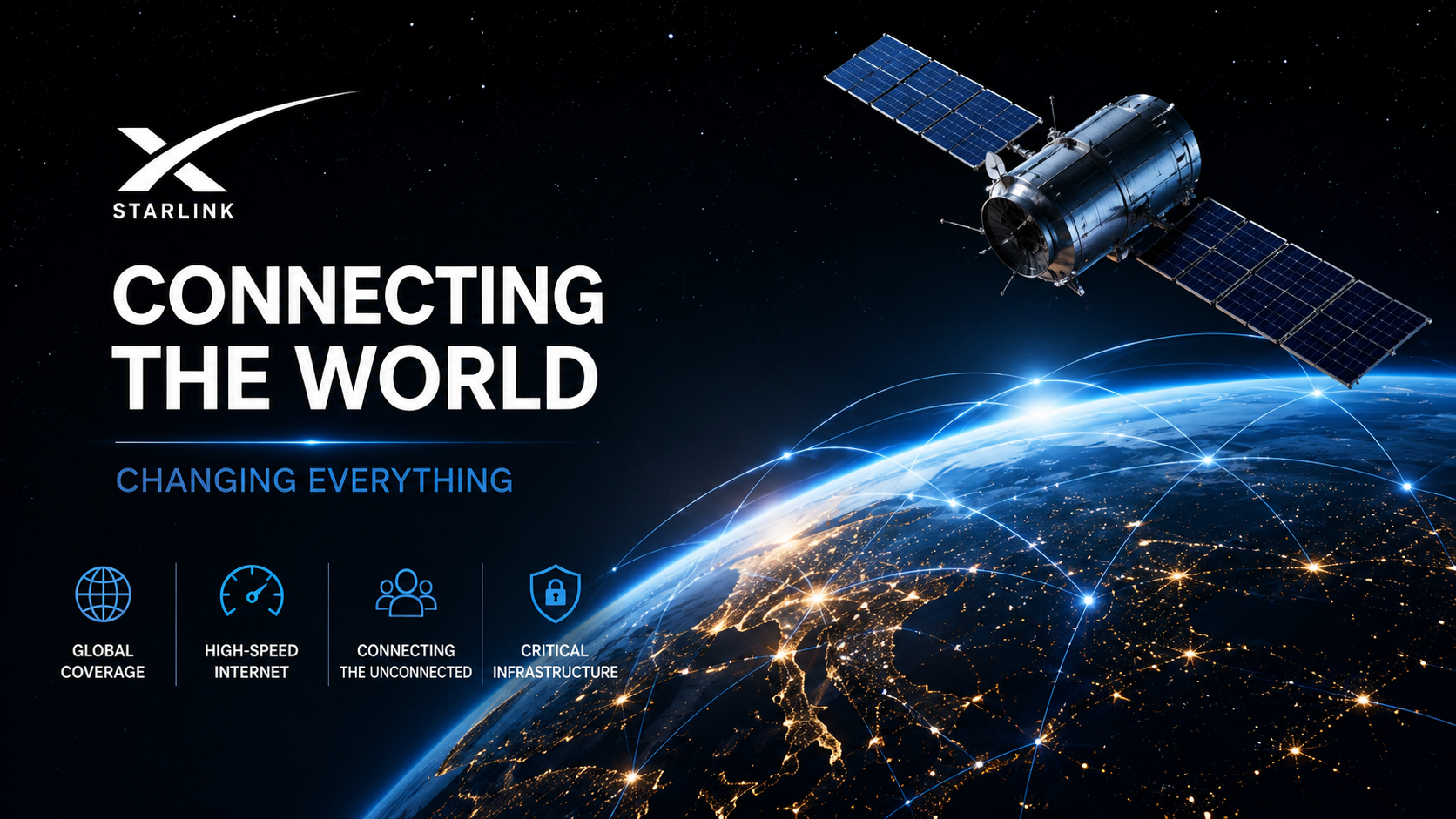
The biggest driver behind this shift is Starlink.
Starlink is building a massive low-Earth-orbit satellite network designed to provide global internet coverage — including remote regions where traditional infrastructure cannot reach.
But Wall Street’s interest goes far beyond consumer internet access.
The real story is infrastructure.
After the war in Ukraine, Starlink demonstrated something extremely important
Modern communication networks can become strategic geopolitical assets.
Military operations, drone coordination, disaster response, and battlefield communications increasingly depend on resilient satellite-based networks.
That realization fundamentally changed how investors view SpaceX.
It is no longer being valued purely as an aerospace company.
It is increasingly being viewed as a critical infrastructure platform.
The AI Angle Is What Really Has Wall Street’s Attention
The AI boom has created enormous demand for
- GPUs
- Data centers
- Electricity
- High-speed connectivity
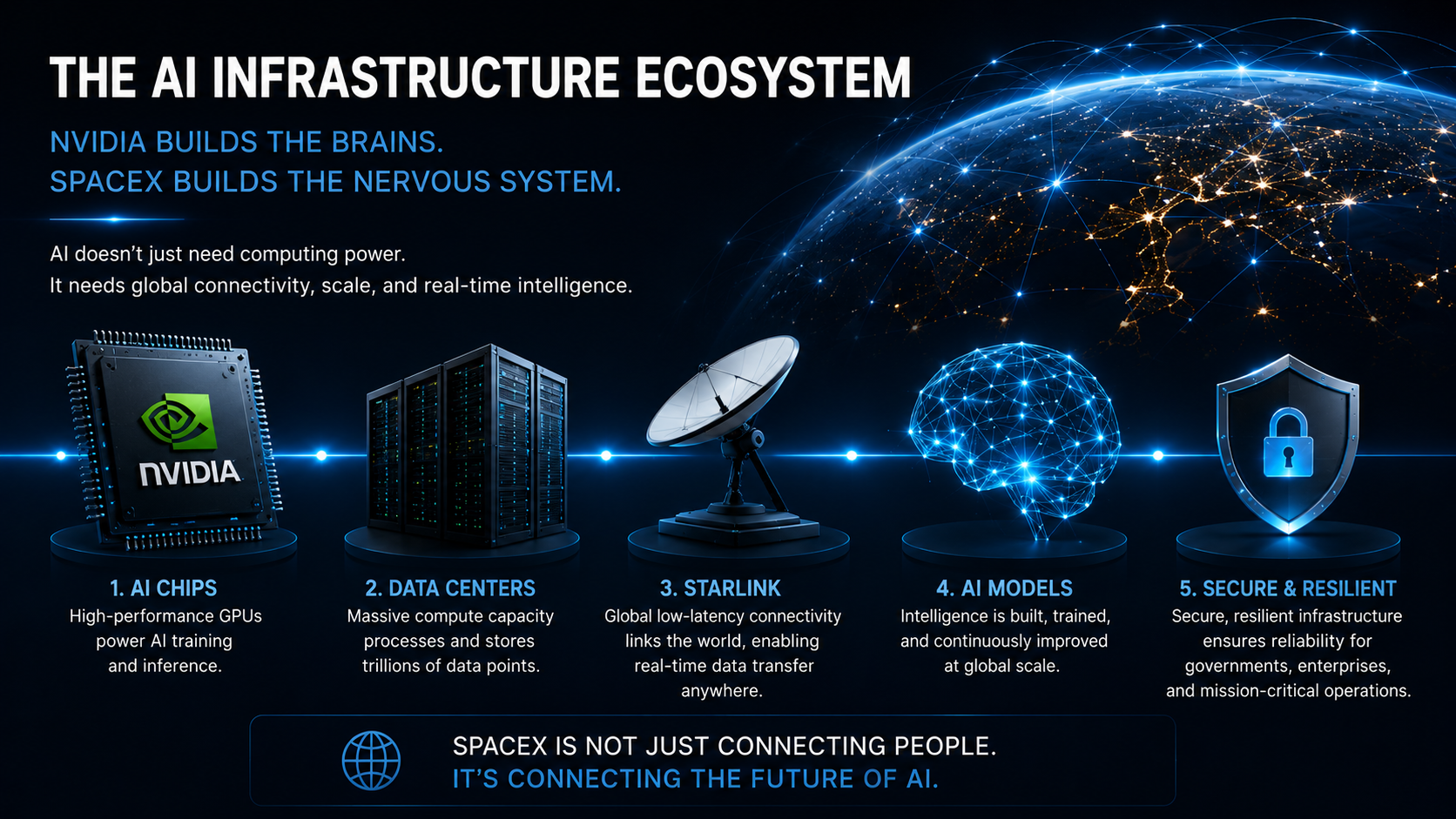
Most investors immediately think of Nvidia when discussing AI infrastructure.
But Wall Street is starting to think one layer deeper.
AI does not only require computing power.
It also requires a global network capable of moving massive amounts of data quickly and reliably.
That is where SpaceX enters the conversation.
A growing number of analysts are beginning to frame the company this way
“Nvidia builds the brains of AI.
SpaceX could help build the nervous system.”
That comparison may sound dramatic, but the logic is becoming harder for investors to ignore.
As AI systems become more distributed and data-intensive, global connectivity infrastructure becomes increasingly valuable.
And few companies possess a network as ambitious as Starlink.
At the same time, markets are closely watching the growing relationship between SpaceX and Elon Musk’s AI company, xAI.
Even without a formal merger, the strategic overlap between
- AI models
- Data centers
- Satellite connectivity
- Global communications infrastructure
has become one of the most discussed themes in investment circles.
In many ways, Starlink is increasingly being viewed as the cash engine that could help fund Musk’s broader AI ambitions.
Some analysts even believe SpaceX is evolving into something far larger than a traditional aerospace company
An integrated AI infrastructure ecosystem.
Why the Timing Makes Sense
The timing of these IPO discussions is not accidental.
Markets are currently rewarding companies tied to
- AI infrastructure
- advanced technology
- data networks
- future industrial systems
better than almost any other sector.
In that environment, a SpaceX IPO could attract extraordinary investor demand.
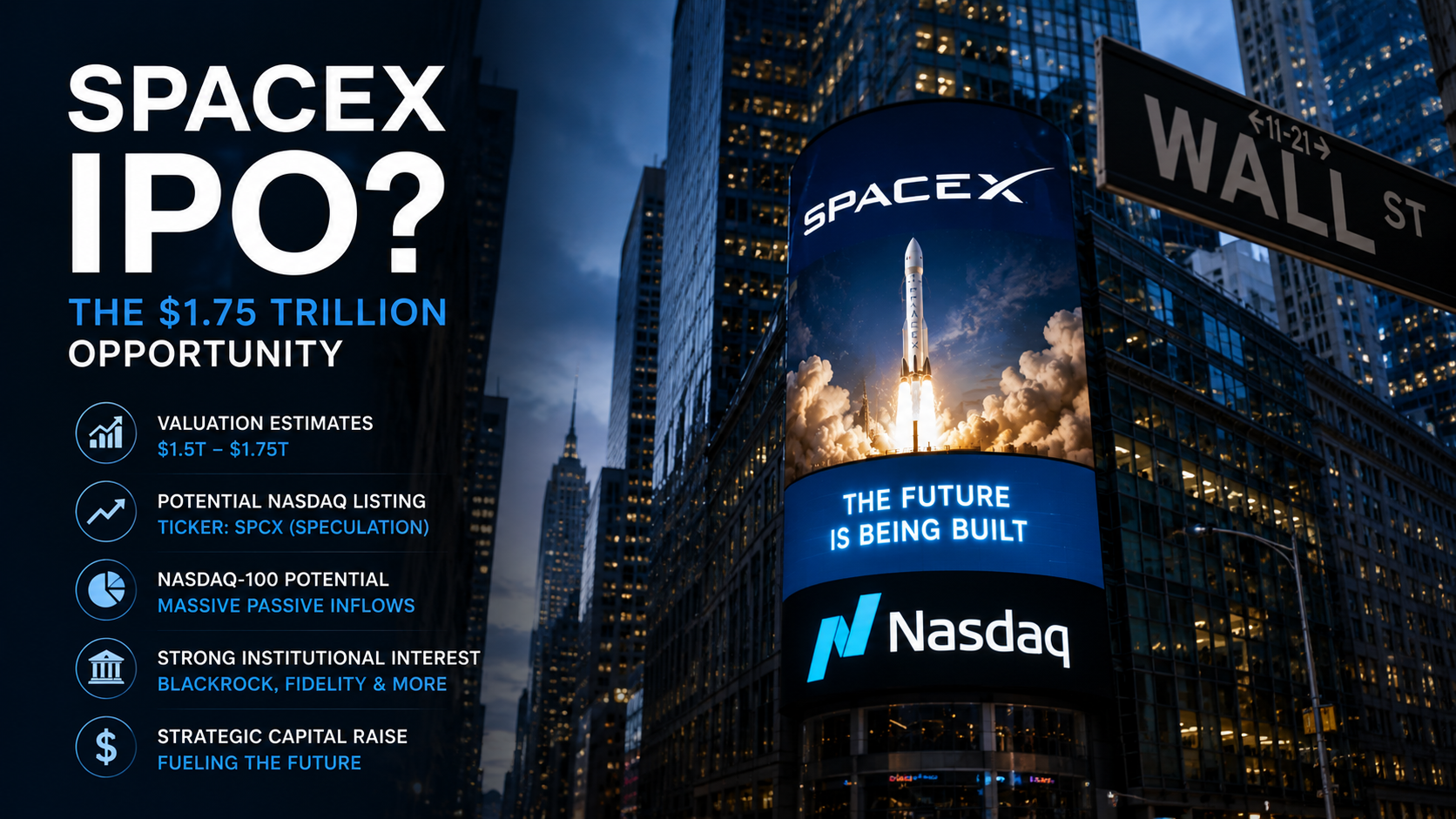
Some market estimates have placed the company’s valuation between $1.5 trillion and $1.75 trillion.
If those numbers materialize, SpaceX could become one of the most valuable companies ever to go public.
Reports and speculation surrounding
- a possible Nasdaq listing
- the ticker symbol “SPCX”
- large-scale capital raising
have only intensified investor attention.
Some analysts also believe a future Nasdaq-100 inclusion could trigger massive passive fund inflows into SpaceX shares through ETFs and institutional index tracking.
For Elon Musk, the logic is straightforward.
A public offering could provide
- massive funding for Starship development
- rapid expansion of Starlink
- aggressive AI infrastructure investments
- defense and communications growth
all while market appetite for AI-related assets remains extremely strong.
The Starship Factor
There is another critical piece many investors overlook
Starship.
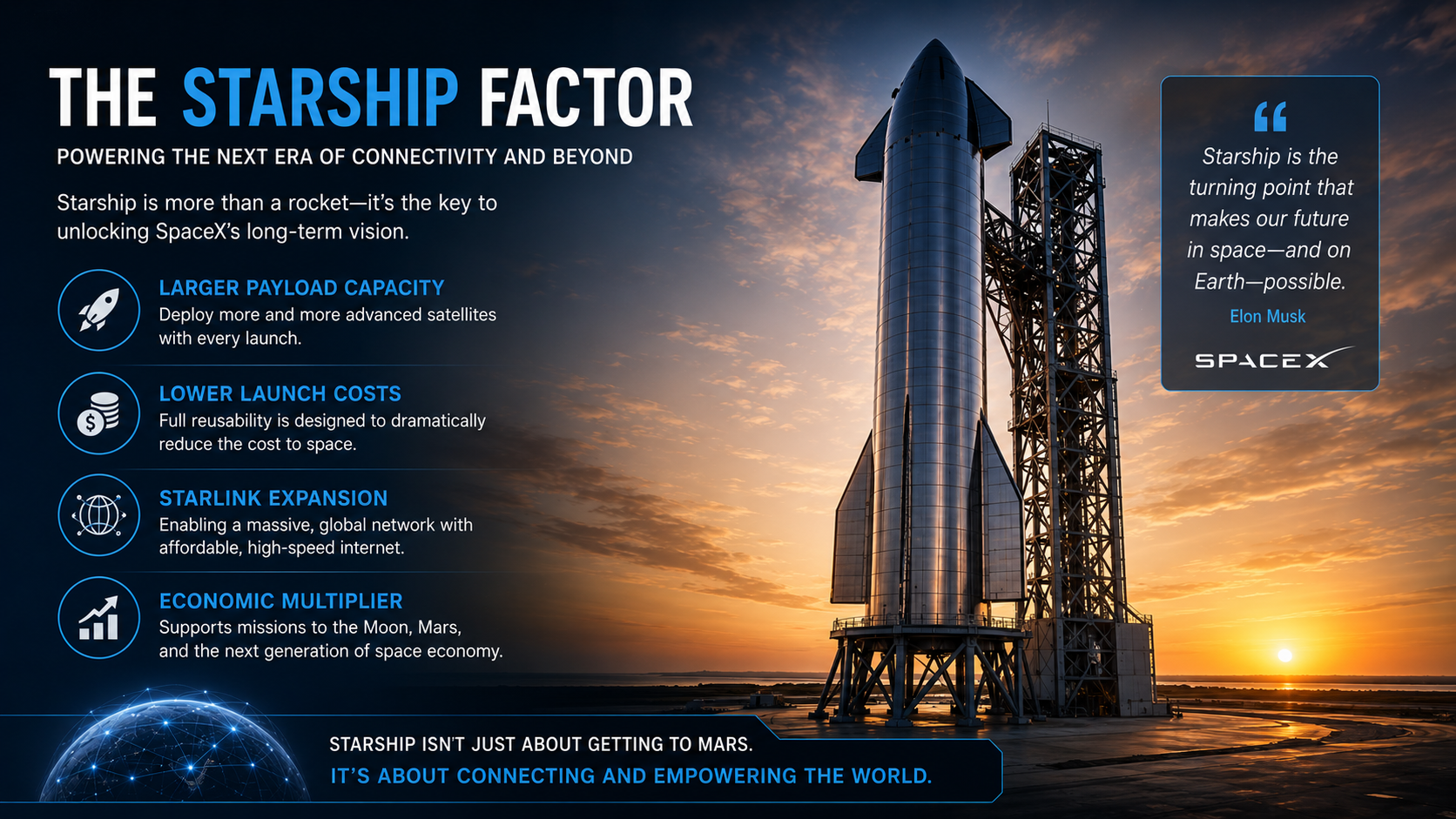
SpaceX’s next-generation rocket is not just about Mars missions.
It is deeply tied to the economics of future Starlink expansion.
Launching larger and more advanced satellites at scale is expected to depend heavily on Starship becoming commercially viable.
That means SpaceX’s long-term valuation is connected not only to AI and connectivity — but also to whether Starship can succeed operationally and economically.
If Starship scales successfully, it could dramatically lower launch costs and strengthen SpaceX’s infrastructure advantage.
If it struggles, the company’s broader growth assumptions could face pressure.
Why Wall Street Is Nervous
Excitement is only one side of the story.
The risks are enormous too.
Many investors believe current valuation expectations may already reflect extremely aggressive AI optimism.
Others worry about the massive capital requirements tied to
- AI infrastructure
- satellite expansion
- data center construction
The company’s future ambitions will require staggering amounts of money.
Recent reports have also highlighted the growing scale of AI infrastructure spending surrounding Musk’s ecosystem, including major compute-related agreements connected to rising AI demand.
There is also the “Musk factor.”
Wall Street understands that Elon Musk’s leadership can drive innovation at extraordinary speed.
But investors also recognize the governance risks that often come with founder-dominated companies.
That combination creates both excitement and caution.
And if SpaceX eventually moves toward a public listing, volatility could be extreme.
The Bigger Picture
The most important takeaway may have nothing to do with rockets.
For years, investors believed the biggest winners of the AI era would simply be semiconductor companies.
But the market narrative is evolving.
The next major battle may revolve around infrastructure
- who controls the networks,
- who moves the data,
- and who powers the global AI economy.
That is why SpaceX matters.
This is no longer just a story about space exploration.
It is becoming a story about the future architecture of global technology itself.
And Wall Street is paying very close attention.
Investors may still debate whether SpaceX is overvalued.
But one thing is becoming increasingly difficult to ignore
The future AI economy may depend just as much on infrastructure as it does on intelligence itself.
— MasterMind
Decoding the future of markets and technology
'[Global] Success Blueprints' 카테고리의 다른 글
| Why America Is Obsessed With Quantum Computing (0) | 2026.05.23 |
|---|---|
| ASML May Be More Important Than Nvidia in the AI Era (0) | 2026.05.22 |
| NVIDIA Earnings Blowout: $81.6 Billion Revenue Crushes Expectations as AI Boom Accelerates (0) | 2026.05.21 |
| [Blueprints of Giants #03] Why Warren Buffett Doesn’t Watch Stock Tickers (0) | 2026.05.21 |
| Why Big Tech Is Suddenly Buying Power (0) | 2026.05.20 |