[Insight] The Internet Isn’t in the Cloud — It’s Under the Ocean


This is Mastermind.
your partner in designing success.
Every time we watch Netflix, trade U.S. stocks, use AI tools, or send messages online, most people assume the data is traveling through satellites in space.
But the reality is completely different.
Nearly 99% of the world’s international internet traffic actually moves through cables hidden deep beneath the ocean.

Your YouTube videos, AI data, financial transactions, cloud services, and stock trades are all traveling through massive submarine fiber-optic cable systems laid across the seafloor.
Today, these undersea cables have become one of the most important hidden infrastructures behind the global economy and the rise of artificial intelligence.
1. Why the Internet Still Depends on Undersea Cables
Even with the rise of satellite internet services like Starlink, submarine cables remain significantly faster and more stable for global data transmission.
In financial markets, speed means money.
High-frequency trading firms in New York and London spend enormous amounts of money competing for milliseconds of faster data transfer.
Submarine fiber-optic cables allow massive amounts of information to move at near light speed with lower latency than satellites.
Satellites are still affected by weather conditions and atmospheric limitations.
Undersea cables are not.
The “wireless” digital world we experience every day is actually built on physical infrastructure resting at the bottom of the ocean.
2. The Massive Infrastructure Beneath the Sea
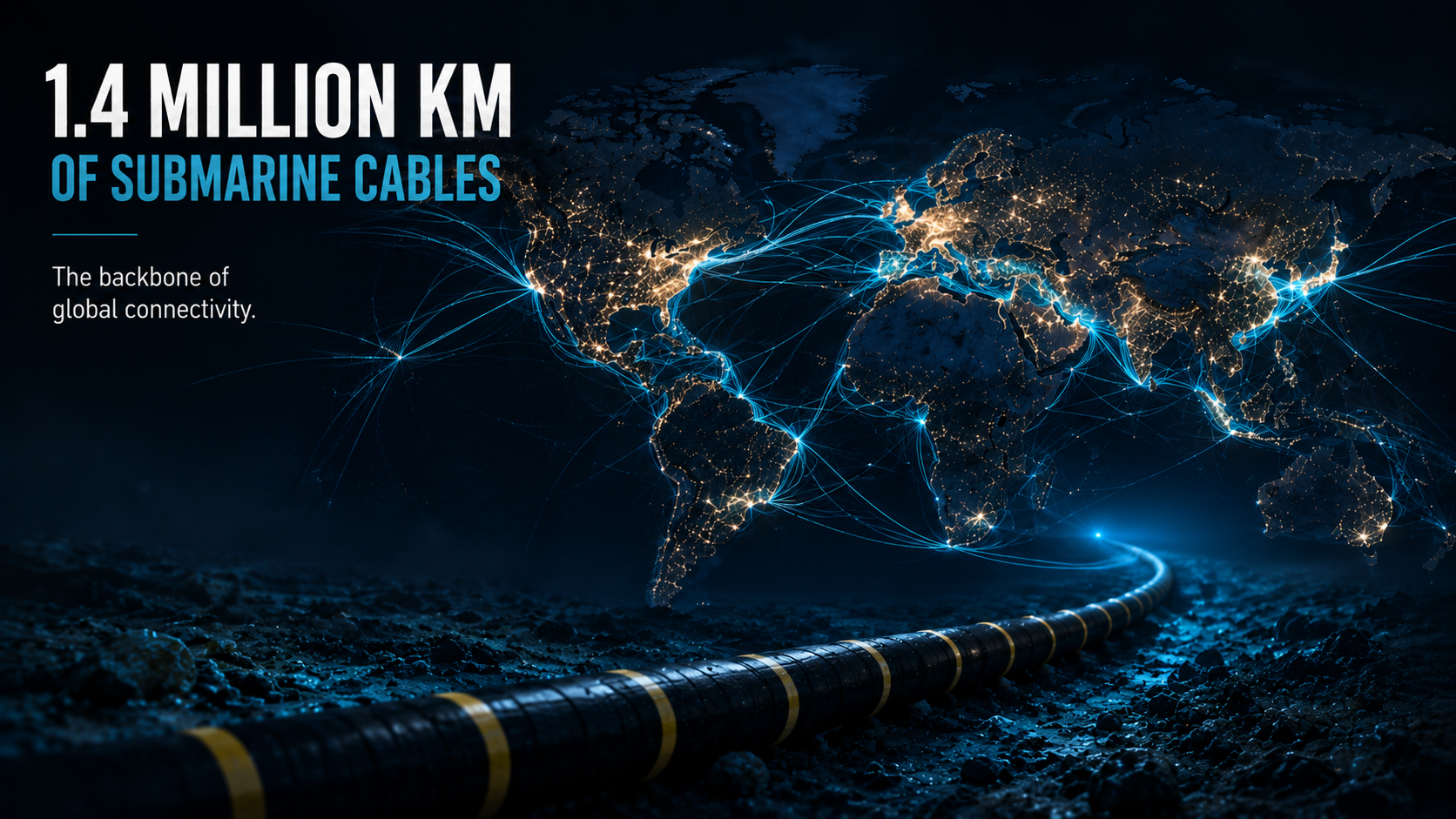
Today, hundreds of submarine cable systems connect continents across the globe.
Combined, these cables stretch more than 1.4 million kilometers — enough to wrap around Earth over 30 times.
These networks connect:
- North America and Europe
- Asia and the United States
- Korea, Japan, Southeast Asia, and beyond
Although they may look like thin lines on a map, submarine cables are heavily armored with:
- Steel
- Copper
- Waterproof protection layers
- Specialized coatings
They are designed to survive deep-sea pressure, harsh environments, and physical damage.
The internet is far more physical than most people realize.
Behind every cloud service is a real-world network hidden beneath the ocean.
3. Big Tech Is Taking Control
In the past, governments and telecom companies built most submarine cable systems.
Today, the biggest investors are no longer telecom operators.
They are Big Tech companies like:
- Meta
- Amazon
- Microsoft
The reason is simple.
AI and cloud computing.
AI models are becoming larger.
And the amount of global data traffic is exploding.
Recently, major technology companies have dramatically increased investments in submarine cable infrastructure to support future AI demand.
Google alone has invested heavily in large-scale projects connecting Japan, Taiwan, Guam, Hawaii, and the United States.
Building AI data centers is important.
But without controlling the infrastructure that moves data between them, long-term dominance becomes far more difficult.
Big Tech companies are no longer just users of internet infrastructure.
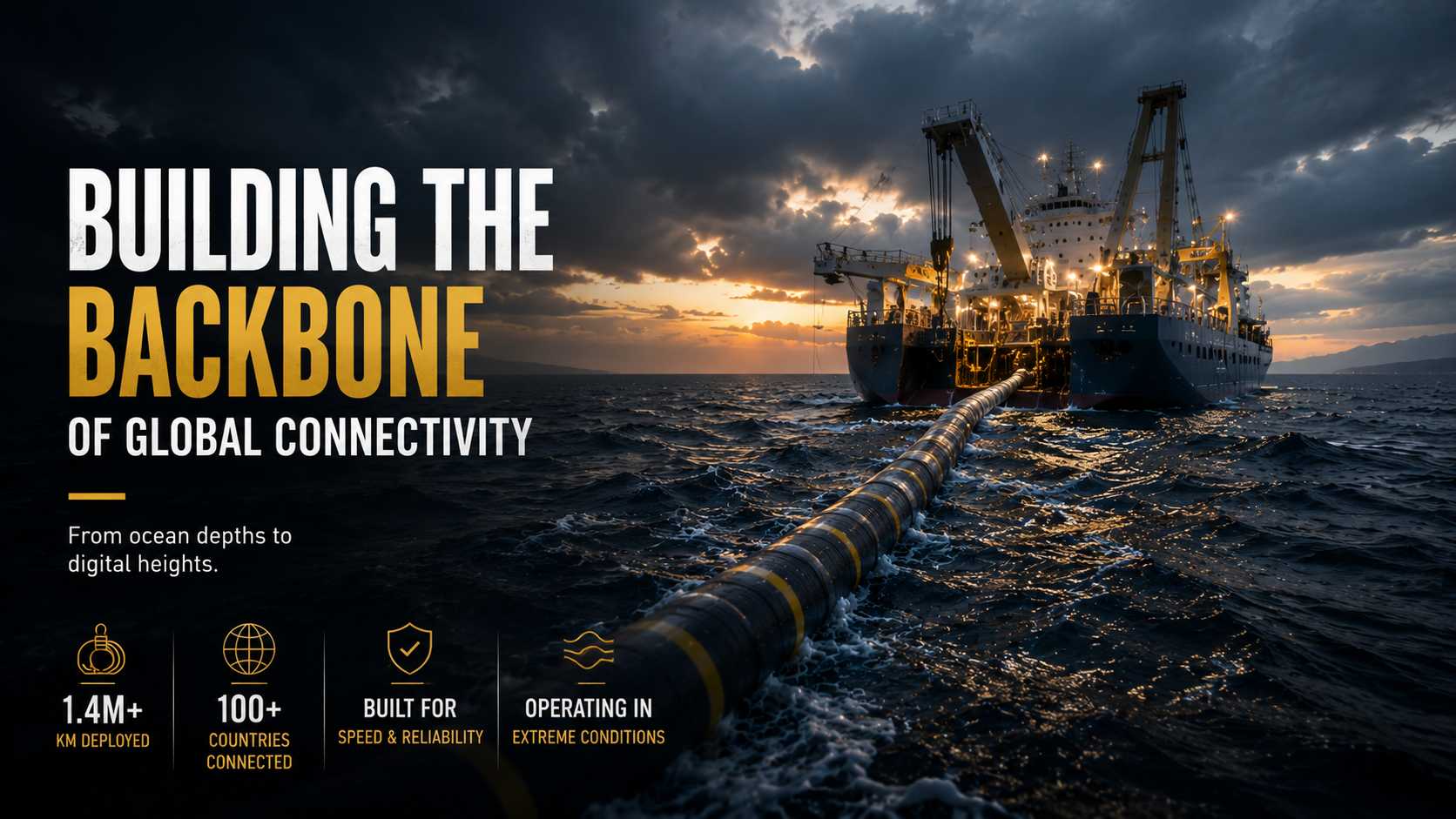
They are becoming owners of it.
4. AI Depends on Physical Infrastructure
Many investors think AI is only about semiconductors like NVIDIA chips.
But the real foundation of AI is data movement.
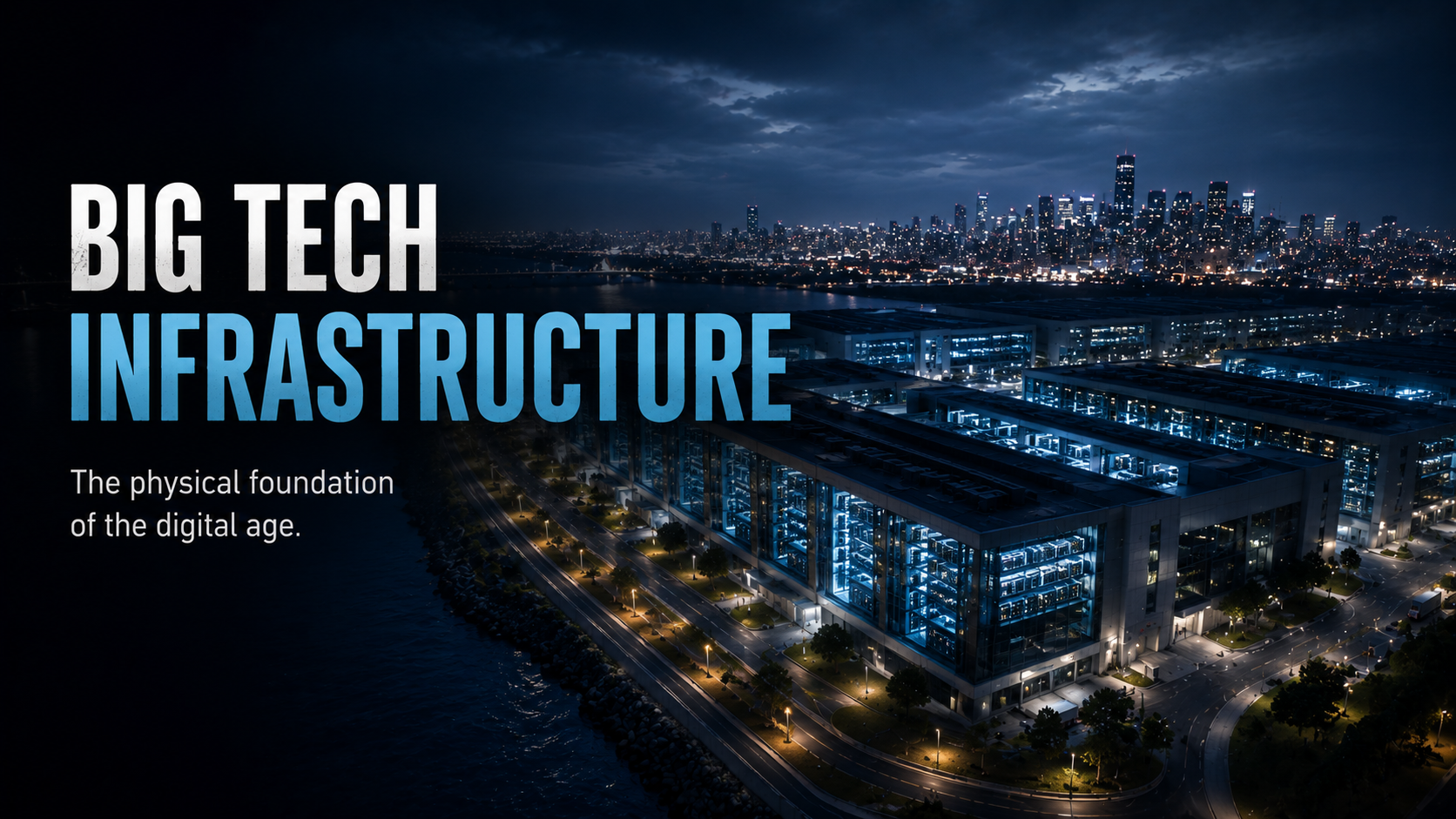
AI systems constantly transfer enormous amounts of information between:
- Data centers
- Cloud servers
- GPU clusters
- Global infrastructure networks
As AI grows, the importance of hidden physical infrastructure also grows.
This includes:
- Power grids
- Cooling systems
- Data centers
- Undersea cables
The AI economy may look digital on the surface.
But underneath, it runs on massive physical infrastructure.
5. A New Geopolitical Battleground
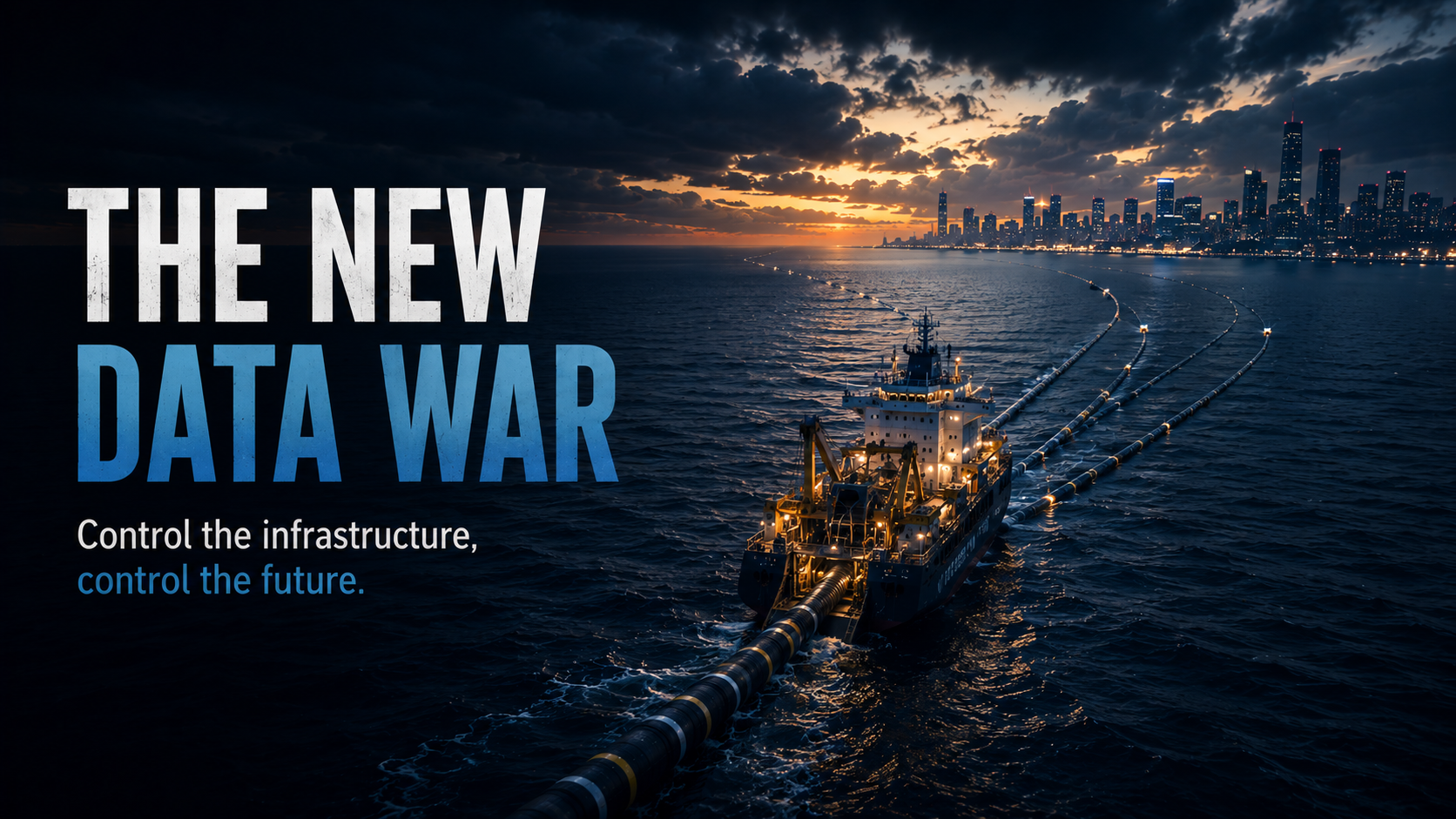
Submarine cables are now becoming strategic geopolitical assets.
And that creates new risks.
Recent tensions in the Red Sea, the Strait of Hormuz, and the Taiwan Strait have raised serious concerns about the vulnerability of global internet infrastructure.
In one recent incident, damage to key submarine cables in the Red Sea disrupted a significant portion of internet traffic between Asia and Europe.
A single physical disruption affected parts of the global digital economy.
The internet is far more fragile — and far more physical — than most people imagine.
Meanwhile, the United States and China are increasingly competing for control over submarine cable infrastructure across the Pacific region.
The U.S. has actively restricted Chinese participation in several cable projects.
Control over data infrastructure is becoming part of a broader geopolitical competition.
Recent incidents near Taiwan have also highlighted the growing vulnerability of submarine cables to physical disruption.
As geopolitical risks increase, discussions about entirely new cable routes — including Arctic routes designed to bypass Middle Eastern chokepoints — are becoming more serious.
Past geopolitical conflicts were centered around oil pipelines.
Future conflicts may revolve around data pipelines.
Mastermind Perspective
When people discuss AI infrastructure, most investors focus only on semiconductors or electricity demand.
But one of the hidden long-term infrastructures behind the AI economy may be submarine cable networks.
As AI traffic grows and geopolitical tensions increase, secure global data infrastructure may become even more valuable.
The future may not only depend on who builds the best AI models.
It may also depend on who controls the roads that move the world’s data.
Beneath the digital world we use every day, an invisible infrastructure war is already underway under the ocean.
And it continues even now — while billions of people casually stream videos, send messages, and connect online.
The infrastructure war beneath the ocean has already begun.
Mastermind
'[Global] Success Blueprints' 카테고리의 다른 글