What Is Buyback Yield? How Share Repurchases Create Long-Term Shareholder Value


Hello, this is MasterMind.
When evaluating a company, most investors start with familiar metrics like the dividend yield, price-to-earnings (P/E) ratio, or earnings per share (EPS). These are useful, but they don't always tell the full story.
Some of the world's best-performing companies—including Apple, Alphabet, and Meta—have delivered enormous shareholder value while maintaining relatively modest dividend yields. Instead of returning most of their cash through dividends, they have chosen a different strategy: share repurchases.
This raises an important question.
How can investors measure the value created through stock buybacks?
The answer is Buyback Yield.
While dividend yield measures the cash a company pays directly to shareholders, Buyback Yield measures how aggressively a company reduces its share count by repurchasing its own stock. Together, these metrics provide a much clearer picture of a company's commitment to shareholder returns.
In today's capital markets, understanding Buyback Yield is no longer optional. It has become one of the most important indicators for evaluating capital allocation, long-term shareholder value, and management quality.
In this article, we'll explore what Buyback Yield is, how it works, why Wall Street pays close attention to it, and how long-term investors can use it to better evaluate businesses.
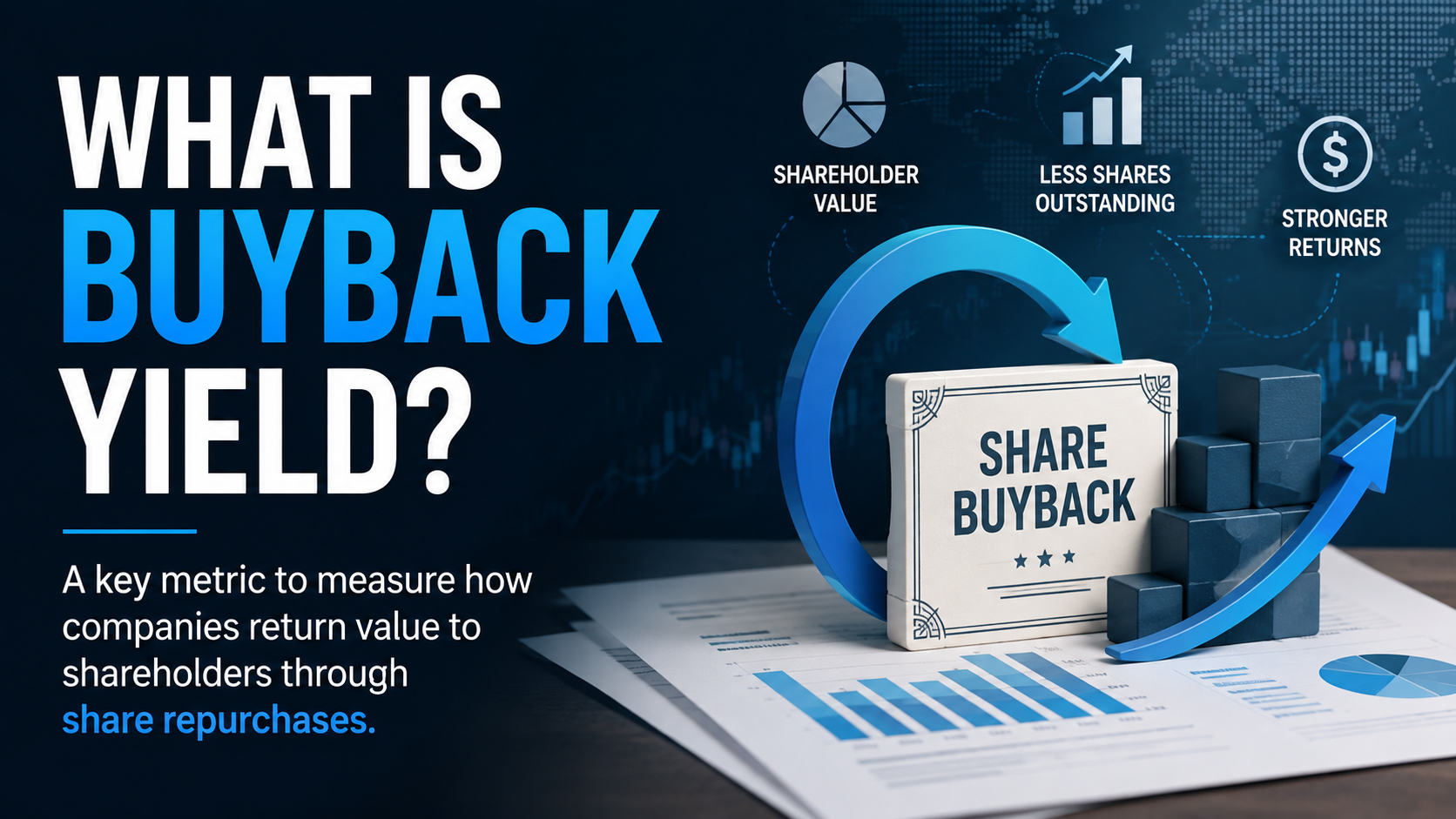
Key Takeaway
Buyback Yield measures how much value a company returns to shareholders by repurchasing its own shares. Combined with dividend yield, it offers one of the clearest views of a company's overall shareholder return strategy and capital allocation discipline.
What Is Buyback Yield?
Buyback Yield measures the value of a company's net share repurchases relative to its market capitalization.
In simple terms, it answers one question
How much of the company is buying itself back each year?
The basic formula is
Buyback Yield = Net Share Repurchases ÷ Market Capitalization × 100
For example, imagine a company with a market capitalization of $100 billion.
If it spends $5 billion repurchasing its own shares over the course of a year, its Buyback Yield is 5%.
Unlike dividends, shareholders don't receive cash directly.
Instead, the company reduces the number of outstanding shares, allowing each remaining share to represent a slightly larger ownership stake in the business.
This distinction is important.
A company announcing a large buyback program doesn't necessarily create value. What matters is whether those repurchased shares are actually retired or effectively removed from circulation, leading to a meaningful reduction in outstanding shares.
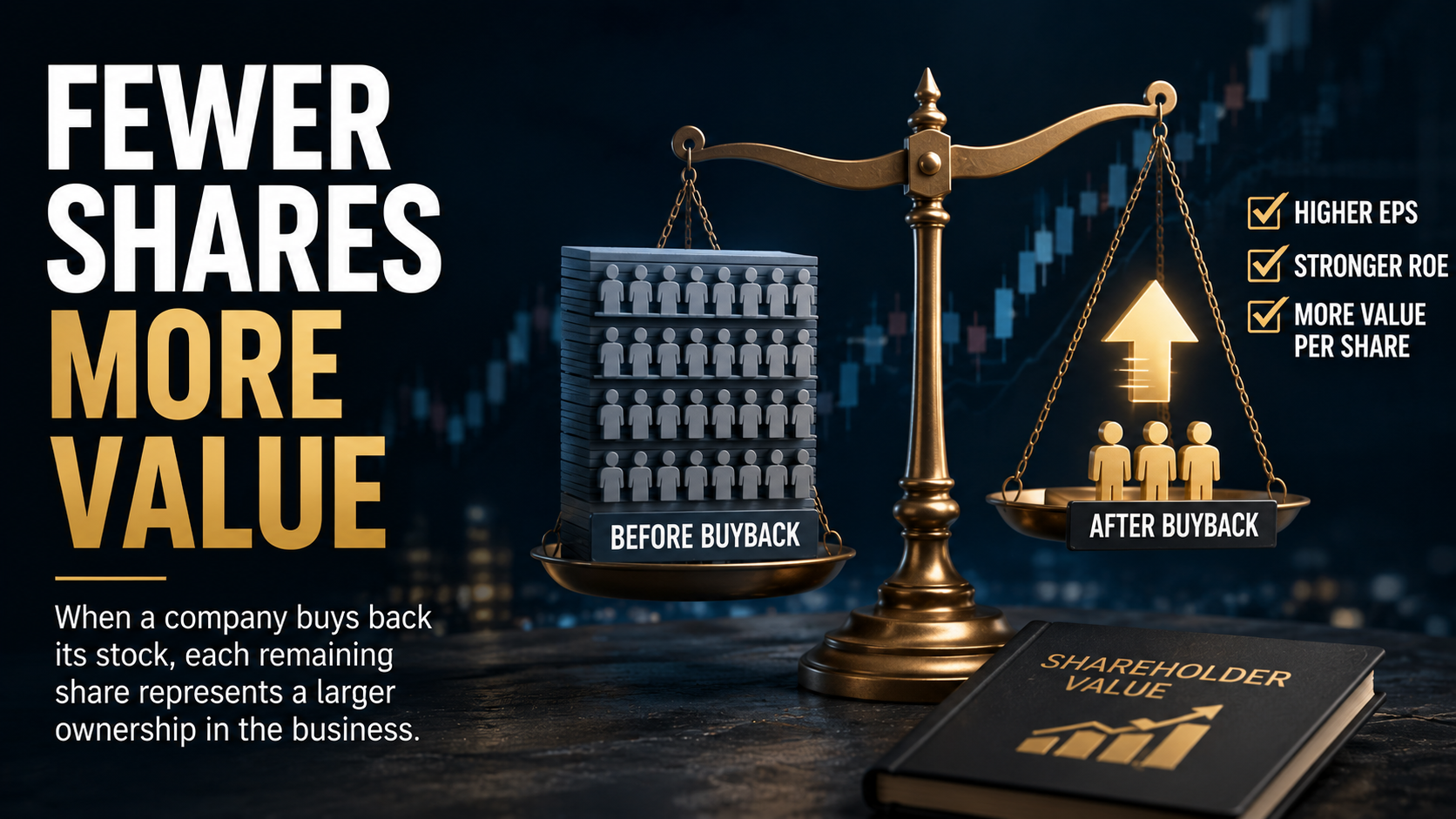
How Share Buybacks Increase Shareholder Value
The mechanics behind Buyback Yield are surprisingly straightforward.
When a company reduces its share count, every remaining shareholder owns a larger percentage of the business without purchasing additional stock.
This creates several important benefits.
1. Higher Earnings Per Share (EPS)
The most immediate impact is on earnings per share.
Suppose a company earns $10 billion in annual net income and has 10 billion shares outstanding.
Its EPS would be
$1.00 per share
Now imagine the company repurchases enough stock to reduce its share count to 8 billion shares, while earnings remain unchanged.
The new EPS becomes
$1.25 per share
The business didn't generate additional profits.
Instead, each remaining share now claims a larger portion of those profits.
This is one reason why companies with consistent buyback programs often report steady EPS growth even during periods of moderate revenue expansion.
2. Improved Return on Equity (ROE)
Share repurchases can also improve Return on Equity (ROE).
When a company uses excess cash to buy back shares, shareholders' equity decreases.
If net income remains stable while equity becomes smaller, ROE naturally rises.
However, investors should understand that a higher ROE created through buybacks isn't necessarily the same as a stronger business.
It's important to distinguish between operational improvement and financial engineering.
The highest-quality companies typically improve both.
3. Potential Tax Efficiency
Dividends distribute cash immediately, which may create taxable income depending on an investor's jurisdiction.
Share buybacks work differently.
Instead of paying cash directly, they increase the ownership percentage of remaining shareholders, allowing value to accumulate through potential capital appreciation.
For many U.S. investors, capital gains have historically been taxed differently than ordinary dividend income, making buybacks an attractive form of shareholder return in certain situations. Tax treatment varies by individual circumstances and current tax law.
4. A Signal of Management Confidence
Corporate executives generally understand their business better than outside investors.
When management authorizes a significant share repurchase program, it often sends a message to the market
"We believe our shares are worth more than the current market price."
Of course, this isn't always true.
Some companies buy back stock simply because they have excess cash or want to offset employee stock compensation.
Others make the mistake of repurchasing shares near market peaks.
Still, well-timed buybacks funded by strong free cash flow are frequently viewed as a positive signal of management's confidence in the company's long-term prospects.
Why Wall Street Pays Close Attention to Buyback Yield
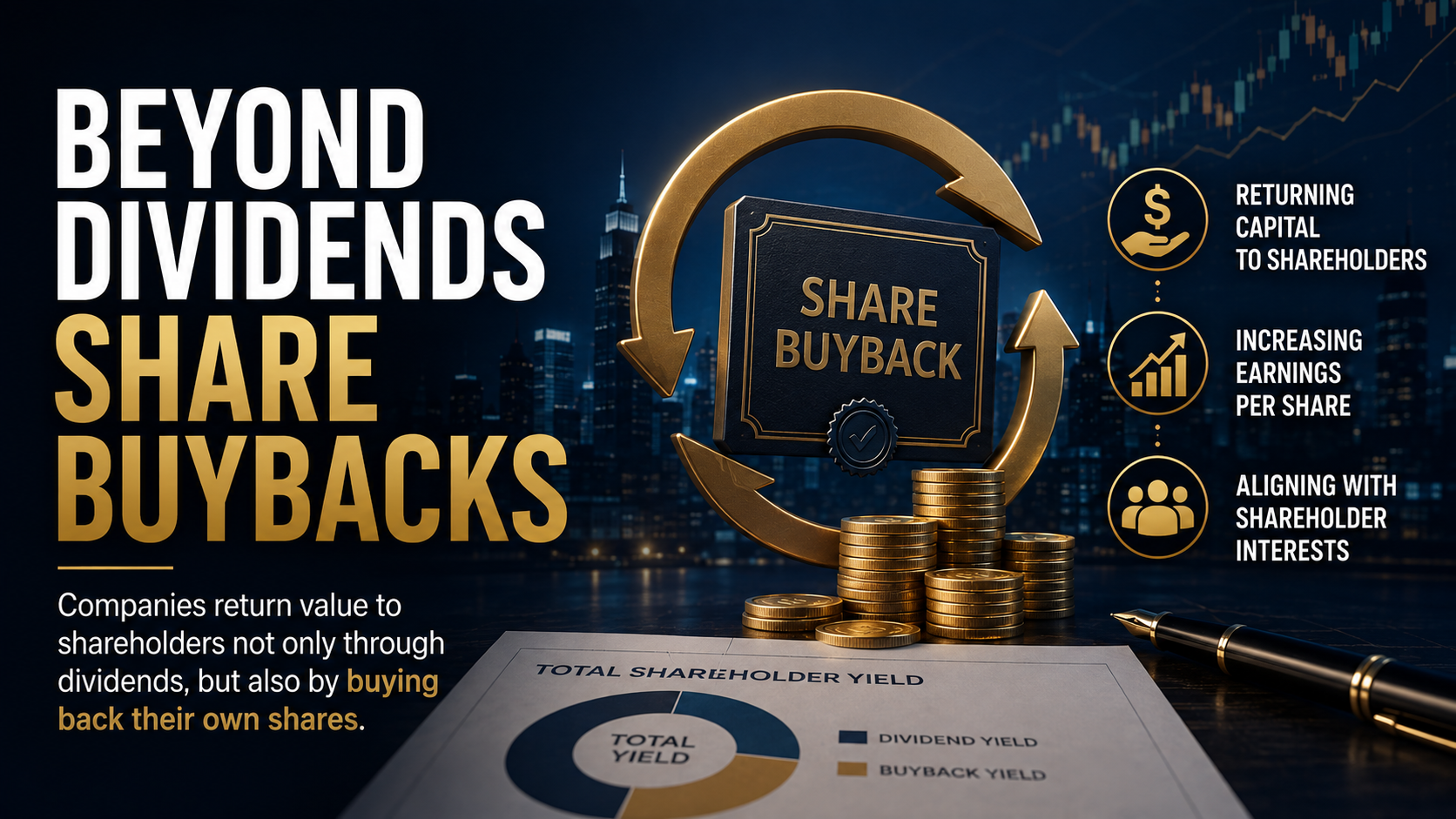
Decades ago, dividends were considered the primary way companies rewarded shareholders.
Today, many of America's largest corporations rely heavily on stock buybacks instead.
Technology giants such as Apple, Alphabet, Meta, and many other large-cap companies have spent hundreds of billions of dollars repurchasing their own shares over the past decade.
This shift has made Buyback Yield one of the most closely watched capital allocation metrics on Wall Street.
There are several reasons for this.
1. It Reveals True Shareholder Returns
Looking only at dividend yield can significantly underestimate how much capital a company returns to investors.
Some businesses pay modest dividends while aggressively reducing their share count year after year.
Professional investors often combine
- Dividend Yield
- Buyback Yield
to calculate what's known as Total Shareholder Yield.
This provides a much more complete picture of shareholder returns than dividends alone.
2. It Helps Explain EPS Growth
Many investors automatically assume that rising EPS reflects stronger business performance.
That's not always the case.
EPS can increase because
- Net income grows.
- The number of outstanding shares declines.
- Or both.
By analyzing Buyback Yield alongside earnings growth, investors can better understand where EPS growth is actually coming from.
This distinction is essential when evaluating the long-term quality of a business.
3. It Reflects Management's Capital Allocation Skills
Perhaps the most important reason to monitor Buyback Yield has nothing to do with accounting.
It has everything to do with capital allocation.
Every successful business eventually generates excess cash.
Management must decide how to use it.
Common choices include
- Investing in research and development
- Expanding operations
- Acquiring other companies
- Reducing debt
- Paying dividends
- Repurchasing shares
These decisions shape shareholder returns for years—sometimes decades.
The best management teams don't simply generate profits.
They consistently allocate capital where it can produce the highest long-term return.
MasterMind Insight
The market doesn't reward companies simply for making money. It rewards companies for making intelligent decisions with the money they earn. Buyback Yield isn't just a financial metric—it offers a window into how management thinks about capital allocation, shareholder value, and long-term wealth creation.
Why Buyback Yield Matters to Investors
Buyback Yield is far more than a financial statistic.
It helps investors understand how management thinks about shareholder value, capital allocation, and long-term business quality.
When evaluated alongside other financial metrics, Buyback Yield can reveal strengths—and weaknesses—that dividend yield alone cannot.
1. It Shows a Company's True Shareholder Return Policy
Many investors focus almost exclusively on dividend yield.
While dividends remain an important source of shareholder returns, they tell only part of the story.
Some companies intentionally keep dividends relatively low while returning enormous amounts of capital through share repurchases.
This is why institutional investors often calculate Total Shareholder Yield, which combines
- Dividend Yield
- Buyback Yield
Together, these metrics provide a more complete view of how much value management is returning to shareholders.
2. It Separates Operational Growth from Financial Engineering
A rising EPS doesn't automatically mean a business is becoming stronger.
For example, EPS can increase because
- Revenue and profits are growing.
- Outstanding shares are declining.
- Or both.
A company with flat earnings may still report higher EPS simply because it has repurchased millions of shares.
That's why experienced investors examine Buyback Yield alongside revenue growth, operating income, and free cash flow.
The goal is to understand whether value is being created through stronger business performance or through changes in capital structure.
3. It Reveals Management's Capital Allocation Philosophy
Eventually, every successful company generates excess cash.
The important question becomes
What does management do with it?
Executives generally have several options
- Invest in research and development
- Build new factories
- Acquire competitors
- Reduce debt
- Increase dividends
- Repurchase shares
Each decision reflects management's priorities.
The highest-quality management teams consistently allocate capital toward opportunities that generate the highest long-term return for shareholders.
Buyback Yield provides valuable insight into that decision-making process.
4. It Can Create Long-Term Compounding
Consistent share repurchases gradually reduce the total number of shares outstanding.
Over many years, this creates a powerful compounding effect.
Each remaining shareholder owns a slightly larger percentage of the business without purchasing additional shares.
For companies that continue growing earnings while steadily reducing their share count, this combination can significantly enhance long-term shareholder returns.
This is one reason many legendary businesses have produced exceptional returns over multiple decades.
How Buyback Yield Affects Financial Markets
Although Buyback Yield is a company-specific metric, large-scale share repurchase programs can influence broader financial markets.
Corporate buybacks often become an important source of demand for stocks, particularly during periods of market weakness.
However, investors should remember that buybacks are only one factor among many that influence asset prices.
Interest rates, earnings growth, economic conditions, and investor sentiment remain equally important.
| Asset Class | Typical Impact | Why It Matters |
| Stocks | Generally Positive | Fewer outstanding shares, higher EPS, stronger shareholder returns |
| Bonds | Neutral to Slightly Negative | Debt-funded buybacks may weaken balance sheets |
| U.S. Dollar | Limited Direct Impact | Corporate cash movements rarely affect currency markets significantly |
| Gold | Minimal Direct Impact | Precious metals respond primarily to macroeconomic conditions |
| Bitcoin | Indirect Impact | Risk appetite may influence crypto demand, but buybacks have little direct effect |
The market rarely rewards buybacks based on size alone.
Instead, investors ask three critical questions
- How were the buybacks funded?
- Were the shares repurchased at attractive valuations?
- Can the company continue repurchasing shares over time?
These questions often matter more than the Buyback Yield itself.
What Investors Should Watch Carefully
Not every buyback program creates value.
Understanding the quality of a company's repurchase strategy is just as important as measuring its size.
1. Are Shares Actually Being Retired?
A buyback announcement doesn't automatically reduce the number of shares outstanding.
Some companies repurchase shares but continue holding them in treasury.
Others later reissue those shares for
- Employee stock compensation
- Acquisitions
- Future capital raising
If outstanding shares don't meaningfully decline, shareholders may receive little long-term benefit.
Investors should focus on whether buybacks lead to a sustained reduction in share count, not simply large authorization announcements.
2. Are Buybacks Funded by Free Cash Flow?
The healthiest buybacks are funded through Free Cash Flow (FCF).
When companies consistently generate excess cash from operations, they can reward shareholders without weakening the business.
Borrowing heavily to finance buybacks is a different story.
Debt-funded buybacks may temporarily increase EPS, but they can also
- Increase interest expenses
- Reduce financial flexibility
- Create additional risk during economic downturns
Strong Buyback Yield supported by healthy cash generation is generally far more valuable than Buyback Yield created through excessive leverage.
3. Is Management Buying Back Stock at the Right Price?
Timing matters.
Repurchasing shares when a company is significantly undervalued can create tremendous long-term value.
Buying aggressively near historical valuation highs can have the opposite effect.
The best management teams view buybacks as an investment decision—not simply a public relations strategy.
They allocate capital when expected long-term returns justify the investment.
4. Pay Attention to Net Buybacks
Many large U.S. companies issue substantial amounts of stock through employee compensation programs such as stock options and Restricted Stock Units (RSUs).
Imagine a company that repurchases $10 billion worth of stock during a year.
If it simultaneously issues $7 billion in new shares to employees, the net reduction in outstanding shares is much smaller than the headline figure suggests.
That's why professional investors often focus on Net Buybacks, not gross repurchase activity.
The net reduction in share count is what ultimately drives shareholder value.
Key Takeaways for Investors
When evaluating Buyback Yield, remember these principles
- Analyze Buyback Yield alongside Dividend Yield to measure total shareholder returns.
- Confirm that outstanding shares are actually declining.
- Prioritize companies funding buybacks through Free Cash Flow rather than debt.
- Distinguish between EPS growth driven by business performance and EPS growth driven by share count reduction.
- Evaluate Buyback Yield together with ROE, ROIC, Free Cash Flow, and long-term earnings growth.
MasterMind Insight
The market rarely rewards numbers by themselves. It rewards the quality behind those numbers. A 5% Buyback Yield funded by durable free cash flow is fundamentally different from a 5% Buyback Yield financed through excessive borrowing. The source of capital often matters more than the percentage itself.
What Smart Investors Look for Beyond Buyback Yield
Professional investors rarely stop at the headline number.
A company announcing a multi-billion-dollar share repurchase program may generate positive headlines, but experienced investors ask a different question
What does this buyback actually tell us about the business?
Rather than focusing only on the percentage, they examine the quality of the company's capital allocation decisions.
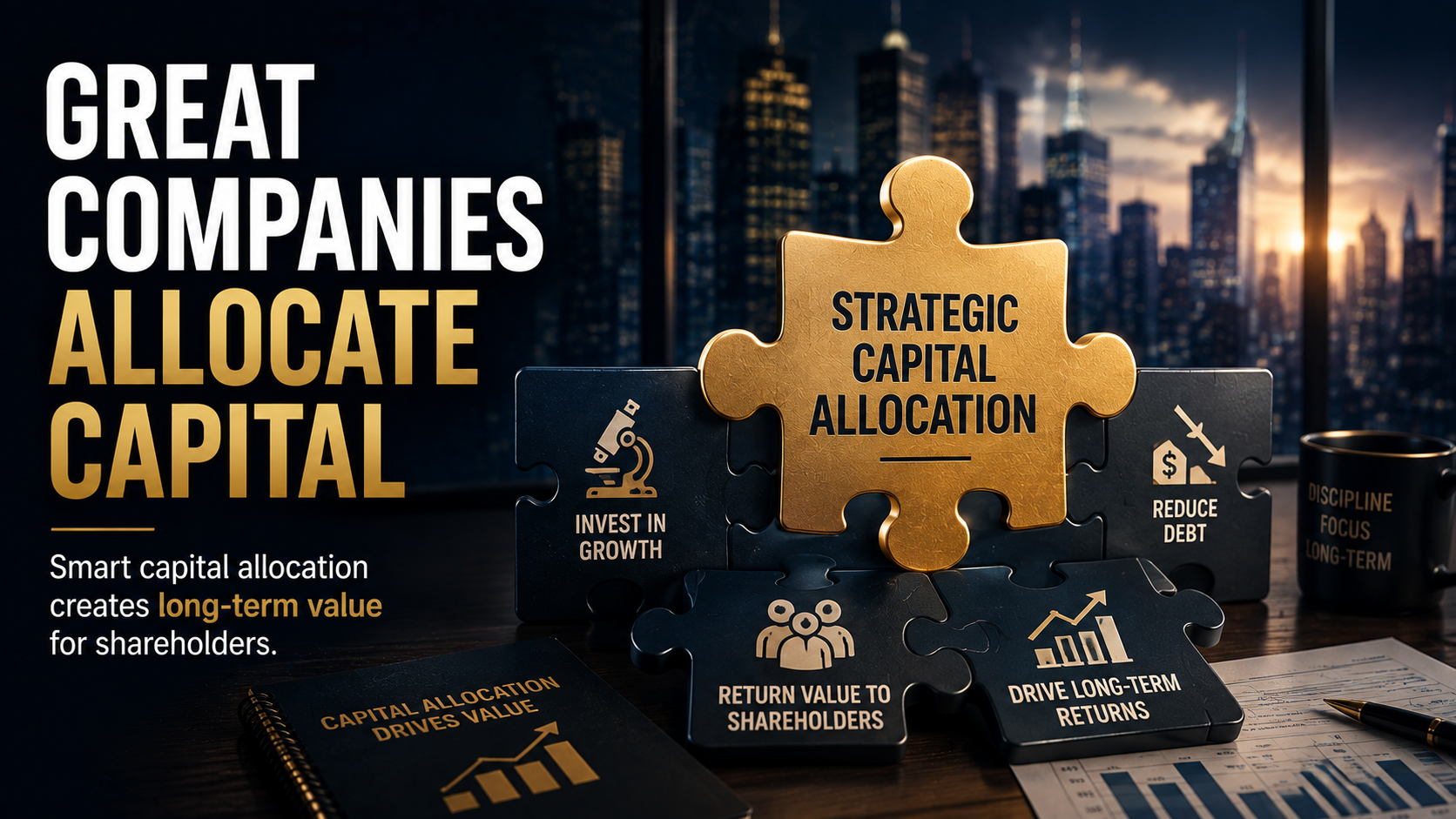
Follow the Money
Every successful company eventually generates excess cash.
Management then faces one of the most important decisions in corporate finance
Where should that cash go?
The options usually include
- Research and development
- Capital expenditures (CapEx)
- Strategic acquisitions
- Debt reduction
- Dividend payments
- Share repurchases
There is no universally correct answer.
The best decision depends on which option creates the greatest long-term return for shareholders.
For a rapidly growing company, investing in new products may generate the highest return.
For a mature business with fewer attractive investment opportunities, buying back undervalued shares may be the most efficient use of capital.
Great management teams understand this difference.
Evaluate the Quality of Cash Flow
Buybacks should be supported by strong, sustainable cash generation.
Companies that consistently produce healthy operating cash flow and free cash flow can continue rewarding shareholders without compromising future growth.
By contrast, businesses that rely on debt to finance buybacks often become more vulnerable during economic slowdowns.
This is why sophisticated investors pay close attention to
- Operating Cash Flow
- Free Cash Flow (FCF)
- Debt Levels
- Interest Coverage
- Balance Sheet Strength
A buyback program is only as strong as the cash flow supporting it.
Long-Term Wealth Is Built Through Capital Allocation
Many investors spend enormous amounts of time predicting quarterly earnings or next month's stock price.
Professional investors often focus somewhere else.
They study how management allocates capital over decades.
A company that consistently makes intelligent capital allocation decisions can create extraordinary shareholder value over time.
History provides numerous examples.
Companies such as Apple have generated tremendous shareholder returns not only because they built outstanding products, but also because they deployed hundreds of billions of dollars into disciplined share repurchase programs while continuing to invest heavily in innovation.
Successful investing is rarely about finding companies with the highest revenue growth in a single year.
It is about identifying businesses capable of compounding value year after year.
Questions Every Investor Should Ask
Before investing in a company with a high Buyback Yield, consider asking
- Is the company generating enough Free Cash Flow to support these buybacks?
- Has the outstanding share count actually declined over time?
- Is management buying back shares when they appear undervalued?
- Is the balance sheet still healthy after the repurchase program?
- Does management have a history of disciplined capital allocation?
- Would this business still create value if buybacks stopped tomorrow?
The answers often matter more than the Buyback Yield itself.
MasterMind Insight
Great companies don't simply earn more money—they consistently make better decisions with the money they earn. Capital allocation is one of the few competitive advantages that compounds over decades, and Buyback Yield offers investors a valuable window into that process.

Final Thoughts
Buyback Yield is far more than another financial ratio.
It reflects how management chooses to allocate capital, how committed a company is to returning value to shareholders, and how effectively it balances growth opportunities with shareholder returns.
Dividend yield alone cannot tell the full story.
By combining Buyback Yield, Dividend Yield, and the broader concept of Total Shareholder Yield, investors gain a much deeper understanding of how a business creates long-term value.
At the same time, Buyback Yield should never be analyzed in isolation.
Investors should always consider
- Whether buybacks are funded by Free Cash Flow
- Whether shares are actually being retired
- Whether management is repurchasing stock at reasonable valuations
- Whether the company maintains a strong balance sheet throughout the process
Ultimately, successful investing isn't about finding companies that simply earn more money.
It's about finding businesses that allocate capital more intelligently than their competitors.
Over long periods, exceptional capital allocation often becomes one of the strongest drivers of shareholder wealth.
Remember this: the best companies don't just create profits—they create lasting value by putting every dollar to its highest and most productive use.
Thank you for reading.
This was MasterMind.
'[Global] Success Blueprints' 카테고리의 다른 글