What Is Corporate Guidance? Why Palantir and Caterpillar Surged After Earnings


Hello, this is MasterMind.
Why do some companies report outstanding earnings only to see their stocks fall, while others rally 20% or even 30% after what appears to be an ordinary earnings report?
Many investors focus on what a company earned last quarter. Wall Street, however, is usually looking somewhere else entirely.
Recent earnings from Palantir Technologies and Caterpillar offered a perfect example. Their strong stock performance was not driven simply by past financial results—it was driven by something much more important: corporate guidance.
Understanding why guidance often matters more than earnings can help investors interpret earnings season more accurately and avoid reacting to headlines alone.

Key Takeaway
Stock prices respond more to changes in future expectations than to past financial results. Guidance reshapes those expectations.
What Is Corporate Guidance?
Corporate guidance is management's official outlook for the future.
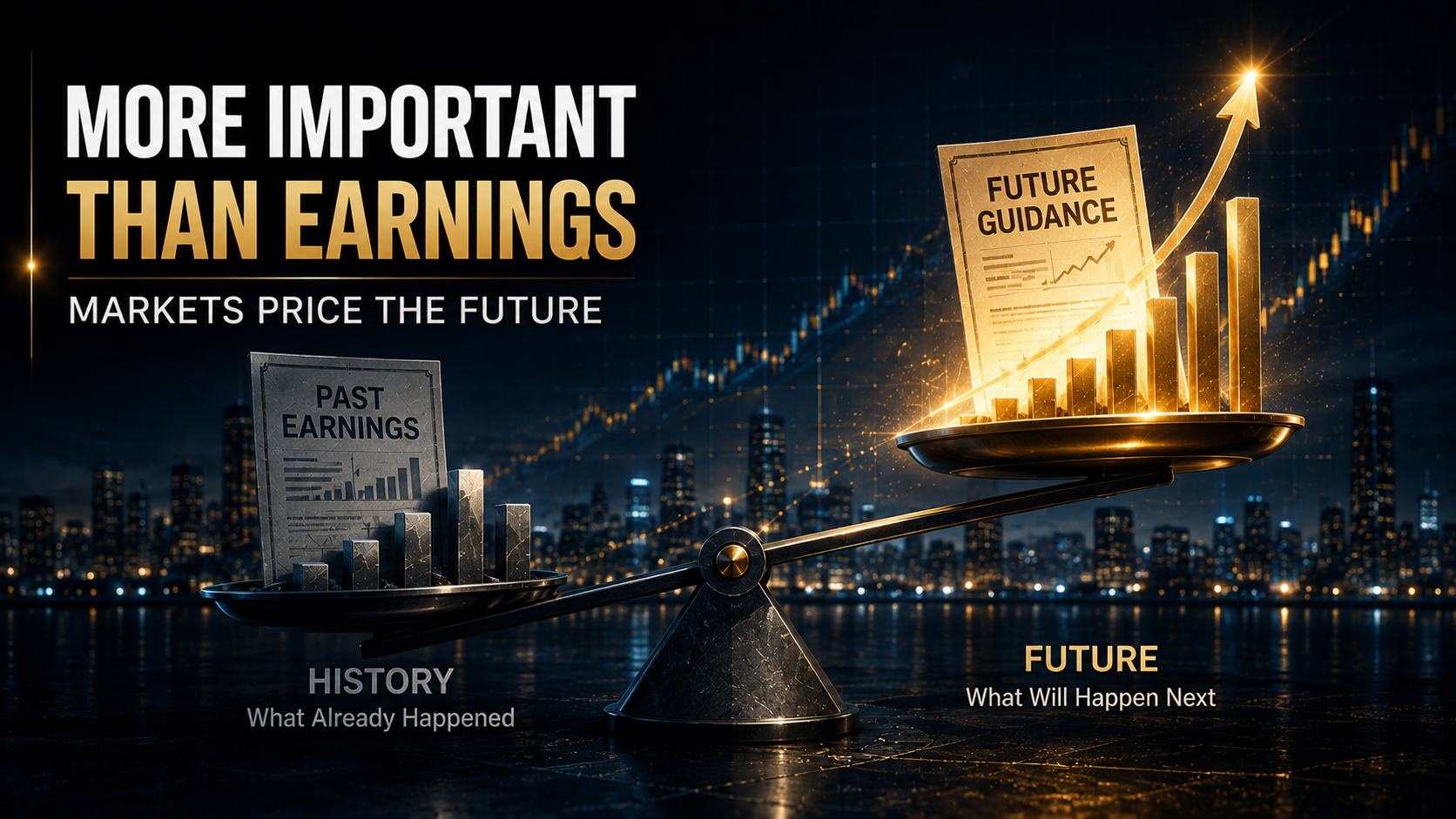
While earnings tell investors what already happened, guidance explains what management expects to happen next.
Companies typically provide guidance on
- Revenue growth
- Earnings per share (EPS)
- Operating margins
- Capital expenditures (CapEx)
- Customer growth
- Industry demand
- Business outlook for upcoming quarters or the full year
Think of it this way
- Earnings are a report card.
- Guidance is the roadmap.
Public markets are forward-looking by nature. Investors value companies based on the cash flows they are expected to generate in the future—not the profits they already earned.
Why Does Guidance Move Stock Prices?
The stock market doesn't simply reward good earnings.
It rewards companies that perform better than investors expected and convince the market that future growth will be even stronger.
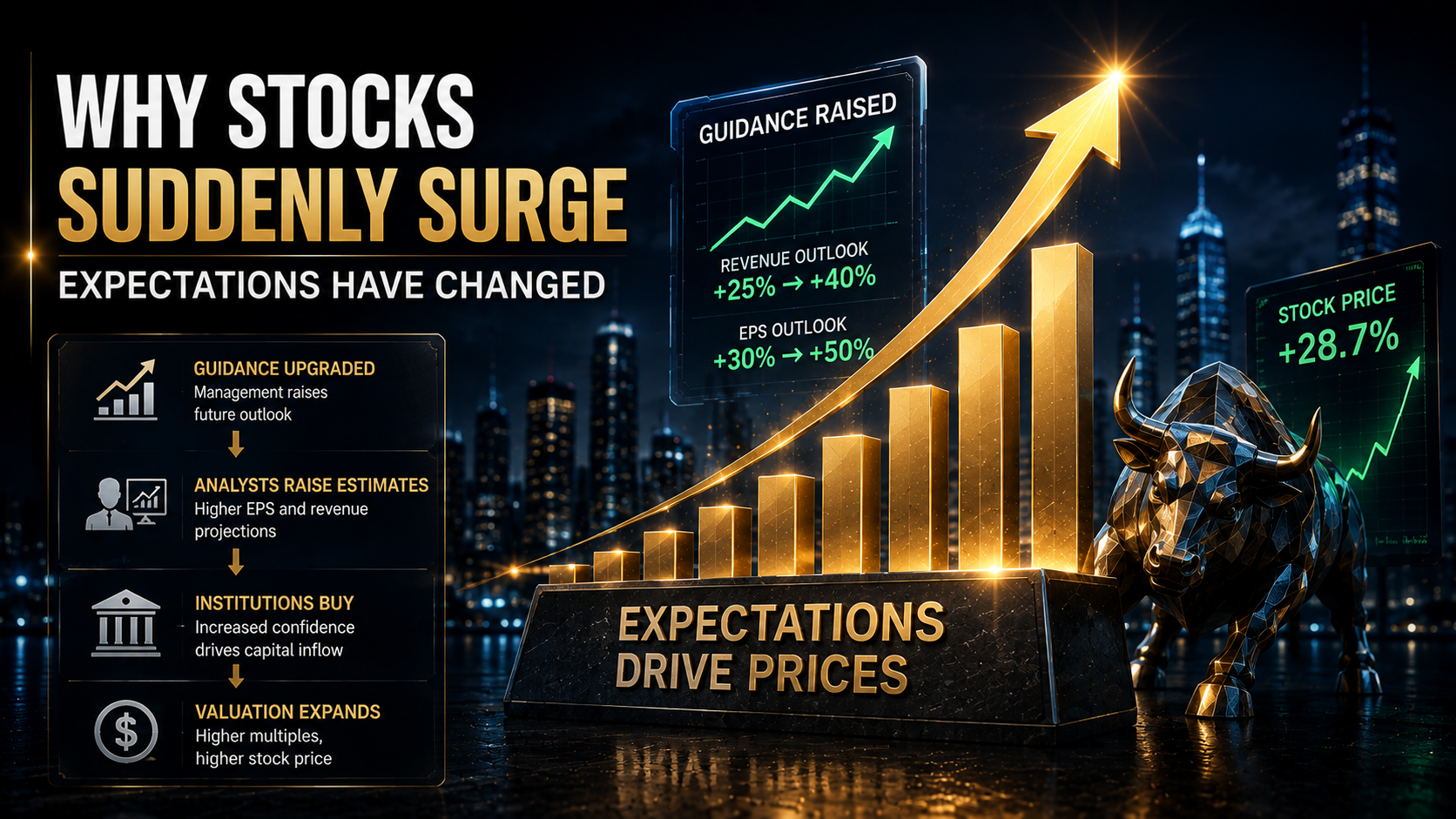
The process typically looks like this
Company Raises Guidance

↓

Analysts Increase Future EPS Estimates

↓

Price Targets Rise

↓

Institutional Investors Increase Positions

↓

Company Valuation Expands

↓

Stock Price Moves Higher
This is why the same earnings report can produce completely different market reactions.
The Market Reacts to Expectations, Not Numbers
Imagine two companies.
Company A
Wall Street expects revenue growth of 20%.
The company reports 21%.
Technically, earnings beat expectations.
Yet the stock barely moves because investors already expected a strong quarter.
Company B
Wall Street expects annual growth of 25%.
Management raises guidance and now expects 40% growth.
Nothing about last quarter changed.
But investors immediately recalculate what the company could earn over the next several years.
That change in expectations—not last quarter's earnings—is what drives the stock higher.
Why Palantir Surged
Palantir's latest earnings season perfectly illustrates this principle.
Strong results were already expected.
What surprised investors was how much management improved its outlook.
Key highlights included
- Higher-than-expected revenue growth
- Increased demand for AI software
- Raised full-year guidance
- Accelerating customer acquisition
- Stronger long-term growth expectations
Investors weren't buying Palantir because of last quarter.
They were buying the possibility that the company could generate substantially more cash flow over the coming years.
That shift in expectations led analysts to raise forecasts, institutions to add exposure, and the stock to surge.
Caterpillar Told a Similar Story
Caterpillar's earnings followed the same pattern.
Markets already expected demand from AI infrastructure and data center construction.
However, management confirmed that demand was stronger than previously anticipated.
The earnings report highlighted
- Growing demand tied to data center construction
- Expanding infrastructure projects
- Strong equipment orders
- Improved outlook for profitability
Rather than focusing solely on the quarter that had already ended, investors focused on what those trends suggested for future earnings.
Why Strong Earnings Can Still Send Stocks Lower
One of the biggest misconceptions among new investors is believing that strong earnings automatically lead to higher stock prices.
In reality, several factors can produce the opposite outcome.
Expectations Were Already Priced In
Professional investors spend months estimating earnings before companies report.
If results simply match expectations, there may be little reason for the stock to move higher.
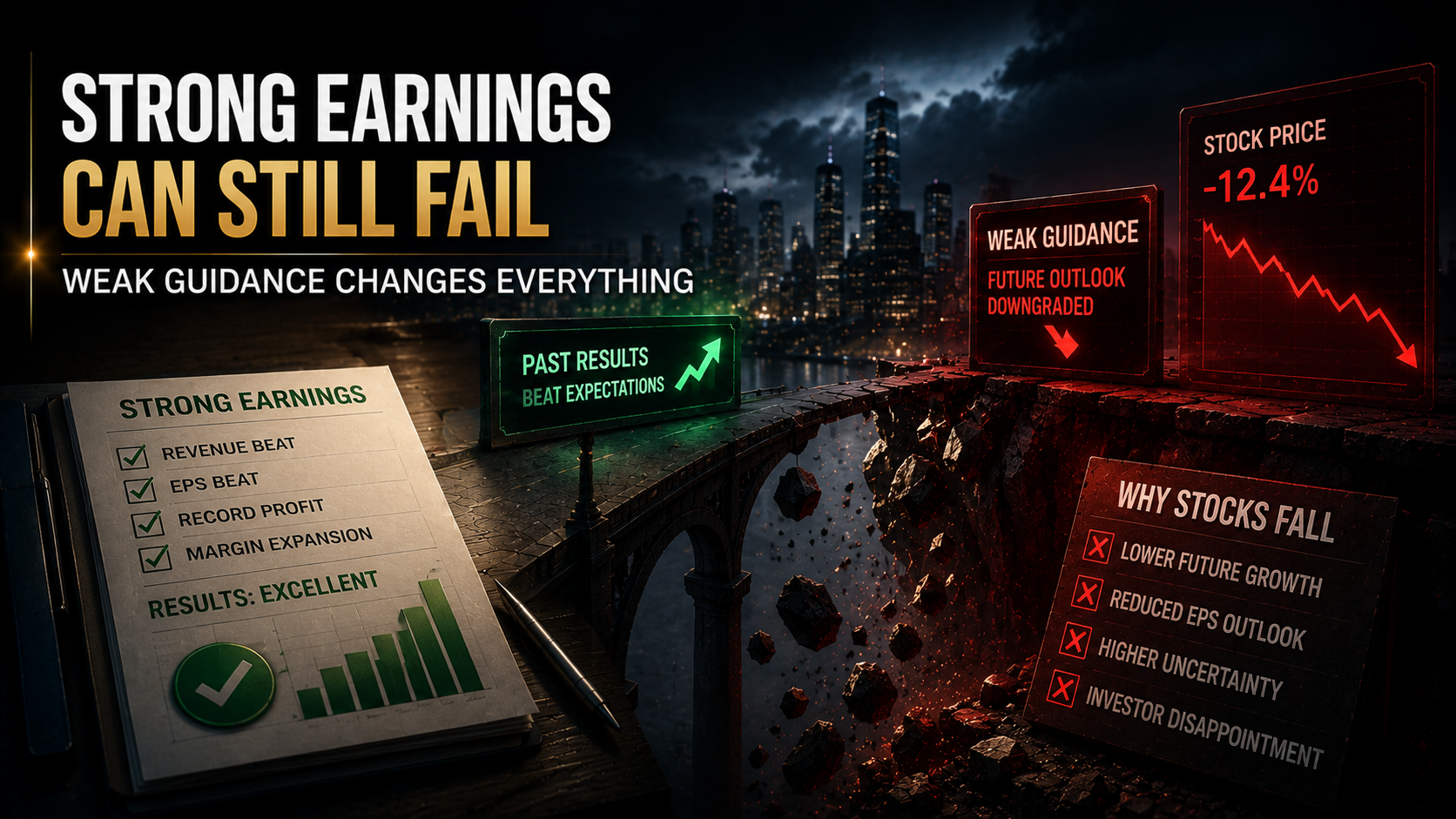
Weak Guidance
A company may report record earnings while warning that growth will slow next quarter.
Markets generally care more about the slowdown than the record profits.
Expectations Were Too High
Sometimes companies deliver excellent results.
The problem is that investors expected extraordinary results.
When expectations become unrealistic, even great earnings can disappoint the market.
Why Guidance Matters So Much
Markets Price the Future
Stock prices represent discounted future cash flows.
Because of this, investors continuously update valuations based on what companies are expected to earn—not what they already earned.
Management Knows More Than Anyone Else
Executives understand their business better than outside investors.
When management raises guidance, it often reflects confidence based on
- Customer demand
- Contract pipelines
- Supply chain conditions
- Pricing power
- Industry trends
While guidance is never a guarantee, it provides valuable insight into management's expectations.
Future Earnings Drive Valuation
Growth companies often trade at premium valuations.
Those valuations become easier to justify if management demonstrates that earnings can grow faster than previously expected.
The denominator in valuation metrics changes as future earnings estimates rise.
The Market Trades the Future
One of the most important lessons in investing is this
The stock market buys tomorrow—not yesterday.
Last quarter is history.
The next quarter, next year, and the years beyond are what ultimately determine long-term value.
That's why many professionals say
Earnings are the rearview mirror. Guidance is the windshield.
A driver occasionally checks the mirror, but decisions are made by looking ahead.
Investing works much the same way.
The Real Nature of the Market
Markets do not simply trade numbers.
They trade expectations.
Earnings confirm whether previous expectations were correct.
Guidance creates new expectations.
When expectations improve, capital flows toward companies with stronger long-term growth prospects.
When expectations deteriorate, money quickly moves elsewhere.
Ultimately, capital follows businesses that appear capable of generating larger future cash flows.
How Different Asset Classes Can React
| Asset | Higher Guidance | Lower Guidance |
| Stocks | Valuation expansion and stronger buying interest | Lower price targets and selling pressure |
| Bonds | Stronger growth expectations may push yields higher | Slower growth expectations may support Treasury demand |
| U.S. Dollar | Can strengthen if economic growth expectations improve | May weaken if growth outlook deteriorates |
| Gold | Often faces headwinds during risk-on environments | Can benefit from increased risk aversion |
| Bitcoin | May gain alongside broader risk assets | Can experience higher volatility during risk-off periods |
Actual market reactions always depend on multiple factors, including Federal Reserve policy, inflation, interest rates, and broader macroeconomic conditions.
What Investors Should Watch During Earnings Season
| What to Watch | Why It Matters |
| Revenue Growth | Indicates business momentum |
| EPS | Measures profitability |
| Guidance | Reveals future expectations |
| CapEx | Shows investment in future growth |
| Customer Growth | Indicates demand sustainability |
| Earnings Call | Provides management's confidence and tone |
Reading only the headline earnings numbers rarely tells the full story.
Investors should pay close attention to what management says about the future.
What Experienced Investors Look For
Professional investors rarely chase a single earnings beat.
Instead, they study whether the company's long-term earnings power is improving.
Capital Flows
Money tends to move toward industries where guidance continues to improve.
Artificial intelligence, digital infrastructure, and advanced manufacturing have recently attracted significant institutional interest because of improving long-term expectations.
Cash Flow
Experienced investors distinguish between optimistic forecasts and businesses that can consistently convert revenue into cash flow.
Strong guidance supported by healthy cash generation carries far more weight than optimistic projections alone.
Business Resilience
Companies capable of maintaining or raising guidance during uncertain economic periods often possess durable competitive advantages, pricing power, or structural demand.
Those characteristics tend to matter more over a decade than over a single quarter.
Long-Term Perspective
Rather than asking whether earnings beat estimates this quarter, long-term investors ask a different question
Will this business generate significantly more cash five years from now than it does today?
That question often leads to better investment decisions than focusing on short-term earnings surprises.
Questions Every Investor Should Ask
- Is this company benefiting from a temporary earnings boost, or is its long-term growth outlook improving?
- Does management's guidance align with major structural trends such as artificial intelligence, infrastructure investment, or digital transformation?
- Is institutional capital flowing toward this industry, or away from it?

Final Thoughts
Palantir and Caterpillar demonstrated an important lesson that repeats itself every earnings season.
The market rarely rewards companies simply for delivering strong results.
Instead, it rewards companies that convince investors the future will be even better than previously expected.
That is why guidance often matters more than earnings.
Understanding this distinction helps investors move beyond headline numbers and better interpret how Wall Street prices businesses.
Remember one key idea
Stocks are not valued based on what a company earned yesterday—they are valued based on what investors believe it can earn tomorrow.
MasterMind.
'[Global] Success Blueprints' 카테고리의 다른 글