What Is the Endowment Effect? Why Investors Overvalue the Stocks They Already Own


Hello, this is MasterMind.
Why does a stock often seem more valuable the moment it enters your portfolio?
Many investors have experienced holding onto a losing stock far longer than they originally planned. Even when the company's fundamentals weaken or better opportunities emerge, selling somehow feels like giving something up rather than making a rational investment decision.
This isn't simply a lack of discipline.
It is a well-documented behavioral bias known as the Endowment Effect—one of the most influential concepts in behavioral economics that quietly shapes investment decisions in every market.
Understanding this bias is important because successful investing is not only about finding great businesses. It is also about recognizing when your own psychology begins to interfere with objective decision-making.
Key Takeaway
The Endowment Effect causes investors to assign greater value to assets simply because they already own them, often leading to poor portfolio decisions and missed investment opportunities.
What Is the Endowment Effect?
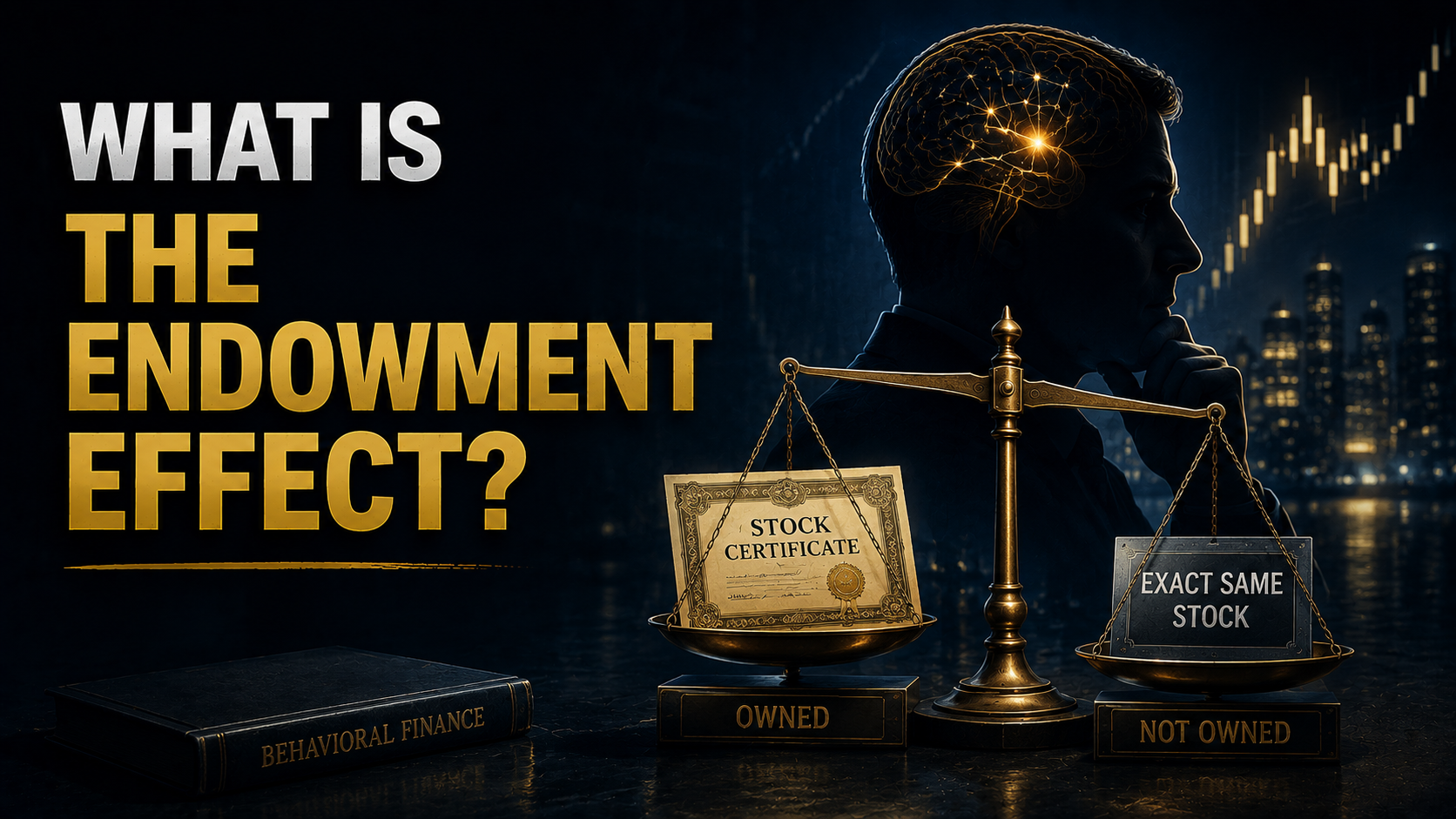
The Endowment Effect is a behavioral economics principle describing our tendency to value something more highly simply because we own it.
Even when two assets are objectively identical, ownership alone changes our perception of value.
This concept became widely recognized through the work of Nobel Prize-winning economist Richard Thaler, whose research demonstrated that people consistently demand more money to sell an item they own than they would be willing to pay to buy the exact same item.
The difference isn't the asset itself.
The difference is ownership.
In investing, this means a stock in your brokerage account can appear fundamentally stronger than an identical opportunity outside your portfolio—even when the market says otherwise.

Why Does the Endowment Effect Happen?
Several psychological biases work together to create the Endowment Effect.
1. Loss Aversion
Behavioral finance research shows that people experience the pain of losses much more intensely than the pleasure of equivalent gains.
Selling a stock—especially at a loss—forces investors to acknowledge that pain.
To avoid it, the brain often inflates the perceived value of the investment instead.
2. Psychological Ownership
Buying shares creates more than financial ownership.
It creates emotional ownership.
The investment gradually becomes connected to personal judgment, research, and confidence.
Selling can therefore feel like admitting your original decision was wrong rather than simply reallocating capital.
3. Confirmation Bias
Once investors become emotionally attached to an investment, they naturally search for information that supports their existing belief.
Positive earnings headlines receive attention.
Negative developments are dismissed as temporary noise.
Instead of objectively evaluating new information, investors begin defending past decisions.

Why Does the Endowment Effect Matter?
Financial markets reward efficient capital allocation.
Capital should continually flow toward businesses with stronger earnings potential, healthier cash flow, and better long-term prospects.
The Endowment Effect interrupts that process.
Rather than asking,
"Where can my capital generate the highest future return?"
investors begin asking,
"How can I justify keeping what I already own?"
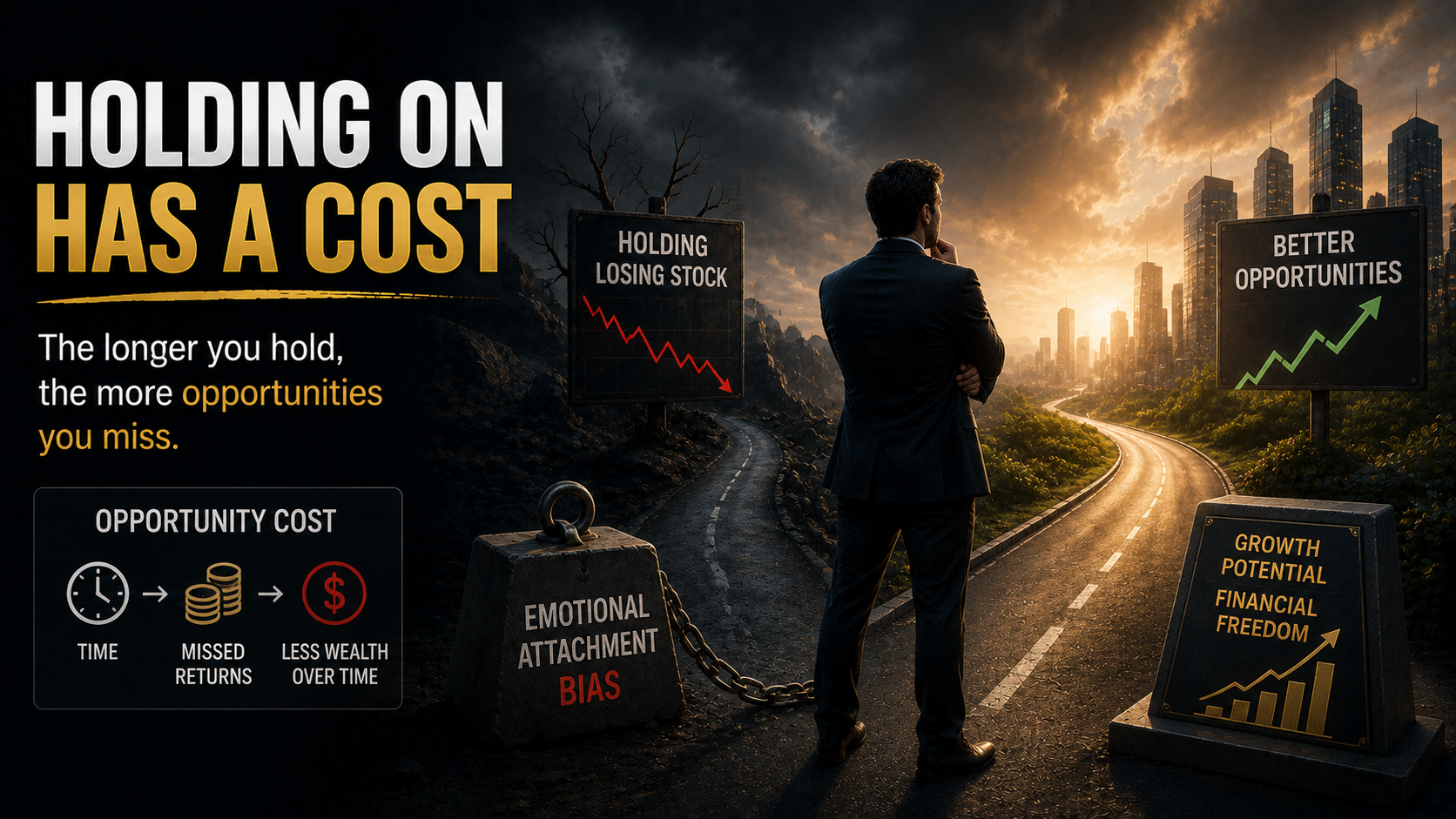
This shift in thinking creates opportunity costs that often remain invisible.
Markets do not care about your purchase price.
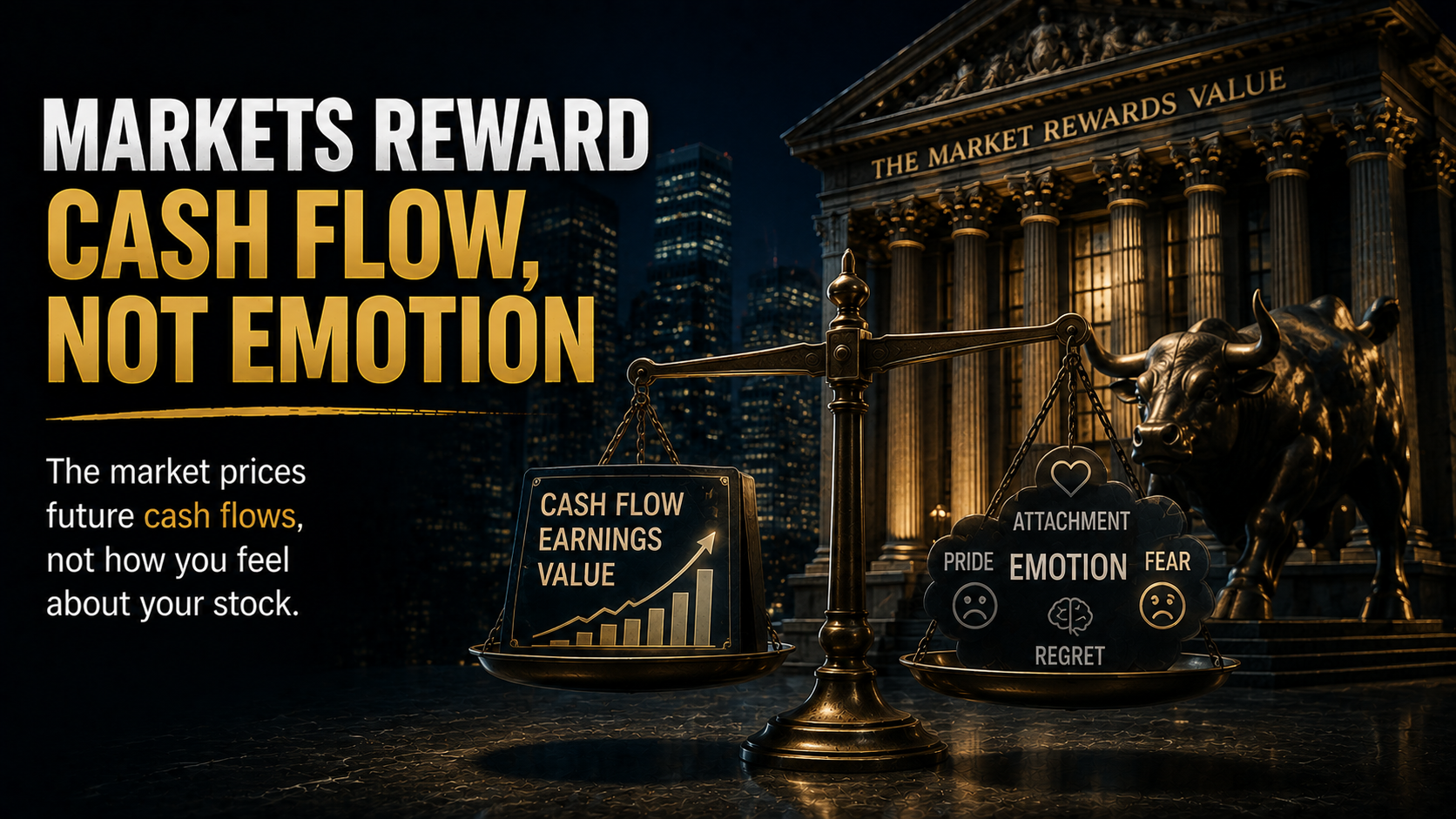
They only care about future cash flows and future business performance.
The market never rewards investors for being emotionally attached to an asset. It rewards businesses that continue creating value.
How the Endowment Effect Influences Financial Markets
Although the Endowment Effect is a psychological bias, its impact extends far beyond individual portfolios.
| Asset Class | Common Behavior | Market Impact |
| Stocks | Holding losing positions too long | Reduced portfolio efficiency |
| Real Estate | Refusing to lower asking prices | Slower market liquidity |
| Cryptocurrencies | Emotional community-driven investing | Increased volatility |
| Bonds | Holding outdated fixed-income positions despite changing rates | Inefficient capital allocation |
During bull markets, investors often become emotionally attached to their biggest winners.
During bear markets, they become emotionally attached to recovering losses.
In both cases, ownership—not valuation—begins driving decisions.
What Investors Should Remember
Ignore Your Purchase Price
Your entry price has no influence on a company's future performance.
Every investment should be evaluated based on where it is today—not where you bought it.
Perform the "Fresh Capital Test"
Ask yourself one simple question
If I didn't already own this stock, would I buy it today at the current price?
If the answer is no, ownership may be influencing your judgment.
Build Rules Before Emotions
Professional investors often rely on predefined investment rules instead of emotional reactions.
Establishing clear exit criteria, portfolio allocation limits, and investment theses before buying helps reduce behavioral bias later.
What Experienced Investors Focus On
Successful investors rarely become emotionally attached to individual stocks.
Instead, they focus on capital allocation.
Their objective is not to defend previous decisions but to continuously position capital where future returns appear strongest.
Rather than asking,
"Do I still like this stock?"
they ask,
"Is this still the best place for my capital?"
That subtle difference often separates disciplined investors from emotional ones.
Ask yourself
- Would I initiate this position today?
- Am I holding this investment because of objective fundamentals or emotional attachment?
- Is this capital preventing me from pursuing better opportunities elsewhere?
- Does this business still have durable competitive advantages and growing free cash flow?
The best investors understand that portfolios should evolve as businesses and markets evolve.
Long-term investing does not mean refusing to change.
It means adapting while staying focused on long-term value creation.
Final Thoughts
The Endowment Effect is one of the most common behavioral biases in investing because it affects everyone—from first-time investors to experienced professionals.
Recognizing it does not eliminate it.
However, recognizing it allows investors to separate emotional ownership from rational analysis.
Markets constantly reprice businesses based on future earnings, cash flow, and competitive strength—not on how attached shareholders feel.
Ultimately, successful investing is less about defending yesterday's decisions and more about making better decisions for tomorrow.
The next time you review your portfolio, ask yourself one question
Do I own this investment because it is still one of the best opportunities available—or simply because it already belongs to me?
Sometimes that single question can completely change the way you invest.
'[Global] Success Blueprints' 카테고리의 다른 글