What Is AI Capital Expenditure (CAPEX)? Why Big Tech Spending Drives NVIDIA, Micron, and the AI Semiconductor Supply Chain


Hello, this is MasterMind.
Why does the stock market react so strongly whenever Microsoft, Amazon, Meta, or Alphabet announces higher AI spending?
A single sentence like "We plan to increase AI infrastructure investment next year" can send shares of NVIDIA, Micron, and other semiconductor companies sharply higher.
At first glance, it may seem like investors are simply excited about artificial intelligence.
In reality, the market is responding to something much bigger.
It is reacting to where future capital will flow.
In today's AI era, Capital Expenditure (CAPEX) has become one of the most important indicators for understanding future demand across the global semiconductor industry.
Key Takeaway
AI CAPEX is far more than a corporate expense. It is one of the strongest leading indicators of future demand for AI infrastructure, semiconductors, and the entire technology supply chain.
What Is AI Capital Expenditure (CAPEX)?
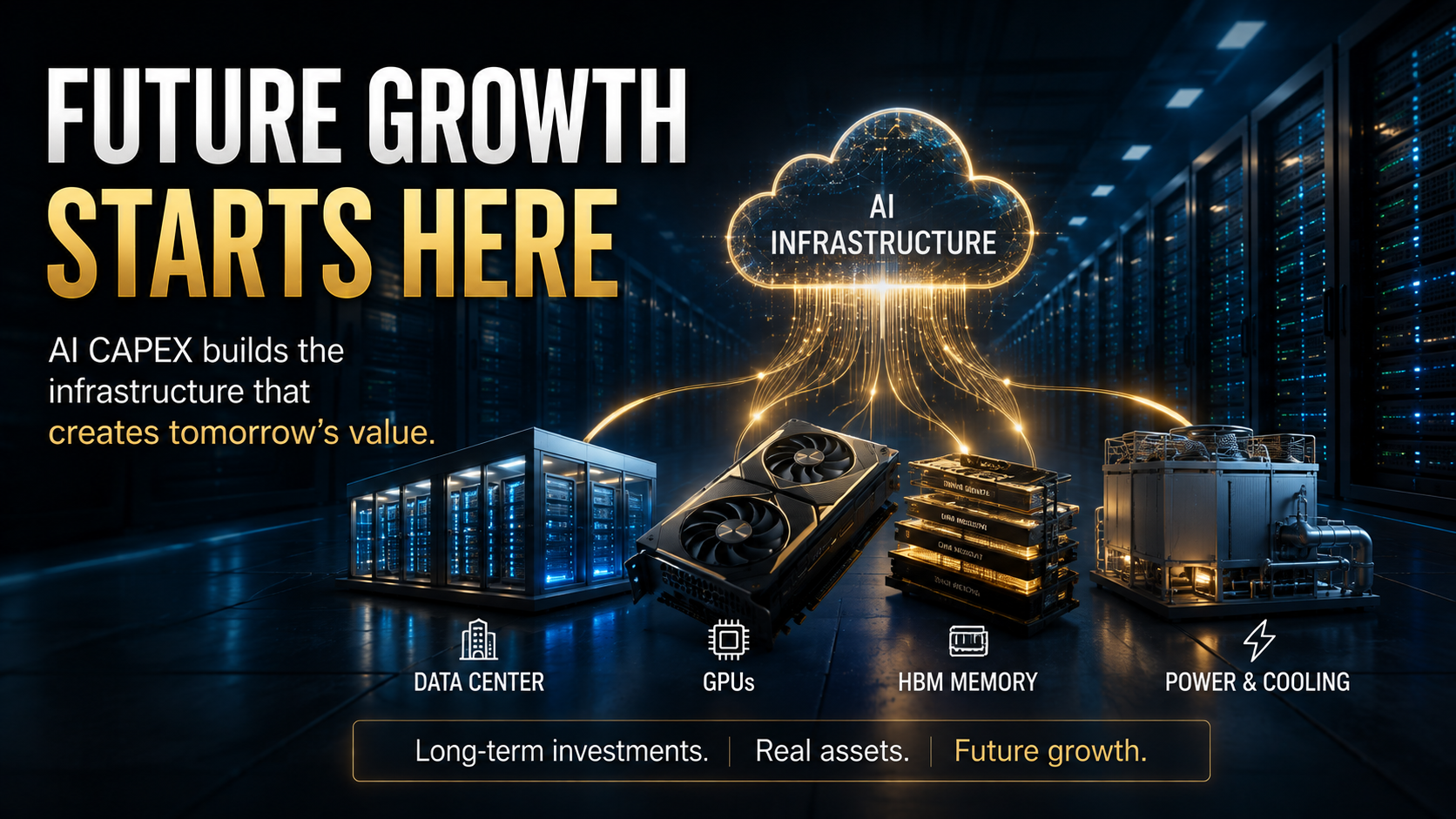
Capital Expenditure, commonly known as CAPEX, refers to money a company invests in long-term assets that generate future growth.
Unlike operating expenses (OPEX), which cover day-to-day costs such as salaries or rent, CAPEX is used to build or expand long-term business capabilities.
Examples include
- AI data centers
- GPU servers
- Networking equipment
- Power infrastructure
- Cooling systems
- Semiconductor manufacturing facilities
In the AI industry, CAPEX has become synonymous with building the infrastructure needed to train and deploy large AI models.
Every new AI service ultimately depends on physical infrastructure.
Why AI CAPEX Matters More Than Ever
The AI revolution is fundamentally an infrastructure story.
Every advanced AI model requires enormous computing power.
That means more
- Data centers
- NVIDIA GPUs
- High-Bandwidth Memory (HBM)
- Advanced networking
- Reliable power systems
As AI adoption accelerates, Big Tech companies continue investing billions of dollars to expand these capabilities.
This is why investors closely monitor AI CAPEX guidance during earnings calls.
How AI CAPEX Flows Through the Semiconductor Supply Chain
AI spending creates a chain reaction across multiple industries.
The process typically looks like this
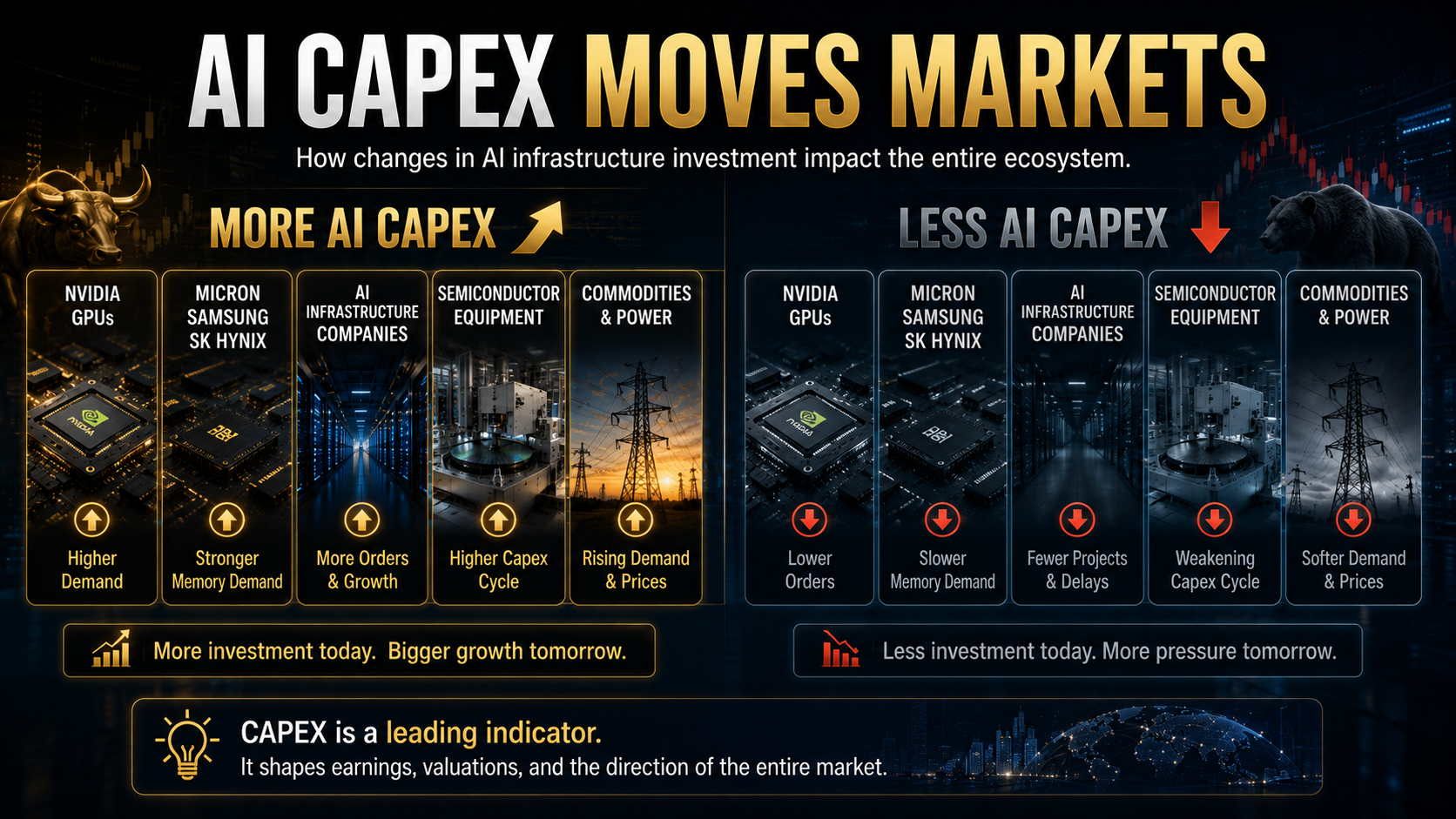
Big Tech Increases AI CAPEX

↓

New AI Data Centers

↓

Higher NVIDIA GPU Orders

↓

Growing Demand for HBM Memory

↓

Benefits for SK hynix, Samsung Electronics, and Micron

↓

Stronger AI Semiconductor Supply Chain

↓

Higher Investor Confidence
This is why investors often see NVIDIA as only one piece of a much larger ecosystem.
Without advanced memory, networking hardware, and supporting infrastructure, AI GPUs cannot reach their full performance.
The AI supply chain succeeds together.

Why Investors Watch CAPEX More Than Quarterly Earnings
Quarterly earnings describe the past.
CAPEX reveals management's expectations for the future.
When executives decide to increase AI investment, they are effectively saying
"We believe future demand will justify today's investment."
Because of this, investors frequently pay as much attention to CAPEX guidance as they do to revenue or earnings per share.
Markets are forward-looking.
Future investment plans often matter more than historical financial results.
What Happens If AI CAPEX Slows?
CAPEX growth is just as important as CAPEX itself.
If major technology companies begin reducing AI investment plans, investors may interpret that as a warning that future demand could weaken.
The market reaction often follows this pattern
Lower AI CAPEX

↓

Reduced GPU Orders

↓

Slower HBM Demand

↓

Weaker Semiconductor Growth Expectations

↓

Pressure on AI Semiconductor Stocks
This does not necessarily mean AI is ending.
Instead, it may indicate that the pace of infrastructure expansion is temporarily slowing.
That distinction is extremely important for long-term investors.
How AI CAPEX Affects Different Asset Classes
| Asset | Higher AI CAPEX | Lower AI CAPEX |
| NVIDIA | Positive | Negative |
| Micron | Positive | Negative |
| Samsung Electronics | Positive | Negative |
| SK hynix | Positive | Negative |
| AI Infrastructure Companies | Positive | Negative |
| Semiconductor Equipment | Positive | Negative |
| Copper & Power Infrastructure | Higher demand | Slower demand |
| Long-Term Growth Stocks | Generally supportive | Potential headwind |
Actual market performance also depends on interest rates, economic growth, and broader macroeconomic conditions.
What Investors Should Focus On
When reading earnings reports, don't look only at the total CAPEX number.
Instead, pay attention to
- Is AI investment still accelerating?
- Is management increasing or reducing future guidance?
- Can the company finance investment through free cash flow?
- Which companies benefit directly from AI infrastructure spending?
The growth rate of CAPEX often matters more than the absolute dollar amount.
Even a record investment can disappoint investors if spending grows more slowly than expected.
What Experienced Investors Really Watch
Professional investors rarely chase headlines.
Instead, they study the direction of capital.
They ask questions like
- Where is global capital flowing?
- Which companies generate sustainable cash flow from AI infrastructure?
- Which businesses can maintain long-term competitive advantages?
- Is today's market pricing already reflecting tomorrow's growth?
Ultimately, investing is not about predicting every market move.
It is about understanding the structural flow of capital and positioning yourself where long-term value is being created.

Final Thoughts
AI Capital Expenditure has become one of the most important indicators in today's financial markets.
Every dollar invested by Microsoft, Amazon, Meta, or Alphabet creates opportunities across the broader AI ecosystem—from NVIDIA GPUs to advanced memory suppliers like SK hynix, Samsung Electronics, and Micron.
Looking beyond quarterly earnings and understanding where capital is flowing provides a much deeper perspective on the future of the technology sector.
The most successful investors do not simply follow technology.
They follow capital.
Remember this
Markets react to the direction of money before they react to the results it eventually produces.
MasterMind.
'[Global] Success Blueprints' 카테고리의 다른 글