Why Did the Nasdaq Fall After Hitting a Record High? Causes and Outlook



Hello, this is MasterMind.
The Nasdaq reached another record high, fueled by AI optimism and strong technology stocks. Yet shortly after reaching new highs, the market pulled back and investor sentiment suddenly became more cautious.
If the outlook for AI remains strong, why would stocks fall?
Does a pullback after a record high signal the beginning of a larger correction, or is it simply a normal pause within a longer-term bull market?
To answer these questions, investors need to look beyond headlines and understand how money actually moves through financial markets.
Key Takeaway
The Nasdaq's decline after reaching a record high was primarily driven by profit-taking, valuation concerns, shifting Federal Reserve expectations, and changes in liquidity conditions rather than a collapse in the underlying AI investment story.
What Does a Record High in the Nasdaq Actually Mean?
Many investors assume that a stock market reaching an all-time high automatically means it has become dangerously overvalued.
History suggests otherwise.
Bull markets often make new highs repeatedly before reaching their eventual peak.
A record high is not necessarily a warning sign.
Instead, it reflects strong investor confidence, improving earnings expectations, and continued capital inflows.
The real question is not whether the market reached a new high.
The real question is whether new money continues entering the market after that high is reached.
Financial markets are forward-looking. Prices today reflect expectations about tomorrow.
Why Did the Nasdaq Pull Back After Reaching New Highs?
Profit-Taking After a Powerful Rally
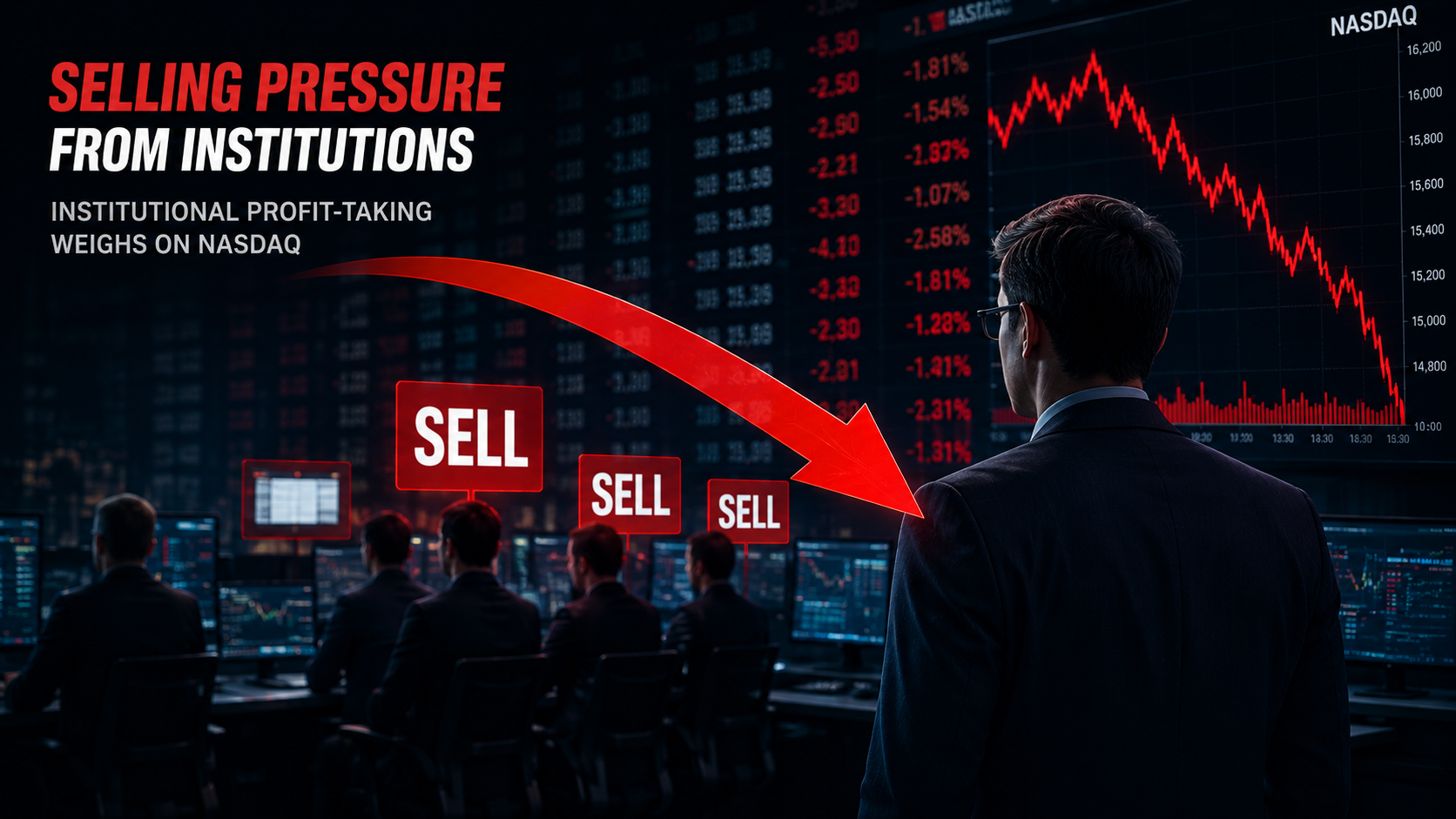
One of the most common reasons markets decline after making new highs is profit-taking.
Many investors who purchased shares months earlier are sitting on substantial gains.
As prices rise, some investors begin locking in profits rather than taking additional risk.
This creates selling pressure precisely when markets appear strongest.
Wall Street has a saying
"Buy the rumor, sell the news."
Often, the best news arrives after much of the upside has already been priced in.
Concerns About Federal Reserve Policy

Interest rates remain one of the most important drivers of stock valuations.
Technology companies are particularly sensitive because a large portion of their value depends on future earnings.
When investors begin believing that interest rates may stay higher for longer, those future earnings become less valuable in today's dollars.
Even without an actual rate hike, changing expectations alone can trigger a pullback in growth stocks.
The market constantly reprices future possibilities.
Valuation Pressure
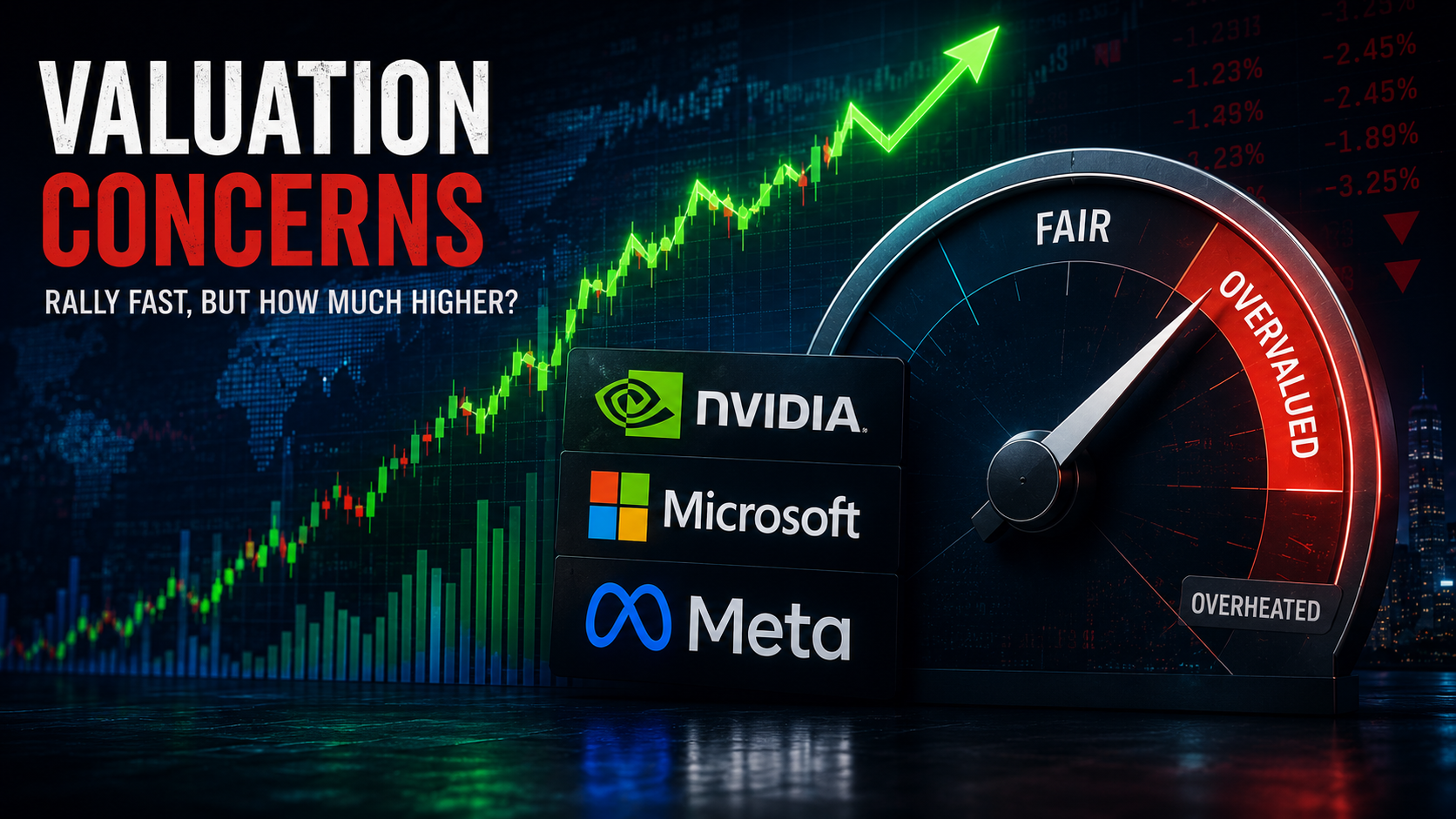
AI-related companies have experienced extraordinary gains.
Stocks such as Nvidia, Microsoft, and other AI beneficiaries have attracted enormous investor attention.
At some point, investors begin asking a simple question
"Are earnings growing fast enough to justify current prices?"
Even strong companies can experience temporary declines if expectations become too optimistic.
Sometimes a pullback is simply the market catching its breath.
Institutional Rebalancing
Large institutions rarely chase prices higher indefinitely.
As positions become larger within portfolios, professional investors often rebalance by reducing exposure and managing risk.
This process can create significant selling pressure even when the long-term outlook remains positive.
What appears to retail investors as sudden weakness may simply be institutional portfolio management.
Why Is This Important for Investors?
The recent Nasdaq pullback highlights an important truth about markets.
Stocks do not move based solely on economic data or company performance.
They move based on the difference between expectations and reality.
A company can report excellent results and still see its stock fall if investors expected even better outcomes.
Understanding this principle helps investors avoid emotional reactions during periods of volatility.
How Does a Nasdaq Pullback Affect Other Assets?
| Asset | Potential Impact |
| Stocks | Increased volatility and profit-taking |
| Bonds | Possible inflows if investors seek safety |
| U.S. Dollar | May strengthen during risk-off periods |
| Gold | Can benefit from uncertainty and hedging demand |
| Bitcoin | Often reacts strongly to liquidity expectations |
One of the most important lessons in investing is that money rarely disappears.
It simply moves.
Capital leaving one asset class frequently enters another.
Understanding those flows is often more valuable than predicting short-term price movements.
What Investors Should Focus On
Avoid Chasing Momentum
Rapid rallies often create fear of missing out.
However, buying solely because prices are rising can expose investors to significant downside when sentiment shifts.
Separate Hype From Fundamentals
Not every company benefiting from an AI narrative will become a long-term winner.
Investors should focus on earnings growth, cash flow, and competitive advantages rather than headlines alone.
Liquidity Matters More Than Most Investors Realize
Stock prices are heavily influenced by liquidity conditions.
When liquidity expands, risk assets generally benefit.
When liquidity tightens, even great companies can experience temporary declines.
Following the flow of money is often more useful than following daily news.
What Do Wealthy Investors See in This Situation?

Capital Flows
Experienced investors focus less on index levels and more on where capital is moving.
Are funds leaving technology entirely?
Or are they simply rotating into other sectors?
The answer matters.
Cash Flow Strength
Strong businesses generate cash regardless of short-term market volatility.
Wealthy investors often prioritize durable cash flow over short-term price momentum.
Portfolio Survival
The most successful investors understand that survival comes before returns.
Protecting capital during uncertain periods allows investors to take advantage of future opportunities.
Long-Term Perspective
A single pullback rarely changes a long-term investment thesis.
Major investors focus on structural trends such as artificial intelligence, productivity growth, demographics, and innovation rather than day-to-day market fluctuations.
Ask yourself
- Would my portfolio survive a 10% correction?
- Am I investing based on fundamentals or excitement?
- Do I understand where money is flowing in today's market?
Final Thoughts
The Nasdaq's decline after reaching a record high does not necessarily signal the end of the bull market.
Rather, it reflects the natural tension between optimism and risk management.
Profit-taking, Federal Reserve expectations, valuation concerns, and liquidity conditions all contributed to the recent pullback.
For long-term investors, the most important lesson is not whether the Nasdaq rises or falls tomorrow.
It is understanding where money is moving and why.
Markets are driven by liquidity, expectations, and capital flows far more than daily headlines.
Predictions will always be uncertain.
Survival, discipline, and understanding the bigger picture remain the foundations of successful investing.
This was MasterMind.
'[Global] Success Blueprints' 카테고리의 다른 글