What Is a Bond ETF? How It Works and Why Investors Use It


Hello, this is MasterMind.
When stock markets become volatile, investors often start looking for safer places to park their money.
That's when bond ETFs frequently enter the conversation.
You may have heard statements like
- "Money is flowing into bond ETFs."
- "Bond ETFs could benefit if interest rates fall."
- "Institutional investors always keep bonds in their portfolios."
But what exactly is a bond ETF?
Why do financial advisors, pension funds, and experienced investors continue to allocate a portion of their portfolios to bonds even during strong bull markets?
Understanding bond ETFs is about more than learning another investment product.
It is about understanding interest rates, market liquidity, risk management, and how capital moves through the financial system.

Key Takeaway
A bond ETF is an exchange-traded fund that holds a diversified basket of bonds, allowing investors to gain exposure to fixed-income securities while improving portfolio stability, liquidity, and risk management.
What Is a Bond ETF?
A bond ETF (Exchange-Traded Fund) is a fund that owns a collection of bonds and trades on a stock exchange just like a stock.
Before understanding bond ETFs, it helps to understand bonds themselves.
A bond is essentially a loan.
Governments, corporations, and other institutions issue bonds to borrow money from investors.
In return, investors receive periodic interest payments and repayment of principal when the bond matures.
The challenge is that individual bonds can be difficult for retail investors to access efficiently.
Many require larger capital commitments, and building a diversified bond portfolio can be expensive.
Bond ETFs solve this problem.
Instead of buying individual bonds, investors can purchase a single ETF share and instantly gain exposure to dozens or even hundreds of bonds.
Think of it this way
- Individual Bond = Lending money to one borrower
- Bond ETF = Owning a diversified portfolio of many borrowers
How Bond ETFs Work
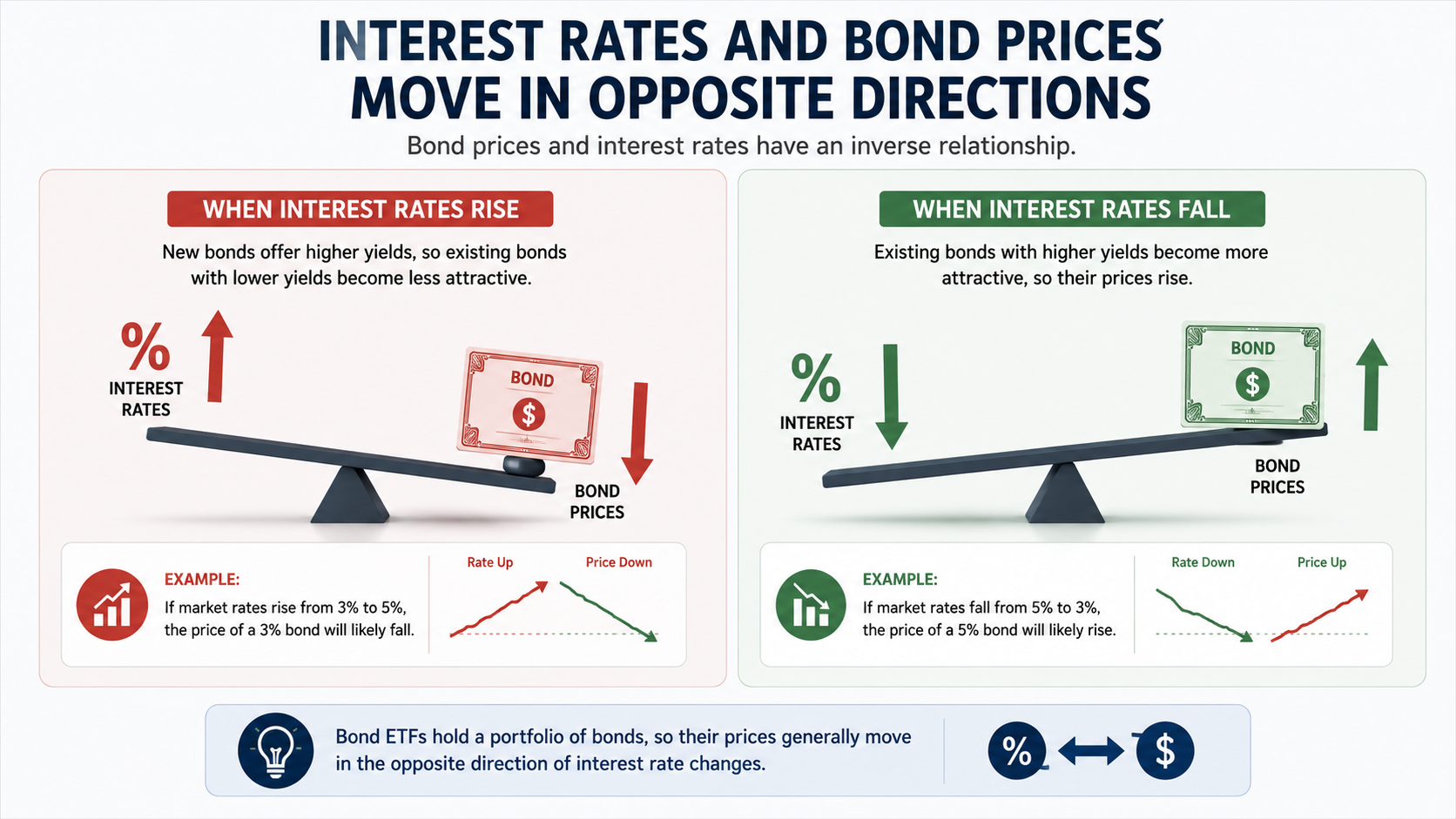
The most important concept behind bond ETFs is the relationship between interest rates and bond prices.
Interest Rates and Bond Prices Move in Opposite Directions
Suppose you own a bond paying 3% interest.
If newly issued bonds suddenly start offering 5%, investors will naturally prefer the newer bonds.
As a result, the value of the older 3% bond falls.
The opposite happens when interest rates decline.
Existing bonds with higher coupon payments become more attractive, causing their prices to rise.
Because bond ETFs hold portfolios of bonds, their prices generally move according to this same principle.
Bond ETFs Also Generate Income
Most bond ETFs distribute income generated from the interest payments collected from the underlying bonds.
This creates two potential sources of return
- Income from bond interest distributions
- Capital appreciation from rising bond prices
For many investors, especially retirees and income-focused investors, this predictable income stream is one of the most attractive features of bond ETFs.
Types of Bond ETFs
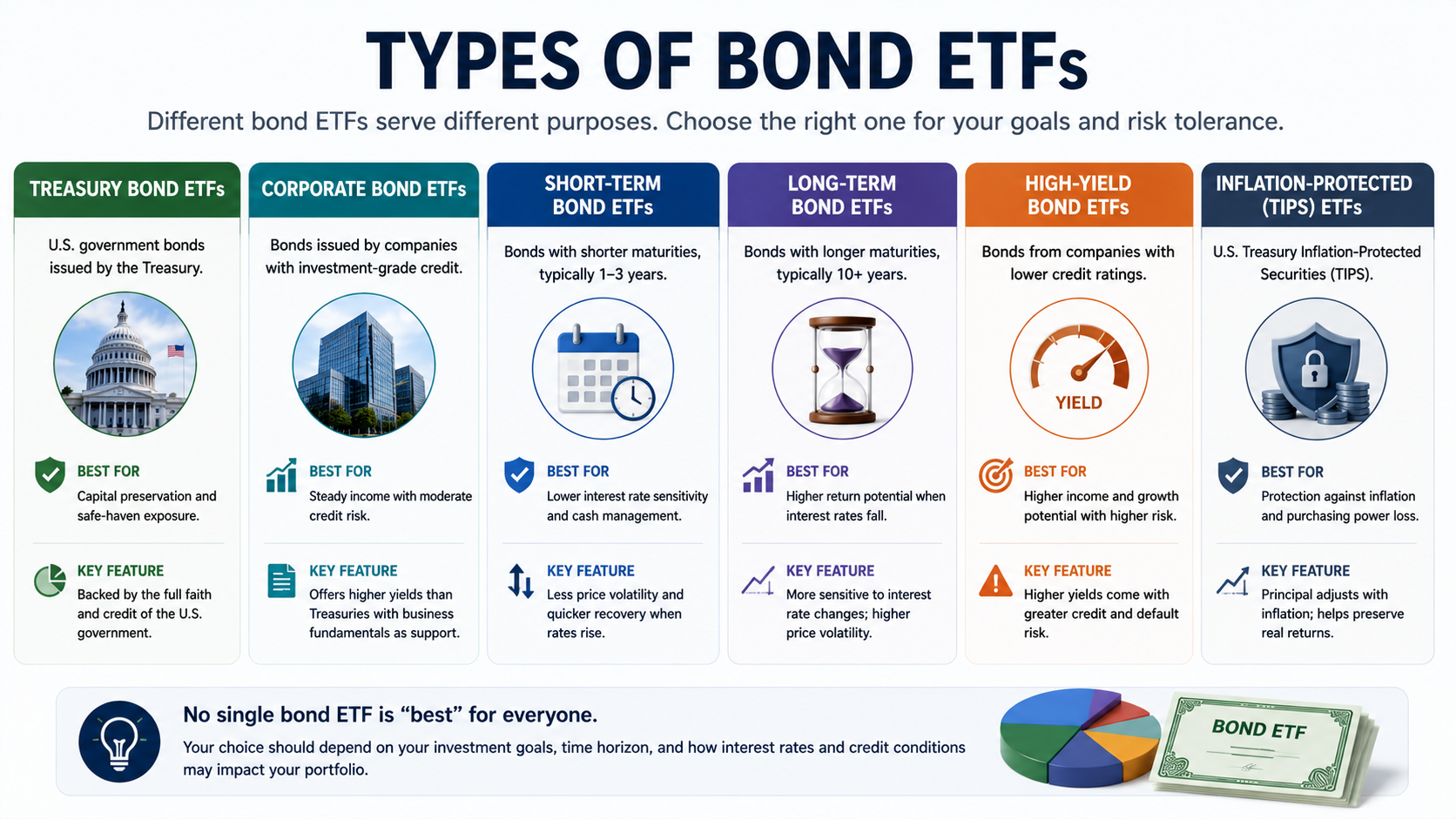
Not all bond ETFs are the same.
Different funds serve different purposes depending on risk tolerance and investment goals.
| Bond ETF Type | Primary Focus |
| Treasury Bond ETFs | U.S. government bonds |
| Corporate Bond ETFs | Investment-grade corporate debt |
| Short-Term Bond ETFs | Lower interest-rate sensitivity |
| Long-Term Bond ETFs | Higher interest-rate sensitivity |
| High-Yield Bond ETFs | Higher income with higher risk |
| Inflation-Protected Bond ETFs | Protection against inflation |
Long-duration bond ETFs tend to experience larger price swings when interest rates move.
This is why they often attract significant attention when markets begin pricing in Federal Reserve rate cuts.
Why Bond ETFs Matter
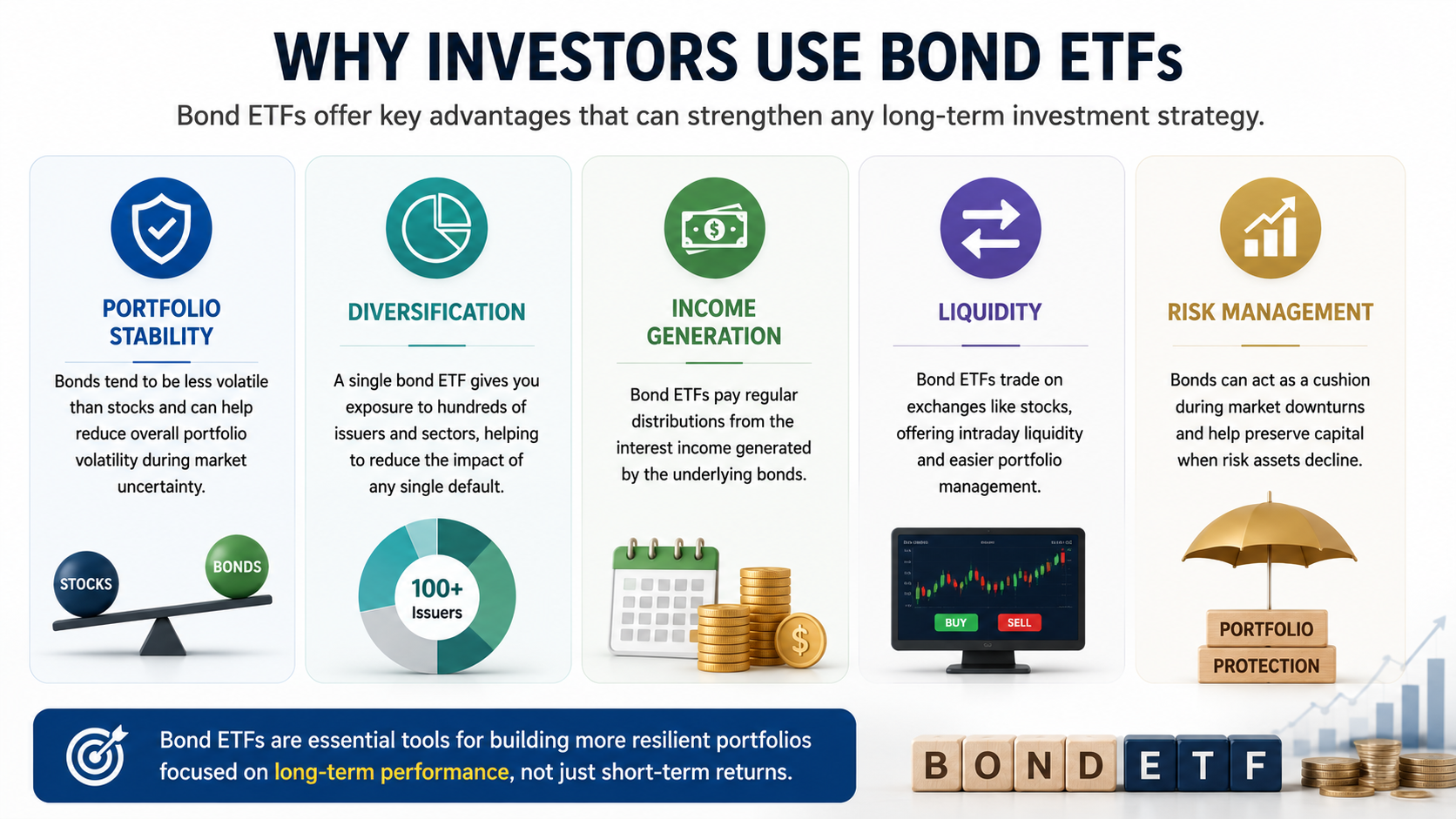
Portfolio Stability
Many investors focus entirely on returns.
Professional investors focus on risk-adjusted returns.
Bond ETFs can help reduce overall portfolio volatility and provide stability during periods of market uncertainty.
Diversification
Diversification is one of the few free advantages available in investing.
A single bond ETF can provide exposure to hundreds of issuers, reducing the impact of any one default or credit event.
Liquidity
Unlike individual bonds, bond ETFs can be bought and sold throughout the trading day.
This flexibility makes them easier to manage and rebalance.
Income Generation
Many investors use bond ETFs as a source of recurring income.
This becomes especially important during retirement or periods when stock market returns are uncertain.
How Bond ETFs Affect Financial Markets
Bond ETFs are deeply connected to broader market conditions.
| Market Environment | Potential Impact on Bond ETFs | Impact on Other Assets |
| Falling Interest Rates | Bond prices may rise | Stocks and risk assets may benefit |
| Rising Interest Rates | Bond prices may fall | Cash and short-duration assets become more attractive |
| Economic Slowdown | Treasury ETFs often strengthen | Stocks may weaken |
| High Inflation | Bond prices face pressure | Commodities and gold may outperform |
What matters most is not simply the movement of bond ETFs themselves.
What matters is the flow of capital.
Markets are constantly reallocating money between risk and safety.
Understanding where capital is moving often provides more insight than focusing solely on price charts.
Key Things Investors Should Know
Understand Duration
Duration measures how sensitive a bond ETF is to interest-rate changes.
The longer the duration, the larger the price movement when rates change.
This means long-term Treasury ETFs can sometimes be more volatile than investors expect.
Bond ETFs Are Not Savings Accounts
Many beginners assume bonds are risk-free.
They are not.
Bond ETF prices can decline significantly when interest rates rise.
Investors should understand that bond ETFs are investments, not cash equivalents.
Focus on Expectations, Not Predictions
Trying to perfectly predict future interest rates is extremely difficult.
Instead, investors should focus on what the market is already expecting.
Financial markets are forward-looking.
Prices often move long before economic changes become obvious.
What Do Wealthy Investors See in Bond ETFs?
Capital Flows
Sophisticated investors watch where money is moving.
Are investors moving from stocks into Treasuries?
Are they leaving risk assets altogether?
Bond ETFs can reveal important shifts in market sentiment.
Cash Flow
Consistent income matters.
Bond ETFs provide a stream of income that can support long-term portfolio planning.
Portfolio Survival
Investing is not only about maximizing gains.
It is also about surviving downturns.
A portfolio that cannot withstand a bear market rarely reaches its long-term goals.
Long-Term Opportunity
Many wealthy investors use bond ETFs as dry powder.
When market corrections occur, bond holdings can be reallocated into undervalued stocks.
In that sense, bond ETFs are not simply defensive assets.
They can become future opportunity assets.
Questions Every Investor Should Ask
- How sensitive is my portfolio to interest-rate changes?
- Do I own assets that can help during a recession?
- Am I focused only on returns, or am I also managing risk?
- Do I have enough liquidity to take advantage of future opportunities?
Final Thoughts
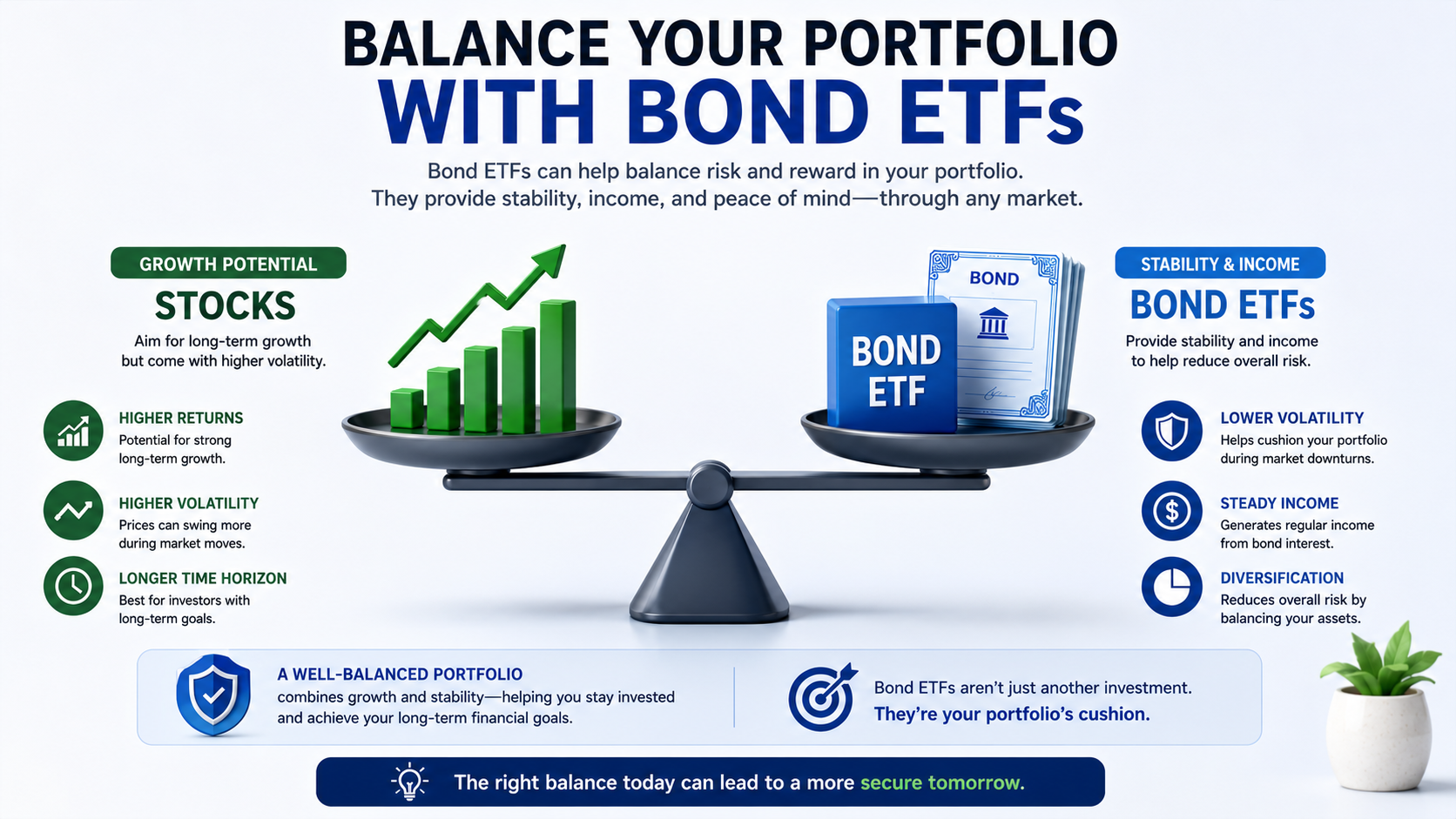
Bond ETFs have transformed fixed-income investing by making bond markets more accessible, diversified, and liquid for everyday investors.
However, their true value goes beyond convenience.
Bond ETFs sit at the intersection of interest rates, liquidity, risk management, and market psychology.
Understanding bond ETFs helps investors better understand how money flows through financial markets.
And in investing, understanding capital flows is often more valuable than predicting headlines.
The most successful investors are not necessarily those who earn the highest returns during bull markets.
They are the ones who remain financially resilient through every market cycle.
This was MasterMind. Designing success.
'[Global] Success Blueprints' 카테고리의 다른 글