What Are U.S. Treasuries? How Rising and Falling Treasury Yields Impact Markets


Hello, this is MasterMind.
If you've followed financial markets for any length of time, you've probably seen headlines like these
- "Treasury yields surge, sending stocks lower."
- "Investors rush into U.S. Treasuries amid market uncertainty."
- "The 10-year Treasury yield reaches a new high."
But why does a government bond have so much influence over the global economy?
Why do investors on Wall Street pay close attention to Treasury yields before they even look at the stock market?
The answer is simple.
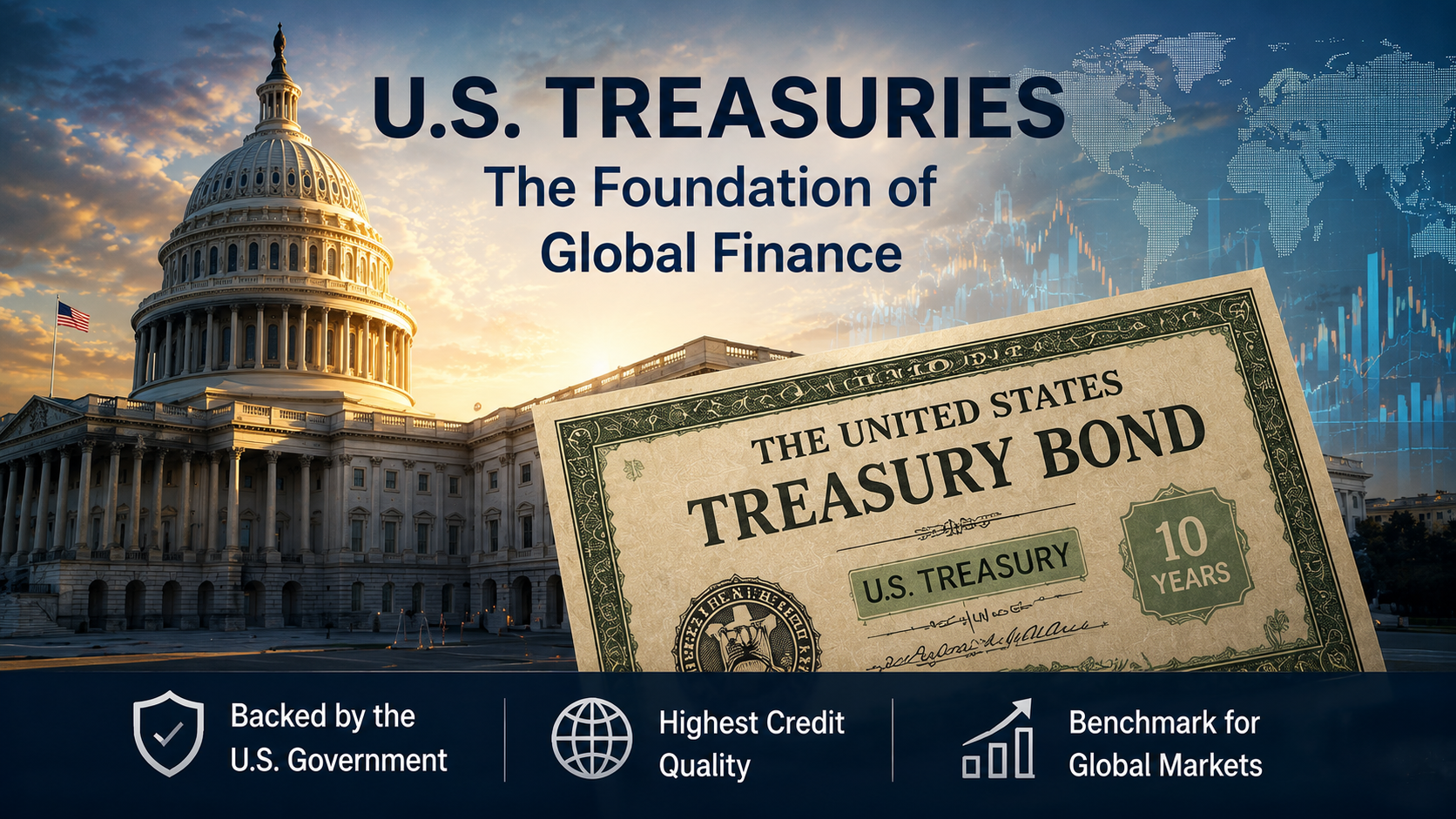
U.S. Treasuries are not just another investment product. They serve as the foundation of the global financial system and influence the pricing of nearly every major asset class.
Understanding U.S. Treasuries is not simply about learning how bonds work. It is about understanding how money moves through the economy and how financial markets are connected.
Key Takeaway
U.S. Treasury securities are considered the global risk-free benchmark, and Treasury yields act as one of the most important indicators of capital flows, economic expectations, and asset valuations.
What Are U.S. Treasuries?
U.S. Treasuries are debt securities issued by the U.S. Department of the Treasury to finance government spending.
When investors buy Treasury securities, they are essentially lending money to the U.S. government in exchange for periodic interest payments and the return of principal at maturity.
Because the U.S. government has historically been viewed as one of the most creditworthy borrowers in the world, Treasury securities are widely considered among the safest investments available.
Treasuries are generally divided into three categories
| Security Type | Maturity |
| Treasury Bills (T-Bills) | Less than 1 year |
| Treasury Notes (T-Notes) | 2 to 10 years |
| Treasury Bonds (T-Bonds) | 20 to 30 years |
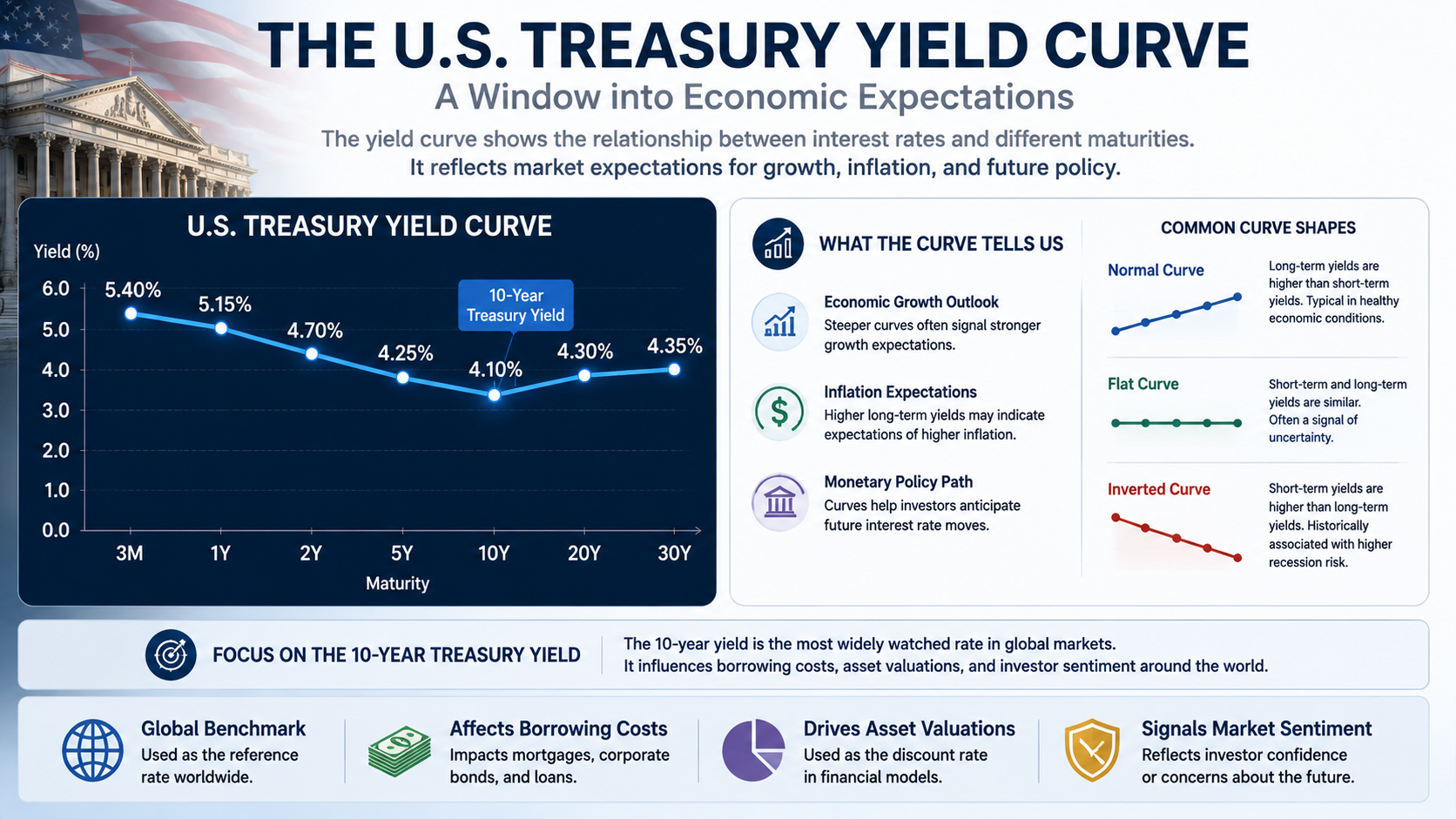
Among these, the 10-year Treasury yield is often regarded as the most important interest rate in global finance.
How Treasury Yields Work
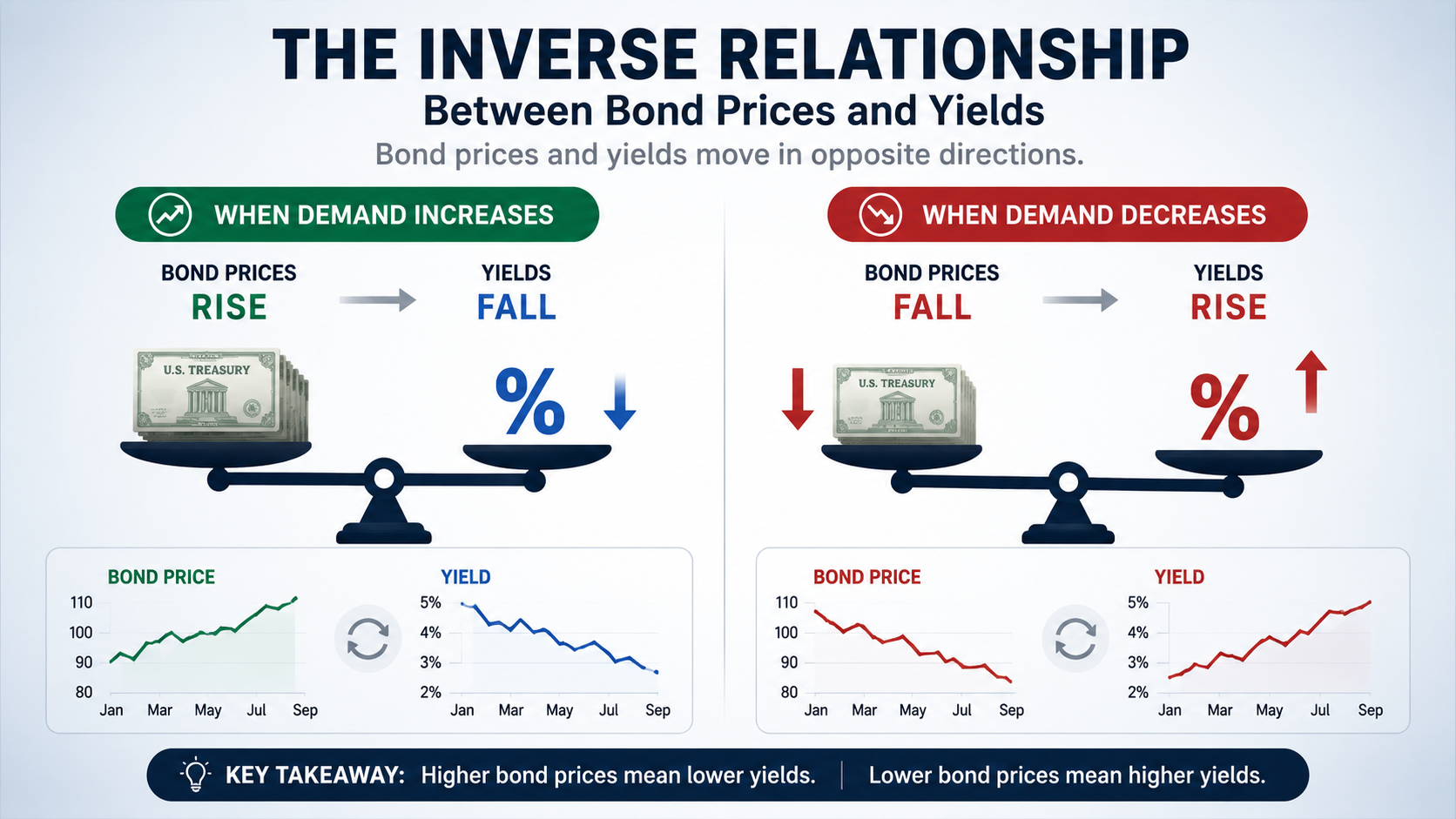
One of the most important concepts investors need to understand is that bond prices and bond yields move in opposite directions.
When Demand for Treasuries Rises
During periods of uncertainty, investors often seek safety.
As more buyers enter the Treasury market, bond prices rise.
However, since interest payments are fixed, higher prices result in lower yields.
In simple terms
Higher Treasury prices = Lower Treasury yields
When Demand for Treasuries Falls
When investors become more optimistic and move money into stocks or other risk assets, Treasury demand may decline.
Bond prices fall, causing yields to rise.
In simple terms
Lower Treasury prices = Higher Treasury yields
This inverse relationship explains why investors often focus on Treasury yields rather than Treasury prices.
Treasury Yields and the Federal Reserve
Many investors assume Treasury yields are controlled directly by the Federal Reserve.
That is only partially true.
The Federal Reserve controls short-term interest rates through monetary policy.
However, longer-term Treasury yields are determined by market participants and reflect expectations about
- Economic growth
- Inflation
- Future interest rates
- Government borrowing
- Investor sentiment
This is why Treasury yields sometimes move in a completely different direction from the Fed's policy rate.
The bond market is constantly attempting to price the future, not the present.
Why Treasury Yields Matter
The Risk-Free Rate Benchmark
Treasury yields represent the return investors can earn with minimal credit risk.
As a result, Treasury yields become the baseline against which all other investments are measured.
If a 10-year Treasury offers a 5% annual yield, investors will generally demand a significantly higher expected return from stocks, real estate, or private investments.
This concept is known as the risk premium.
The Foundation of Asset Valuation
Future cash flows are worth less when interest rates rise.
Because Treasury yields are commonly used as the discount rate in financial models, higher yields tend to reduce the present value of future earnings.
This is particularly important for
- Technology stocks
- Growth companies
- High-valuation assets
The higher Treasury yields go, the more pressure these assets may face.
The Global Cost of Capital
Treasury yields influence borrowing costs across the economy.
Mortgage rates, corporate bond yields, business loans, and even international debt markets often move in relation to Treasury yields.
In many ways, Treasury yields function as the global price of money.
How Treasury Yields Affect Financial Markets

Stocks
Rising Treasury yields often create valuation pressure on stocks, particularly growth stocks.
Falling yields generally support higher equity valuations.
Bonds
Existing bonds typically lose value when yields rise and gain value when yields fall.
U.S. Dollar
Higher Treasury yields can attract global capital into dollar-denominated assets, strengthening the U.S. dollar.
Lower yields may have the opposite effect.
Gold
Gold does not generate interest income.
As Treasury yields rise, the opportunity cost of holding gold increases, which can weigh on gold prices.
Bitcoin and Other Cryptocurrencies
Cryptocurrencies often benefit from abundant liquidity and investor risk appetite.
Rising Treasury yields may reduce liquidity and increase competition from safer income-producing assets.
What Investors Should Watch
Focus on the Speed of Yield Changes
Rising yields are not automatically bearish.
A gradual increase driven by healthy economic growth can be a positive sign.
Problems typically emerge when yields rise faster than markets expect.
Rapid increases in yields can trigger volatility across stocks, bonds, and other asset classes.
Watch the Yield Curve
Under normal conditions, long-term Treasury yields are higher than short-term yields.
When short-term yields exceed long-term yields, the yield curve becomes inverted.
Historically, yield curve inversions have often been associated with elevated recession risks.
Follow Capital Flows
The most important question is not whether yields are up or down.
The more important question is where money is moving.
Are investors seeking safety?
Or are they moving into risk assets?
Understanding capital flows often provides deeper insight than simply tracking headlines.
What Wealthy Investors See in Treasury Markets
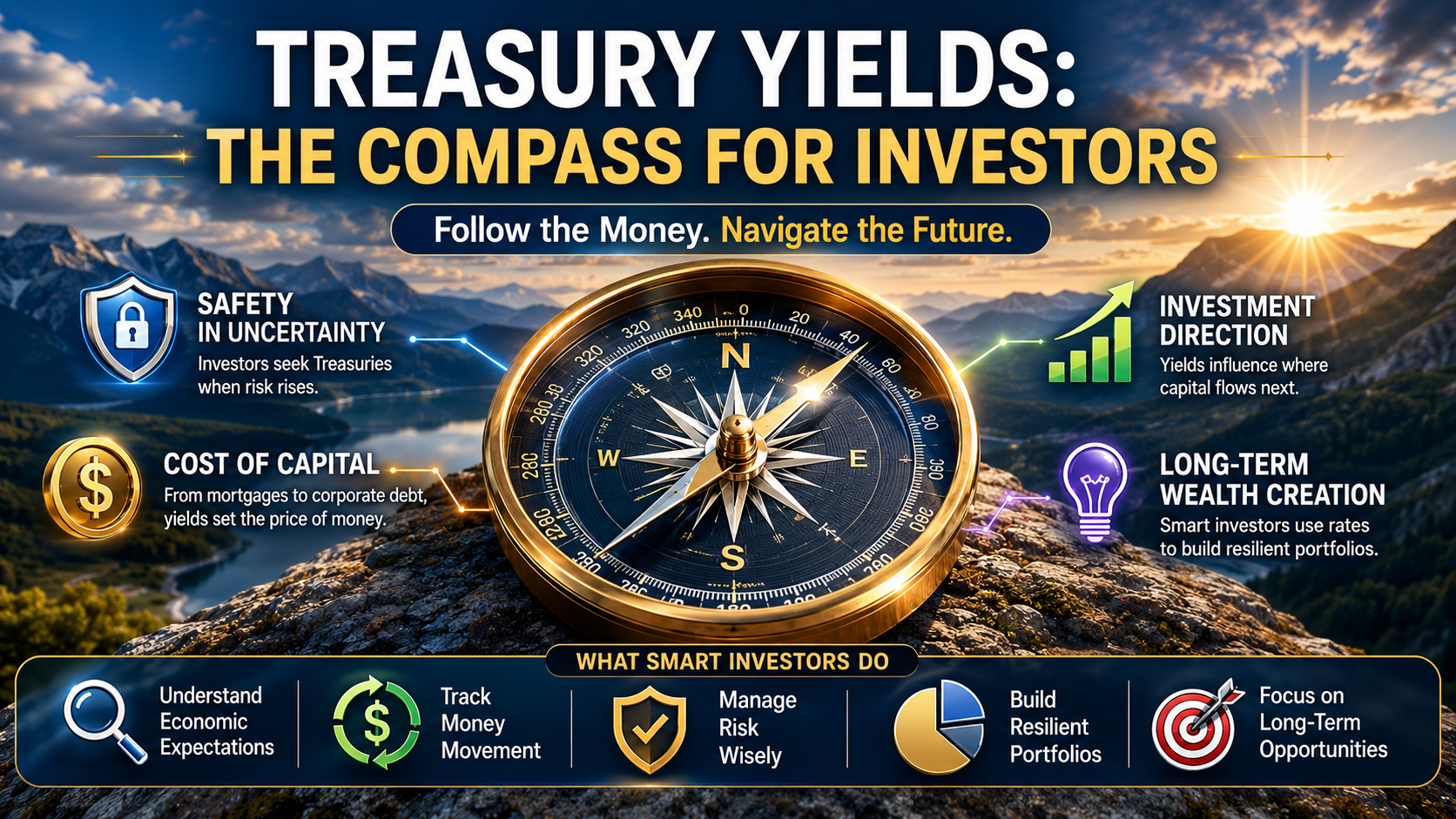
Large investors rarely focus solely on stock prices.
Instead, they monitor Treasury markets for signals about the broader financial system.
Money Movement
Treasury markets often reveal shifts in investor behavior before those shifts become visible elsewhere.
Cash Flow
Sophisticated investors prioritize sustainable cash flow over short-term speculation.
In higher-rate environments, assets with strong cash generation tend to attract more attention.
Portfolio Resilience
Successful investing is not only about maximizing returns.
It is also about surviving adverse market conditions.
Treasuries often serve as a stabilizing force within diversified portfolios.
Long-Term Perspective
Markets react to news in the short term.
Over longer periods, they tend to follow capital flows and economic fundamentals.
This is why many experienced investors spend more time studying Treasury markets than predicting daily stock movements.
Ask yourself
- Is capital moving toward safety or risk?
- How would my portfolio perform if Treasury yields rose significantly?
- Am I following headlines, or am I following money flows?
Final Thoughts
U.S. Treasuries are far more than government bonds.
They serve as the foundation of global finance, influence borrowing costs throughout the economy, and shape the valuation of nearly every major asset class.
Stocks, bonds, gold, the U.S. dollar, and even cryptocurrencies are affected by changes in Treasury yields.
That is why professional investors often monitor Treasury markets before they look at stock charts.
Financial markets ultimately follow the movement of capital.
And one of the clearest signals of where capital is moving can be found in the U.S. Treasury market.
The key lesson to remember is this
Treasury yields are not just numbers. They are one of the most powerful indicators of economic expectations, capital flows, and financial market direction.
This was MasterMind. Designing success.
'[Global] Success Blueprints' 카테고리의 다른 글