Why Gold and Bitcoin Fell After the Fed Rate Pause and What the Dot Plot Reveals


Hello, this is MasterMind.
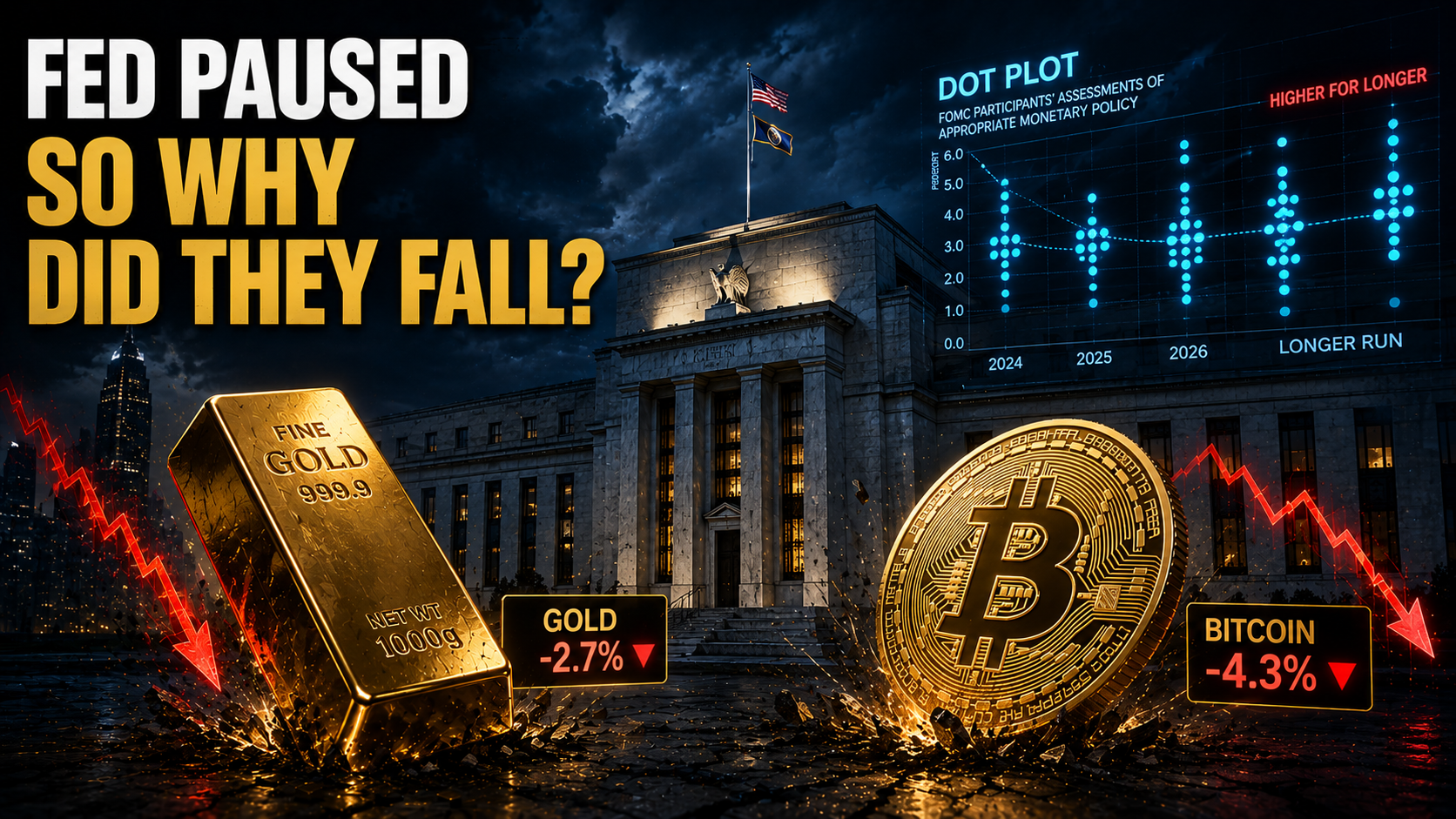
If the Federal Reserve kept interest rates unchanged, why did both gold and Bitcoin fall at the same time?
At first glance, it seems counterintuitive. Gold is often viewed as a safe-haven asset, while Bitcoin is frequently called "digital gold." Conventional wisdom suggests that if the Fed is not raising rates, both assets should benefit.
Yet financial markets rarely react to today's interest rate alone.
They react to expectations about tomorrow.
Understanding why gold and Bitcoin declined despite a Fed rate pause provides a valuable lesson about liquidity, real interest rates, and the flow of capital across global markets.
Key Takeaway
Gold and Bitcoin can decline even when the Fed holds rates steady if investors begin to expect higher interest rates, tighter liquidity, or stronger real yields in the future.
Why a Fed Rate Pause Doesn't Always Help Asset Prices
Many investors assume that a rate pause is automatically bullish.
However, financial markets are forward-looking.
By the time the Fed announces its decision, investors have often priced in the outcome weeks or even months in advance.
The real question is not
What did the Fed do today?
The real question is
What does the Fed suggest it may do next?
That distinction is what moved markets.
What Is the Fed's Dot Plot?

The Dot Plot is one of the most closely watched documents released after Federal Reserve meetings.
It shows where individual Fed officials expect interest rates to be in the future.
Each dot represents one policymaker's forecast.
While the official rate decision tells investors where rates are today, the Dot Plot provides clues about where rates may go tomorrow.
This is why markets often react more strongly to the Dot Plot than to the rate announcement itself.
For investors, the Dot Plot is essentially a roadmap of future monetary policy expectations.
The Market Saw a Hawkish Pause
A common misconception is that a rate pause means the tightening cycle is over.
That is not always true.
Sometimes the Fed pauses while signaling that rates could remain elevated for longer than investors expect.
This is known as a hawkish pause.
In a hawkish pause, the Fed may communicate
- Inflation remains a concern.
- Rate cuts may not arrive soon.
- Higher rates could stay in place longer.
- Financial conditions may remain restrictive.
When investors interpret a Fed meeting this way, asset prices can fall even without an actual rate hike.
The market is responding to future policy, not current policy.
Why Gold Fell
Gold has served as a store of value for thousands of years.
However, gold has one important characteristic
It does not generate income.
Unlike Treasury bonds, money market funds, or savings accounts, gold does not pay interest.
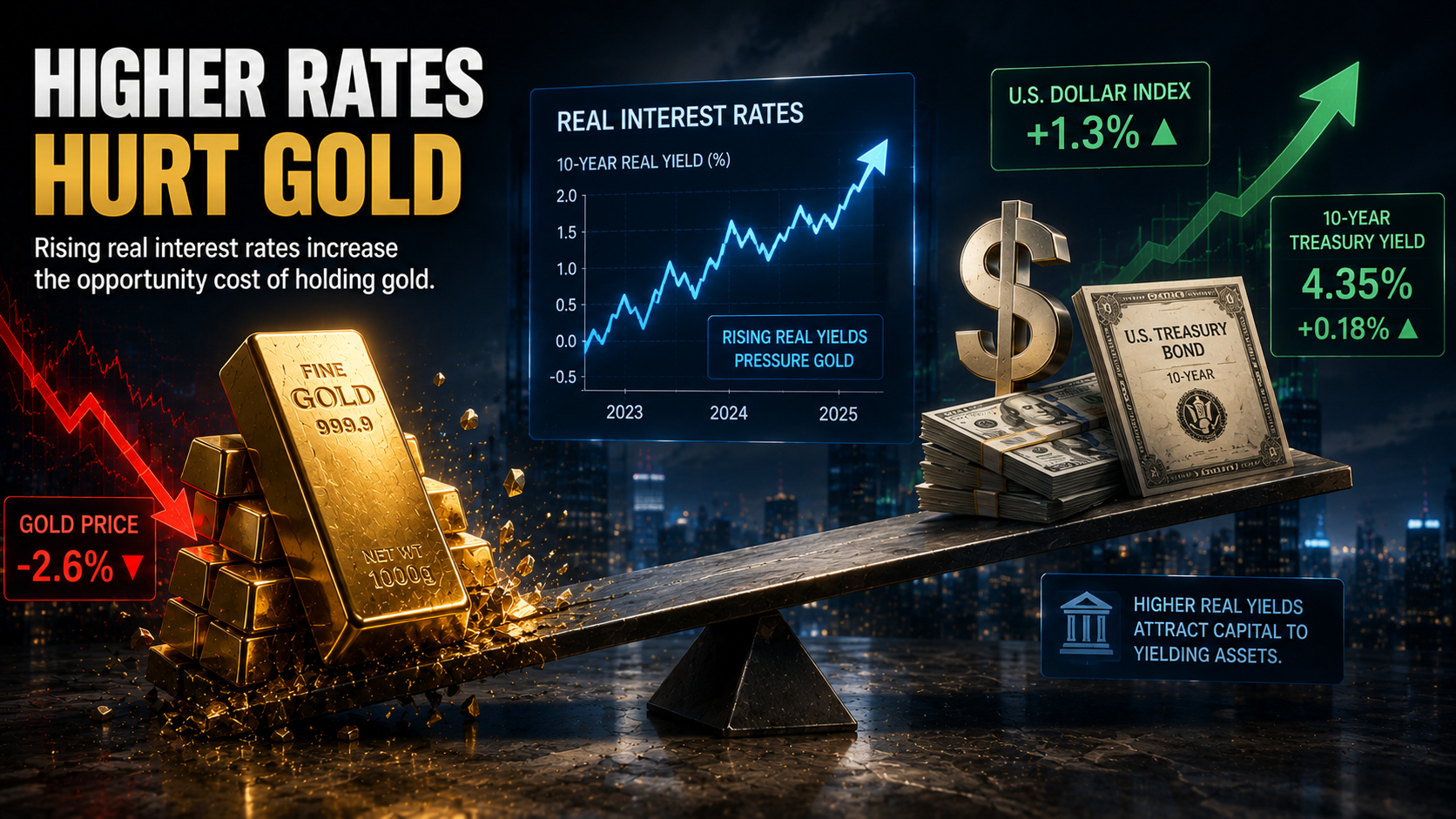
When investors expect higher interest rates or higher real yields, the opportunity cost of holding gold increases.
In simple terms
If a Treasury bond offers attractive yields, investors may choose income-producing assets over a non-yielding asset like gold.
This relationship becomes especially important when real interest rates rise.
What Are Real Interest Rates?
Real interest rates are calculated by subtracting inflation from nominal interest rates.
When real yields rise
- Cash becomes more attractive.
- Bonds become more attractive.
- Gold often faces downward pressure.
This is one reason why gold prices can fall even when the Fed leaves rates unchanged.
Why Bitcoin Fell Alongside Gold
Bitcoin is often described as digital gold.
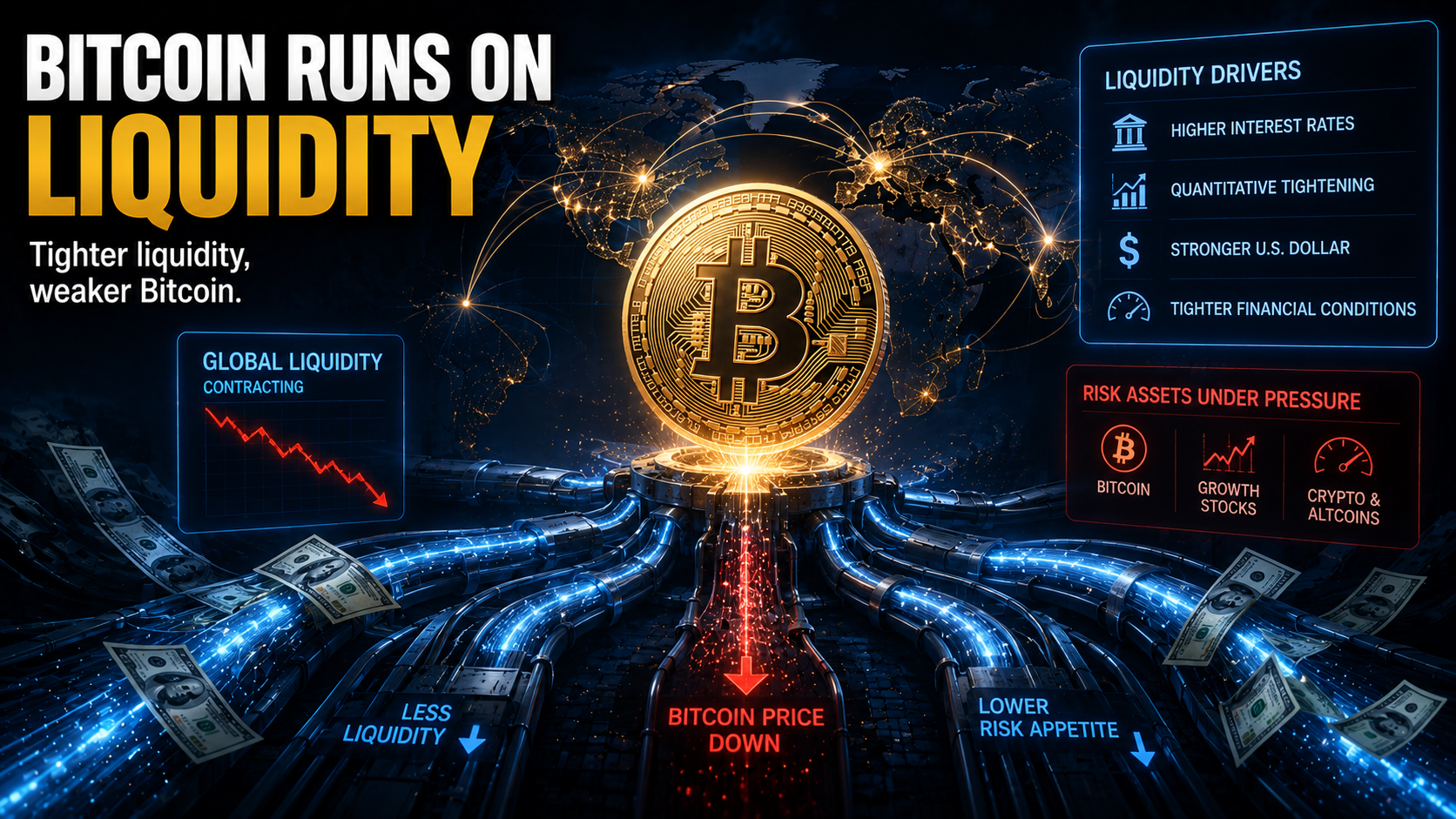
In practice, however, Bitcoin frequently behaves more like a high-growth technology asset.
Its performance is heavily influenced by liquidity conditions.
When money is abundant and financial conditions are loose, investors tend to take more risk.
Capital flows into
- Growth stocks
- Venture capital
- Cryptocurrencies
- Speculative assets
When liquidity tightens, the opposite happens.
Investors reduce risk exposure and move toward safer assets.
Because Bitcoin is highly sensitive to global liquidity, expectations of tighter financial conditions can put pressure on its price.
This explains why Bitcoin sometimes falls at the same time as gold despite their different narratives.
Liquidity Is the Real Driver
Many investors focus on prices.
Experienced investors focus on liquidity.
Liquidity is the fuel that powers financial markets.
When liquidity expands
- Asset prices tend to rise.
- Risk appetite increases.
- Capital flows toward growth-oriented investments.
When liquidity contracts
- Investors become more selective.
- Risk assets face pressure.
- Capital seeks safety and yield.
This is why understanding liquidity is often more important than predicting the next market headline.
Markets move because money moves.
Why Investors Should Pay Attention
The most important lesson from this event is that markets react to changing expectations.
Asset prices do not simply reflect current reality.
They reflect what investors collectively believe about the future.
A Fed rate pause may already be fully priced into markets.
What matters is whether future expectations become
- More hawkish
- More dovish
- More optimistic
- More pessimistic
In many cases, changes in expectations create larger market moves than the actual economic data itself.
How Different Assets Typically React
| Asset Class | Potential Impact |
| U.S. Dollar | Often strengthens when rates stay higher for longer |
| Treasury Bonds | Yields may rise if markets expect tighter policy |
| Gold | Faces pressure from higher real yields |
| Bitcoin | Sensitive to liquidity conditions and risk appetite |
| Growth Stocks | Can struggle when liquidity tightens |
| Cash | Becomes relatively more attractive |
The exact outcome varies from cycle to cycle, but understanding these relationships helps investors interpret market behavior more effectively.
Key Takeaways for Investors
Don't Focus Only on the Rate Decision
The Fed's statement, projections, and Dot Plot often matter more than the rate announcement itself.
Watch Real Interest Rates
Real yields are one of the most important drivers of gold prices.
Follow Liquidity
Liquidity influences nearly every major asset class, including stocks, bonds, gold, and cryptocurrencies.
Markets Price the Future
By the time a policy decision becomes official, markets may have already moved on to the next expectation.
What Wealthy Investors Look For
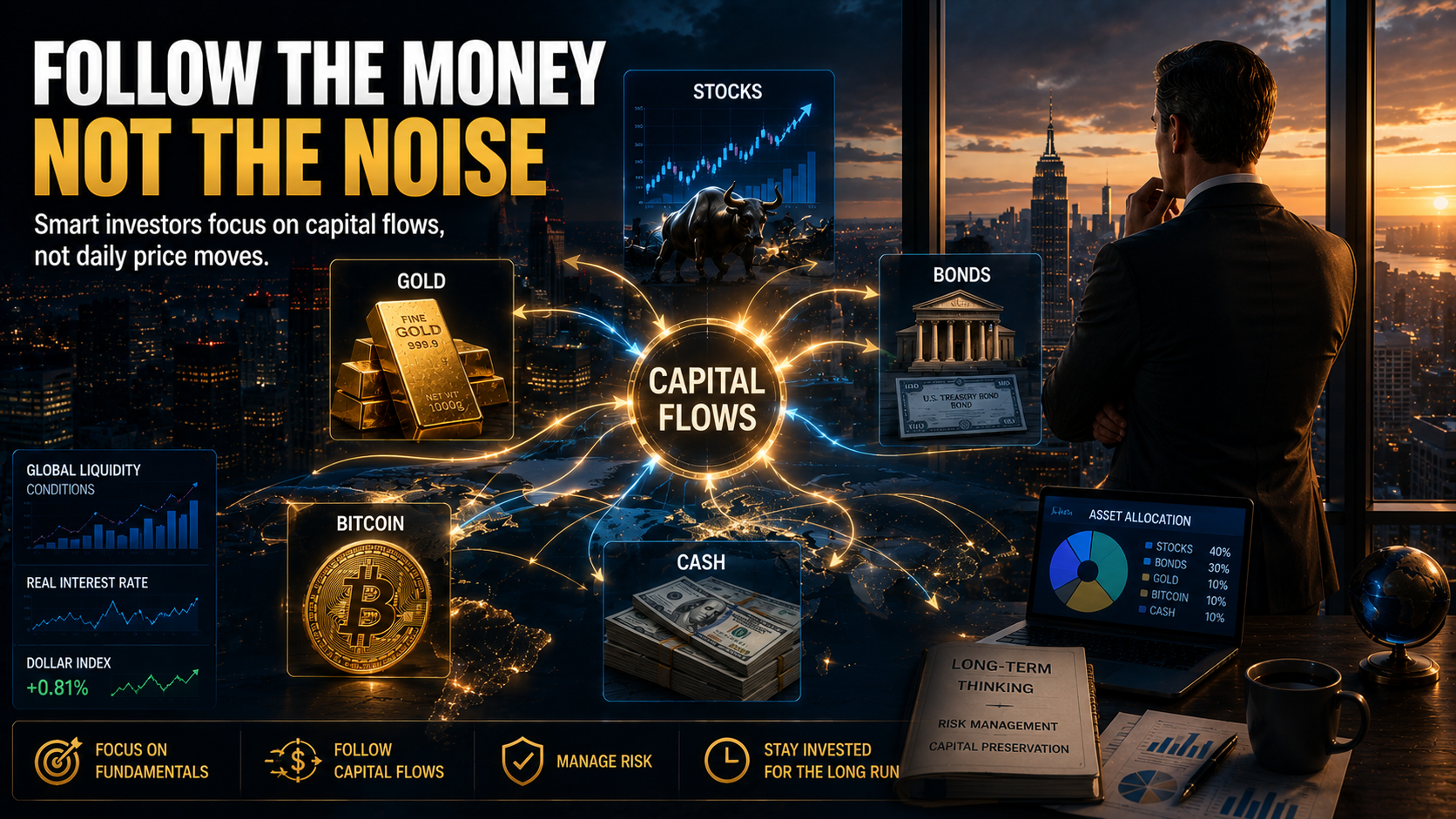
Large institutional investors rarely focus on daily price swings.
Instead, they focus on the movement of capital.
Money Flows
Where is capital moving?
Toward cash?
Toward bonds?
Toward technology stocks?
Toward alternative assets?
Following money flows often reveals more than following headlines.
Cash Flow
In a higher-rate environment, assets that generate consistent cash flow become increasingly valuable.
Asset Resilience
The goal is not simply maximizing returns.
The goal is surviving changing economic environments.
The strongest portfolios are designed to withstand multiple scenarios.
Long-Term Perspective
Successful investors spend less time predicting and more time preparing.
Rather than asking:
Will gold rise next week?
They ask
Is liquidity expanding or contracting?
That question often provides a much clearer picture of future market conditions.
Consider asking yourself
- Can my portfolio handle higher rates for longer?
- Am I focused on prices or capital flows?
- Which assets benefit from tighter liquidity?
- Which assets depend on abundant liquidity to perform?
In investing, survival is often more important than prediction.
Final Thoughts
Gold and Bitcoin did not fall because the Fed raised rates.
They fell because investors reassessed the future path of monetary policy, liquidity, and real interest rates.
The lesson is simple
Financial markets are not driven solely by what the Fed does today.
They are driven by what investors believe the Fed will do tomorrow.
Understanding expectations, liquidity, and capital flows can provide far more insight than focusing on headlines alone.
The market always looks ahead. And capital is always searching for its next destination.
This was MasterMind.
'[Global] Success Blueprints' 카테고리의 다른 글