The June 2026 FOMC Dot Plot Was Hawkish. So Why Were Markets Relieved?


The Federal Reserve left interest rates unchanged in June 2026.
Yet investors were focused on something else entirely: the Dot Plot.
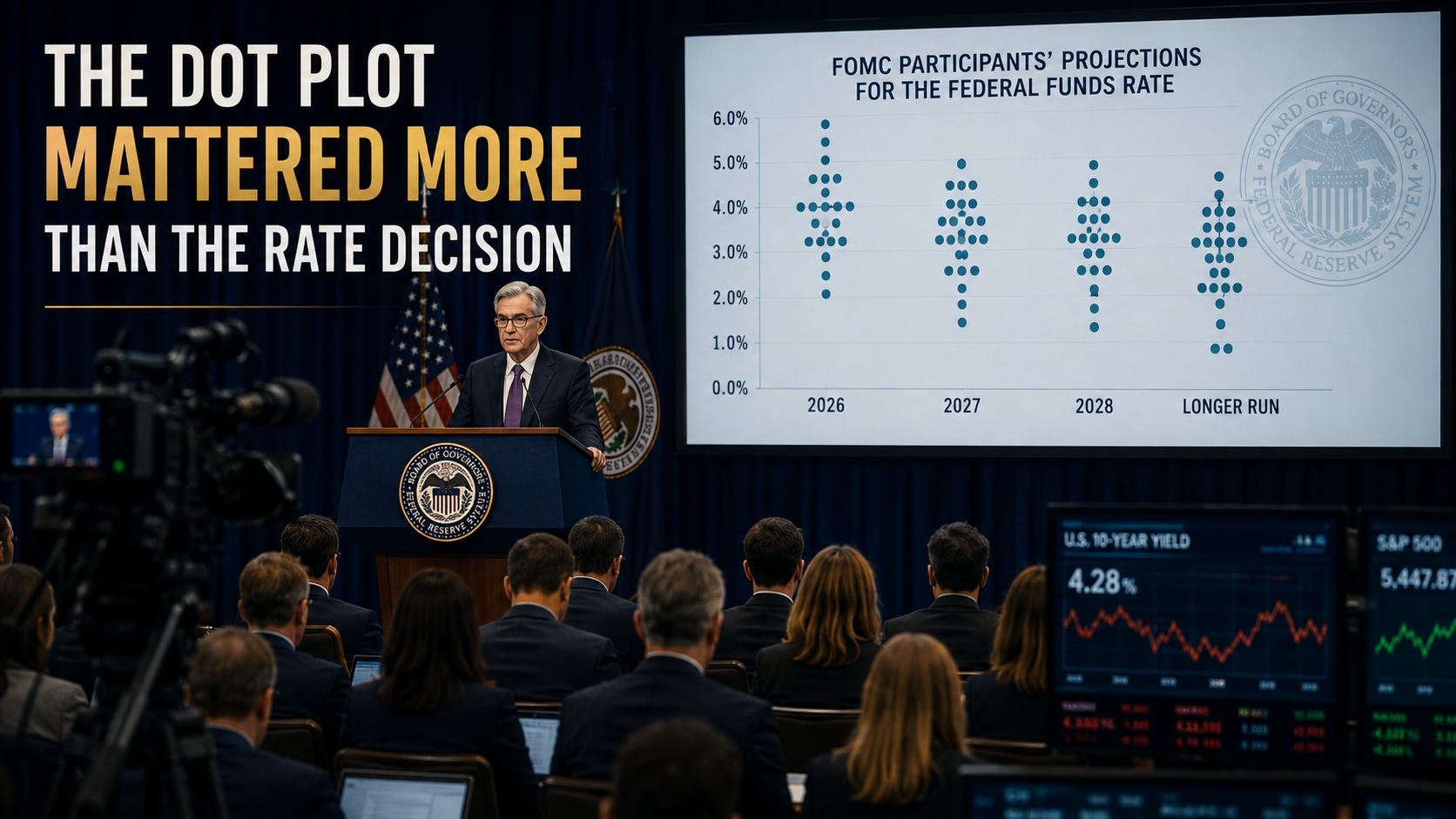
Leading up to the meeting, markets were bracing for a significantly more hawkish outcome. Many investors feared the Federal Reserve would push back harder against rate-cut expectations and reinforce the idea that interest rates may remain elevated for much longer.
However, when the meeting concluded, the reaction was surprisingly calm.
Some analysts even described the outcome as "less hawkish than expected."
So why did markets find relief in a meeting that still carried a relatively restrictive message?
The answer lies in one of the most important principles of investing:
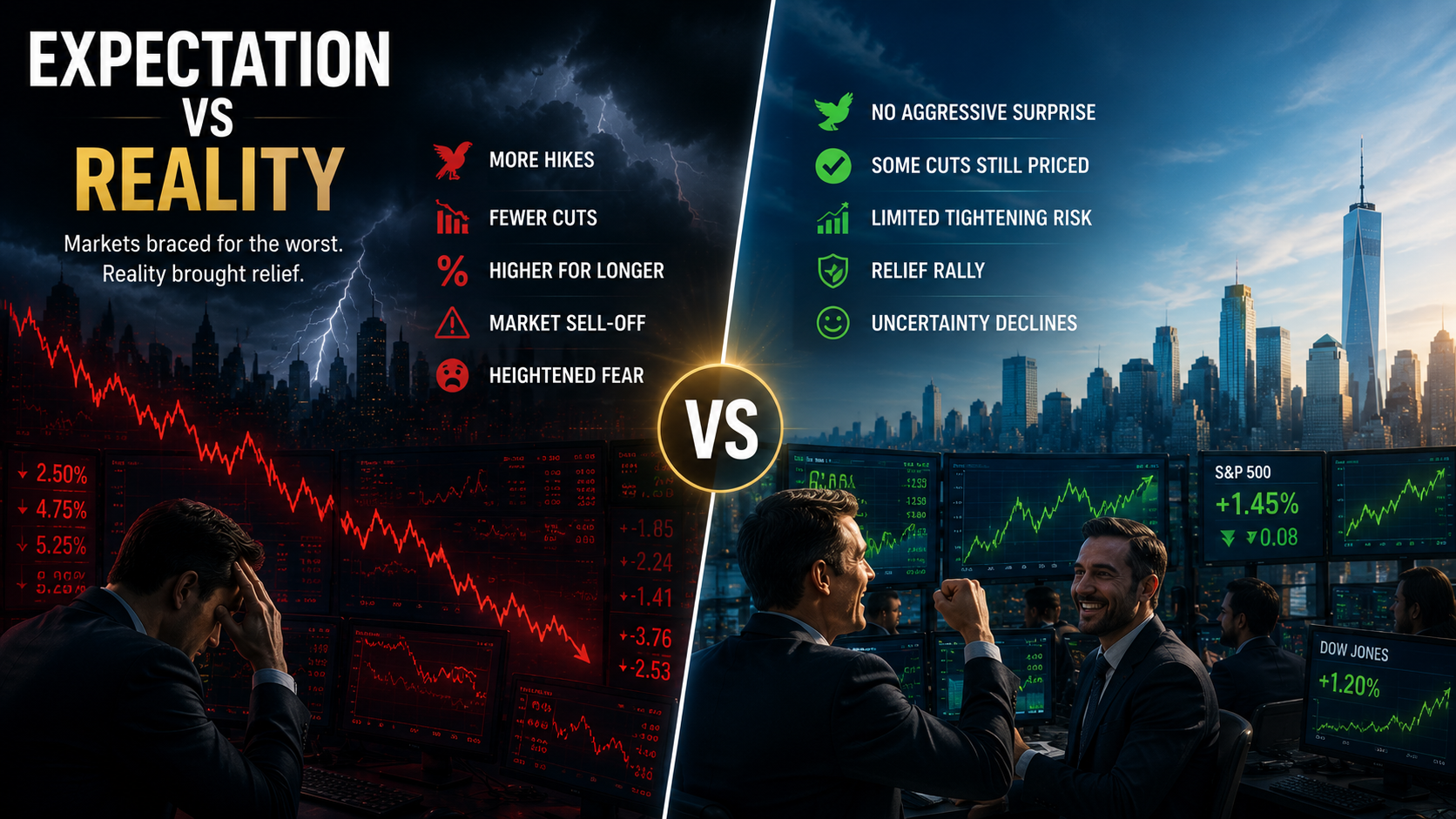
Markets do not react to numbers. Markets react to the gap between expectations and reality.
The June 2026 FOMC meeting offers a perfect example of this dynamic.
Key Takeaway
The June 2026 FOMC Dot Plot remained broadly hawkish, but because investors had prepared for an even more aggressive outcome, the actual result reduced uncertainty and was interpreted as a relative positive.
What Is The FOMC Dot Plot?
The Dot Plot is a chart published by the Federal Reserve that shows where individual policymakers believe interest rates should be in the future.
Each dot represents one policymaker's projection for the federal funds rate.
Investors use the Dot Plot to estimate the future path of monetary policy and understand how the Federal Reserve views inflation, growth, and financial conditions.
However, there is an important distinction.
The Dot Plot is not a promise.
It is simply a snapshot of policymakers' current expectations, which can change as economic conditions evolve.
That is why investors focus less on the exact dots and more on how those dots change from one meeting to the next.
What Investors Were Worried About Before The Meeting
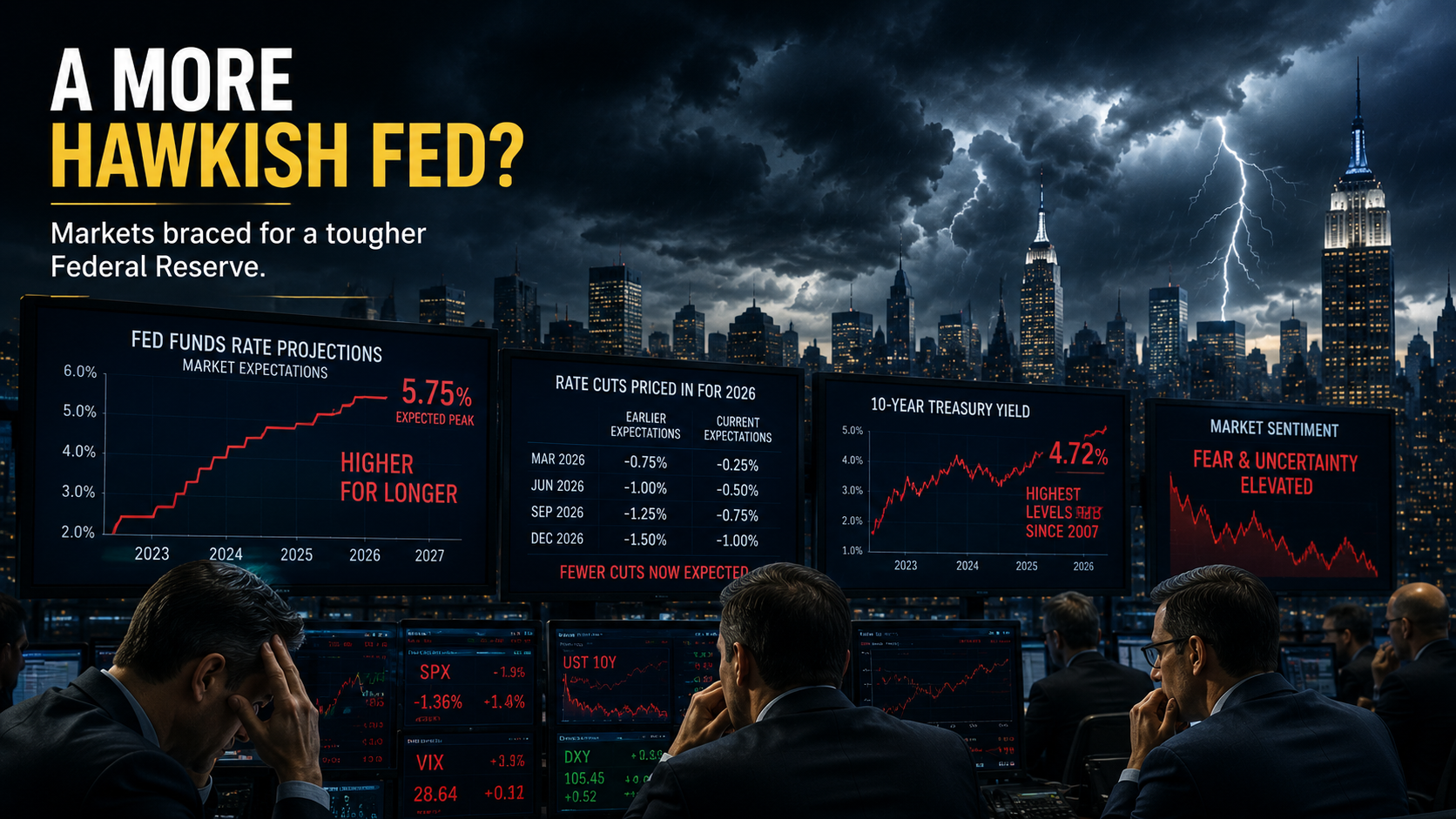
Before the June meeting, markets faced several concerns.
Inflation remained above the Federal Reserve's long-term target.
Economic growth was slowing, but not enough to eliminate inflation concerns.
Labor market conditions remained relatively resilient.
As a result, investors worried that policymakers would adopt a much tougher stance than markets had anticipated.
The biggest fears included:
- Fewer projected rate cuts
- Higher long-term interest rate forecasts
- Increased discussion of additional tightening
- A stronger commitment to restrictive policy
In short, investors were preparing for a much more aggressive hawkish surprise.
What Changed In The June 2026 Dot Plot?
The June Dot Plot showed that Federal Reserve policymakers continue to expect interest rates to remain relatively elevated.
While the overall message remained hawkish, the shift was smaller than many investors feared before the meeting.
This distinction ultimately became one of the main reasons markets reacted calmly.
June 2026 Dot Plot Snapshot
| Metric | March 2026 | June 2026 |
| 2026 Year-End Median Rate | 3.4% | 3.8% |
| Inflation Forecast (PCE) | 2.7% | 3.6% |
| Policy Message | Gradual Easing | Higher for Longer |
At first glance, these projections appeared hawkish.
The median rate forecast moved higher, and inflation expectations increased significantly.
Yet markets remained surprisingly calm because investors had already priced in an even more aggressive outcome.
The key takeaway was not the exact numbers themselves.
It was the fact that the adjustment remained relatively modest compared with the more aggressive scenarios investors had been pricing in beforehand.
Understanding Hawkish And Dovish Policy
Financial media frequently use terms like "hawkish" and "dovish," but many newer investors are not entirely familiar with what they mean.
A hawkish Federal Reserve prioritizes controlling inflation.
This generally means:
- Higher interest rates
- Restrictive monetary policy
- Slower liquidity growth
- Less support for risk assets
A dovish Federal Reserve prioritizes economic growth and financial support.
This generally means:
- Lower interest rates
- Easier financial conditions
- Greater liquidity
- More support for risk assets
| Policy Stance | General Meaning |
| Hawkish | Tightening financial conditions |
| Dovish | Easing financial conditions |
Markets generally welcome dovish surprises and dislike hawkish surprises.
The key word, however, is surprise.
Why Markets Stayed Calm
This is where many investors misunderstand how markets actually work.
The market's reaction becomes easier to understand when expectations and reality are compared side by side.
| What Markets Feared | What The Dot Plot Showed |
| Major hawkish shift | Moderate upward revision |
| Rate cuts disappear | Some cuts still projected |
| Aggressive tightening | Higher-for-longer message |
| Risk asset selloff | Relative market relief |
Markets react less to the level of rates and more to changes in expectations.
Most people focus on the level of interest rates.
Professional investors focus on expectations.
Markets react less to the level of rates and more to changes in expectations.
The June 2026 Dot Plot was certainly not dovish.
The Federal Reserve maintained a restrictive stance and showed little urgency to begin aggressive rate cuts.
However, it also failed to deliver the highly aggressive outcome many investors had feared.
The market's reaction becomes easier to understand when expectations and reality are compared side by side.
Once investors realized the worst-case scenario was unlikely, uncertainty declined.
And when uncertainty declines, markets often respond positively even if the underlying news is not particularly good.
This is one of the most misunderstood aspects of market psychology.
Bad news can cause stocks to rise if investors were expecting something even worse.
The Real Message From The Federal Reserve
Behind the headlines, the Fed appeared to communicate three important messages.
Rate Cuts Are Not Imminent
Federal Reserve officials remain cautious about declaring victory over inflation.
Policymakers continue to emphasize the need for additional evidence before committing to meaningful rate reductions.
Additional Tightening Is Not The Base Case
At the same time, policymakers avoided signaling another major tightening cycle.
This helped reduce fears of a significantly more restrictive policy path.
Higher For Longer Remains The Central Theme
The most important takeaway may not be higher rates.
It may be longer-lasting rates.
The Federal Reserve continues to emphasize maintaining restrictive conditions long enough to ensure inflation remains under control.
For investors, this means the discussion is shifting away from whether rates will rise and toward how long rates will stay elevated.
Why Investors Care So Much About The Dot Plot

Many investors treat the Dot Plot as a simple interest-rate forecast.
In reality, it provides something far more valuable.
The Dot Plot offers clues about future liquidity conditions.
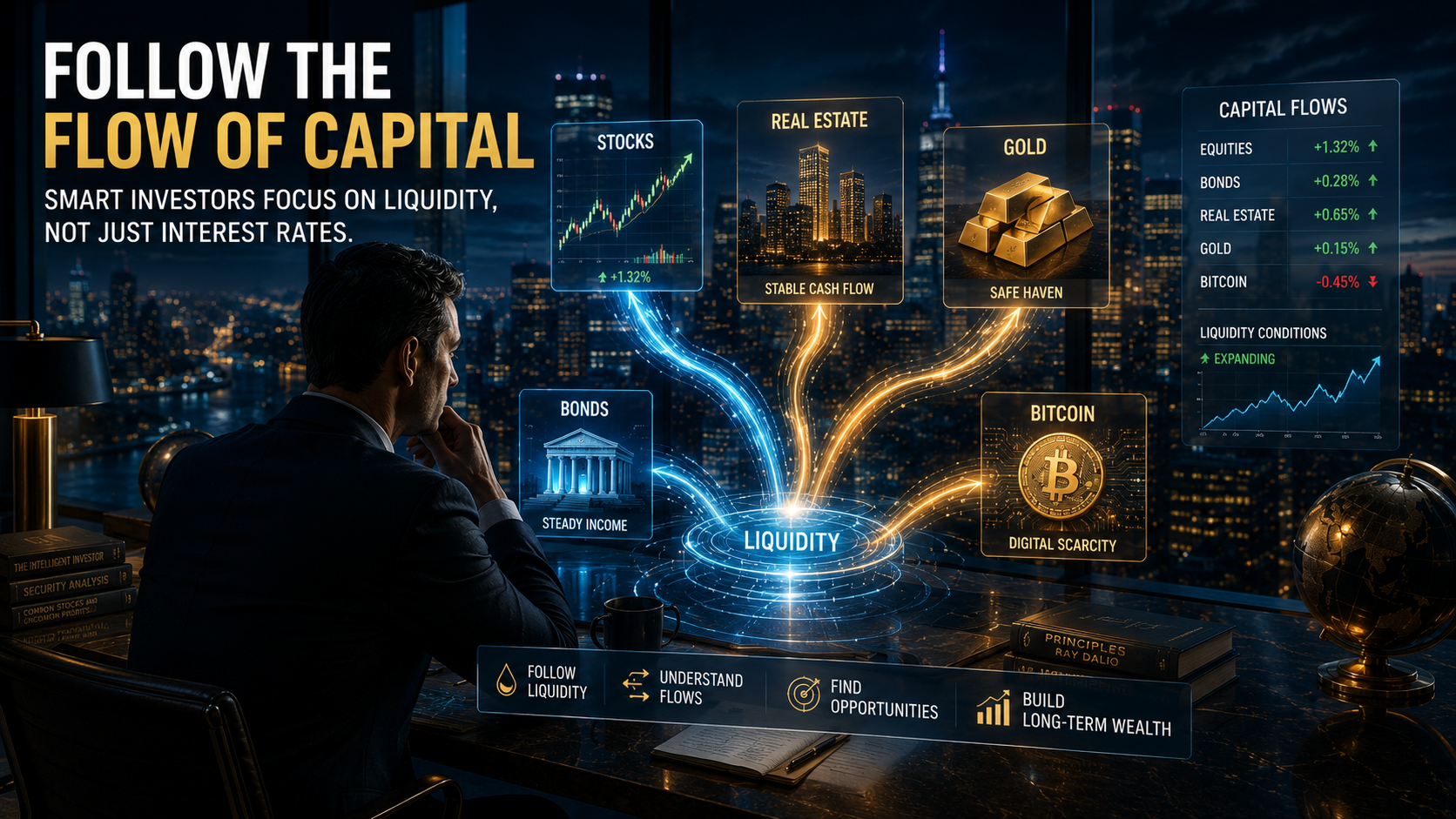
Stocks, bonds, gold, real estate, and Bitcoin all respond to liquidity.
Because of that, investors are not simply asking:
"What will rates be next year?"
They are asking:
"Will financial conditions become easier or remain restrictive?"
The Dot Plot is not just an interest-rate forecast. It is a liquidity forecast.
That is why even small changes in the Dot Plot can have meaningful consequences across financial markets.
Market Impact Across Major Asset Classes
Different asset classes typically respond to hawkish policy in different ways.
| Asset Class | Typical Impact of a Hawkish Fed |
| U.S. Stocks | Higher pressure on valuations |
| Treasury Bonds | Higher yields, lower bond prices |
| U.S. Dollar | Stronger dollar |
| Gold | Pressure from higher real yields |
| Bitcoin | Sensitive to liquidity conditions |
| Real Estate | Higher financing costs |
While the June meeting remained broadly hawkish, the market's response suggests that expectations had already adjusted to much of this reality.
What Smart Investors Should Focus On
The biggest mistake investors make is treating every FOMC meeting like a prediction contest.
Successful investing is rarely about perfectly forecasting the next Fed decision.
Instead, it is about understanding the environment in which capital is operating.
Investors should pay attention to:
- Liquidity trends
- Credit conditions
- Corporate earnings resilience
- Capital allocation decisions
- Risk management
The June meeting serves as another reminder that expectations often matter more than the announcement itself.
What Wealthy Investors See In This Environment
Most investors ask:
"How many rate cuts are coming?"
Wealthy investors often ask a different question:
"Where is capital likely to flow next?"
They focus on:
- Cash flow durability
- Balance-sheet strength
- Pricing power
- Long-term competitive advantages
They understand that periods of restrictive monetary policy often create opportunities for stronger businesses to separate themselves from weaker competitors.
Investing is not about predicting every outcome. It is about building a portfolio that can survive multiple outcomes.
Ask yourself:
- Can my portfolio handle rates staying higher for longer?
- Am I focused on headlines or liquidity?
- Do I understand where capital is moving?
Those questions may matter far more than the next quarter-point move by the Federal Reserve.
Final Thoughts
The June 2026 FOMC meeting was not a dovish pivot.
Nor was it the aggressive hawkish shock many investors feared.
Instead, it delivered something markets often appreciate:
clarity.
The Federal Reserve reinforced its commitment to controlling inflation while avoiding a dramatic escalation of tightening expectations.
Ultimately, the most important lesson from this meeting is not the exact level of interest rates.
It is the reminder that markets continuously price the future, not the present.
Understanding expectations, liquidity, and capital flows will almost always provide more insight than focusing on a single number.
This was MasterMind.
Designing success.
'[Global] Success Blueprints' 카테고리의 다른 글