What Are Dividend Stocks? How They Create Passive Income and Long-Term Wealth


Hello, this is MasterMind.
What if your investments could pay you even when stock prices go nowhere?
Most investors focus on capital gains. They buy stocks hoping prices will rise in the future. But some of the world's most successful long-term investors pay attention to something else: cash flow.
That's where dividend stocks come in.
Dividend investing is not just about collecting quarterly payments. It is about owning businesses that generate consistent profits and share those profits with shareholders.
In a world filled with market volatility, dividend stocks offer a different approach to building wealth—one based on income, patience, and long-term compounding.
Key Takeaway
Dividend stocks allow investors to participate in a company's profits while building a growing stream of cash flow that can compound into substantial long-term wealth.
What Are Dividend Stocks?
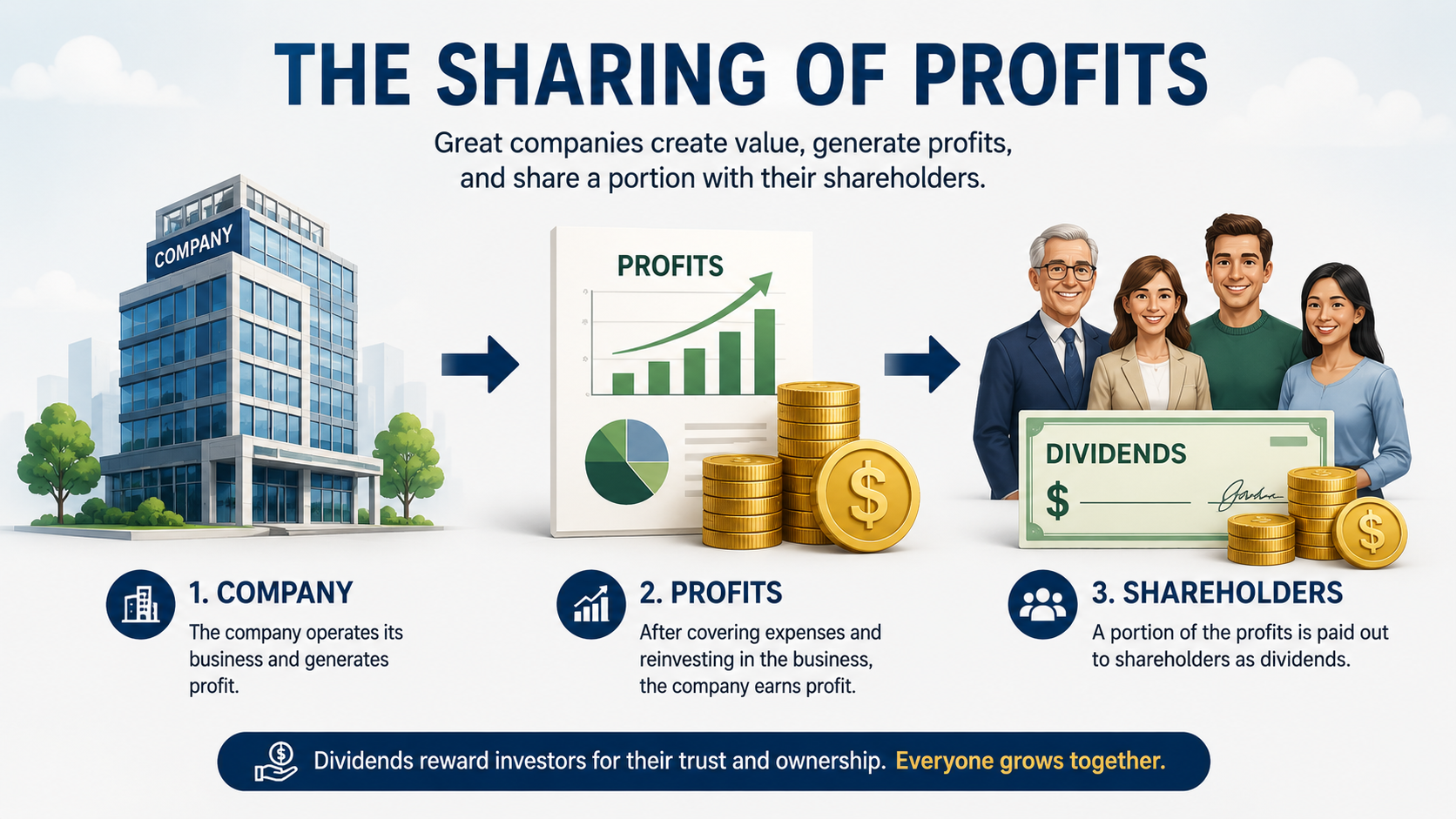
A dividend stock is a stock that regularly distributes a portion of its profits to shareholders.
When a company earns money, management generally has three options
- Reinvest in the business
- Pay down debt
- Return capital to shareholders
One of the most common ways companies reward shareholders is through dividends.
If you own shares of a dividend-paying company, you receive a portion of those profits based on the number of shares you own.
In other words, dividend investing allows investors to get paid for being owners of successful businesses.
Many mature companies with stable cash flows pay dividends, including businesses in
- Consumer staples
- Utilities
- Telecommunications
- Energy
- Financial services
These industries often generate predictable earnings, making regular dividend payments possible.
How Do Dividends Work?
Dividends are usually paid in cash on a quarterly basis in the United States.
For example, imagine a company pays
- Annual dividend: $4 per share
- Shares owned: 100
The investor would receive
$400 per year
without selling a single share.
This is one of the key differences between dividend investing and growth investing.
Growth investors depend primarily on rising stock prices.
Dividend investors generate income while continuing to hold their shares.
What Is Dividend Yield?

One of the most important metrics in dividend investing is dividend yield.
Dividend yield measures how much annual income an investor receives relative to the stock's current price.
The formula is
Annual Dividend Per Share ÷ Current Share Price × 100
Example
| Metric | Value |
| Share Price | $100 |
| Annual Dividend | $5 |
| Dividend Yield | 5% |
A 5% dividend yield means an investor earns $5 annually for every $100 invested, assuming the dividend remains unchanged.
However, a higher yield does not automatically mean a better investment.
Sometimes a stock's price falls sharply because the business is struggling. That decline can make the dividend yield appear unusually high.
This is why investors should always evaluate dividend sustainability, not just yield.
Why Do Investors Care About Dividend Stocks?
Consistent Cash Flow
Dividend stocks provide something many investors underestimate: income.
Even if stock prices move sideways for years, shareholders continue receiving dividend payments.
This can be particularly valuable during retirement or periods of market uncertainty.
Better Downside Resilience
Dividend-paying companies are often financially mature businesses with stable earnings.
During market downturns, investors tend to favor companies that continue generating profits and paying shareholders.
While dividend stocks are not immune to losses, they often experience less volatility than high-growth companies.
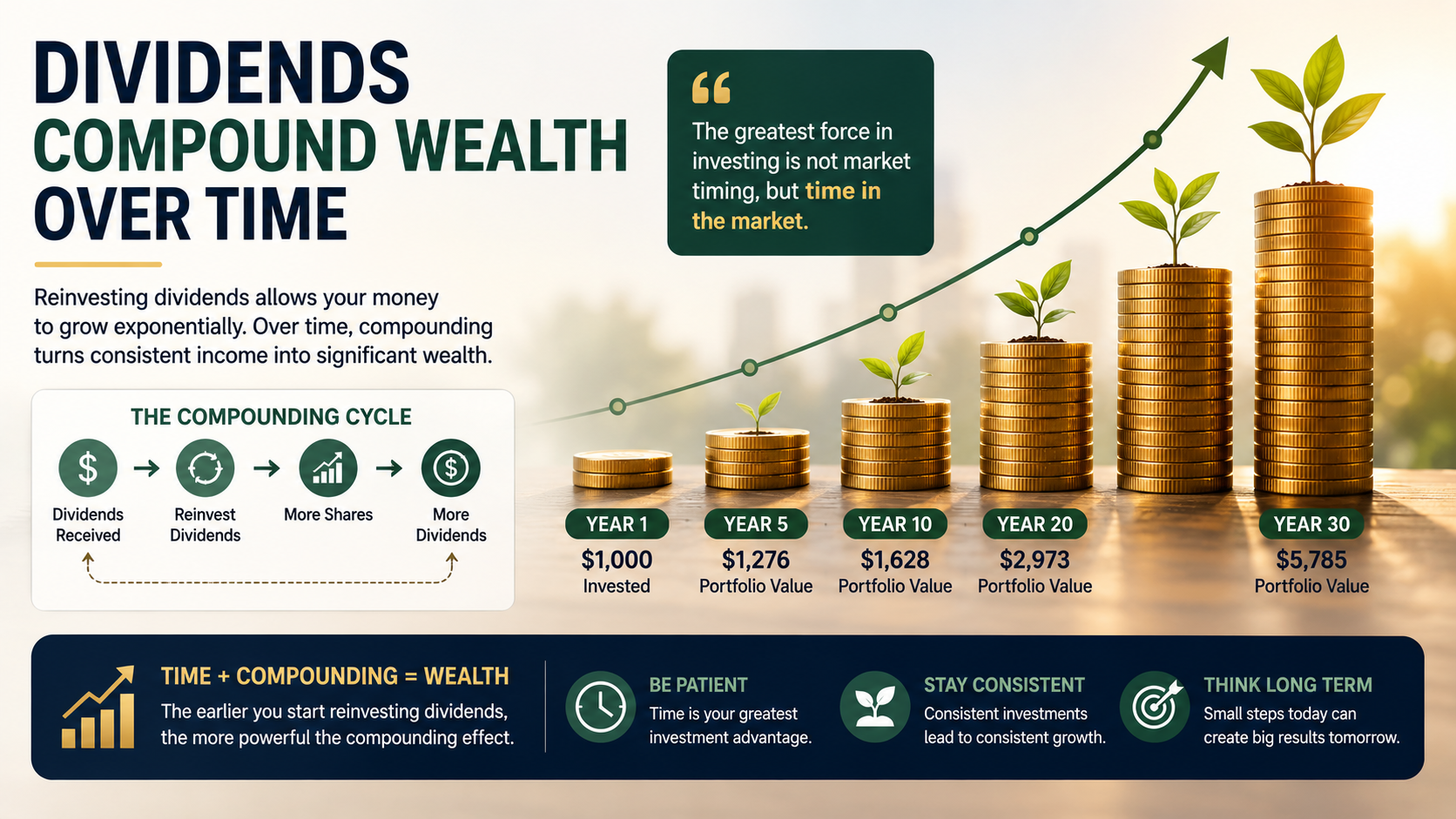
The Power of Compounding
The true strength of dividend investing comes from reinvestment.
When dividends are reinvested
Dividends → More Shares → More Dividends
The cycle repeats.
Over decades, this creates one of the most powerful wealth-building mechanisms available to investors.
This is why long-term investors often focus on dividend growth rather than short-term price movements.
How Interest Rates Affect Dividend Stocks
Dividend stocks do not exist in isolation.
Their attractiveness changes depending on the broader economic environment.
| Economic Environment | Impact on Dividend Stocks |
| Rising Interest Rates | Relative attractiveness declines |
| Falling Interest Rates | Dividend stocks become more attractive |
| Economic Recession | Defensive dividend sectors gain attention |
| Economic Expansion | Growth stocks often outperform |
| High Market Volatility | Demand for dividend stocks increases |
For example, if Treasury bonds offer 5%, investors may be less willing to buy dividend stocks yielding only 3%.
However, when rates fall, reliable dividend income becomes significantly more attractive.
Markets constantly compare risk-adjusted cash flows across different asset classes.
How Dividend Stocks Compare to Other Assets
| Asset Class | Market Dynamics & Comparison |
| Stocks | Dividend stocks provide income plus potential appreciation |
| Bonds | Compete for income-focused capital |
| U.S. Dollar | Influenced by Federal Reserve interest-rate policy |
| Gold | Provides no income, often compared against dividend yields |
| Bitcoin | Relies primarily on future price appreciation |
One of the most important lessons in investing is understanding where money is flowing.
When liquidity is abundant, investors often chase growth.
When uncertainty rises, many investors shift toward assets that generate predictable cash flow.
Dividend stocks frequently benefit from that transition.
Key Things Investors Should Watch
Don't Chase Yield
A double-digit dividend yield may look attractive.
But if the underlying business is deteriorating, that dividend may eventually be reduced or eliminated.
Always look beyond the headline number.
Focus on Dividend Growth
Many of the strongest dividend investments are not the highest-yielding stocks.
Instead, they are companies that consistently increase dividends year after year.
Dividend growth often signals
- Strong earnings
- Healthy cash flow
- Effective management
- Long-term business strength
Evaluate Free Cash Flow
Dividends are ultimately funded by cash generation.
Investors should ask
- Is the company consistently profitable?
- Does it generate excess cash?
- Can it maintain dividends during an economic slowdown?
These questions matter more than yield alone.
What Do Wealthy Investors See in Dividend Stocks?

Most people focus on stock prices.
Wealthy investors focus on cash flow.
They understand that long-term wealth is not simply about owning assets.
It is about owning assets that produce income.
Following the Flow of Money
During periods of uncertainty, experienced investors often prioritize cash-producing assets over speculative opportunities.
Reliable cash flow creates flexibility.
It provides capital that can be reinvested when new opportunities emerge.
Asset Survival Matters
Markets rise and fall.
Businesses come and go.
The companies that continue paying and increasing dividends through multiple economic cycles often demonstrate exceptional resilience.
Dividend growth is not just a reward.
It is evidence of business durability.
Thinking Long Term
The market is often obsessed with predictions.
Successful investors tend to focus on something else
Sustainability.
Ask yourself
- Does this investment generate cash flow?
- Can this business survive a recession?
- Would I be comfortable owning it for the next decade?
Those questions often matter more than trying to predict next year's stock price.
Because investing is not about being right every time.
It is about surviving long enough for compounding to work.
Final Thoughts
Dividend stocks are more than income-producing investments.
They are ownership stakes in businesses that generate profits and share those profits with shareholders.
While many investors focus solely on stock price appreciation, dividend investing offers another path—one built around cash flow, patience, and compounding.
Markets will always fluctuate.
Interest rates will rise and fall.
Economic cycles will come and go.
But businesses that consistently generate cash and reward shareholders have historically remained valuable assets over the long run.
The most important lesson is this
Dividend stocks are not simply investments that pay income. They are businesses that demonstrate financial strength, cash-flow generation, and long-term survivability.
This was MasterMind.
Designing success.
'[Global] Success Blueprints' 카테고리의 다른 글