What Is Agentic AI? Meaning, Examples, and Why CPUs Could Matter More Than GPUs


Hello, this is MasterMind.
For the past few years, the AI investment story has largely been about one thing: GPUs.
As artificial intelligence exploded into the mainstream, companies rushed to build massive AI infrastructure powered by high-performance graphics processors. NVIDIA became one of the biggest winners of the AI boom, and for good reason. Training large language models requires enormous amounts of parallel computing power.
But what happens when AI moves beyond answering questions and starts performing real-world work?
That question is becoming increasingly important as a new concept gains traction across the technology industry: Agentic AI.
Many investors are beginning to wonder whether the next phase of AI could shift some attention away from pure computing power and toward the systems that coordinate and manage AI workloads. If that happens, CPUs may become far more important than many people expect.
Key Takeaway
As Agentic AI becomes more capable of performing complex tasks autonomously, demand may increasingly shift from pure AI training power toward the infrastructure required to coordinate, manage, and execute AI-driven workflows—an area where CPUs could play a larger role.
What Is Agentic AI?
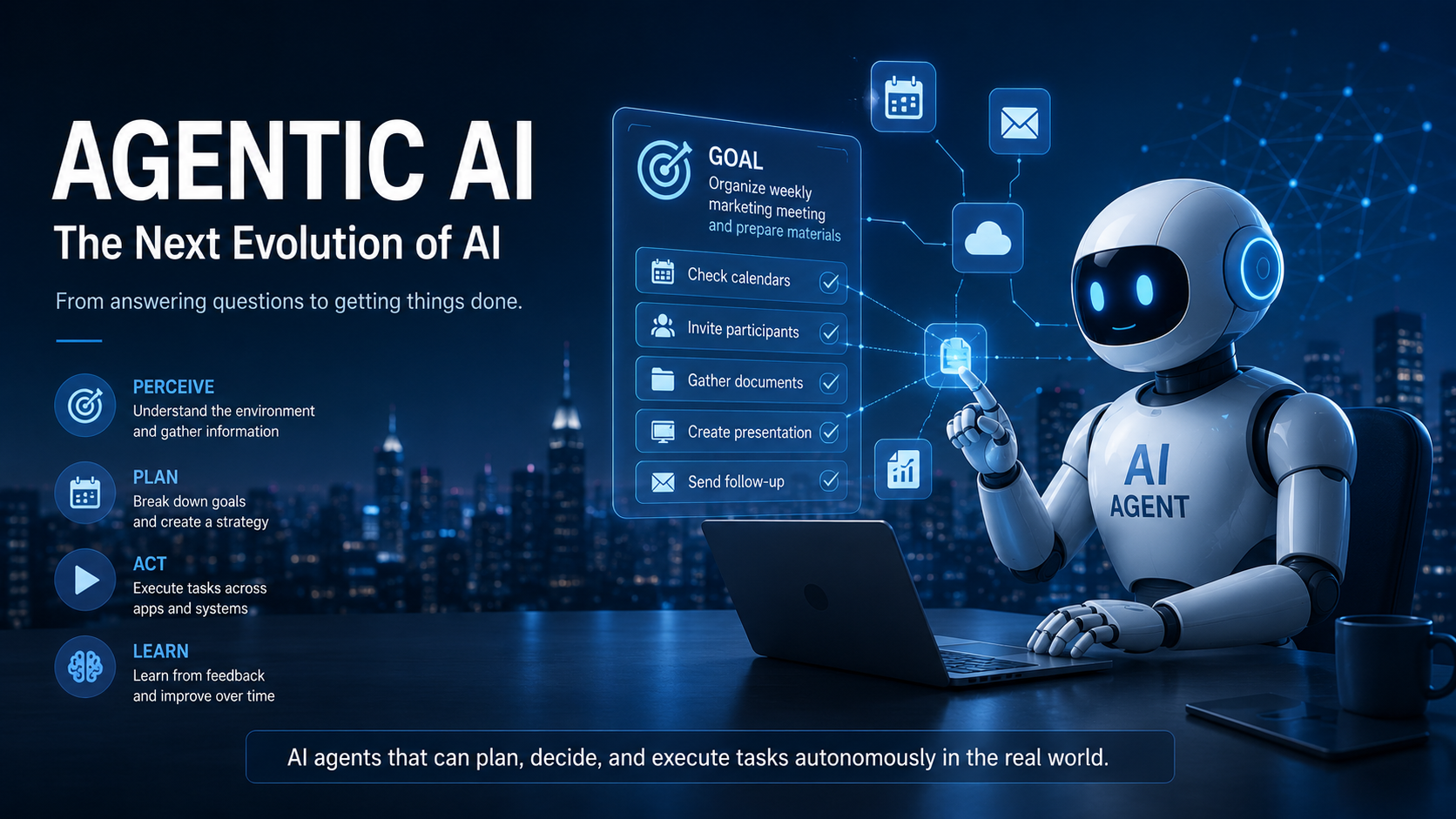
Agentic AI refers to artificial intelligence systems that can act autonomously to achieve a goal rather than simply respond to prompts.
Most generative AI tools today operate in a question-and-answer format. Users provide instructions, and the AI generates a response.
For example, ChatGPT can create a travel itinerary, write an email, or summarize a report.
However, the user is still responsible for taking action.
Agentic AI goes a step further.
Instead of merely providing information, it can plan tasks, make decisions, interact with software, gather data, and execute actions with minimal human intervention.
Imagine giving an AI a simple objective
"Schedule next week's marketing meeting and prepare the necessary materials."
An Agentic AI system could potentially
- Check calendars
- Contact participants
- Gather relevant documents
- Generate presentation materials
- Send follow-up emails
- Adjust plans based on responses
In other words, AI shifts from being an assistant that answers questions to a digital worker capable of completing objectives.
Agentic AI vs Generative AI
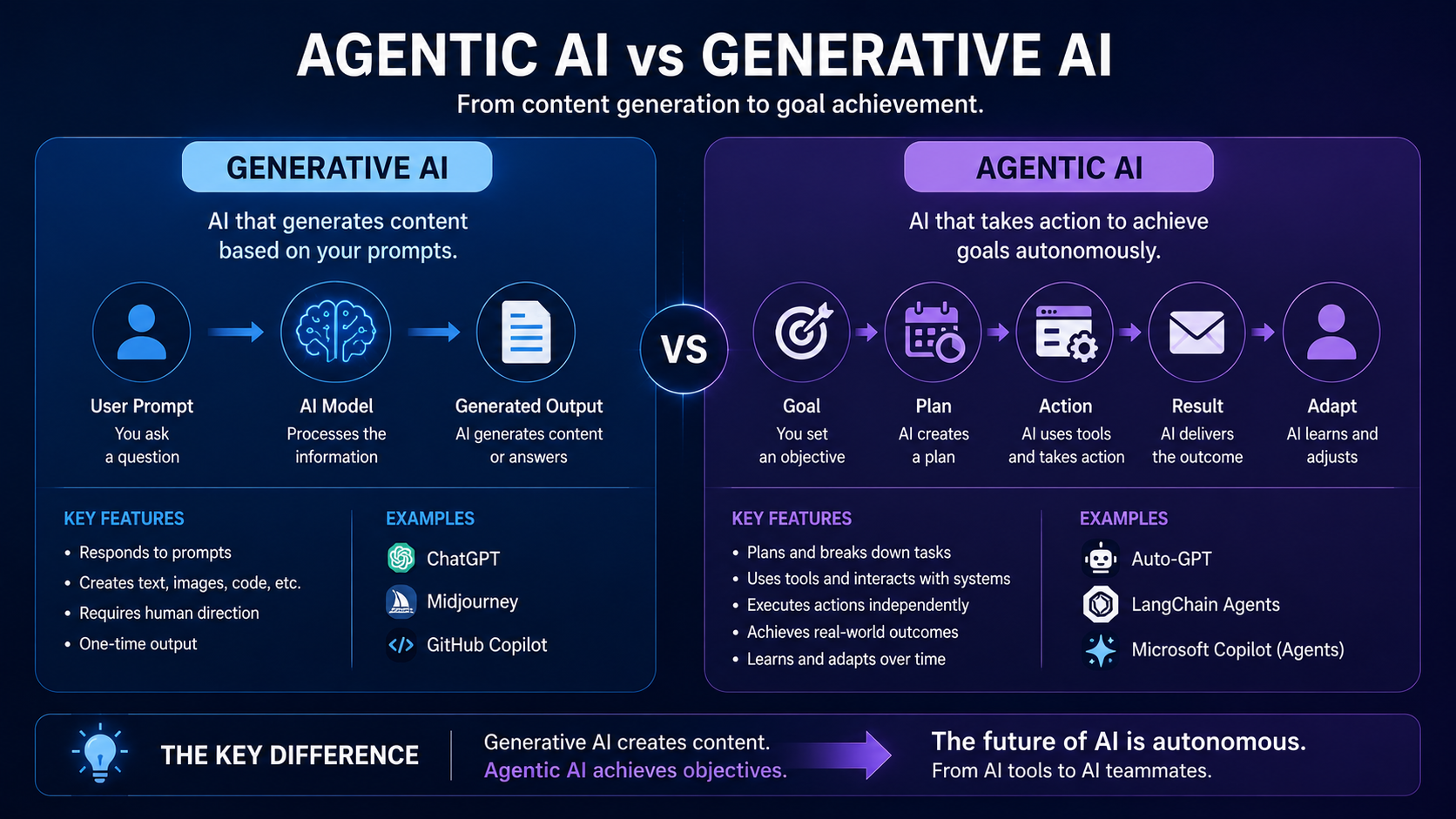
Many investors use the terms interchangeably, but they represent different stages of AI development.
| Feature | Generative AI | AIAgentic AI |
| Primary Function | Generate content | Achieve objectives |
| User Involvement | High | Lower |
| Workflow | Prompt and response | Planning and execution |
| Value Creation | Information generation | Task completion |
| Examples | ChatGPT, image generators | Autonomous AI agents |
Generative AI creates outputs.
Agentic AI manages processes.
That distinction may become increasingly important as businesses seek productivity gains rather than simply better content generation.
How Agentic AI Changes Infrastructure Requirements
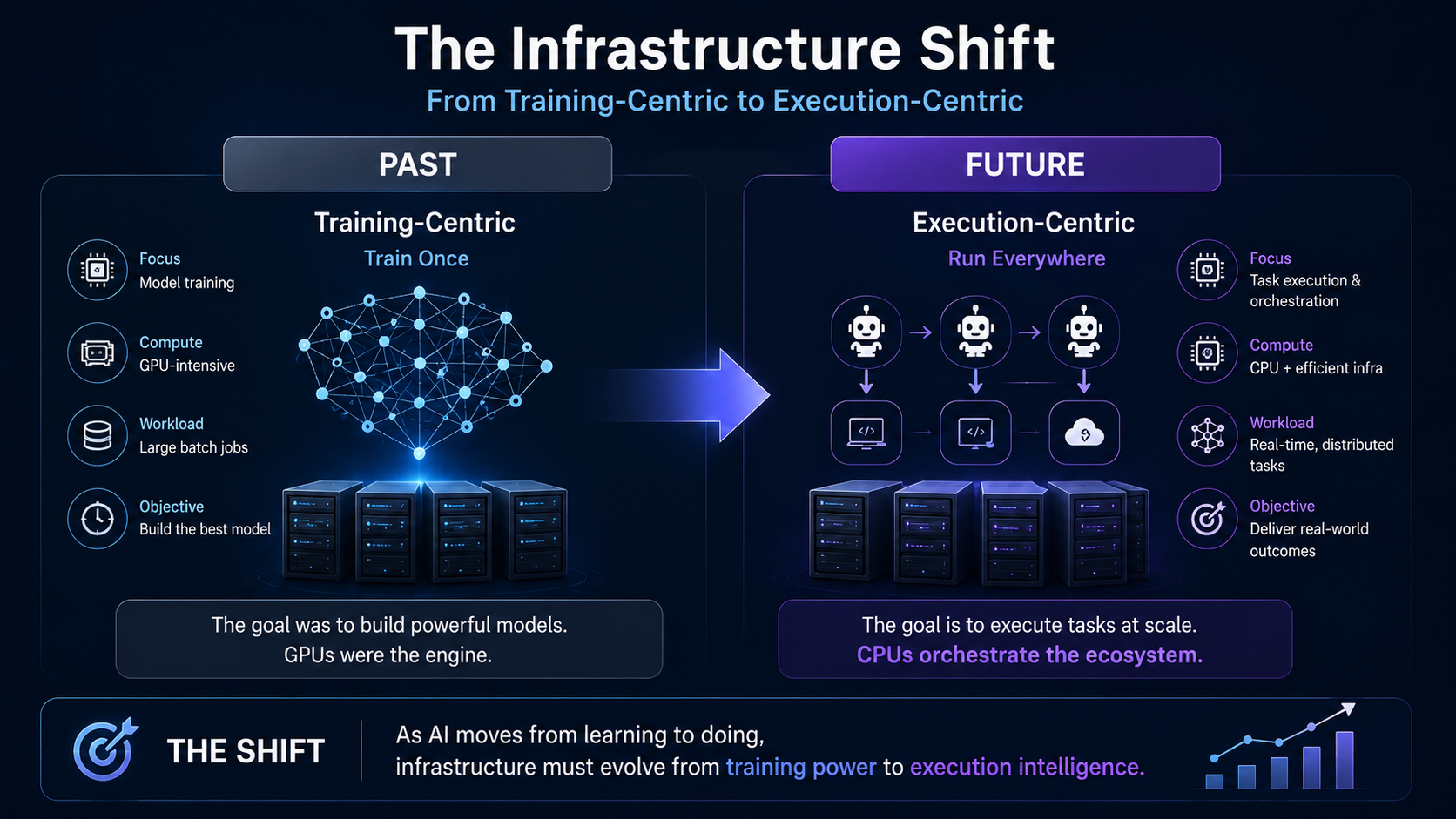
The first wave of AI focused heavily on training models.
Training requires enormous computational resources, making GPUs the dominant technology.
However, running autonomous AI agents creates a different challenge.
An AI agent performing real-world work must constantly
- Access databases
- Search the web
- Manage emails
- Coordinate software tools
- Interact with cloud services
- Execute business workflows
These tasks require more than raw computational power.
They require orchestration.
This is where CPUs become increasingly relevant.
Why CPUs Could Become More Important

A useful analogy is to think of GPUs as workers and CPUs as managers.
GPUs excel at processing massive amounts of data simultaneously.
CPUs excel at coordinating operations, managing resources, and directing workflow execution.
As Agentic AI systems become more sophisticated, the need for orchestration may increase significantly.
Thousands of AI agents operating inside an enterprise environment could require constant coordination across multiple systems and applications.
In that environment, CPUs become critical because they help manage the flow of information and tasks throughout the entire infrastructure stack.
This does not mean GPUs become less important.
Rather, it suggests that future AI infrastructure may rely on a more balanced relationship between GPUs and CPUs.
Why Investors Are Paying Attention
Financial markets are always looking ahead.
The key question is no longer whether AI will continue to grow.
The question is where future spending will occur.
The first phase of AI investment was dominated by AI model training.
The next phase may focus on deployment, automation, and productivity.
If Agentic AI gains widespread adoption, businesses may need
- More advanced servers
- Larger cloud infrastructure
- Better workflow management systems
- Expanded enterprise software ecosystems
- More powerful server CPUs
For investors, that creates opportunities beyond the companies currently associated with AI training.
Markets often reward businesses that solve the next bottleneck rather than the current one.
Potential Impact on Financial Markets
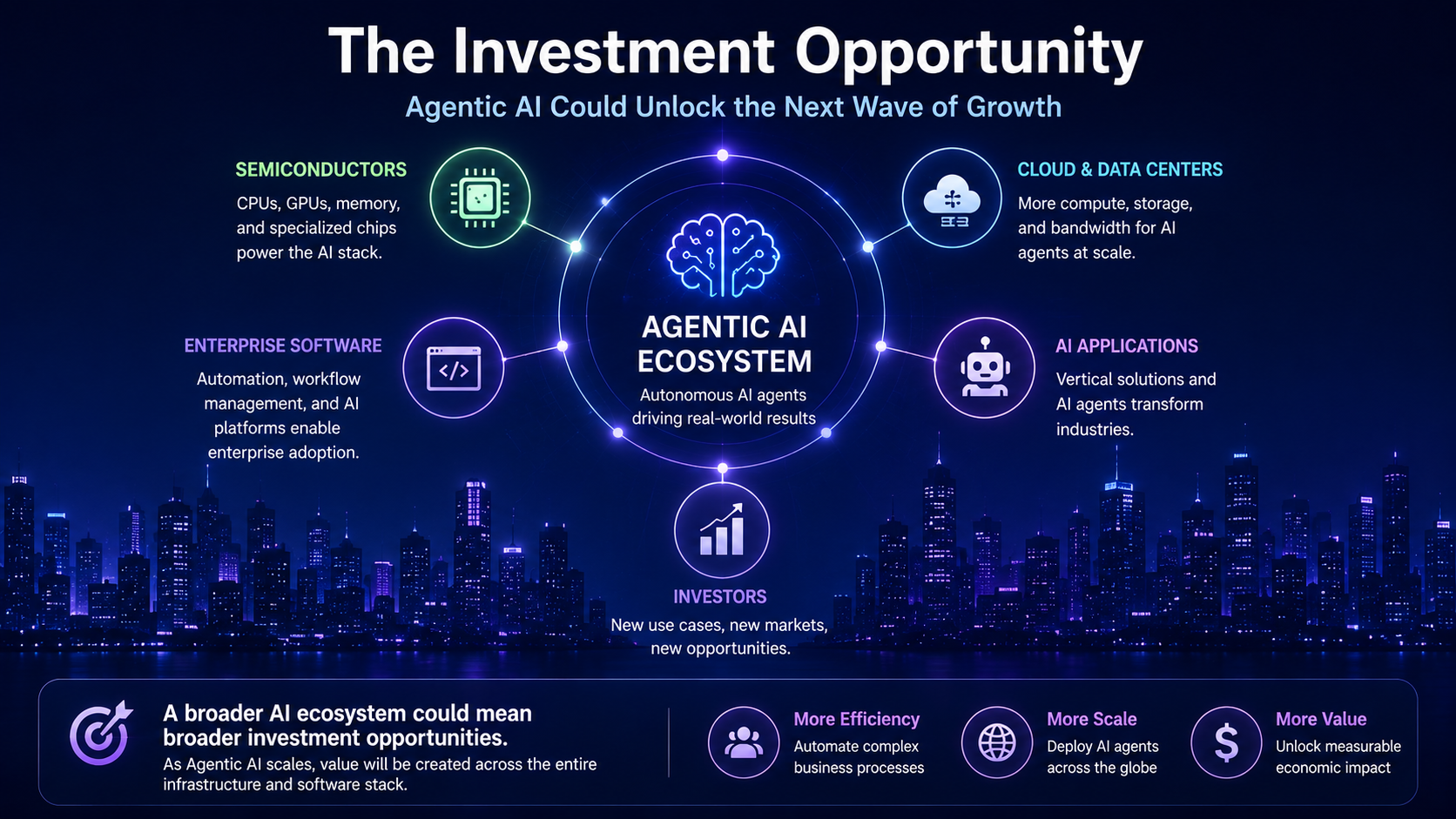
The rise of Agentic AI could influence several sectors.
| Asset Class | Potential Impact |
| Semiconductors | Increased attention on CPUs alongside GPUs |
| Cloud Computing | Higher demand for AI-driven services |
| Data Centers | Expanded infrastructure investment |
| Enterprise Software | Growth in automation platforms |
| Technology Stocks | Potential broadening of AI beneficiaries |
| Digital Assets | Indirect impact through risk sentiment |
The most important takeaway is that AI may become a much larger ecosystem than many investors currently assume.
What Investors Should Watch
Investors do not need to predict the future perfectly.
They simply need to understand the direction of change.
Several developments are worth monitoring
Enterprise AI Adoption
Are businesses deploying AI agents into real-world workflows?
Server CPU Demand
Are data centers increasing spending on high-performance server processors?
Cloud Infrastructure Investment
Which companies are building the platforms required for AI automation?
Productivity Gains
Can Agentic AI generate measurable business value rather than simply produce content?
The answers to these questions may shape the next chapter of the AI investment cycle.
What Wealthy Investors Often Look For
Experienced investors rarely focus solely on the most popular technology trend.
Instead, they focus on where capital is likely to flow next.
When a major technological shift occurs, supporting infrastructure often becomes just as important as the technology itself.
The internet required fiber networks.
Cloud computing required data centers.
Artificial intelligence requires computing infrastructure.
The rise of Agentic AI may reveal entirely new bottlenecks within the AI ecosystem.
And historically, bottlenecks tend to attract investment.
A useful question to ask is
If AI agents eventually become digital employees, what infrastructure will be required to support millions of them?
The answer may extend far beyond GPUs alone.
Final Thoughts
Agentic AI represents more than just another AI buzzword.
It reflects a broader shift from AI that generates information to AI that performs work.
While GPUs remain essential for AI development, the growing importance of coordination, workflow management, and system orchestration could increase the value of CPUs in the years ahead.
Markets often focus on today's winners.
Long-term investors focus on tomorrow's bottlenecks.
The first major bottleneck of the AI era was computational power.
The next one may be the infrastructure required to manage autonomous digital workers at scale.
That possibility is why Agentic AI deserves attention from both technology enthusiasts and investors alike.
This was MasterMind.
'[Global] Success Blueprints' 카테고리의 다른 글