What Is the US 10-Year Treasury Yield and Why Does It Move Global Markets?


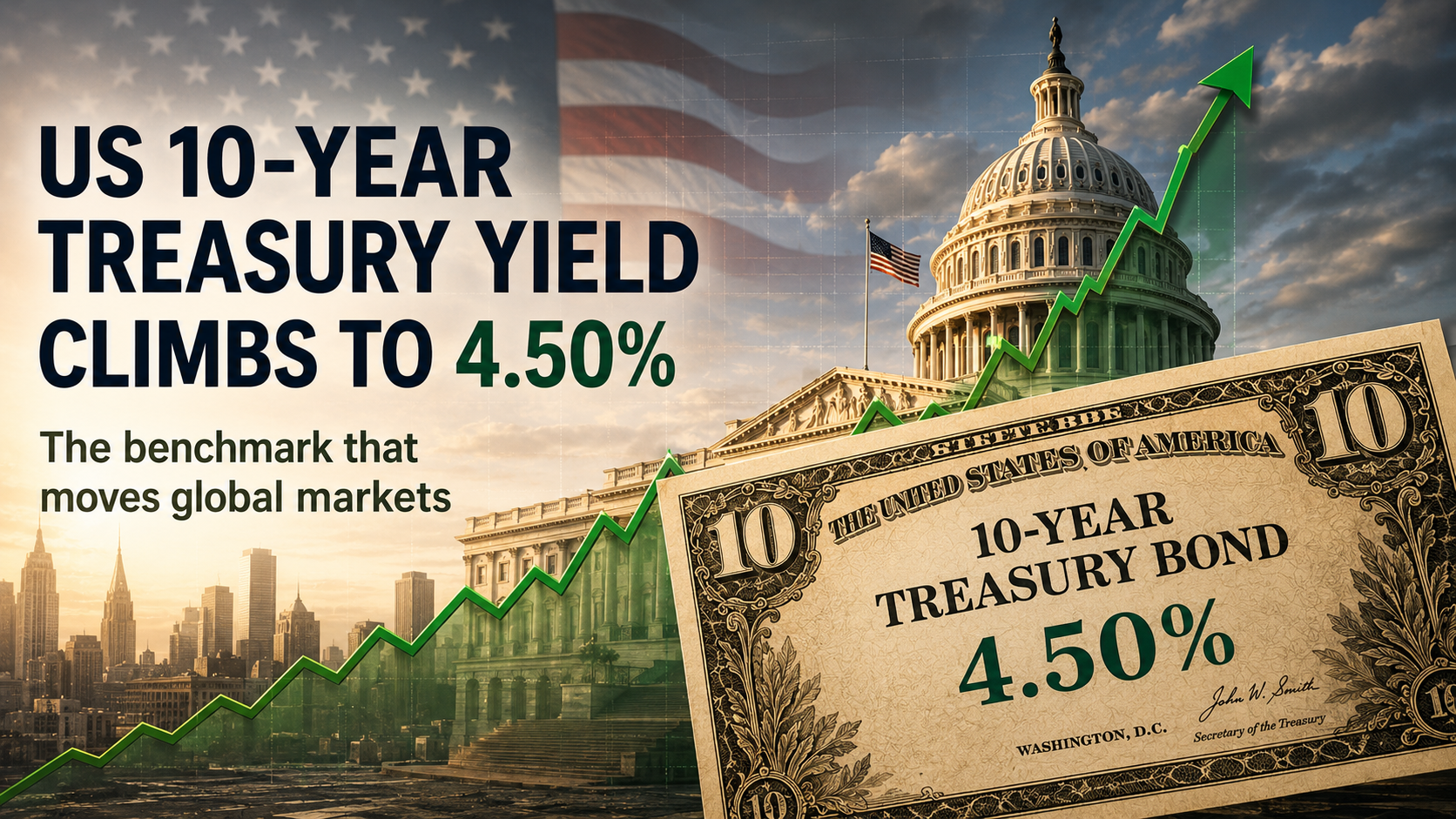
Understanding the Surge in US Treasury Yields and What It Means for Investors
Hello, this is MasterMind.
The US 10-Year Treasury yield has once again become one of the most closely watched indicators in global financial markets.
Whether stocks are rallying, Bitcoin is soaring, or markets are experiencing heightened volatility, professional investors around the world continue to monitor one number above all else the US 10-Year Treasury yield.
But why does this single figure have such a powerful influence on stocks, bonds, real estate, and even cryptocurrencies?
The answer goes far beyond interest rates themselves. The Treasury market reveals what investors expect, what they fear, and where global capital is moving.
Today, we'll explore the true meaning of the US 10-Year Treasury yield and why it remains one of the most important indicators in modern investing.
What Is the US 10-Year Treasury Yield?
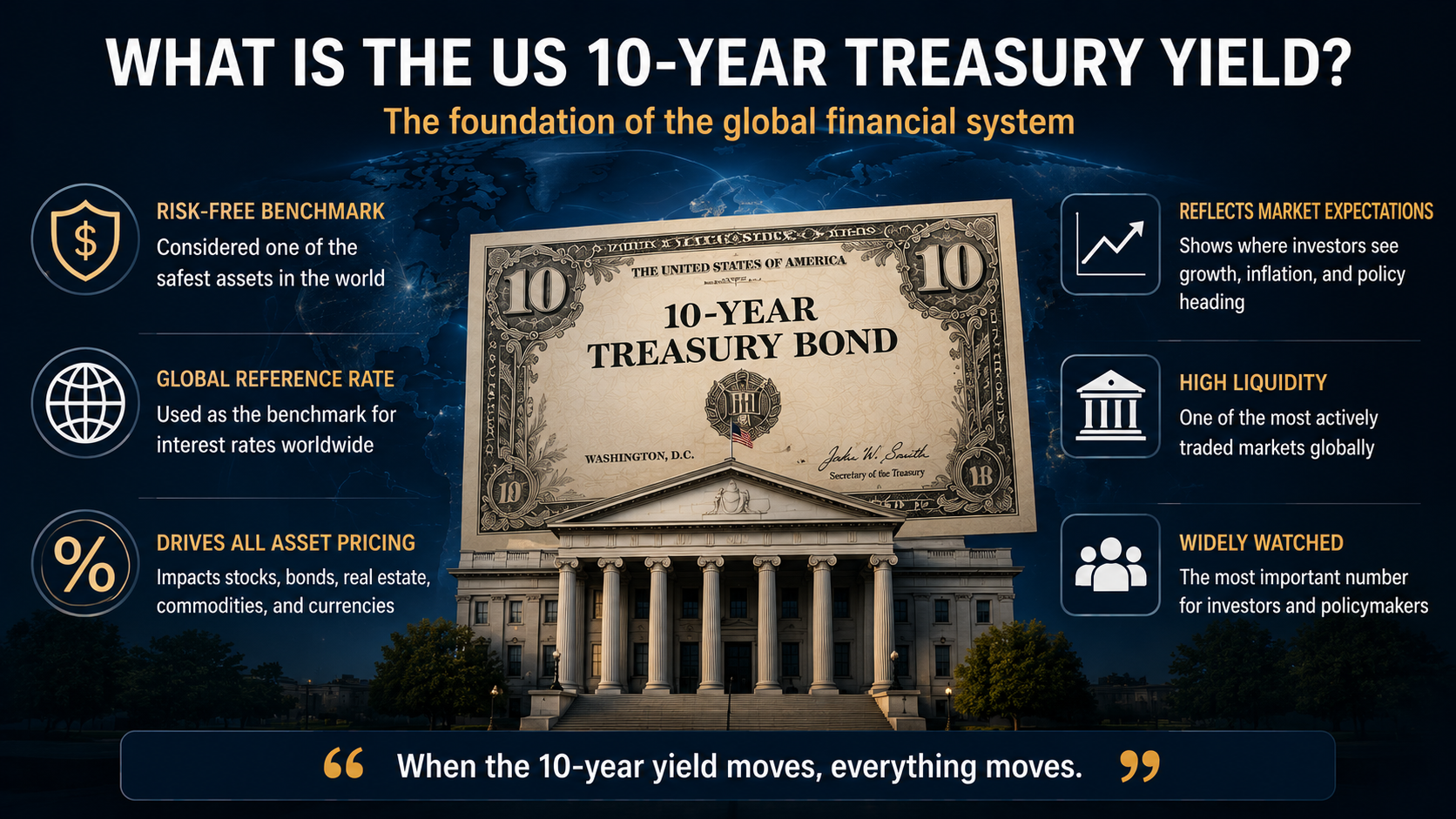
The US 10-Year Treasury yield represents the return investors receive for lending money to the US government for ten years.
At first glance, it may seem like just another interest rate. In reality, it serves as the benchmark for nearly every financial asset in the world.
Mortgage rates, corporate borrowing costs, stock valuations, bond pricing, and even currency markets are influenced by movements in Treasury yields.
Because US Treasuries are widely considered one of the safest investments available, the 10-Year Treasury yield is often referred to as the global risk-free rate.
This makes it the foundation upon which countless investment decisions are built.
The Real Meaning Behind Treasury Yield Movements
Many investors focus on whether yields are rising or falling.
A more important question is why they are moving.
Treasury yields reflect the market's collective expectations about the future.
Economic Growth Expectations
When investors expect stronger economic growth, they often move money out of safe assets like government bonds and into riskier assets such as stocks.
As bonds are sold, bond prices decline and yields rise.
In this scenario, rising Treasury yields can actually signal optimism about future economic activity.
Inflation Expectations
Inflation erodes purchasing power over time.
If investors believe inflation will remain elevated over the next decade, they demand higher yields to compensate for that risk.
As inflation expectations increase, Treasury yields tend to move higher as well.
Federal Reserve Policy Expectations
Financial markets constantly attempt to anticipate the Federal Reserve's next move.
Even before the Fed changes interest rates, Treasury yields often adjust to reflect future policy expectations.
For this reason, the bond market frequently acts as a leading indicator of monetary policy.
The Key Forces Driving Treasury Yields Higher
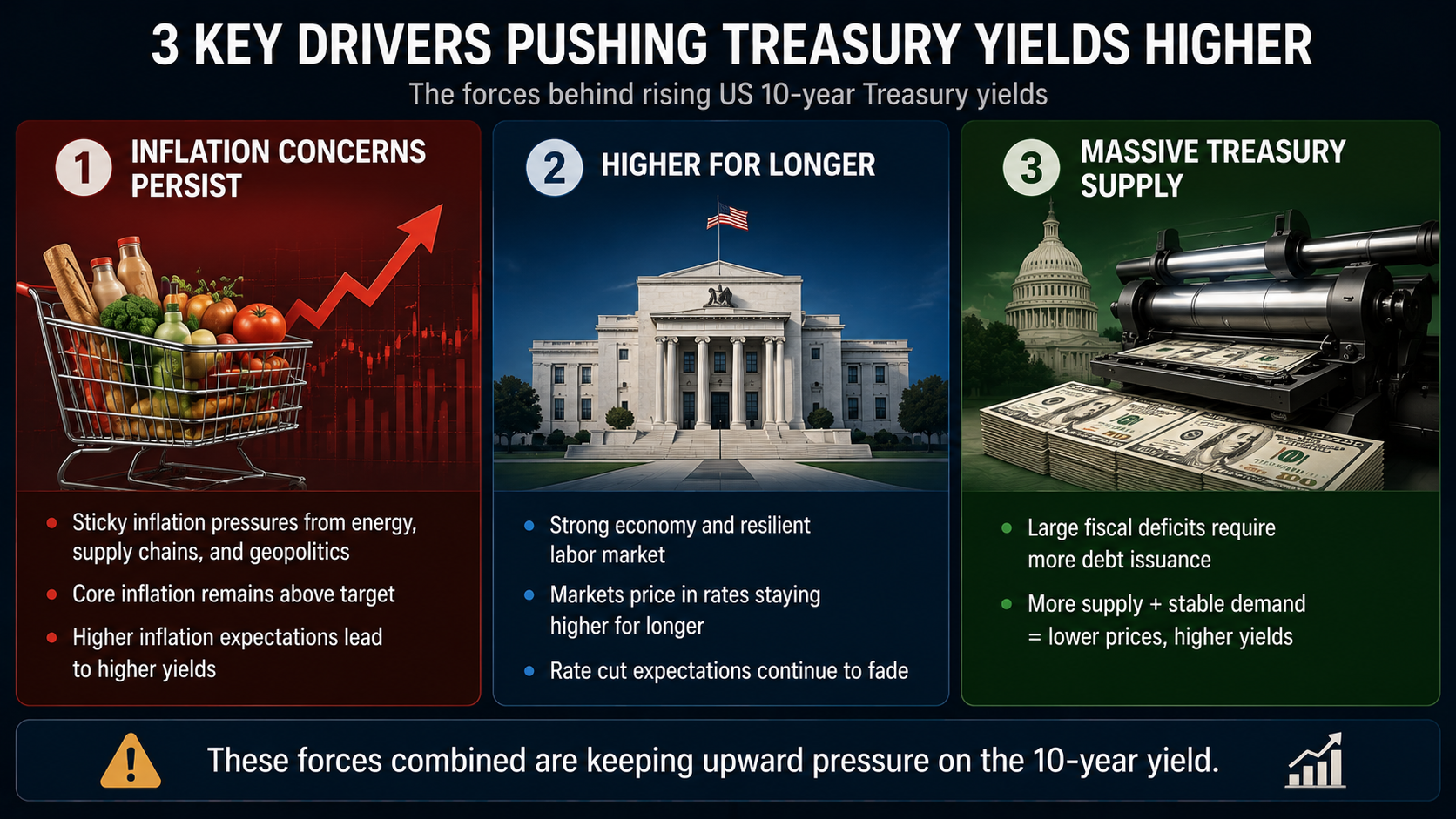
Several factors are currently putting upward pressure on US Treasury yields.
1. Persistent Inflation Concerns
Although inflation has cooled from its peak, markets remain concerned about potential inflationary pressures from energy prices, supply chain disruptions, and geopolitical uncertainty.
As long as inflation remains a threat, investors are likely to demand higher yields.
2. Higher-for-Longer Interest Rates
The US economy has shown remarkable resilience despite elevated interest rates.
Consumer spending remains relatively healthy, and the labor market continues to demonstrate strength.
As a result, investors have become less confident that the Federal Reserve will cut rates aggressively.
Markets are increasingly pricing in a "higher for longer" environment.
And in investing, what markets fear often matters more than what they hope for.
Right now, the biggest fear is that interest rates may stay elevated much longer than expected.
3. Massive Government Debt Issuance
The US government continues to run significant fiscal deficits.
To finance these deficits, the Treasury must issue large amounts of new debt.
When bond supply increases faster than demand, prices fall and yields rise.
This structural factor has become an increasingly important driver of long-term Treasury yields.
Why Rising Treasury Yields Pressure Stock Markets
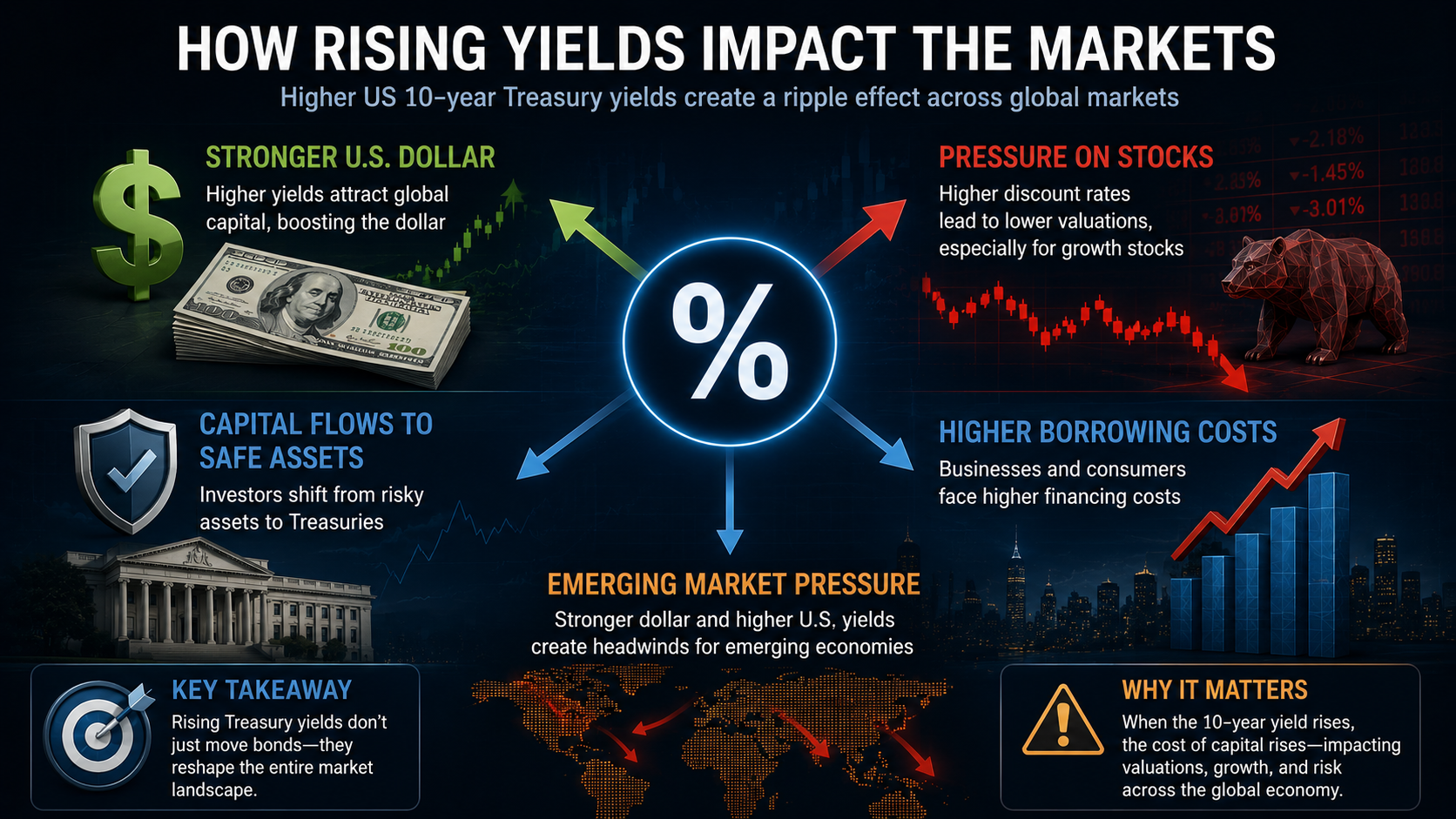
Stocks and bonds compete for capital.
When investors can earn attractive returns from relatively safe Treasury securities, they become less willing to take risks in equities.
This is particularly important for growth stocks.
Technology companies and high-growth businesses derive much of their valuation from earnings expected far into the future.
As Treasury yields rise, the discount rate used to value those future earnings increases.
Higher discount rates lead to lower valuations.
This is why the Nasdaq and other growth-focused indices tend to react strongly to movements in Treasury yields.
Why Does the US 10-Year Treasury Yield Matter More Than Stock Prices?
Stock prices are often the result of money moving.
Treasury yields frequently reveal where money may move next.
This is why institutional investors on Wall Street closely monitor the bond market before looking at stock indexes.
When Treasury yields rise, capital can shift toward safer assets that offer attractive returns with lower risk.
When Treasury yields fall, liquidity often moves back into risk assets such as stocks, cryptocurrencies, and growth-oriented investments.
In many cases, the bond market acts as a leading indicator, while the stock market reacts later.
Risks Investors Should Watch Closely
Valuation Pressure on Growth Stocks
Higher yields often translate into lower valuations for companies whose profits are expected years into the future.
Increased Stress on Highly Leveraged Companies
Businesses carrying large amounts of debt face higher financing costs when interest rates remain elevated.
In a tightening liquidity environment, weaker companies typically face challenges first.
Stronger US Dollar and Capital Outflows
As Treasury yields become more attractive, global capital often flows into US assets.
This can strengthen the US dollar while creating pressure on emerging markets and risk assets worldwide.
Why Bitcoin Investors Watch Treasury Yields
Bitcoin investors are paying closer attention to Treasury yields than ever before.
When the US 10-Year Treasury yield rises, investors can earn higher returns from relatively safe government bonds.
As a result, some capital may move away from speculative assets and toward fixed-income investments.
Conversely, when Treasury yields begin to decline, investors often become more willing to take risk, which can support assets such as Bitcoin, technology stocks, and other growth-oriented investments.
For this reason, Treasury yields have become an increasingly important indicator for cryptocurrency investors.
What Are Wealthy Investors Watching?
Historical Examples of Treasury Yield Impact
History provides several examples of how Treasury yields influence financial markets.
During 2022, the US 10-Year Treasury yield climbed above 4%, while the Nasdaq experienced a significant bear market and housing activity slowed considerably.
In contrast, during late 2023 and early 2024, Treasury yields retreated from their highs, helping fuel a strong rally in technology stocks and AI-related companies.
These market reactions occurred because investors interpreted falling yields as a signal that financial conditions could become more supportive in the future.
The lesson is simple: Treasury yields are not just numbers. They often provide an early signal about future liquidity conditions and investor sentiment.

Sophisticated investors rarely focus solely on predicting short-term market moves.
Instead, they pay close attention to capital flows and financial resilience.
First, they monitor where money is moving.
When Treasury yields rise, many investors shift part of their portfolios toward safer income-producing assets.
Second, they focus on assets that can survive even when liquidity becomes scarce.
Companies with dominant market positions, strong balance sheets, and durable cash flows often emerge stronger from challenging environments.
Third, they prioritize cash flow.
Speculation depends on market sentiment.
Cash flow depends on business fundamentals.
And in investing, survival matters more than prediction.
Consider asking yourself
Can my portfolio withstand a prolonged period of elevated interest rates?
Do my investments generate sustainable cash flow?
Am I relying on market optimism, or am I investing in assets with genuine long-term resilience?
The answers to these questions may determine future investment success.
Final Thoughts
The US 10-Year Treasury yield is far more than just another financial statistic.
It reflects market expectations for economic growth, inflation, Federal Reserve policy, and global capital flows.
The recent rise in Treasury yields may be signaling that investors expect higher interest rates and tighter financial conditions to persist longer than previously anticipated.
Markets always price in the future.
And few indicators reveal that future more clearly than the US 10-Year Treasury yield.
A final thought from MasterMind
Don't become distracted by daily market noise. Follow the flow of capital. Strong assets survive even when liquidity disappears, and those survivors often become the leaders of the next market cycle.
This was MasterMind.
'[Global] Success Blueprints' 카테고리의 다른 글