Why Nvidia Is Building an AI R&D Center in South Korea - Jensen Huang's Bet on the Next Era of AI


Hello, this is MasterMind.
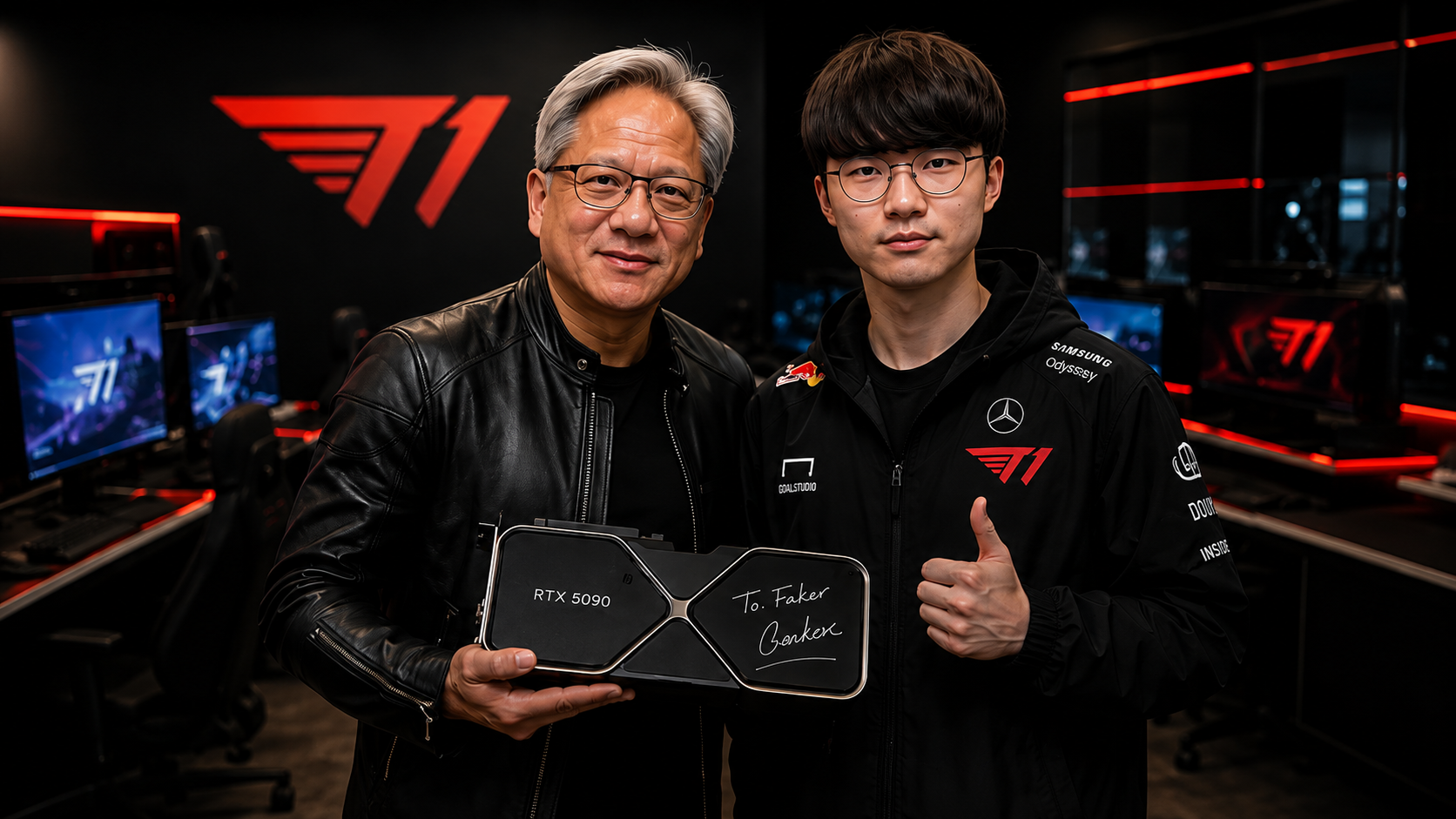
When Nvidia CEO Jensen Huang arrived in South Korea, one of the most talked-about moments wasn't a meeting with government officials or corporate executives.
Instead, it was his meeting with Faker, arguably the greatest esports player of all time.
The image quickly spread across social media and technology communities worldwide. To many, it looked like a simple publicity event.
But investors rarely focus on headlines alone.
They focus on what happens behind them.
And behind this visit lies a much bigger story—one that could shape the next chapter of the global AI industry.
Why is Nvidia expanding its presence in South Korea?
Why is the company investing in AI research infrastructure there?
And what does this tell us about the future of artificial intelligence?
Why Nvidia Is Expanding Its AI Footprint in South Korea
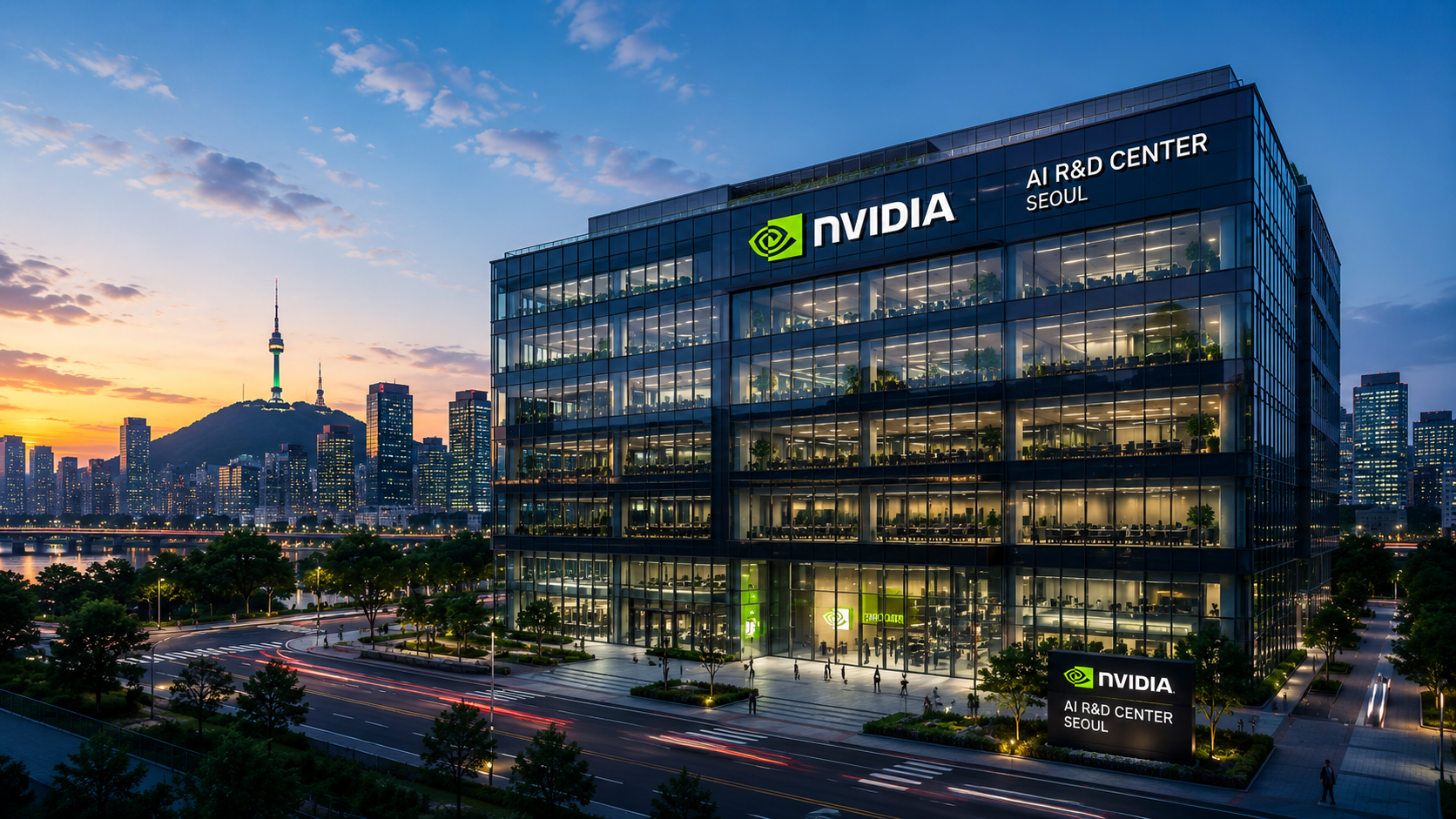
Nvidia's recent push to establish an AI research and development hub in Seoul is about much more than geographic expansion.
The company already dominates the AI accelerator market through its GPUs.
However, Nvidia's long-term ambition extends far beyond selling chips.
It aims to become the foundational infrastructure layer of the AI economy.
That means controlling not only hardware, but also software platforms, robotics ecosystems, data center architecture, and industrial AI deployment.
South Korea offers something few countries can provide simultaneously
- Advanced semiconductor manufacturing
- World-class industrial capabilities
- Growing robotics expertise
- Strong AI research talent
For Nvidia, this makes South Korea a strategic partner rather than simply another customer.
AI Act One Is Ending
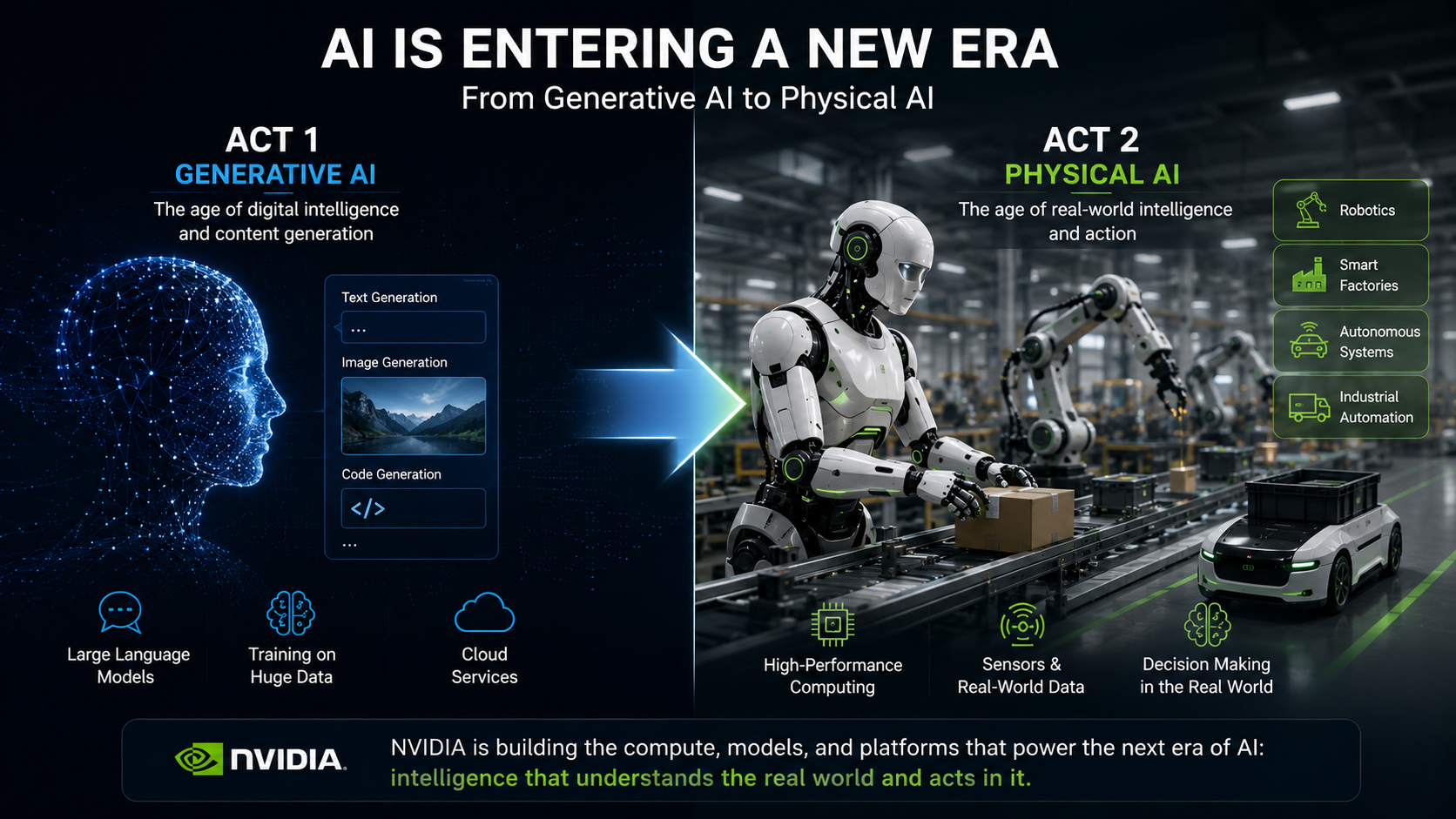
For the past several years, the AI boom has been driven primarily by large language models.
Applications such as ChatGPT, Claude, and Gemini introduced the world to generative AI and sparked unprecedented demand for computing power.
This phase could be described as AI's first act.
The next phase may look very different.
Jensen Huang has repeatedly emphasized the concept of Physical AI.
Unlike generative AI, which operates primarily through software and digital interactions, Physical AI extends intelligence into the real world.
This includes
- Humanoid robots
- Smart factories
- Autonomous systems
- Industrial automation
- Intelligent machines
In other words, AI is moving beyond generating answers and beginning to make decisions and take actions in physical environments.
That transition requires significantly more computing power, infrastructure, and real-world integration than today's AI applications.
Why Vera Rubin and HBM4 Matter

As AI systems become more sophisticated, computational performance alone is no longer enough.
Memory bandwidth has become one of the industry's most important bottlenecks.
This is where High Bandwidth Memory (HBM) enters the picture.
Many industry observers now describe HBM as the "oil" of the AI era.
Without advanced memory systems, even the most powerful AI processors cannot operate at their full potential.
This challenge becomes even more critical as Nvidia prepares for its next-generation Vera Rubin platform.
Future AI workloads will require enormous amounts of data to move between processors and memory at unprecedented speeds.
As a result, securing advanced memory supply chains has become a strategic priority for the entire AI industry.
And South Korea sits at the center of that ecosystem.
This helps explain why Nvidia continues to deepen relationships with key technology and manufacturing partners in the country.
Why the Faker Meeting Was Symbolically Important
Many observers viewed Huang's meeting with Faker as a marketing event.
In reality, it may have carried a deeper message.
Faker is more than an esports athlete.
He represents excellence within a global gaming culture that helped build Nvidia's original customer base.
Before Nvidia became the dominant force behind AI infrastructure, it was a company known primarily for gaming graphics.
The meeting symbolized the connection between Nvidia's past and its future.
Gaming created the foundation.
Artificial intelligence is building the next empire.
Bringing together one of technology's most influential CEOs and one of gaming's most iconic figures created a powerful statement about Nvidia's evolving identity.
What Investors Should Really Be Watching

Most investors focus on individual headlines.
Sophisticated capital focuses on infrastructure.
The real question is not whether AI will continue growing.
The question is who controls the critical bottlenecks that make AI possible.
Historically, the greatest investment opportunities often emerge from infrastructure layers rather than consumer-facing applications.
Today, those layers include
- AI accelerators
- High-bandwidth memory
- Data centers
- Power infrastructure
- Robotics platforms
- Industrial automation systems
As AI expands from software into the physical world, these areas could become increasingly important drivers of long-term value creation.
Final Thoughts - Follow the Flow of Capital
Jensen Huang's visit to South Korea and his meeting with Faker generated headlines around the world.
But the deeper story may be Nvidia's preparation for the next stage of artificial intelligence.
The company is positioning itself not merely as a chipmaker, but as a foundational infrastructure provider for the future AI economy.
And South Korea appears to be becoming one of the key strategic hubs in that vision.
For investors, the most important lesson is not to focus solely on short-term news cycles.
Instead, focus on where capital is flowing, which technologies are becoming indispensable, and which companies occupy the most critical positions within the emerging AI ecosystem.
The next era of AI may not be defined by chatbots alone.
It may be defined by the machines, factories, and infrastructure that bring intelligence into the physical world.
The question is no longer whether AI will transform the economy.
The question is who will control the infrastructure behind that transformation.
— MasterMind
'[Global] Success Blueprints' 카테고리의 다른 글