What Happens When the Federal Reserve Raises Interest Rates?


Why Markets Get Nervous Every Time the Fed Speaks
Hello, this is MasterMind.
If you follow financial news, there is one institution that appears almost every day.
The Federal Reserve, commonly known as the Fed.
And whenever investors pay close attention to a headline, it is usually something like
"The Fed raised interest rates."
"The Fed decided to hold rates steady."
But have you ever wondered why?
Why does a move of just 0.25% or 0.50% make headlines around the world?
Why does a single decision from the Fed cause
Stocks to fluctuate
Bitcoin to pull back
Real estate markets to slow down
Exchange rates to swing
It even affects the interest rates we pay on mortgages, loans, and credit cards.
That's because interest rates are not just numbers.
They represent
The price of money itself
In this article, we'll explore how the Federal Reserve works and why global markets pay such close attention to every word the Fed says.
What Does the Federal Reserve Do?
Many people confuse the Federal Reserve with the U.S. government.
The U.S. Treasury issues government bonds.
The Federal Reserve, on the other hand, serves as America's central bank.
Its primary responsibilities are
Price stability
Maximum employment
Financial system stability
And the most powerful tool it uses to achieve those goals is interest rates.
That is why investors around the world pay close attention to the Fed.
It has enormous influence over the flow of money throughout the global economy.
Why Does the Fed Raise Interest Rates?

The answer is simple
To fight inflation
When too much money circulates throughout the economy, people spend more.
Businesses raise prices.
Asset prices climb.
Inflation accelerates.
Eventually, the economy begins to overheat.
When that happens, the Fed raises interest rates.
In simple terms
The Fed is applying the brakes to the economy
Higher borrowing costs reduce spending and investment, helping to cool inflationary pressures.
What Happens When the Fed Raises Rates?
1. Borrowing Becomes More Expensive
The first impact is usually felt in the lending market.
Mortgage rates rise
Auto loans become more expensive
Corporate borrowing costs increase
As borrowing becomes more costly, consumers spend less and businesses invest more cautiously.
As a result, economic growth tends to slow.
Whenever the Fed raises rates, the credit market often feels the impact first.
2. Stocks Face Greater Pressure
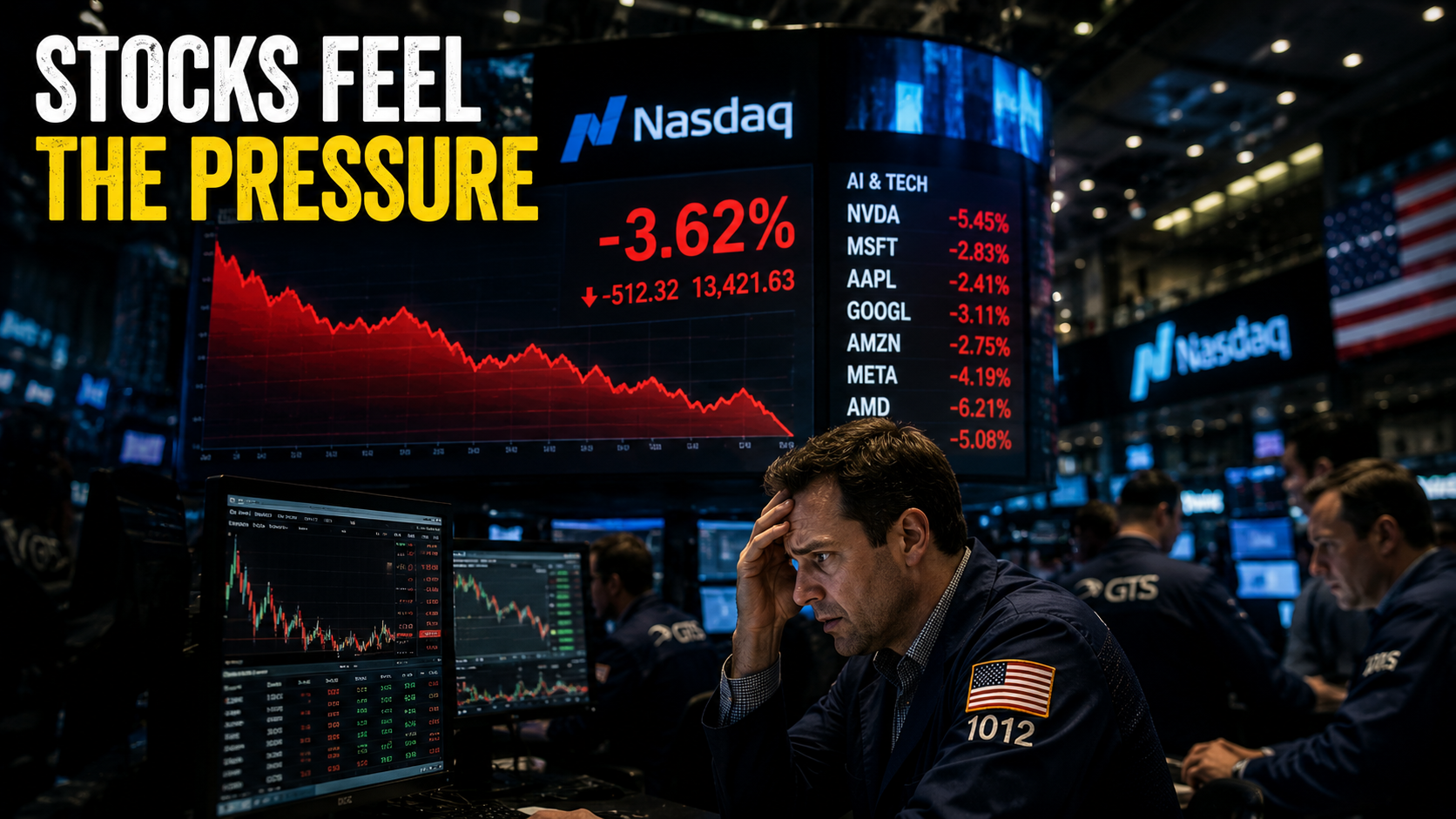
Higher interest rates are generally viewed as a headwind for stocks.
Especially
Technology stocks
Growth stocks
AI-related companies
Why?
Because investors begin comparing future growth opportunities against guaranteed returns from safer assets.
In other words
Future growth becomes less attractive
Risk-free returns become more attractive
As a result
Investor sentiment weakens
Market volatility increases
Growth stocks often face corrections
There's a common saying on Wall Street
"The market fears interest rates more than headlines."
Interest rates remain one of the most powerful forces influencing asset prices.
3. The U.S. Dollar Gets Stronger

When U.S. interest rates rise, global capital tends to flow toward the United States.
Money naturally seeks
Safety
Higher returns
The result is often
Increased demand for U.S. dollars
A stronger dollar
Capital outflows from emerging markets
This is why Federal Reserve decisions affect far more than just the U.S. economy.
They can influence financial conditions around the entire world.
Many people think of the Fed as simply an institution that sets rates.
But financial markets often view it differently.
The Fed helps determine the price of money worldwide
That's why every policy decision attracts so much attention.
4. Bitcoin and Cryptocurrencies Become More Volatile
Bitcoin is highly sensitive to liquidity conditions.
When money is abundant, risk assets often perform well.
But when rates rise, conditions change.
Markets begin worrying about
Reduced liquidity
Risk-off sentiment
Dollar strength
As a result, cryptocurrencies can experience increased volatility.
Over the past several years, investors have repeatedly observed a familiar pattern
Higher rates → Bitcoin weakness
While many factors influence crypto prices, monetary policy remains one of the most important.
5. Real Estate Markets Can Cool Down
Real estate is also highly sensitive to interest rates.
Most homebuyers rely on financing.
When borrowing costs rise, monthly mortgage payments increase.
The result can be
Lower housing demand
Fewer transactions
Slower real estate activity
This is one reason why real estate investors closely monitor Federal Reserve policy decisions.
Why Does the Market Obsess Over Every Word From the Fed?
Markets are not focused solely on current interest rates.
What matters even more is
The future direction of rates
Investors constantly ask questions such as
Will the Fed raise rates again?
When will rate cuts begin?
Is a recession coming?
The global financial market is engaged in a continuous effort to answer these questions.
Right now, investors are evaluating
Whether inflation is truly under control
When rate cuts may begin
How long higher rates could last
At the same time, uncertainties remain.
Rising energy prices
Geopolitical tensions
Stronger-than-expected economic data
Can all create concerns that inflation may return.
Because of this, investors carefully analyze every Fed statement, every press conference, and every economic report.
The Fed's words often provide
Clues about the future direction of markets
And those clues can move trillions of dollars around the world.
Why Is the Fed More Important Than Ever Today?
Recently, markets have become increasingly sensitive to Federal Reserve decisions.
The reason is simple.
Investors are asking one critical question
When will the Fed begin cutting rates?
The longer higher rates remain in place
Corporate financing costs stay elevated
Real estate markets remain under pressure
Risk appetite remains constrained
However, if rate cuts begin, the situation could change dramatically.
Stocks
Bitcoin
Real estate
Emerging market assets
Could all benefit from improving liquidity conditions.
That is why investors closely monitor economic indicators such as
Consumer Price Index (CPI)
Employment reports
Retail sales data
GDP growth figures
These numbers help shape future Federal Reserve decisions.
Ultimately, markets care less about today's interest rate and more about
What the Fed will do next
What Do Successful Investors Focus On?
Experienced investors don't simply react to headlines.
Instead, they ask
Where is money flowing?
Which assets are strongest?
Which businesses can survive difficult conditions?
In a high-rate environment, not every asset performs well.
Often, the strongest performers are those that can demonstrate
Strong cash flow
Sustainable profitability
Financial resilience
Challenging markets tend to reveal true quality.
Final Thoughts
Every day, financial markets generate thousands of headlines.
But one question matters more than almost any other
What will the Federal Reserve do next?
The answer influences
Stocks
Bitcoin
Real estate
Currency markets
Borrowing costs
And ultimately affects asset prices across the world.
The more volatile markets become, the more important it is to understand the underlying mechanics rather than react emotionally.
Those who understand the flow of money can identify opportunities.
Those who ignore it risk being swept away by changing conditions.
At the end of the day, Federal Reserve policy remains
One of the most powerful signals shaping global capital flows
What do you think?
Which asset class do you believe will perform best during the next phase of the interest rate cycle?
Feel free to share your thoughts in the comments.
This was MasterMind.
'[Global] Success Blueprints' 카테고리의 다른 글