Japan Lost Its No.1 Position After 34 Years — Why the U.S. Is Paying Attention


Is This Japan's Decline? The Market Sees Something Different
Hello, this is MasterMind.
A major piece of news recently caught the attention of global financial markets.
For the first time in 34 years, Japan has lost its position as the world's largest net foreign asset nation.
At first glance, many people interpreted the news as a sign of weakness.
"Is Japan's economy finally starting to crack?"
"Is the era of Japanese financial dominance over?"
But global investors are asking a very different question.
They are not focused on Japan's decline.
They are focused on where Japan's money goes next.
Because this story is not really about rankings.
It's about the potential shift of one of the largest pools of capital in the world.
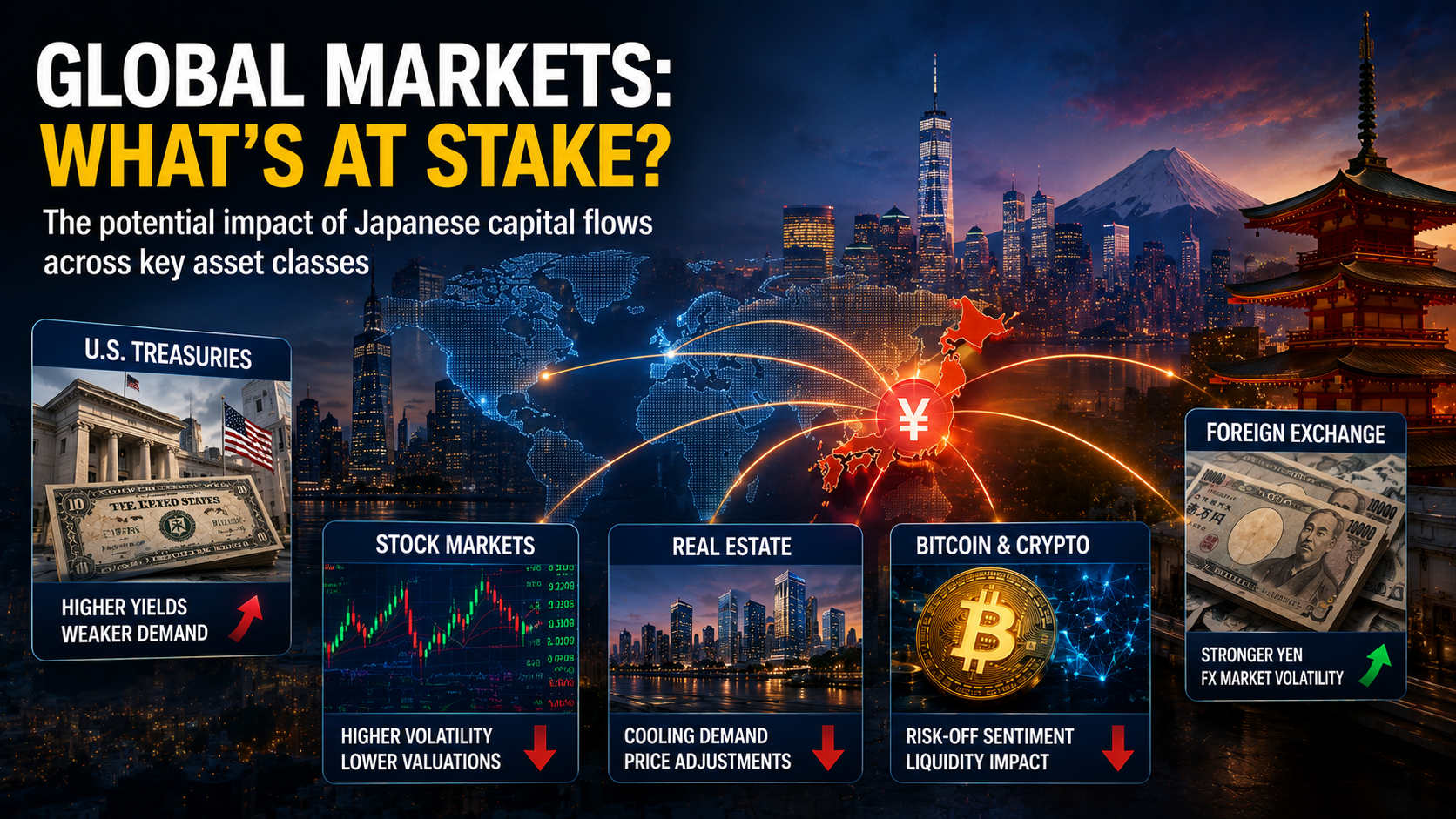
And that could have consequences for U.S. Treasuries, stocks, real estate, Bitcoin, and global financial markets.
What Is a Net Foreign Asset Position?
To understand why this matters, we first need to understand what a net foreign asset position actually is.
Simply put, it measures a country's overseas assets minus the assets that foreign investors hold within that country.
This includes:
- Foreign stocks
- Foreign bonds
- Overseas real estate
- Ownership stakes in global companies
A large positive net foreign asset position means a country has invested more capital abroad than foreigners have invested in its domestic economy.
For decades, Japan dominated this category.
Since 1991, it held the world's top position for 34 consecutive years.
That made Japan one of the most important providers of capital to the global financial system.
Did Japan Lose the Top Spot Because Its Economy Is Weakening?
Not necessarily.
In fact, this is where the story becomes more interesting.
Japan's overseas asset holdings remain near record highs.
The loss of its No.1 ranking does not automatically mean Japan has become weaker.
Ironically, one reason behind the change is the strength of Japan's own stock market.
Japanese equities have experienced a powerful rally in recent years.
As global investors poured money into Japanese stocks, the value of foreign-owned Japanese assets increased significantly.
From an accounting perspective, that increase can raise Japan's external liabilities.
In other words:
Japan's overseas assets grew.
But foreign ownership of Japanese assets also grew rapidly.
The result was a shift in the rankings.
This is why many analysts see the change less as a sign of decline and more as a side effect of Japan's strong capital markets.
The Real Story: Japan's Interest Rates

The ranking itself is not what worries investors.
The bigger issue is Japan's changing interest-rate environment.
For decades, Japan maintained ultra-low interest rates.
At times, rates were even negative.
Because domestic returns were so low, Japanese pension funds, insurance companies, banks, and retail investors searched for better opportunities overseas.
That capital flowed into:
- U.S. Treasury bonds
- American equities
- Global bond markets
- International real estate
- Bitcoin and other risk assets
As a result, Japan became one of the most important sources of liquidity in the global financial system.
What Happens If Japanese Capital Comes Home?

The situation is beginning to change.
Inflation has returned to Japan after years of deflationary pressure.
The Bank of Japan has started moving away from its ultra-loose monetary policies.
As Japanese bond yields rise, domestic investments become more attractive.
This creates a possibility that some Japanese investors may reduce their exposure to overseas assets and increase allocations at home.
Financial markets often refer to this process as:
Capital Repatriation
or
The Return of Japanese Money
And that possibility is attracting significant attention.
Why Is the United States Watching So Closely?

Here is the interesting part.
The headline is about Japan.
But many investors believe the bigger implications are for the United States.
The U.S. remains one of the world's largest debtor nations and continuously issues Treasury bonds to finance government spending.
For decades, Japanese investors have been among the largest foreign buyers of U.S. Treasuries.
That is why markets are asking an important question:
Will Japanese investors continue buying U.S. government debt at the same pace?
If the answer changes, global financial conditions could change as well.
This is no longer just a Japanese story.
It is a story about the future flow of global capital.
Why Global Markets Are Paying Attention
1. U.S. Treasury Market
If Japanese investors reduce purchases of U.S. Treasuries, demand for government bonds could weaken.
That could place upward pressure on Treasury yields.
Since Treasury yields serve as a benchmark for global borrowing costs, the effects could spread throughout the financial system.
2. Stock Markets
Higher yields generally increase financing costs for businesses.
Growth stocks and technology companies, which often depend on future earnings expectations, tend to be especially sensitive to rising rates.
As a result, changes in capital flows can influence equity valuations worldwide.
3. Bitcoin and Digital Assets
Bitcoin and other cryptocurrencies are often affected by global liquidity conditions.
If capital becomes more selective and financial conditions tighten, risk assets may experience greater volatility.
That makes Japan's capital flows an important variable for crypto investors as well.
4. Currency Markets
If Japanese investors bring overseas capital back home, demand for the Japanese yen could increase.
That may strengthen the currency and add volatility to global foreign-exchange markets.
Currency movements can influence trade balances, corporate earnings, and investment flows around the world.
What Smart Investors Are Really Watching
Successful investors rarely focus only on headlines.
Instead, they look for deeper shifts beneath the surface.
The real question is not whether Japan lost a ranking.
The real question is whether one of the world's largest sources of capital is beginning to change direction.
For years, markets benefited from abundant liquidity and ultra-low interest rates.
If that environment evolves, investors may need to rethink how they evaluate risk, valuations, and future opportunities.
Money flows matter.
And understanding where capital is moving often matters more than understanding today's headlines.
Final Thoughts
The most important part of this story is not that Japan lost its No.1 position.
The most important part is the direction of Japanese capital.
For more than three decades, Japan has been a major pillar of global finance.
If the flow of that capital begins to change, the effects could reach far beyond Japan.
Treasury yields.
Stock markets.
Real estate.
Bitcoin.
Foreign exchange markets.
All of them could feel the impact.
Success in investing is not about reacting to headlines.
It is about understanding the forces shaping tomorrow's markets before everyone else does.
What do you think?
Will Japanese capital continue supporting global markets, or are we entering a new era of capital repatriation?
Let us know your thoughts in the comments.
Designing Success,
MasterMind
'[Global] Success Blueprints' 카테고리의 다른 글