Could the Age of Resource Dominance Be Coming? The Bretton Woods 3.0 Scenario


A World Dominated by the Dollar, but Shaped by a New Resource Paradigm
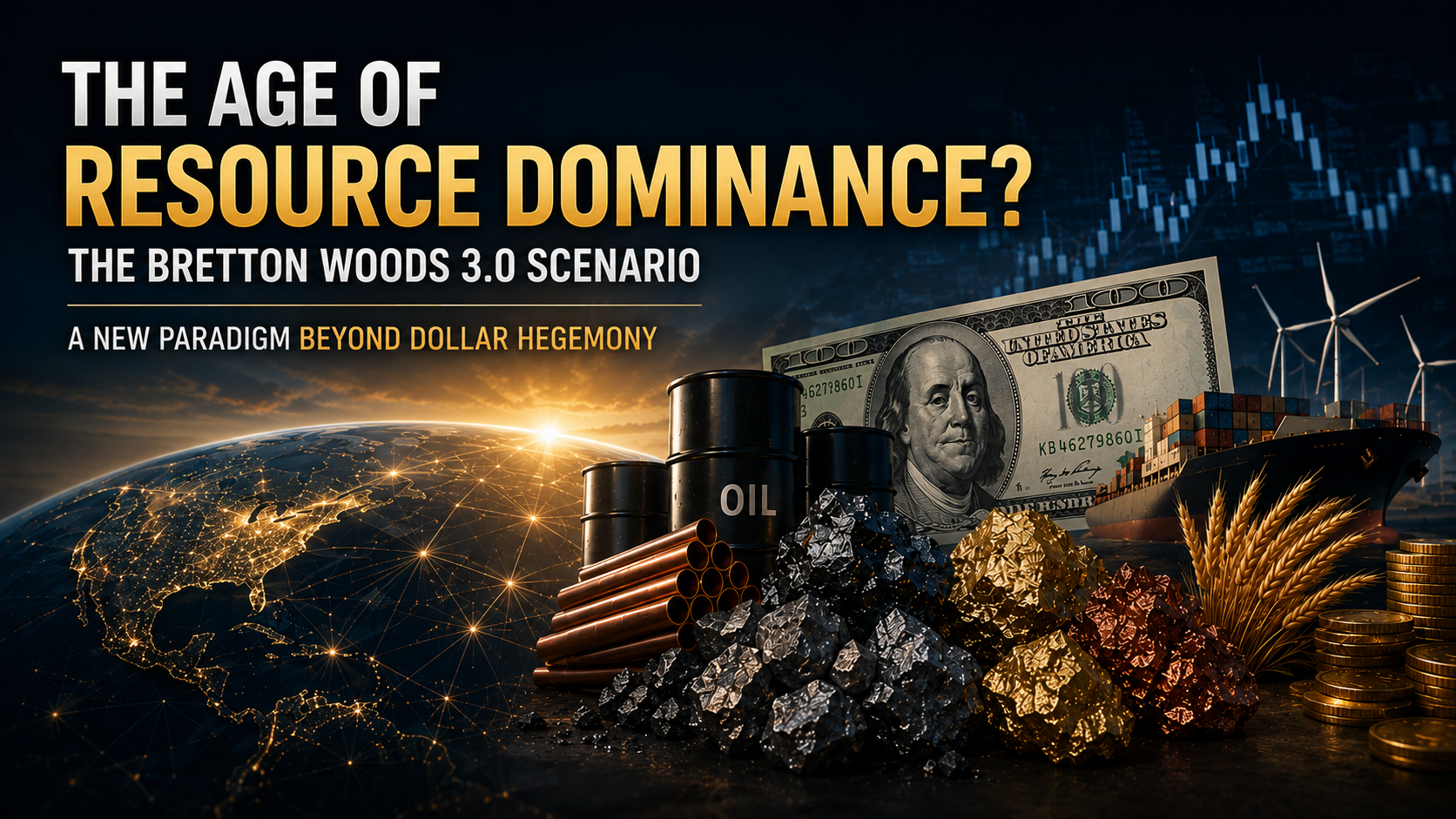
Why Bretton Woods 3.0 Is Gaining Attention
Hello, this is Mastermind.
The global economy is showing signs of a fascinating shift.
The United States remains the world's most powerful financial nation. The U.S. dollar is still the dominant currency in international trade, and U.S. Treasury bonds continue to serve as the benchmark asset of the global financial system.
Yet when we look at the recent actions of China, Saudi Arabia, and several BRICS nations, a different trend begins to emerge.
What are these countries accumulating?
Dollars?
Gold?
Surprisingly, many nations are increasingly focusing on tangible assets such as oil, natural gas, rare earth minerals, uranium, copper, and agricultural commodities.
Why is the world paying attention to resources again?
And what exactly is the concept known as Bretton Woods 3.0?
Today, we'll explore the possibility of a new era through the lens of resource dominance and changing global power structures.
Bretton Woods 1.0 - The Age of Gold

In 1944, the world established a new international monetary system.
This became known as the Bretton Woods system.
Under this framework, national currencies were linked to the U.S. dollar, while the dollar itself was backed by gold.
Gold stood at the center of the global financial order.
A nation's credibility was closely tied to the amount of gold it possessed.
This period is often referred to as Bretton Woods 1.0.
Bretton Woods 2.0 - The Era of the Dollar and Petrodollar
Everything changed in 1971.
The United States suspended the dollar's convertibility into gold in what became known as the Nixon Shock.
The global monetary system shifted dramatically.
Instead of gold, confidence in the United States became the foundation of the system, while U.S. Treasury bonds emerged as the world's primary reserve asset.
During the 1970s, the United States and Saudi Arabia established a framework in which oil transactions were conducted primarily in dollars.
This became the foundation of the Petrodollar System.
Oil trade.
International commerce.
Foreign exchange reserves.
All became deeply connected to the U.S. dollar.
This is the world we know today as Bretton Woods 2.0.
Cracks in a Strong Dollar System?
The United States continues to strengthen its monetary influence through stablecoins and digital payment infrastructure.
Yet elsewhere, a different trend is emerging.
This is not merely political rhetoric.
It is increasingly visible in policy decisions and economic data.
China's Reduced Exposure to U.S. Treasuries
China has gradually reduced its holdings of U.S. Treasury securities over the past several years.
Many analysts view this as an effort to diversify reserves and reduce dependence on dollar-denominated assets.
Central Banks Are Buying Gold
Central banks around the world have been purchasing gold at record levels.
This suggests a growing interest in tangible stores of value alongside traditional financial assets.
Changes in the Petrodollar Structure
Saudi Arabia has explored broader settlement options in energy trade, including discussions involving non-dollar transactions.
The kingdom has also expanded cooperation with BRICS nations.
This does not mean the dollar system is collapsing.
However, it does suggest that the global financial environment is becoming more diversified than it was in previous decades.
Why Resources Matter
The answer is surprisingly simple.
Money can be created.
Central banks can print currency.
Governments can issue debt.
Resources are different.
Oil cannot be printed.
Rare earth minerals cannot be duplicated.
Food production cannot expand infinitely.
Resources have physical limits.
And when uncertainty rises, attention often shifts back toward scarce tangible assets.
Money can be printed.
Resources cannot.
Water may also become one of the most important strategic assets of the future.
Climate change and population growth are increasing concerns about long-term water security.
Many experts believe future competition among nations may involve not only energy, but also access to fresh water.
Oil.
Natural gas.
Rare earth minerals.
Uranium.
And water.
These may become defining assets of national strength in the decades ahead.
The Resource Race Has Already Begun

In recent years, global supply chains have repeatedly demonstrated their vulnerability.
Energy Competition
The Russia-Ukraine conflict exposed the strategic importance of energy security.
Europe faced major challenges securing natural gas supplies.
Rare Earth Competition
China maintains a significant position in the rare earth supply chain.
Rare earth elements are essential for
- Semiconductors
- Electric vehicles
- Batteries
- Defense systems
The concentration of these materials within specific regions has become a major geopolitical concern.
Food Security
Climate disruptions and geopolitical tensions continue to affect agricultural production and global food supplies.
Food is increasingly viewed as a national security asset rather than merely a commodity.
Resources are no longer just raw materials.
They are becoming strategic tools of national power.
The Hidden Competition Around Greenland
When discussions about purchasing Greenland emerged several years ago, many people dismissed the idea as unrealistic.
From a resource perspective, however, Greenland is highly significant.
The region is believed to possess substantial deposits of rare earth minerals and other strategic resources.
It also holds increasing geopolitical value as Arctic shipping routes become more accessible.
The United States, China, and several European nations continue to show interest in the region.
What appears quiet on the surface may actually represent an early stage of future resource competition.
Even the AI Revolution Depends on Resources
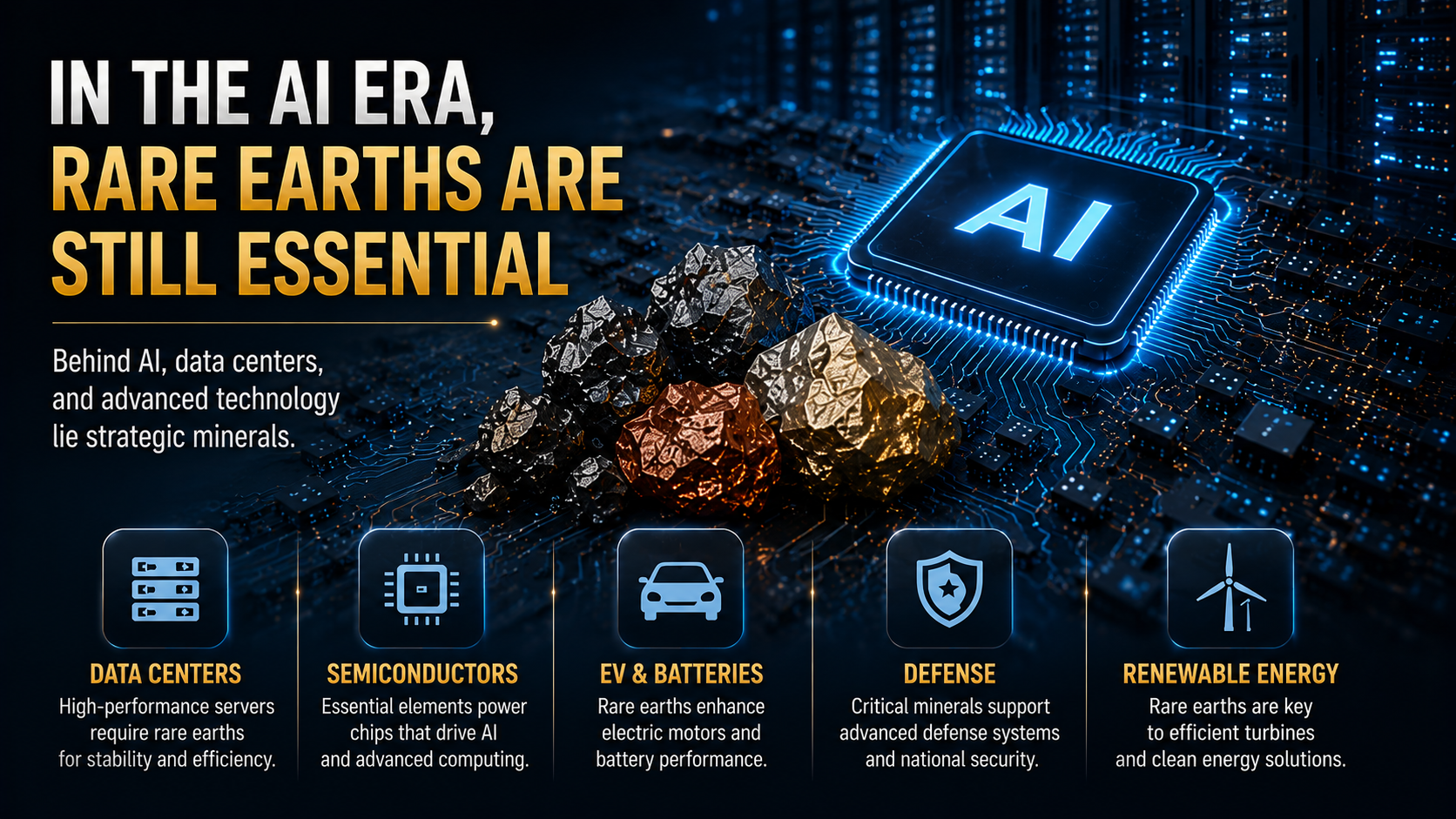
Much of today's investment attention is focused on artificial intelligence.
Yet AI infrastructure depends heavily on physical resources.
Data centers require enormous amounts of
- Electricity
- Semiconductors
- Power infrastructure
- Strategic minerals
Without rare earth elements and critical materials, many advanced technologies simply cannot be produced.
Behind the race for AI leadership lies another race: the competition for resources.
Some analysts even argue
"The more advanced AI becomes, the more important strategic resources will be."
China's Rare Earth Advantage
Rare earth minerals are not ordinary commodities.
They are essential components in
- Electric vehicle motors
- Wind turbines
- Semiconductor manufacturing equipment
- Missile guidance systems
- Military aircraft
China remains a dominant force not only in mining but also in refining and processing these materials.
As a result, the United States and its allies have invested heavily in building alternative supply chains.
This is not merely industrial policy.
It is part of a broader competition for technological leadership.
Why Uranium Is Back in the Spotlight
Uranium has attracted renewed interest in recent years.
Several forces are driving this trend
- Growing AI-related electricity demand
- Expansion of electric vehicles
- Energy security concerns
- Carbon reduction goals
As power consumption rises, reliable baseload energy becomes increasingly valuable.
Nuclear power is once again being considered an important solution.
As a result, uranium is being reevaluated as a strategic resource rather than just another commodity.
Why Copper Is Called "Dr. Copper"
Investors often refer to copper as "Dr. Copper."
The reason is simple.
Copper is used in nearly every major industry
- Construction
- Power grids
- Semiconductors
- Electric vehicles
- Data centers
- Industrial equipment
When economic activity expands, demand for copper tends to rise.
When growth slows, demand often weakens.
Because of this relationship, many investors view copper as a leading indicator of global economic health.
If resource dominance becomes increasingly important, copper could play a central role.
The United States Is Also Competing for Resources
This story is not simply about America versus BRICS.
The United States is actively participating in the global race for strategic resources.
Examples include
- Strategic petroleum reserves
- Semiconductor supply chain investments
- Rare earth development projects
- Battery mineral initiatives
- Friend-shoring and allied supply networks
The U.S. clearly understands the strategic value of resources.
The real competition may not be about abandoning the dollar.
It may be about securing the resources needed to sustain economic and technological leadership.
What Is Bretton Woods 3.0?
Bretton Woods 3.0 is not an official monetary system.
Rather, it is a concept used by some economists and investors to describe a possible shift toward a more resource-oriented global order.
Some proposals even envision settlement systems linked to gold and other tangible assets.
One frequently discussed concept is known as "The Unit."
However, these ideas remain theoretical and have not been adopted as official international frameworks.
Still, the broader message is clear.
The world may be gradually exploring ways to anchor value not only in financial systems but also in tangible assets.
Is Dollar Dominance Really Ending?
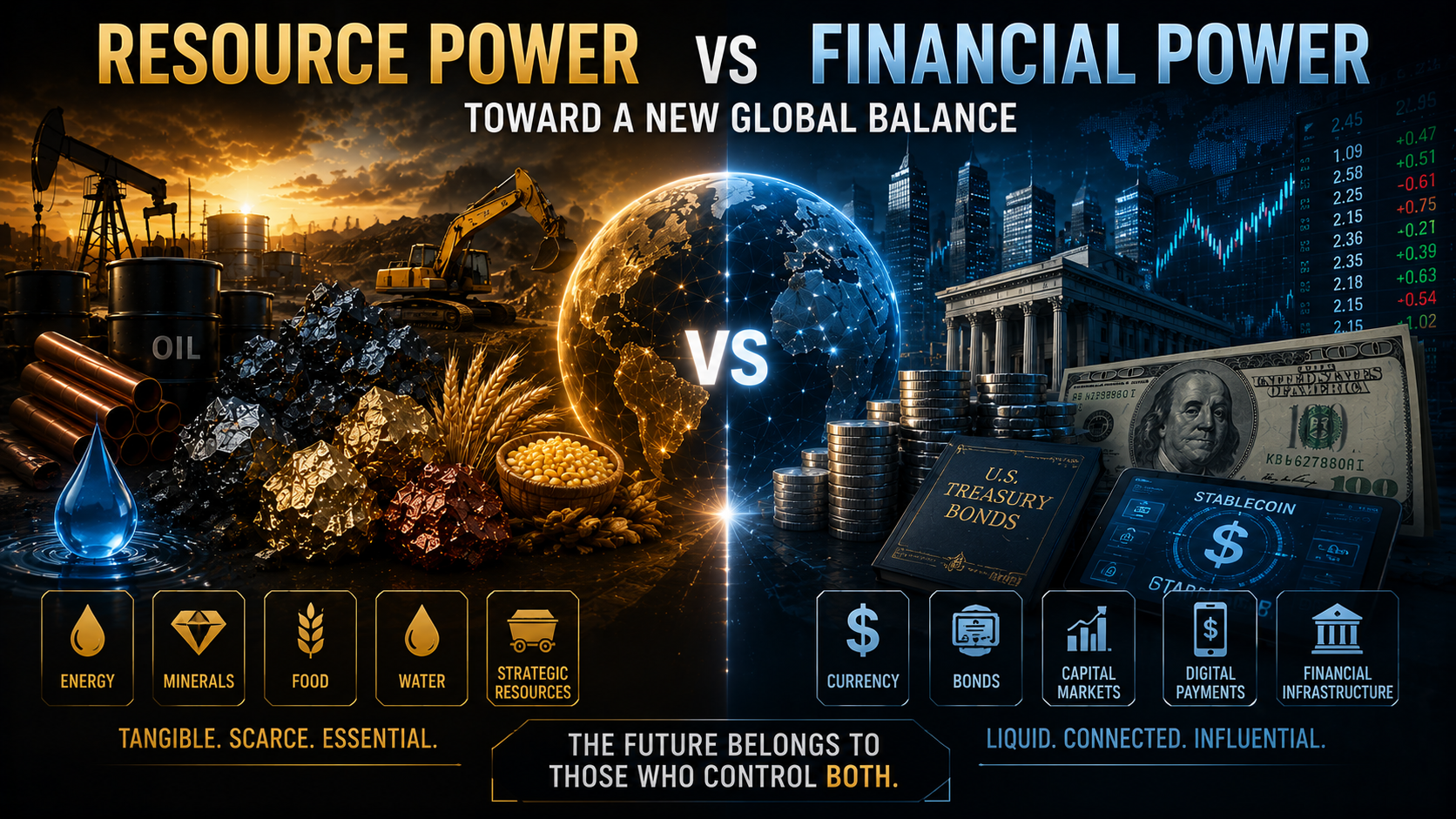
Not necessarily.
The U.S. dollar remains the world's leading reserve currency.
The United States still possesses the deepest capital markets, the strongest financial infrastructure, and unmatched military influence.
History, however, shows that no system remains unchanged forever.
The age of gold eventually ended.
New systems often emerge slowly rather than suddenly.
The key question is not whether the dollar disappears.
The key question is what assets become increasingly important alongside it.
Final Thoughts - What Should Investors Watch?
Successful investors do not focus solely on whether the dollar is rising or falling.
They pay attention to where capital is flowing.
They observe what governments are trying to secure.
They identify assets that may remain scarce and valuable in the future.
Many people view dollars and resources as competing forces.
The future may not be that simple.
The dollar could remain at the center of global finance while resources become increasingly important strategic assets.
Perhaps Bretton Woods 3.0 is not the end of dollar dominance.
Perhaps it is the emergence of a new system where financial power and resource power coexist.
A world where dollar dominance remains strong.
But where resources become a critical pillar of economic influence.
That may be the new asset paradigm taking shape before our eyes.
What do you think?
Will the dollar remain the dominant force in global finance?
Or will strategic resources become the defining assets of the next era?
Leave your thoughts in the comments.
This was Mastermind, designing success through insight.
'[Global] Success Blueprints' 카테고리의 다른 글