[Insight] The Economy Is Slowing… So Why Is Nasdaq Still Surging?


The Strange Economy Behind the AI Boom
Hello,
This is Mastermind.
The global economy has clearly started to slow.
Consumer spending is becoming more cautious. Inflation continues to pressure household budgets, while recent economic data points to weakening demand across multiple sectors.
At the same time, financial markets continue moving in the opposite direction.

The Nasdaq remains near historic highs.
AI-related stocks continue attracting enormous amounts of capital.
And companies like Nvidia, Microsoft, Amazon, and Meta have become the primary engines driving market momentum.
That disconnect has led many investors to ask the same question:
Why do markets continue rising while the broader economy feels increasingly fragile?
Markets Are Betting on a Different Future
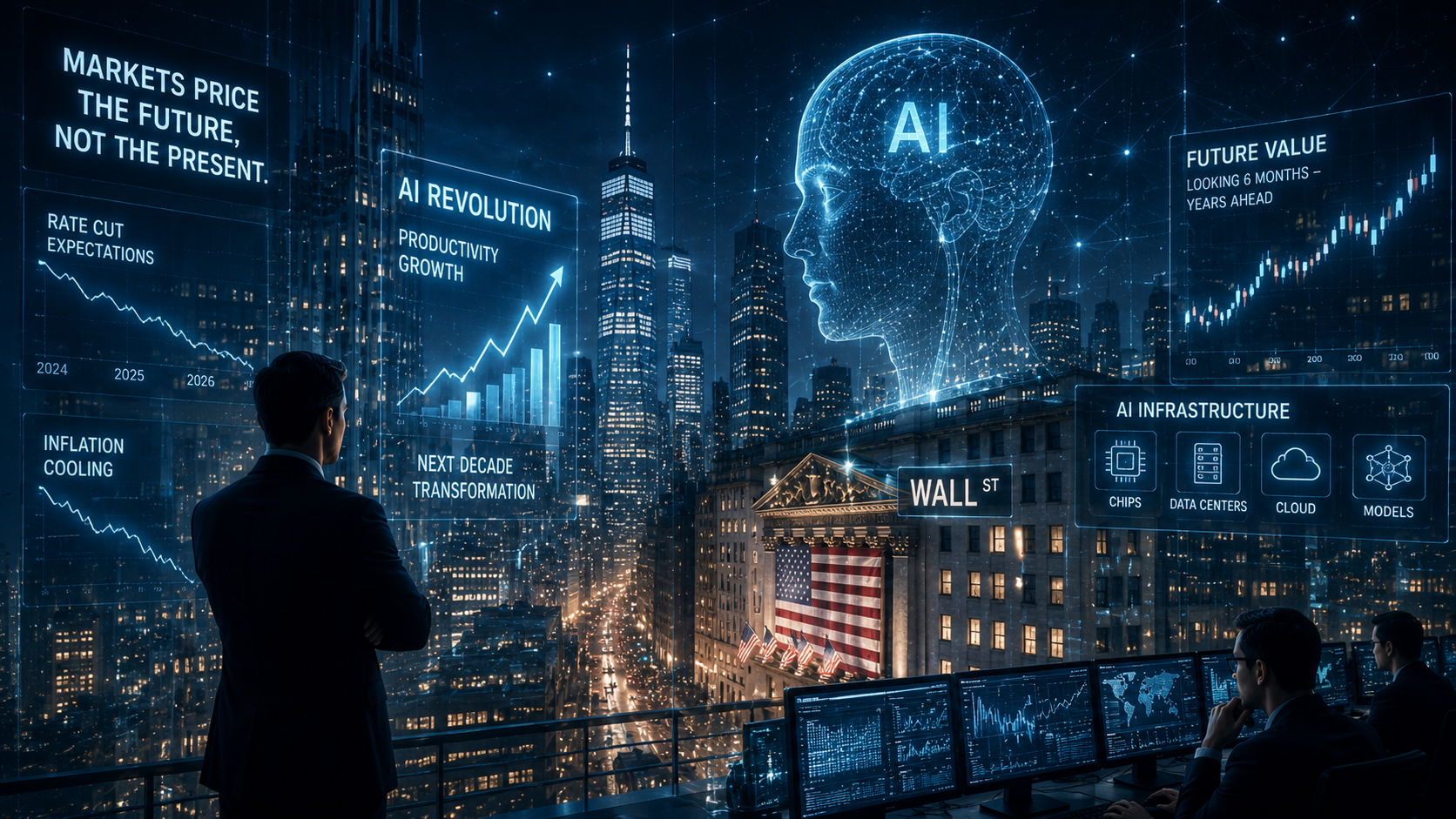
One of the most important things to understand about financial markets is that they are forward-looking.
Markets are not simply reacting to current economic conditions.
They are constantly attempting to price what investors believe the economy may look like six months — or even several years — from now.
Right now, institutional investors are focused on a few major themes.
Interest rates may eventually decline if growth continues slowing.
Artificial intelligence could significantly improve productivity over the next decade.
And the companies building AI infrastructure today may become even more dominant in the future global economy.
As a result, weak economic data is not always interpreted negatively.
Slower consumer spending can increase expectations for future rate cuts.
Softer growth data can reinforce hopes for easier monetary policy.
And as long as the AI growth narrative remains intact, capital continues flowing toward large technology companies.
That is one reason markets can rise even while consumers and small businesses continue facing pressure.
Beneath the Rally, a Narrower Market
From a distance, the market rally appears broad and healthy.
Underneath the surface, however, much of the momentum is concentrated in a relatively small number of companies.
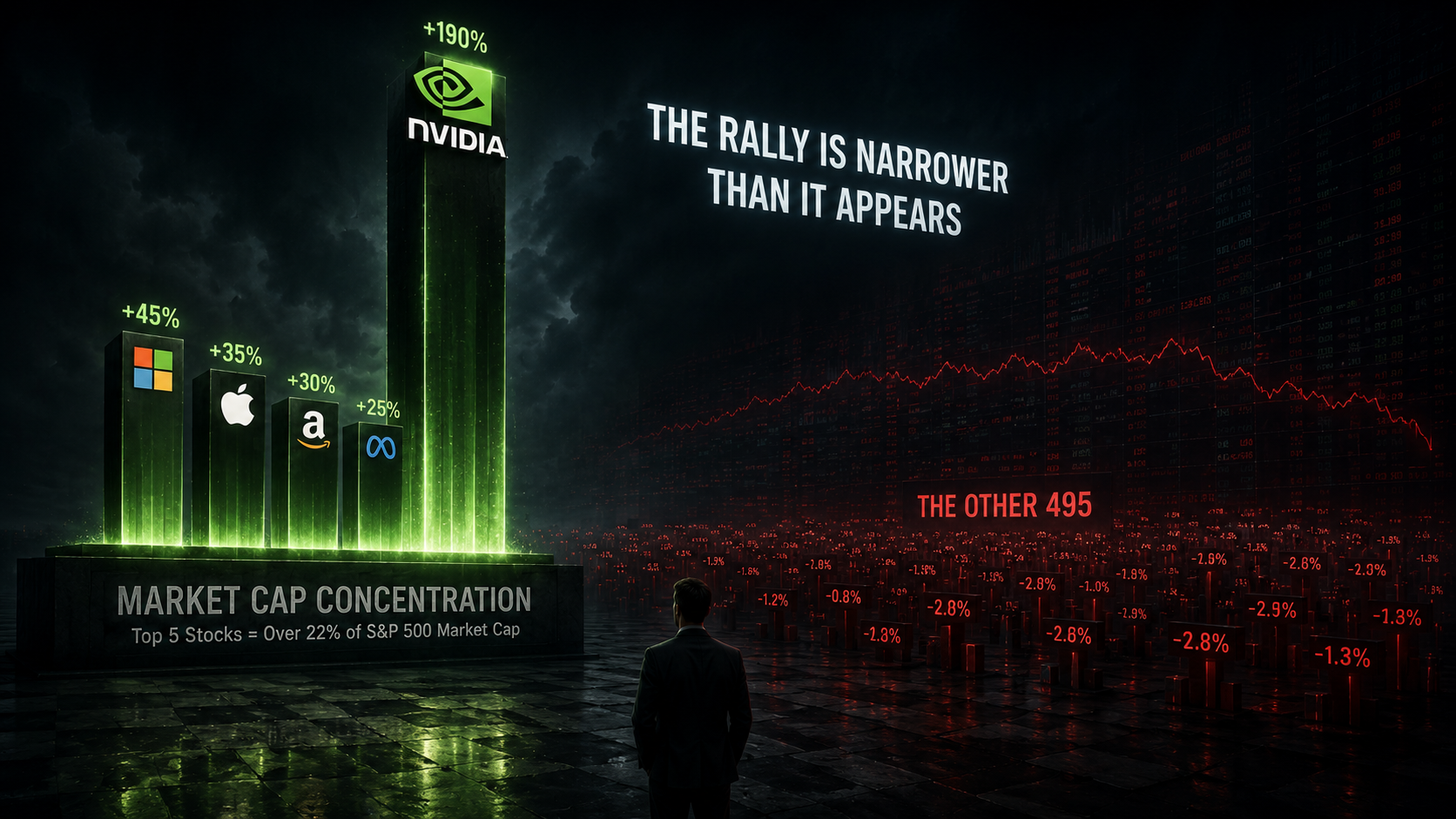
Nvidia, Microsoft, Apple, Amazon, and Meta now account for a significant share of overall index performance.
Global investment capital has become heavily concentrated around AI-related themes:
semiconductors, cloud infrastructure, data centers, and large language models.
Investors increasingly view AI as a long-term structural transformation rather than a temporary trend.
That optimism may ultimately prove correct.
But outside the technology sector, economic conditions remain far less impressive.
Consumer demand has weakened in several parts of the economy.
Retail activity has slowed.
Borrowing costs remain elevated.
And many smaller businesses continue facing margin pressure.
Layoffs have also continued across multiple industries, even while major indexes remain near record highs.
The result is an unusual environment where financial markets and everyday economic conditions no longer appear closely aligned.
Why the Boom Doesn’t Feel Real
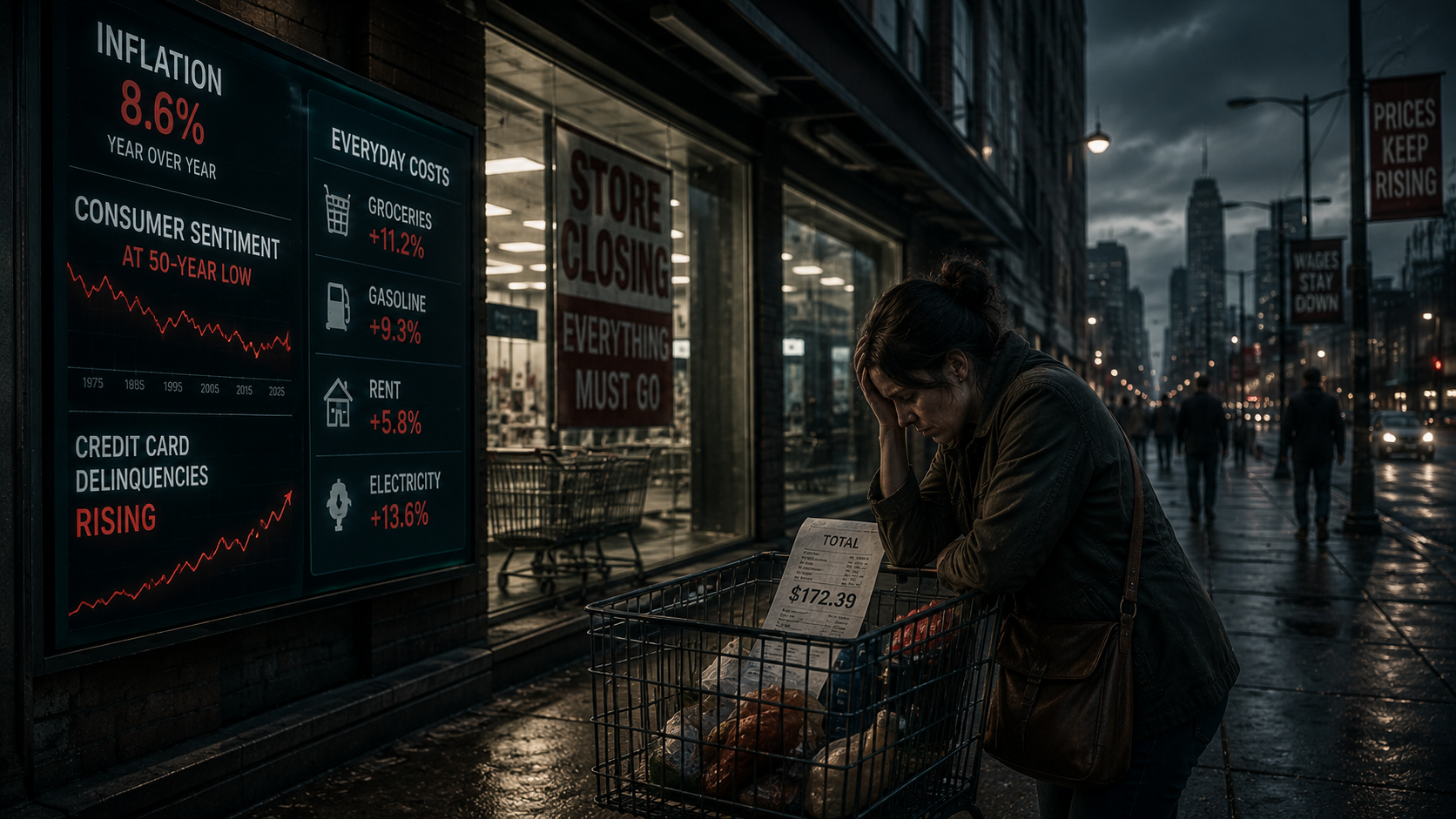
Many people feel disconnected from the market rally for a simple reason:
Rising asset prices do not necessarily improve broader economic conditions.
Much of the liquidity entering markets is flowing directly into financial assets rather than circulating evenly through the real economy.
Capital continues moving aggressively into technology stocks, AI-focused funds, and other growth-related investments.
At the same time, inflation continues reducing real purchasing power for many households.
Recent consumer credit and delinquency data have also pointed to growing financial stress beneath the surface of the economy.
This creates a strange contradiction.
Financial markets appear strong.
But everyday expenses remain difficult to manage.
That divergence has become one of the defining characteristics of the current economic environment.
When Bad News Stops Mattering
Another important feature of the current market environment is the way investors are interpreting economic risk.
Recently, weaker consumer spending data and volatile PPI inflation numbers would normally have pressured markets lower.
Instead, many investors viewed those developments as supportive for equities because they increased expectations that monetary policy could eventually become more accommodative.
Historically, markets tend to become more fragile when investors begin assuming that negative economic developments will ultimately support asset prices.

That does not necessarily mean markets are about to collapse.
The AI sector is generating real revenue, attracting massive infrastructure investment, and driving legitimate technological change.
But even transformative technologies can experience periods where market expectations accelerate faster than underlying economic reality.
That is why some investors are beginning to question whether current valuations already reflect too much future optimism.
Mastermind’s Perspective
The current market environment is not entirely irrational.
There are legitimate reasons why investors remain optimistic about artificial intelligence and the long-term earnings potential of major technology companies.
But there is also a growing disconnect between financial markets and the broader economy.
Consumers remain under pressure.
Economic growth has slowed.
And market leadership has become increasingly concentrated in a small number of companies tied to the AI narrative.
History shows that markets can continue rising much longer than many expect.
It also shows that periods of extreme optimism often reduce investor sensitivity to risk.
That does not mean the AI boom will fail.
But it does mean investors should remain careful about confusing technological progress with permanently rising asset prices.
The economy may be slowing.
Yet expectations for the future continue accelerating.
And that gap is becoming one of the most important stories in global markets today.
What do you think?
Are markets correctly pricing the future impact of AI — or are expectations beginning to move ahead of economic reality?
This was Mastermind.
'[Global] Success Blueprints' 카테고리의 다른 글