AI Bubble or Profitability Problem? Why Investors Are Reassessing AI Stocks


Hello, this is MasterMind
For nearly two years, investors have been told the same story.
Artificial intelligence is the future.
Data centers are expanding at record speed.
Semiconductor demand is exploding.
And the biggest technology companies are investing hundreds of billions of dollars to build the infrastructure behind the AI revolution.
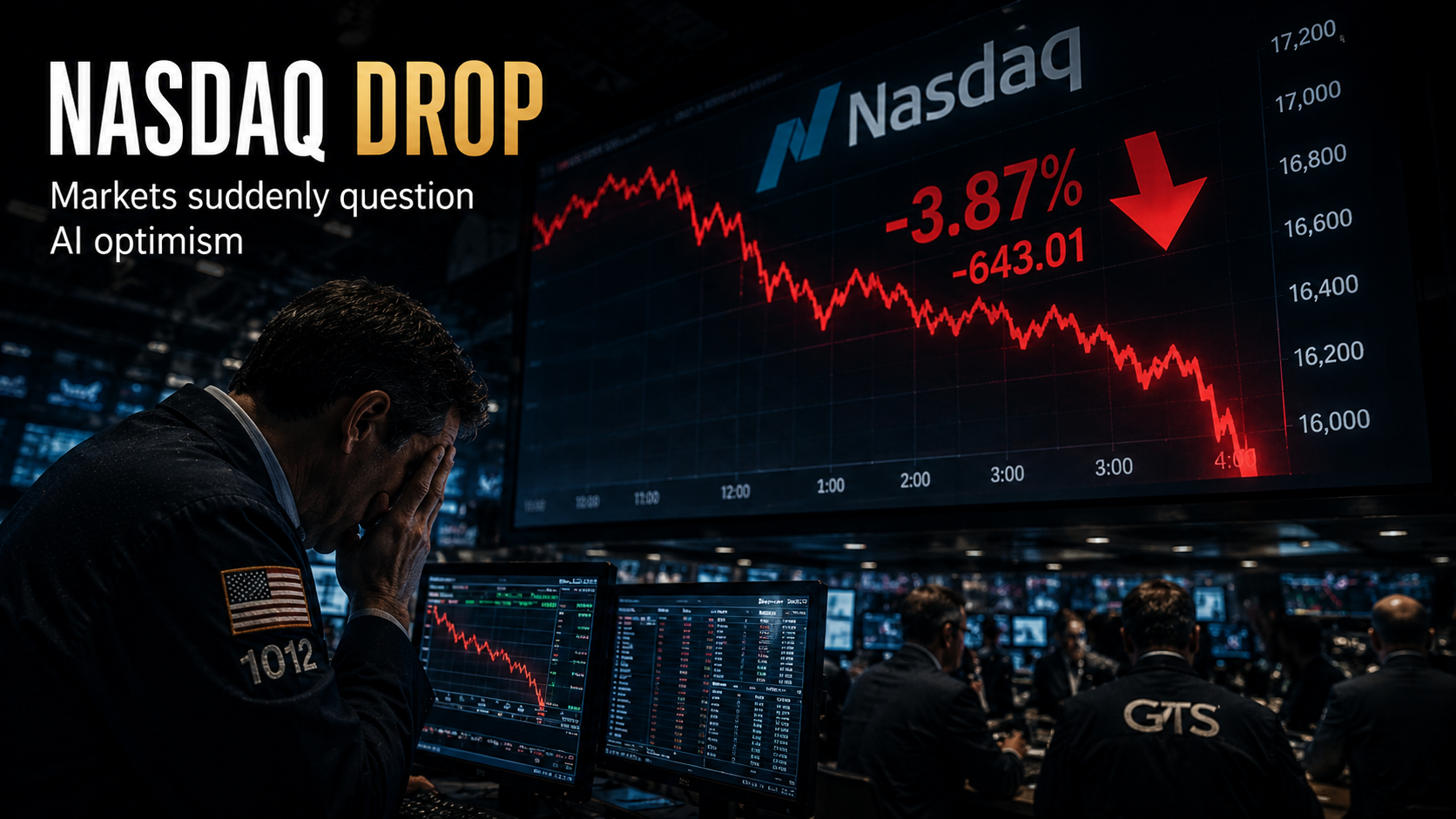
So why are AI stocks suddenly under pressure?
Why are investors questioning companies that only months ago seemed unstoppable?
To understand the recent selloff in the Nasdaq and AI-related stocks, we need to look beyond headlines and focus on what truly drives financial markets: expectations, liquidity, and cash flow.
Key Takeaway
The recent decline in AI-related stocks is not necessarily a rejection of artificial intelligence. Instead, it reflects growing investor concerns about whether massive AI investments can generate profits quickly enough to justify today's valuations, especially in a higher-for-longer interest rate environment.
Why Did AI Stocks Start Falling?

Financial markets are forward-looking.
Stocks do not trade based on what companies earned yesterday. They trade based on what investors believe companies will earn tomorrow.
Over the past two years, the market has priced in an extraordinary AI future.
Investors expected
- Explosive demand for AI services
- Massive data center construction
- Record semiconductor sales
- Accelerating corporate profits
The problem is not that these trends are false.
The problem is that expectations may have risen faster than profits.
At some point, every bull market faces the same question
Where are the earnings?
That question is now becoming increasingly important for AI-related companies.
The Difference Between Innovation and Profitability
Many investors hear the phrase "AI bubble" and immediately think of the dot-com crash.
The comparison is understandable, but incomplete.
The internet was not a failure.
It transformed the global economy.
Yet many internet companies collapsed because technological potential did not automatically translate into sustainable profits.
The same distinction matters today.
AI may very well reshape entire industries.
But investors are no longer focused solely on technological progress.
They want evidence that AI spending can create meaningful and repeatable cash flow.
In the end, markets reward profits, not promises.
Why Higher Interest Rates Matter More Than Ever
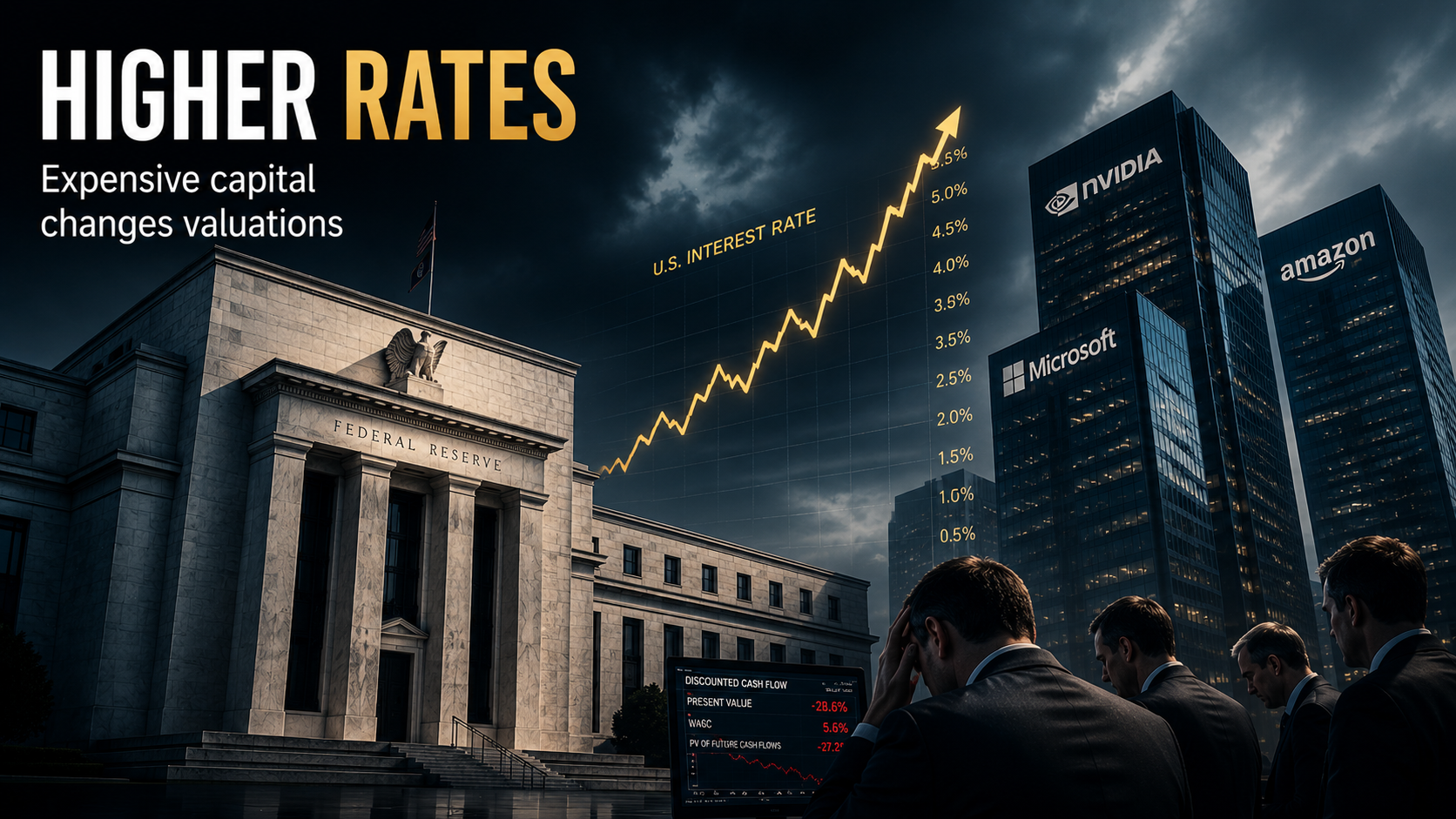
One of the most important forces behind the recent market volatility is the Federal Reserve.
For years, low interest rates supported high-growth technology companies.
When money is cheap, investors are willing to pay a premium for future earnings.
However, when rates remain elevated, future profits become less valuable in today's dollars.
This is often referred to as the "higher for longer" environment.
The impact is significant
- Growth stocks face valuation pressure
- Capital becomes more expensive
- Investors demand stronger profitability
- Risk tolerance declines
As a result, companies that depend heavily on future growth projections become more vulnerable to market corrections.
What Is the Market Really Worried About?
The market is not questioning whether AI is important.
The market is questioning whether AI investments are generating sufficient returns.
Technology companies have committed enormous amounts of capital toward AI infrastructure.
New data centers.
Advanced chips.
Massive computing networks.
The concern is simple
Are revenues growing fast enough to justify the spending?
As long as that question remains unanswered, volatility is likely to remain elevated.
How This Impacts Major Asset Classes
| Asset Class | Potential Impact |
| U.S. Stocks | Increased volatility in growth and AI sectors |
| Treasury Bonds | Potential demand during risk-off periods |
| U.S. Dollar | Strength from safe-haven flows |
| Gold | Benefits from uncertainty and risk aversion |
| Bitcoin | Highly sensitive to liquidity conditions |
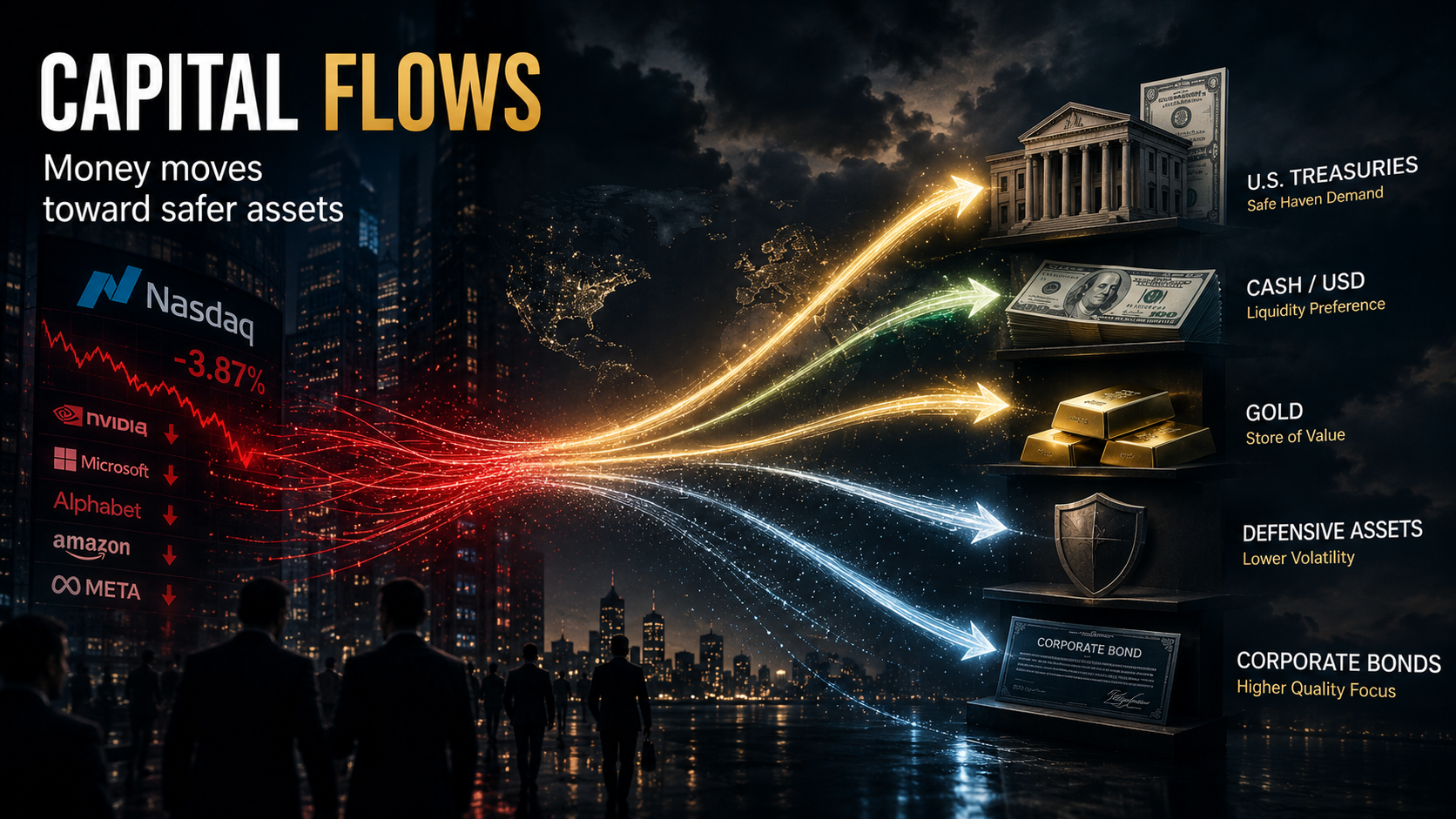
One of the most important lessons for investors is that money never disappears.
It simply moves.
When capital leaves one sector, it usually flows into another.
Understanding those flows often matters more than following headlines.
What Should Investors Watch Next?
Rather than focusing solely on stock prices, investors should pay attention to three critical factors
1. Corporate Earnings
Can AI-related companies convert investment spending into measurable profits?
2. Cash Flow
Are businesses generating sustainable cash flow without relying on constant external funding?
3. Federal Reserve Policy
Will interest rates remain elevated longer than expected?
The answers to these questions may determine the next major direction for markets.
What Are Wealthy Investors Looking At?

Experienced investors rarely focus on panic.
Instead, they focus on resilience.
They ask different questions
- Which companies generate real cash flow?
- Which businesses can survive a prolonged high-rate environment?
- Where is institutional capital moving?
- Which assets become stronger when liquidity tightens?
Market corrections often reveal the difference between strong businesses and popular stories.
That distinction becomes especially important during periods of uncertainty.
Final Thoughts
The recent weakness in AI-related stocks does not necessarily mean the AI revolution is ending.
What it does suggest is that investors are becoming more selective.
Markets are moving beyond excitement and toward verification.
The next phase of the AI story may not be about who spends the most money.
It may be about who generates the most profit.
In investing, survival matters more than prediction.
And survival begins with understanding where money is flowing and why.
This is MasterMind
designing success through insight.
'[Global] Success Blueprints' 카테고리의 다른 글