What Is the VIX Index? Meaning, How It Works, and Why It Matters


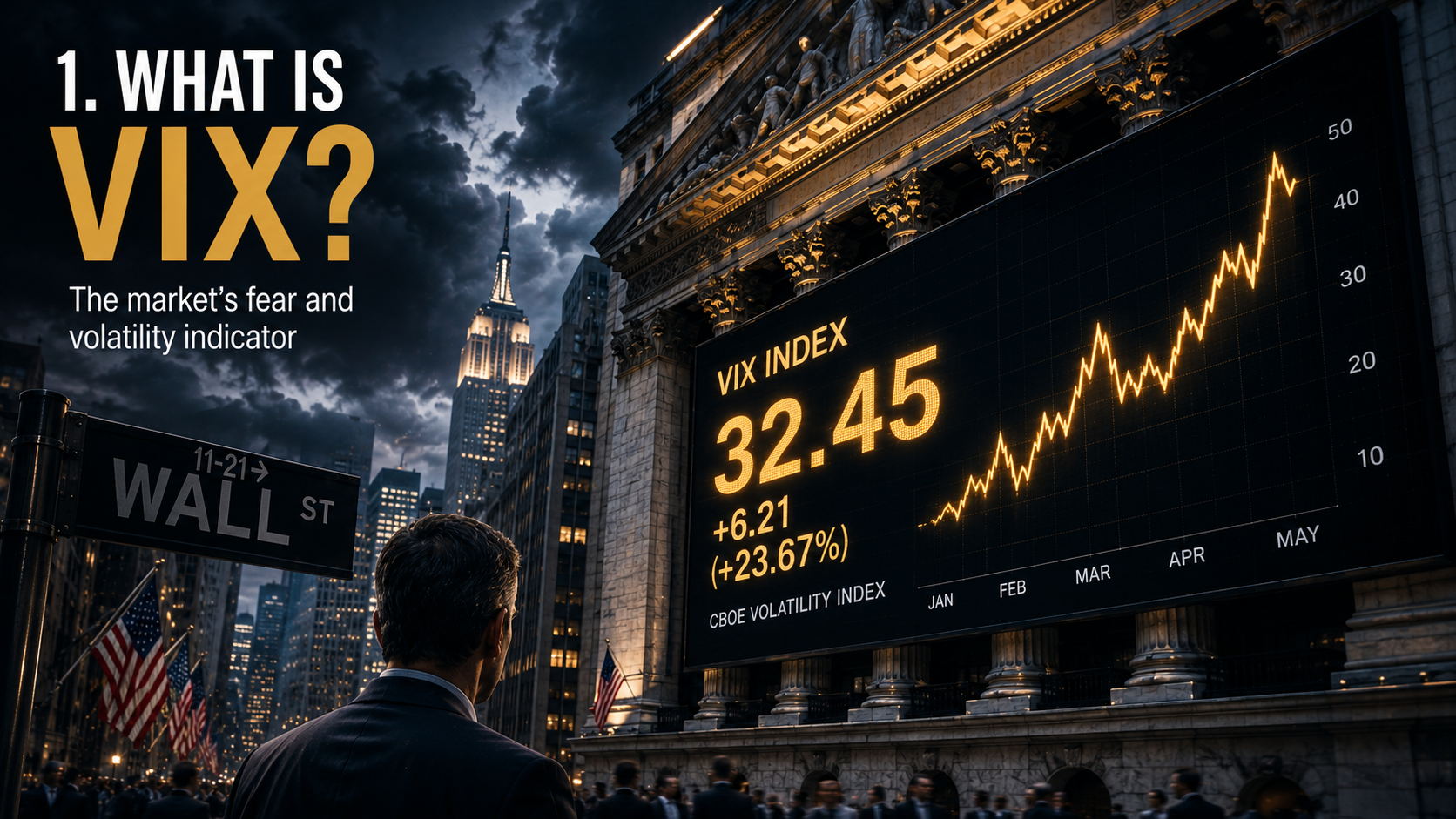
Hello, this is MasterMind.
Why does Wall Street suddenly start talking about the VIX whenever the stock market falls?
Why do professional investors monitor the VIX even more closely than the headlines?
And why do some of the world's most successful investors become interested in buying assets precisely when fear reaches its peak?
To answer those questions, we need to understand what the VIX really measures.
The VIX is often called the "Fear Index," but that nickname only tells part of the story.
At its core, the VIX is a real-time reflection of how investors are pricing uncertainty, risk, and future market volatility.
Key Takeaway
The VIX Index measures the market's expectation of volatility over the next 30 days, making it one of the most widely watched indicators of investor sentiment, market risk, and potential investment opportunities.
What Is the VIX Index?
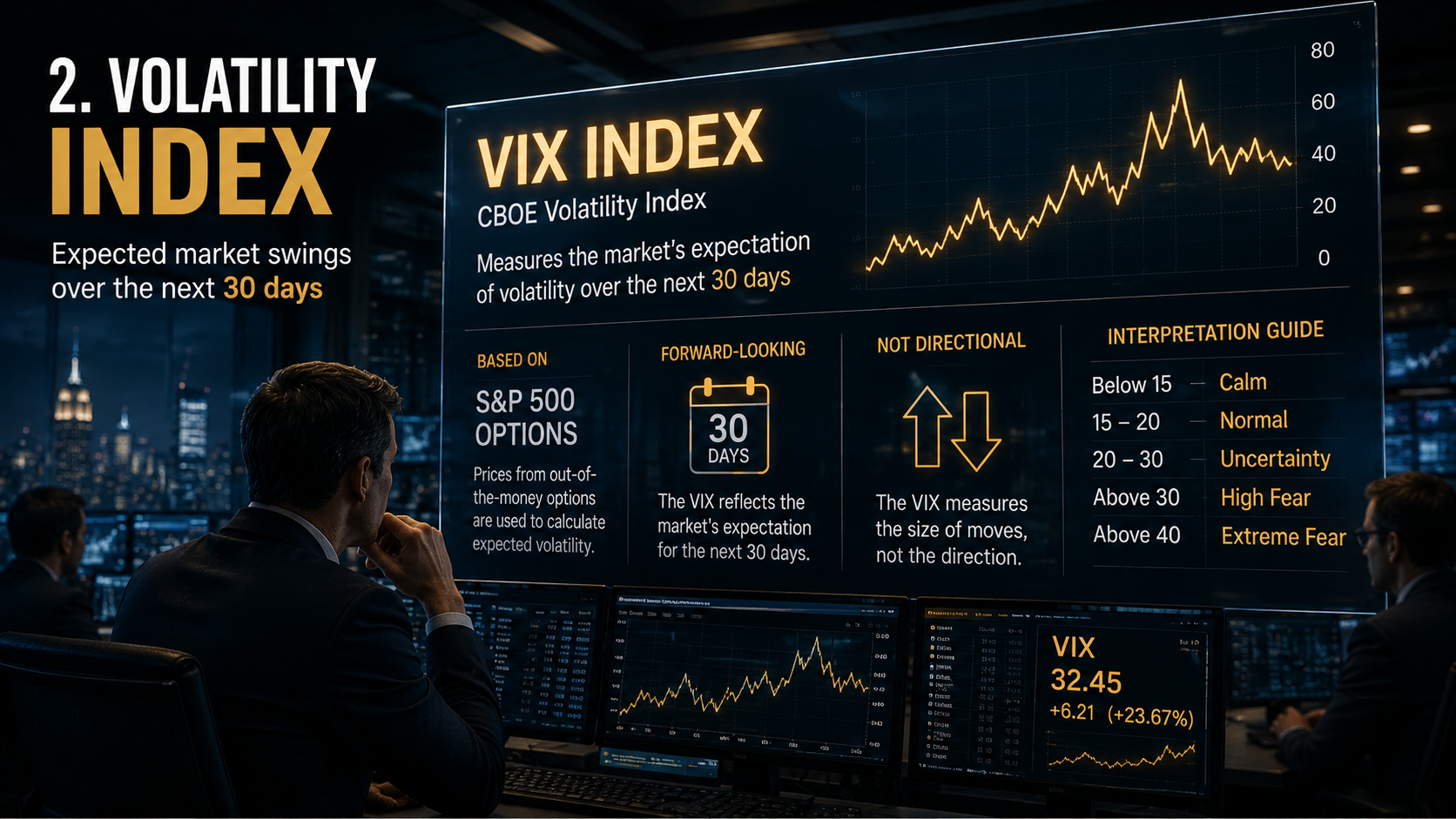
The VIX, short for Volatility Index, is calculated by the Chicago Board Options Exchange (CBOE) using options prices on the S&P 500.
Rather than measuring whether investors believe stocks will rise or fall, the VIX measures how much investors expect the market to move.
In simple terms, the VIX answers a single question
How uncertain is the market about the next month?
When investors feel confident, the VIX tends to remain low.
When uncertainty rises, options prices increase, and the VIX moves higher.
Because fear often accompanies uncertainty, the VIX earned its nickname as the Fear Index.
A general interpretation looks like this
| VIX Level | Market Environment |
| Below 15 | Calm and optimistic |
| 15–20 | Normal conditions |
| 20–30 | Rising uncertainty |
| Above 30 | Elevated fear |
| Above 40 | Crisis-level volatility |
The important distinction is that the VIX does not predict direction.
It measures the expected magnitude of market movement.
How Does the VIX Work?

Many investors assume the VIX is based on surveys or sentiment polls.
In reality, it is derived from actual market transactions.
Investors who worry about market declines often purchase put options, which function similarly to insurance policies for their portfolios.
As demand for protection increases, option premiums rise.
The VIX captures this increase in expected volatility.
The process works roughly like this
Growing uncertainty
↓
Higher demand for portfolio protection
↓
Rising option prices
↓
Higher expected volatility
↓
Rising VIX
This is why many professional investors view the VIX as a more honest measure of market fear than news headlines.
People can say they are confident.
Their options positions often tell a different story.
Why Is the VIX Important?
It Measures Market Psychology in Real Time
Most economic data tells us what has already happened.
The VIX provides insight into what investors expect to happen next.
Markets are forward-looking by nature.
As a result, changes in the VIX often reveal shifts in sentiment before they become obvious elsewhere.
It Reveals Hidden Stress in Financial Markets
Sometimes financial news appears calm while the VIX quietly rises.
This can indicate that institutional investors are becoming more defensive behind the scenes.
Conversely, a market selloff with only a modest increase in the VIX may suggest that investors were already prepared for the event.
The VIX helps investors identify underlying tension that may not be visible on the surface.
It Helps Track Capital Flows
Markets move because money moves.
When the VIX rises sharply, investors often reduce exposure to risk assets and shift capital toward perceived safe havens.
Understanding where money is moving is often more valuable than simply understanding why headlines are negative.
How the VIX Affects Major Asset Classes

The VIX does not influence stocks alone.
It often impacts capital allocation decisions across the entire financial system.
| Asset Class | Typical Impact of Rising VIX |
| U.S. Stocks | Increased selling pressure |
| Growth Stocks | Higher volatility |
| U.S. Treasuries | Increased demand |
| U.S. Dollar | Potential strength |
| Gold | Safe-haven demand |
| Bitcoin | Risk-off pressure |
These relationships are not guaranteed.
However, they frequently appear during periods of heightened uncertainty.
The VIX is ultimately a reflection of changing risk preferences across markets.
The Relationship Between the VIX and the Stock Market
One of the most common misconceptions is that a high VIX automatically means investors should sell stocks.
History suggests the opposite may sometimes be true.
Major spikes in the VIX have often occurred near periods of maximum pessimism, including
- Black Monday (1987)
- The Global Financial Crisis (2008)
- The COVID-19 Market Crash (2020)
In each case, fear reached extreme levels.
Yet long-term investors who remained focused on fundamentals eventually saw markets recover.
This is why Wall Street has a famous saying
"When the VIX is high, it's time to buy."
Of course, no indicator is perfect.
But extreme fear often creates opportunities that are unavailable during periods of optimism.
Key Lessons for Investors
The VIX Measures Volatility, Not Direction
A rising VIX does not necessarily mean markets will continue falling.
It simply means larger price swings are expected.
The VIX Should Never Be Used Alone
The VIX is most useful when combined with
- Interest rates
- Liquidity conditions
- Corporate earnings
- Economic growth
- Credit market trends
No single indicator explains everything.
Extreme Readings Matter Most
The most valuable information often comes from extremes.
Very low VIX readings can signal excessive complacency.
Very high VIX readings can signal widespread panic.
Both conditions deserve attention.
What Do Wealthy Investors Look For During VIX Spikes?

Professional investors rarely focus on the VIX number itself.
Instead, they focus on what it reveals about capital flows and market behavior.
Follow the Money
Is capital leaving risky assets?
Where is it going?
Treasuries, cash, gold, or something else?
Understanding the destination of capital is often more important than understanding the news event itself.
Evaluate Cash Flow
Fear affects prices quickly.
Business fundamentals change more slowly.
Long-term investors focus on whether companies continue generating cash flow despite market volatility.
Assess Asset Resilience
Not all assets respond equally to economic stress.
Periods of elevated volatility reveal which businesses possess durable competitive advantages and strong balance sheets.
Think Long Term
Fear is temporary.
Cash flow can be permanent.
This distinction is one of the reasons successful investors often view market volatility differently from the average participant.
Instead of asking
"How much lower can stocks go?"
They ask
- What is the market afraid of?
- Is that fear justified?
- Where is capital moving?
- Which assets are likely to survive and thrive over the next decade?
- Am I prepared if volatility becomes even worse?
Investing is not about predicting the future perfectly.
It is about building a portfolio capable of surviving uncertainty.
Final Thoughts
The VIX Index is much more than a fear gauge.
It is a window into investor expectations, market psychology, and capital flows.
A high VIX does not guarantee a crisis.
A low VIX does not guarantee safety.
What matters is understanding what the market is pricing in.
Markets respond to expectations.
Expectations influence capital flows.
And capital flows ultimately drive asset prices.
The most successful investors do not simply watch prices.
They watch where the money is going.
This is MasterMind
designing success through insight.
'[Global] Success Blueprints' 카테고리의 다른 글