DeepSeek's $65 Billion Valuation — The Efficiency Question Challenging the AI Industry


In the race to dominate artificial intelligence, the prevailing assumption has been simple:
The company with the most GPUs wins.
For years, the AI industry has operated under that logic. Technology giants spent billions of dollars building massive data centers, stockpiling NVIDIA chips, and scaling computing power at unprecedented levels.
But a Chinese AI startup called DeepSeek is forcing investors to ask a different question.
What if the future of AI isn't determined solely by who owns the most hardware, but by who can use it most efficiently?
With reports suggesting that DeepSeek is seeking approximately $7.4 billion in new funding at a valuation approaching $65 billion, the company has quickly become one of the most closely watched players in the global AI race.
Yet the real story is not the valuation itself.
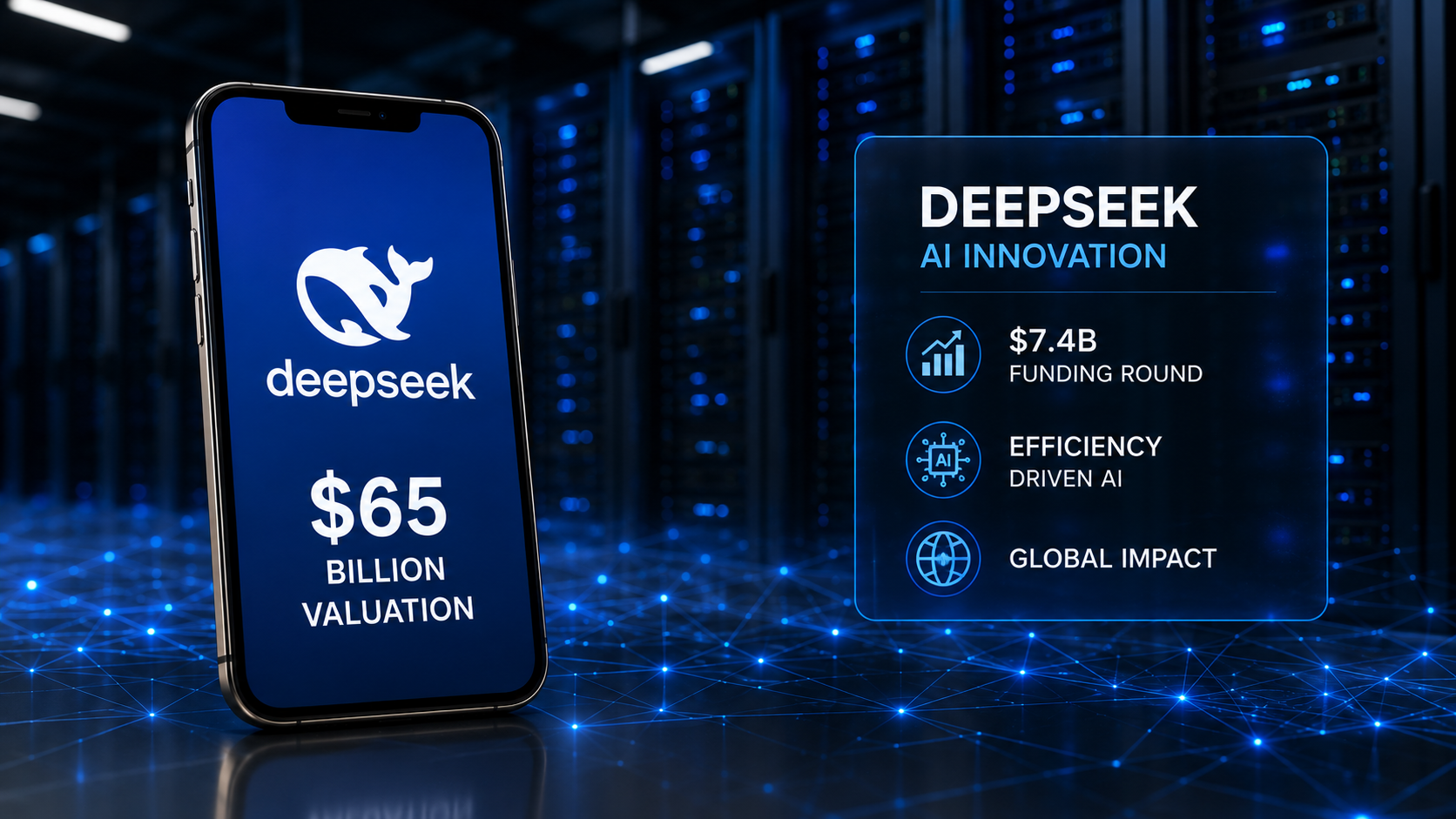
The real story is what DeepSeek represents.
The Origin of DeepSeek
Unlike many AI startups founded inside Silicon Valley's technology ecosystem, DeepSeek emerged from a very different environment.
The company was founded by Liang Wenfeng, who also established High-Flyer, one of China's leading quantitative hedge funds.
That background matters.
Hedge funds are built around one principle: maximizing efficiency.
Rather than relying solely on brute-force spending, they seek better algorithms, better optimization, and better capital allocation.
That philosophy appears to have shaped DeepSeek's approach to AI development.
While major AI companies invested heavily in expanding computational resources, DeepSeek gained attention by demonstrating that highly competitive models could be developed with significantly lower resource requirements.
This challenged one of the industry's most widely accepted assumptions.
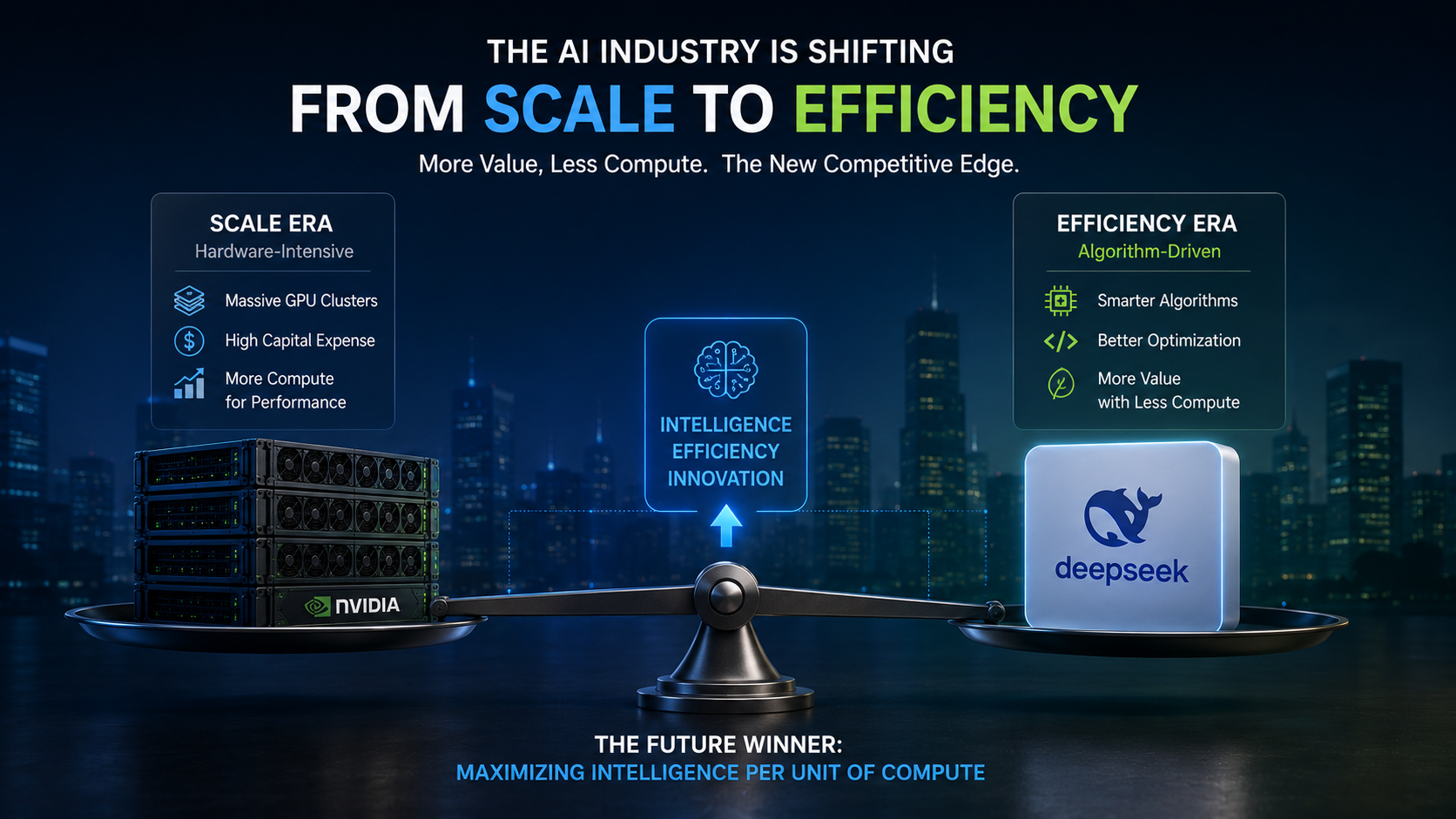
The Shift From Scale to Efficiency
For much of the AI boom, investors focused on one metric above all else:
Computing power.
The logic was straightforward.
More GPUs meant larger models, faster training, and stronger performance.
As a result, companies across the technology sector poured enormous amounts of capital into AI infrastructure.
DeepSeek introduced a different narrative.
Instead of competing solely on scale, the company emphasized optimization, efficiency, and resource utilization.

That distinction may seem subtle, but it has significant implications.
If AI performance can continue improving without a proportional increase in computing resources, the economics of the industry could change dramatically.
For investors, this raises an important question:
Will the next generation of AI leaders be defined by the size of their infrastructure, or by their ability to extract more value from the infrastructure they already have?
Open Source as a Strategic Weapon
Another reason DeepSeek has attracted attention is its open-source strategy.
Many leading AI companies rely on closed ecosystems and subscription-based business models.
DeepSeek has taken a different approach by releasing key models to the broader developer community.
Open source is often misunderstood as simply giving technology away.
In reality, it can be one of the most effective methods for building influence.
The more developers, startups, and enterprises build on a platform, the more powerful that ecosystem becomes.
Technology history offers numerous examples where open ecosystems expanded faster than proprietary alternatives.
DeepSeek appears to be betting that AI may follow a similar path.
Building a Chinese AI Ecosystem
The latest fundraising reports highlight another important trend.
Potential investors reportedly include major Chinese corporations and state-backed investment funds.
This matters because AI is no longer just a software business.
Modern AI requires computing infrastructure, cloud services, energy systems, semiconductor supply chains, and large-scale deployment capabilities.
As these components become increasingly interconnected, the competition shifts from individual companies to entire ecosystems.
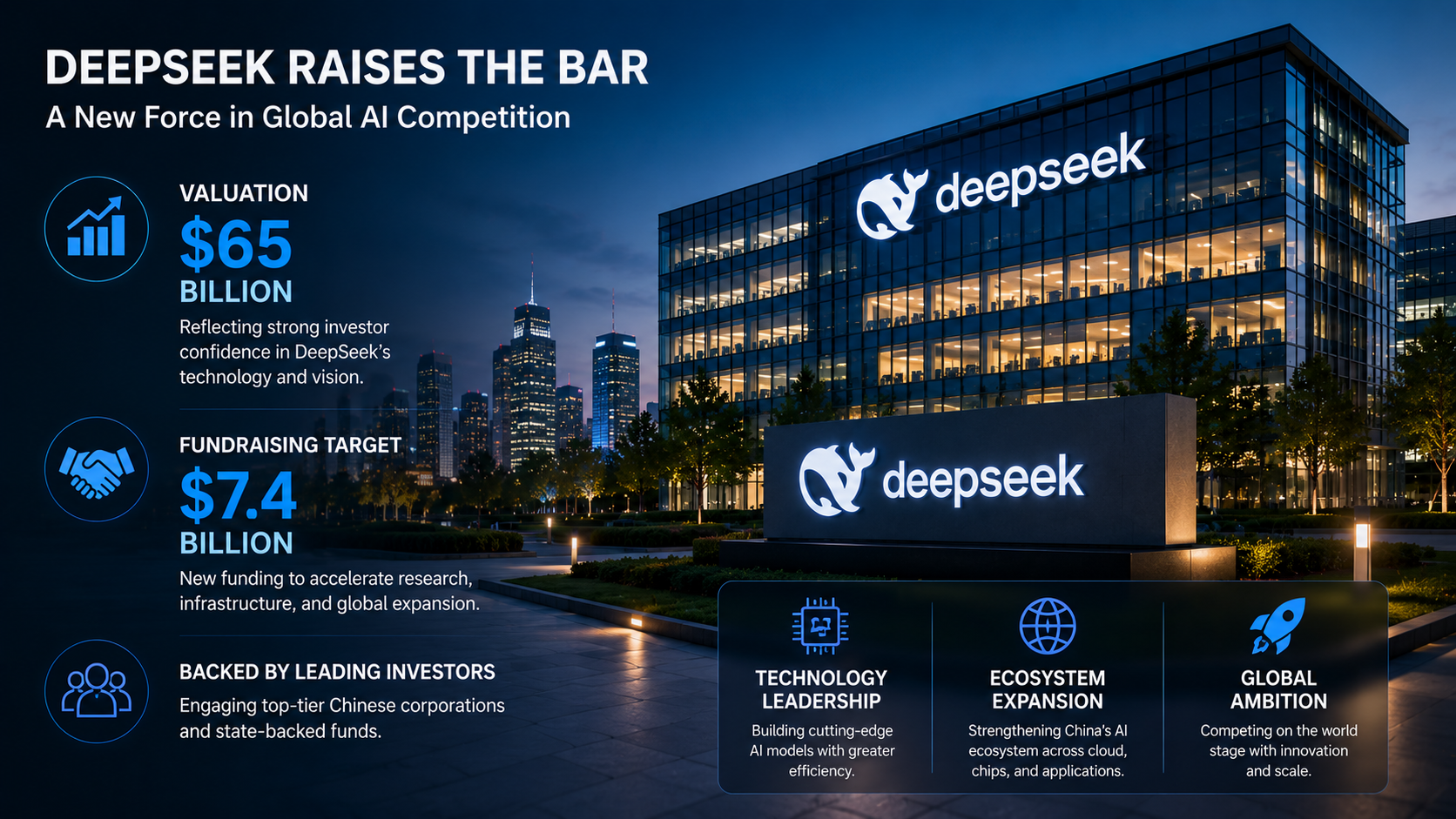
Investors are no longer evaluating a single AI model.
They are evaluating the strength of an entire technology stack.
DeepSeek Has Also Discovered the Limits of Efficiency
Despite all the discussion around optimization and resource efficiency, DeepSeek's fundraising plans reveal an equally important reality.
Efficiency alone is not enough.
Until now, DeepSeek has largely operated without major outside funding.
But the AI industry is evolving rapidly.
The next phase of competition involves AI agents, advanced reasoning models, enterprise-scale deployment, and increasingly sophisticated infrastructure requirements.
All of these require substantial capital.
In other words, DeepSeek may have challenged the assumption that unlimited spending is the only path to AI innovation.
But its latest funding round also demonstrates that scale still matters.
The company is not abandoning efficiency.
It is combining efficiency with capital.
That distinction is critical.
The Risks Investors Should Watch
While DeepSeek's rise has generated excitement, several risks remain.
First, geopolitical tensions between the United States and China continue to shape the technology landscape.
Any escalation in export controls, semiconductor restrictions, or regulatory measures could affect future growth.
Second, data security concerns remain a major challenge.
Many Western governments and corporations continue to scrutinize Chinese technology platforms, which could limit adoption in certain markets.
Third, the AI industry's long-term profitability remains uncertain.
Technological progress has been extraordinary, but sustainable monetization is still being tested across the sector.
What Smart Investors Are Really Watching
The most successful investors are rarely focused on headlines alone.
They focus on structural shifts.
DeepSeek is important not simply because it is another AI company.
It is important because it highlights a larger transition taking place inside the industry.
The key question is no longer:
"Who owns the most GPUs?"
The more important question may be:
"Who can generate the highest level of intelligence from a given amount of computing power?"
That is the efficiency question.
And it could become one of the defining themes of the next decade in AI.
At the same time, DeepSeek's planned multi-billion-dollar fundraising round reminds us of another reality.
Innovation may begin with efficiency.
But global technological leadership ultimately requires both efficiency and scale.
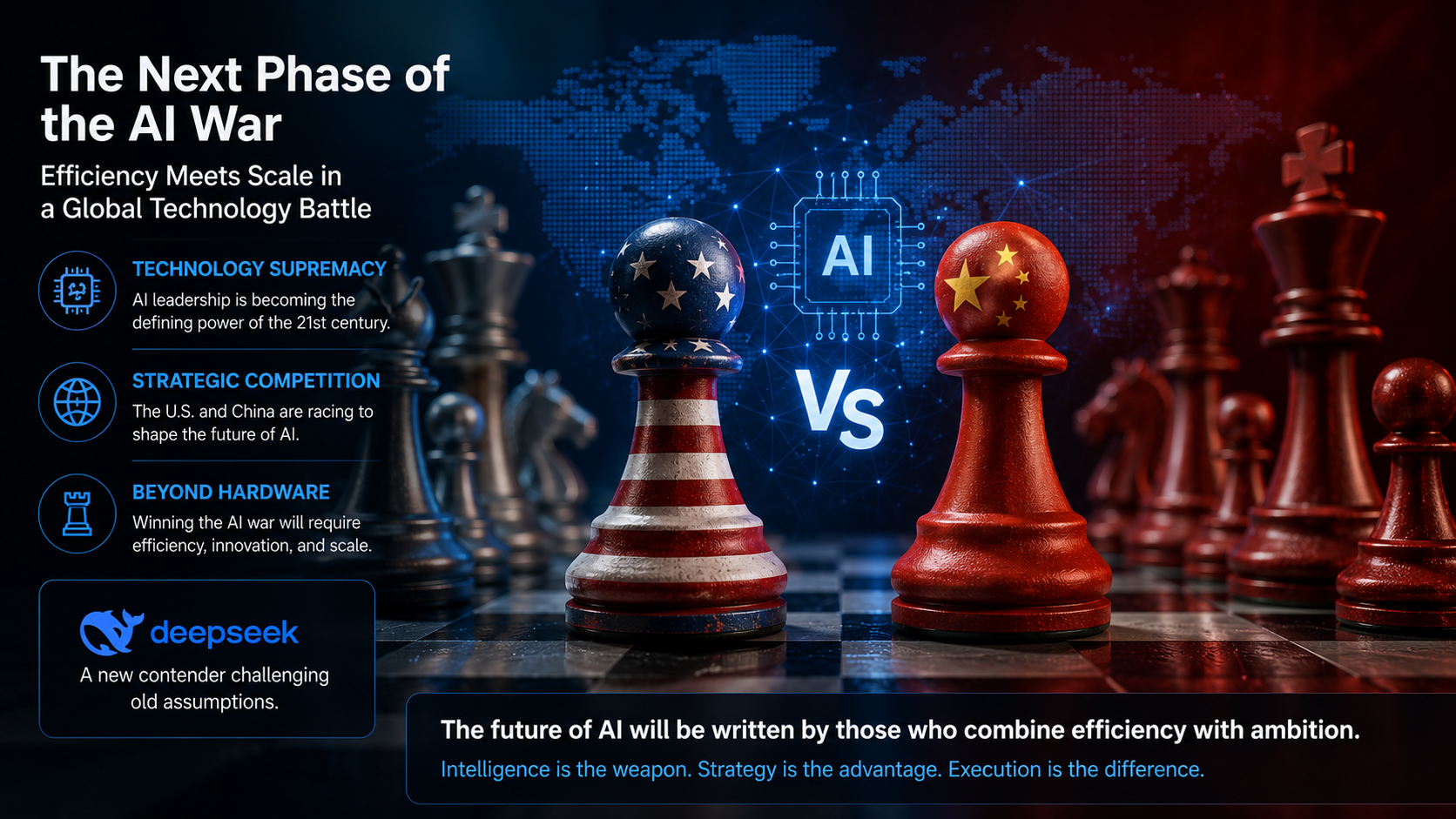
The future winners of AI may not be the companies with the largest budgets.
Nor will they necessarily be the companies with the leanest operations.
The most valuable companies could be those capable of combining both.
Final Thoughts
DeepSeek's rapid rise and reported multi-billion-dollar fundraising effort represent more than the success of a single startup.
They signal a broader debate about the future economics of artificial intelligence.
For years, the dominant assumption was that bigger infrastructure automatically produced better outcomes.
DeepSeek has challenged that belief.
Whether the company ultimately becomes a long-term leader remains to be seen.
But it has already accomplished something significant.
It has forced investors, technologists, and policymakers to reconsider one of the most important questions in AI:
Is the future of artificial intelligence a competition of capital, or a competition of efficiency?
The answer may shape the next era of the global technology industry.
'[Global] Success Blueprints' 카테고리의 다른 글