What Really Happens If Oil Hits $100 Again? Where Smart Money Could Move Next


Hello, this is MasterMind.
This is where we focus on trends, not headlines, and seek insight beyond the noise.
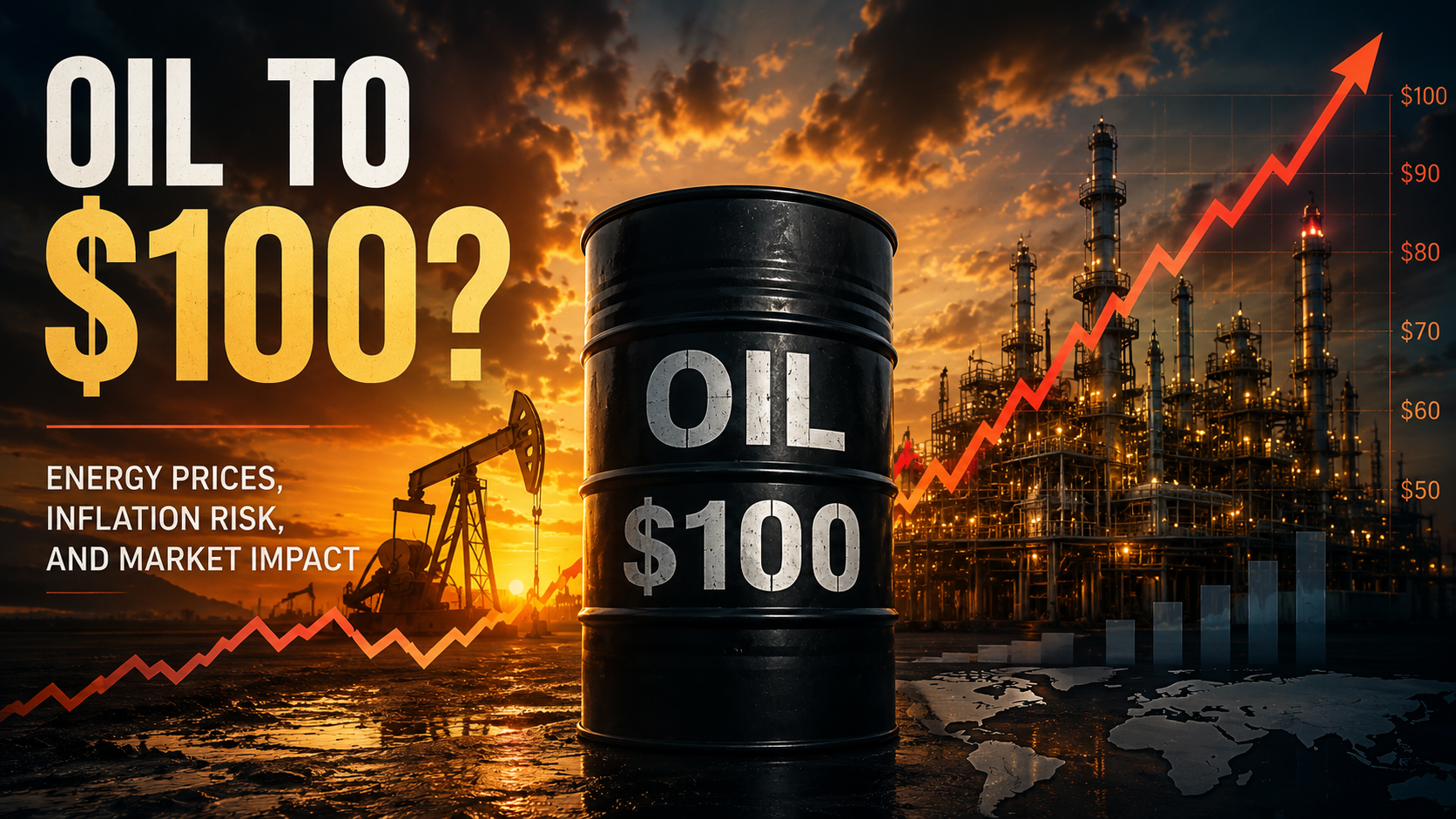
Oil prices are once again climbing toward the psychologically important $100-per-barrel level. As geopolitical tensions in the Middle East resurface, global energy markets have become increasingly volatile.
Many people assume that higher oil prices simply mean more expensive gasoline. In reality, a sustained move toward $100 oil could trigger a chain reaction across the global economy, affecting inflation, interest rates, currencies, and financial markets.
Let's explore what could happen if oil reaches $100 again—and where investors may want to position themselves.
The Three Major Consequences of $100 Oil
1. The Federal Reserve May Delay Rate Cuts
Higher oil prices directly increase energy costs, which eventually flow into Producer Price Index (PPI) and Consumer Price Index (CPI) readings.
For months, investors have been anticipating Federal Reserve rate cuts. However, a sharp rise in energy prices could slow the disinflation process and force policymakers to remain cautious.
Instead of discussing rate cuts, markets may once again begin pricing in a "higher for longer" interest rate environment.
Higher borrowing costs could create additional pressure on both consumers and businesses.

2. Stronger U.S. Dollar and Global Capital Flows
Historically, periods of economic uncertainty tend to strengthen the U.S. dollar.
As oil prices rise, energy-importing countries face increasing costs, which can weaken local currencies and place additional stress on trade balances.
Global investors often respond by moving capital toward dollar-denominated assets, reinforcing the dollar's role as a safe-haven currency during uncertain times.
This dynamic can create challenges for emerging markets while supporting U.S. financial assets.

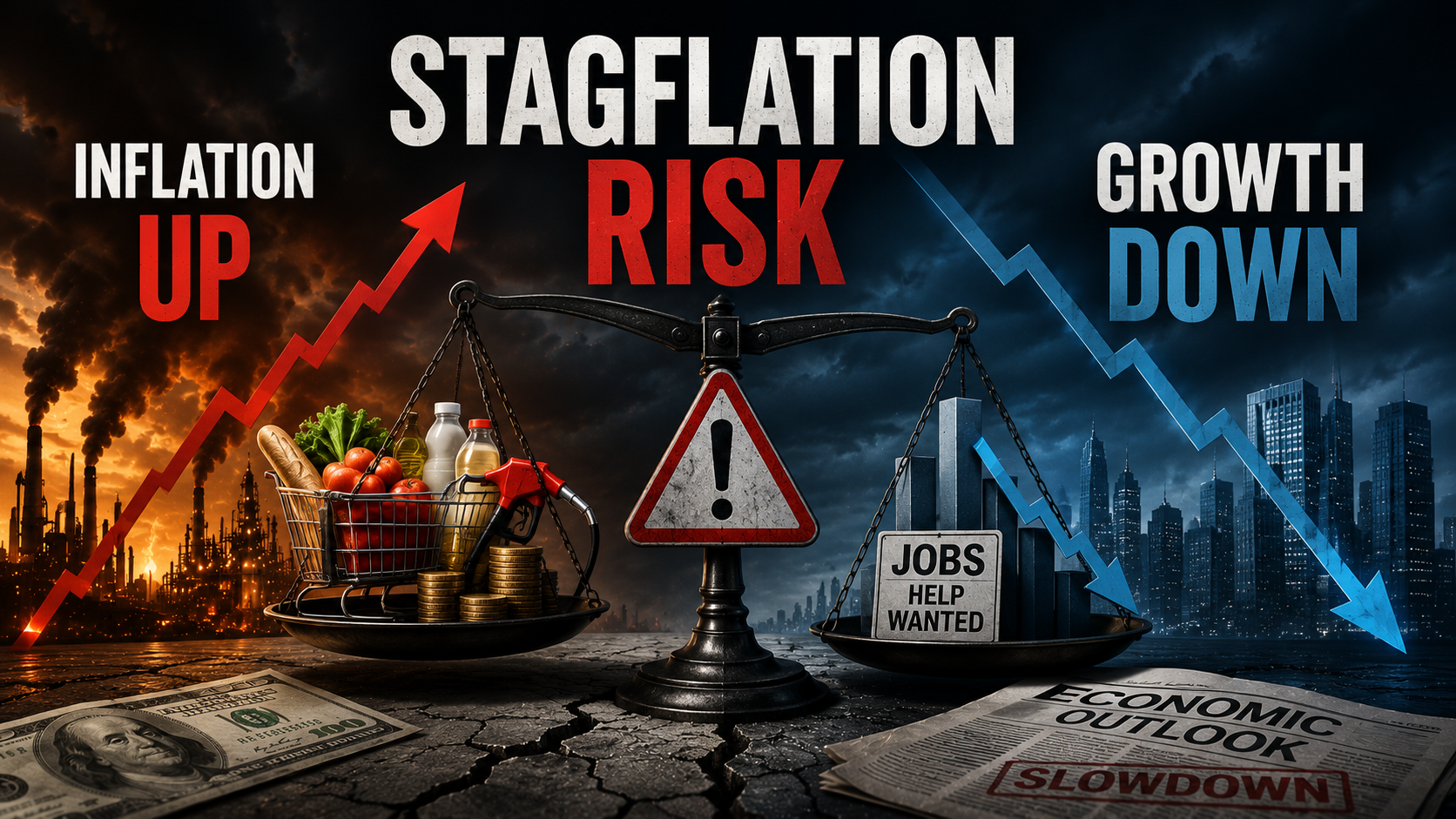
3. The Risk of Stagflation
Perhaps the most concerning scenario is stagflation—a period when inflation remains high while economic growth slows.
Businesses face rising production costs due to expensive energy, while consumers reduce spending because of higher interest rates and declining purchasing power.
The result can be a difficult environment where corporate earnings weaken even as inflation remains elevated.
Historically, stagflation has been one of the most challenging economic environments for investors and policymakers alike
Where Could Capital Flow During an Oil Shock?
Periods of market stress often trigger major shifts in capital allocation.
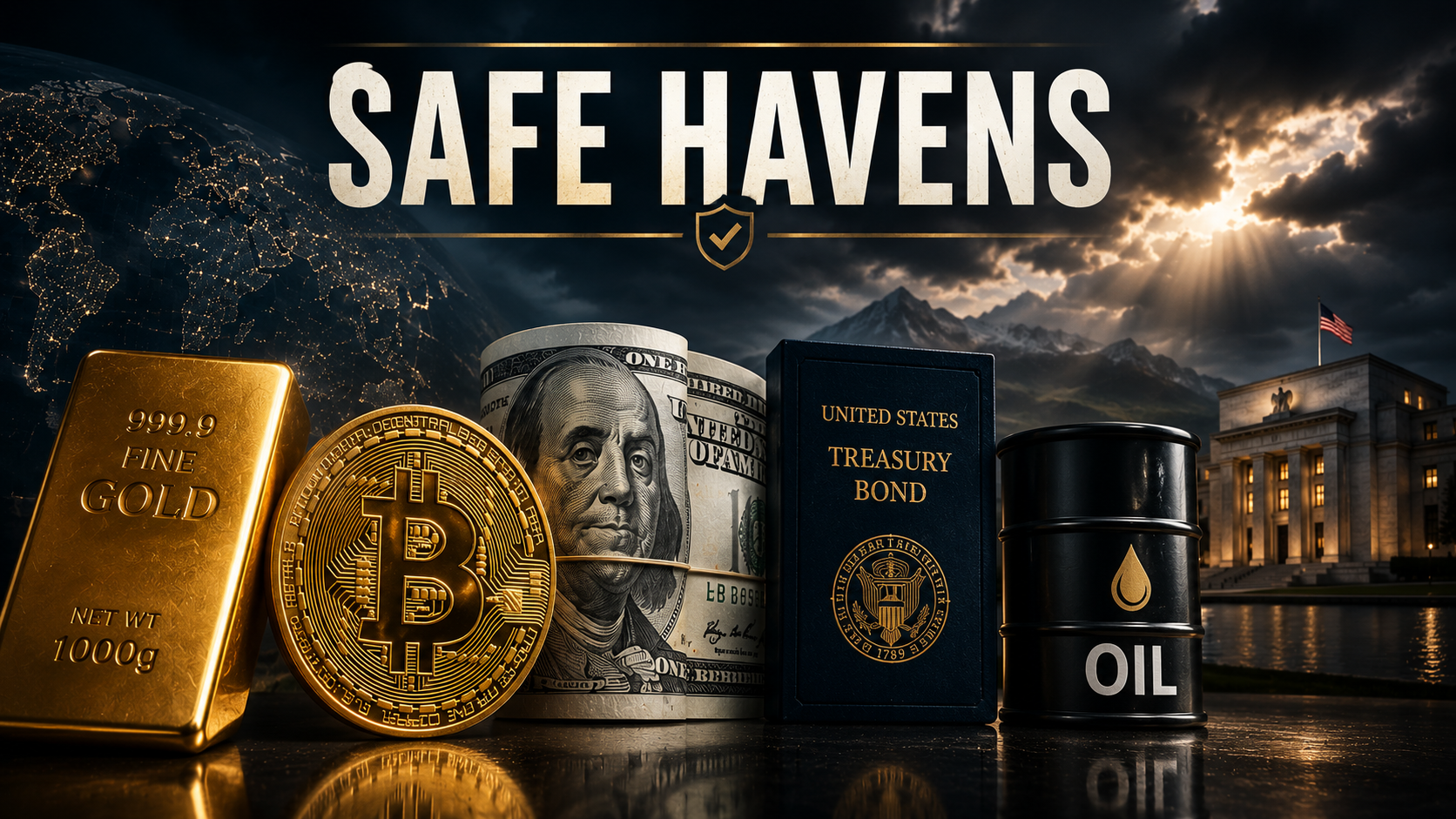
Some asset classes historically perform better than others during inflationary and uncertain environments.
Asset ClassExamplesInvestment Thesis
| Energy Stocks | Exxon Mobil, Chevron | Direct beneficiaries of higher oil prices |
| U.S. Dollar | USD holdings, Treasury assets | Safe-haven demand and currency strength |
| Gold | Physical gold, Gold ETFs | Traditional inflation hedge |
| Bitcoin | BTC | Long-term digital scarcity narrative |
| AI Mega-Caps | Nvidia, Microsoft | Structural growth independent of economic cycles |
Energy Stocks
Energy companies are often among the most direct beneficiaries of rising oil prices.
However, investors should avoid oversimplifying the relationship.
Higher oil prices do not automatically guarantee higher profits for energy companies.
Profitability depends on three critical factors:
- Oil prices
- Refining margins
- Global demand
If economic growth slows significantly, fuel demand may decline, limiting the upside for energy stocks.
The U.S. Dollar and Gold
During periods of uncertainty, investors often seek safety.
The U.S. dollar remains the world's dominant reserve currency and tends to attract capital during times of market stress.
Gold has historically served as a hedge against inflation, geopolitical instability, and currency debasement.
For many investors, these assets represent important portfolio stabilizers.
Bitcoin
Bitcoin is often referred to as "digital gold," but its behavior remains different from traditional safe-haven assets.
In many risk-off environments, Bitcoin still trades more like a high-risk growth asset than a defensive investment.
Nevertheless, its fixed supply and growing institutional adoption continue to support the long-term investment thesis.
Investors should approach Bitcoin as a high-risk, high-reward asset rather than a pure safe haven.
AI Mega-Cap Leaders
One of the most powerful themes in today's market remains artificial intelligence.
Companies such as Nvidia and Microsoft continue to benefit from long-term structural demand driven by AI infrastructure, cloud computing, and data center expansion.
Unlike many traditional businesses, these firms possess significant pricing power and strong competitive advantages.
Even in a challenging macroeconomic environment, AI leaders may continue attracting investor capital due to their unique growth opportunities.
MasterMind's Perspective
The most dangerous moment in the market is not when everyone is afraid.
It is when everyone becomes comfortable.
Just days ago, investors were celebrating easing geopolitical tensions and falling oil prices.
Now the narrative has shifted once again.
Markets move faster than most people expect, and successful investors adapt rather than predict.
Predictions can be wrong.
Preparation is what matters.
Anyone can make money during a strong bull market.
The real test comes when uncertainty rises and investors must protect both capital and opportunity.
Final Thoughts
Today's market is being pulled in two opposite directions.
Bearish Forces:
- Rising oil prices
- Geopolitical tensions
- Inflation concerns
Bullish Forces:
- Artificial intelligence
- Data center expansion
- Strong mega-cap technology growth
This is not necessarily the time for excessive leverage or emotional decision-making.
Instead, investors should focus on risk management, portfolio resilience, and long-term positioning.
Markets rarely move exactly as we expect.
Money follows information.
Wealth follows insight.
This was MasterMind.
Design your success.
'[Global] Success Blueprints' 카테고리의 다른 글