What Determines Gold Prices? Why Gold Goes Up and Down


Hello, this is MasterMind.
Gold prices frequently make headlines whenever they reach new highs or experience sharp declines. During uncertain economic times, many investors begin asking the same questions
- Why is gold going up?
- Why does gold sometimes fall?
- Is gold still a good investment?
The answer is more complex than many people think.
Gold is not simply a precious metal. It is one of the world's oldest stores of value and one of the clearest indicators of how investors view inflation, interest rates, currencies, and financial uncertainty.
Understanding how gold prices are determined can help investors better understand not only the gold market but also the broader economy.
Key Takeaway
Gold prices are primarily driven by real interest rates, the U.S. dollar, investor sentiment, and global capital flows not by a single news event.
What Are Gold Prices?

Gold prices refer to the market value of gold traded around the world, typically quoted in U.S. dollars per troy ounce.
The global benchmark for gold is the spot price, which reflects the current market value based on international trading. Gold is actively traded through futures markets such as COMEX, over-the-counter markets, and exchange-traded funds (ETFs).
Because gold is priced in U.S. dollars, changes in the dollar's value can directly influence gold prices.
Unlike stocks, gold does not represent ownership in a company. Instead, it serves primarily as a store of value and a defensive asset during periods of uncertainty.
What Determines Gold Prices?
Many people assume gold prices move simply because more people buy or sell gold.
In reality, the gold market is driven more by expectations than physical demand.
Investors constantly evaluate questions such as
- Will interest rates rise or fall?
- Is inflation becoming a problem?
- Will the U.S. dollar strengthen or weaken?
- Are investors seeking safety or taking more risk?
As expectations change, capital flows between stocks, bonds, cash, and gold. These shifts in capital ultimately determine gold prices.

Why Gold Prices Rise
Several conditions typically support higher gold prices.
1. Falling Real Interest Rates
Gold does not generate interest or dividends.
When real interest rates decline, the opportunity cost of holding gold becomes lower, making gold more attractive compared to interest-bearing assets.
2. A Weaker U.S. Dollar
Gold is priced in U.S. dollars.
When the dollar weakens, gold generally becomes less expensive for international buyers, often increasing global demand.
3. Rising Inflation Concerns
Investors often buy gold to help preserve purchasing power during periods of persistent inflation.
Although gold is not a perfect inflation hedge, inflation concerns frequently increase demand for gold.
4. Geopolitical Uncertainty
Wars, geopolitical tensions, banking crises, and financial instability often increase demand for safe-haven assets.
Gold has historically been one of the world's most trusted defensive investments during uncertain times.
5. Central Bank Buying
Many central banks continue increasing their gold reserves as part of their long-term reserve diversification strategies.
Large institutional purchases can provide additional long-term support for gold prices.
Why Gold Prices Fall
Gold does not always move higher.
Several factors can also pressure gold prices lower.
1. Rising Real Interest Rates
Higher real yields increase the attractiveness of Treasury securities and other income-producing investments.
As investors shift toward assets that generate income, demand for gold may weaken.
2. A Stronger U.S. Dollar
A stronger dollar generally makes gold more expensive for foreign buyers.
Lower international demand can place downward pressure on gold prices.
3. Economic Recovery
When economic growth improves, investors often move money from defensive assets into stocks and other growth-oriented investments.
This shift can reduce demand for gold.
4. Strong Risk Appetite
During bull markets, investors usually become more willing to own higher-risk assets.
As confidence returns, safe-haven demand for gold often declines.
5. Gold ETF Outflows
Gold ETFs such as SPDR Gold Shares (GLD) and iShares Gold Trust (IAU) have become important parts of the gold market.
When investors sell shares of these ETFs, investment demand for gold can weaken, putting pressure on prices.
Gold Price Drivers at a Glance
| Gold Prices Rise When | Gold Prices Fall When |
| Real interest rates decline | Real interest rates rise |
| The U.S. dollar weakens | The U.S. dollar strengthens |
| Inflation concerns increase | Inflation expectations ease |
| Geopolitical risks increase | Economic conditions improve |
| Central banks buy gold | Gold ETF outflows increase |
| Investors seek safety | Investors prefer risk assets |
The important lesson is simple
Gold prices are driven by changing expectations and capital flows—not by one single event.
How Gold Prices Affect Other Assets
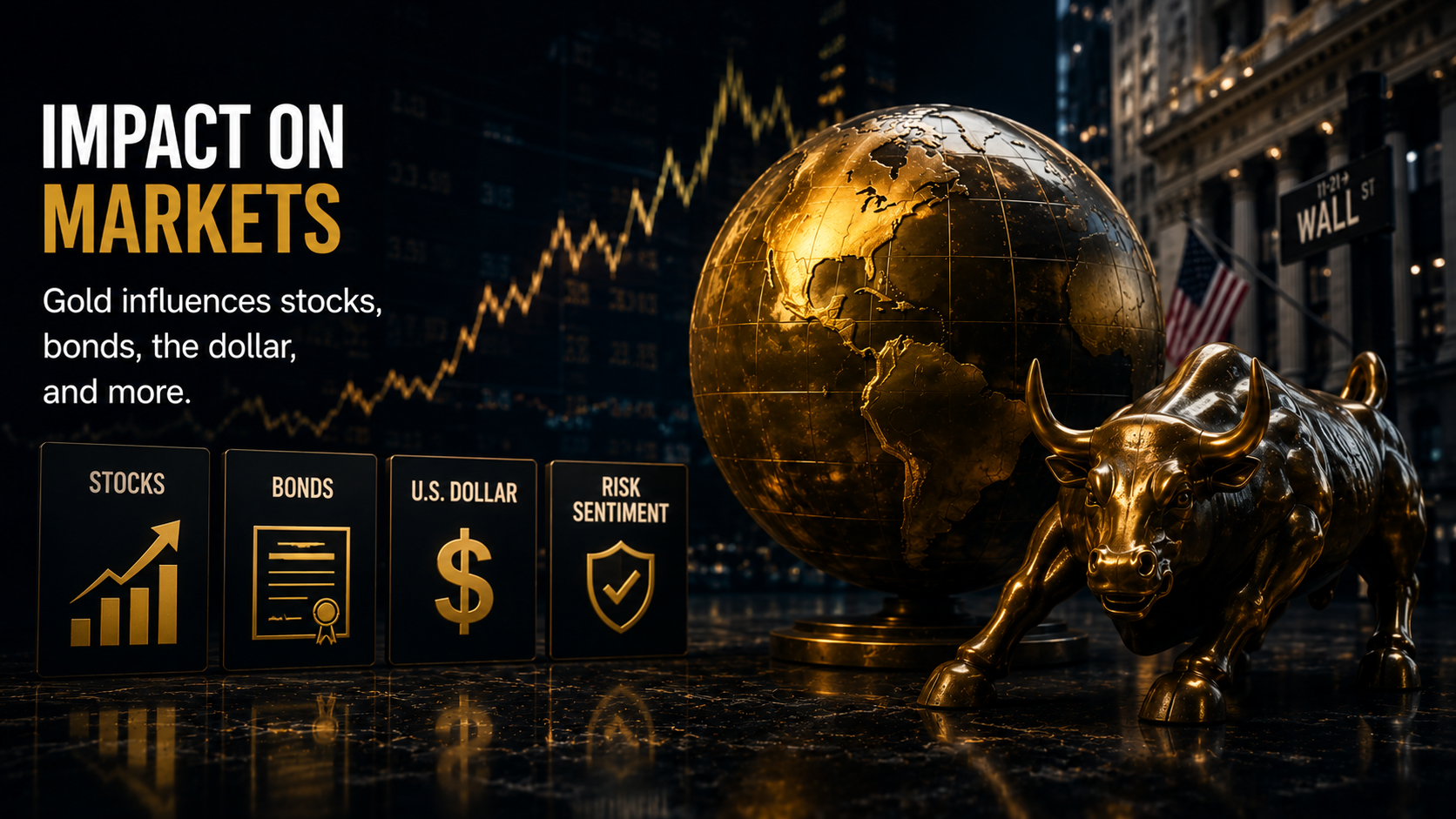
| Asset | Typical Relationship with Gold |
| Stocks | Gold often performs well when investors become more defensive. |
| U.S. Treasuries | Falling bond yields can support higher gold prices. |
| U.S. Dollar | Gold and the dollar often move in opposite directions, though both may strengthen during major crises. |
| Bitcoin | Often called "digital gold," but generally much more volatile. |
| Silver | Shares some characteristics with gold but is more sensitive to industrial demand. |
Gold is not isolated from financial markets.
Its price often reflects broader investor confidence and changing expectations about the economy.
Ways to Invest in Gold
There are several ways investors can gain exposure to gold.
| Investment Method | Advantages | Disadvantages |
| Physical Gold | Direct ownership with no counterparty risk | Storage, insurance, and higher transaction costs |
| Gold ETFs (GLD, IAU) | Convenient, liquid, and easy to trade | Annual expense ratios and no physical ownership |
| Gold Futures | High liquidity and leverage | Higher risk and complexity for most investors |
The right approach depends on an investor's objectives, risk tolerance, and investment horizon.

Key Takeaways for Investors
Before investing in gold, remember these important principles
- Gold is a store of value, not a cash-flow-producing asset.
- Real interest rates remain one of the most important drivers of gold prices.
- The strength of the U.S. dollar has a significant influence on gold.
- Gold can help diversify a portfolio during periods of uncertainty.
- Long-term investors should focus on capital preservation rather than short-term price movements.
Conclusion
Gold prices move for many reasons.
Interest rates, inflation expectations, the U.S. dollar, investor sentiment, central bank purchases, and global uncertainty all play important roles.
That is why gold can rise during one economic cycle and decline during another.
Instead of trying to predict every price movement, investors should focus on understanding why money is moving into or out of gold.
Gold is more than a commodity.
It reflects confidence, fear, and the changing direction of global capital.
Capital moves before headlines. Gold often tells that story first.
This is MasterMind
designing success through insight.
'[Global] Success Blueprints' 카테고리의 다른 글