Bond Investing Strategy in a 5% Rate Environment: Investment-Grade Bonds, Treasuries, and Duration


Hello, this is MasterMind.
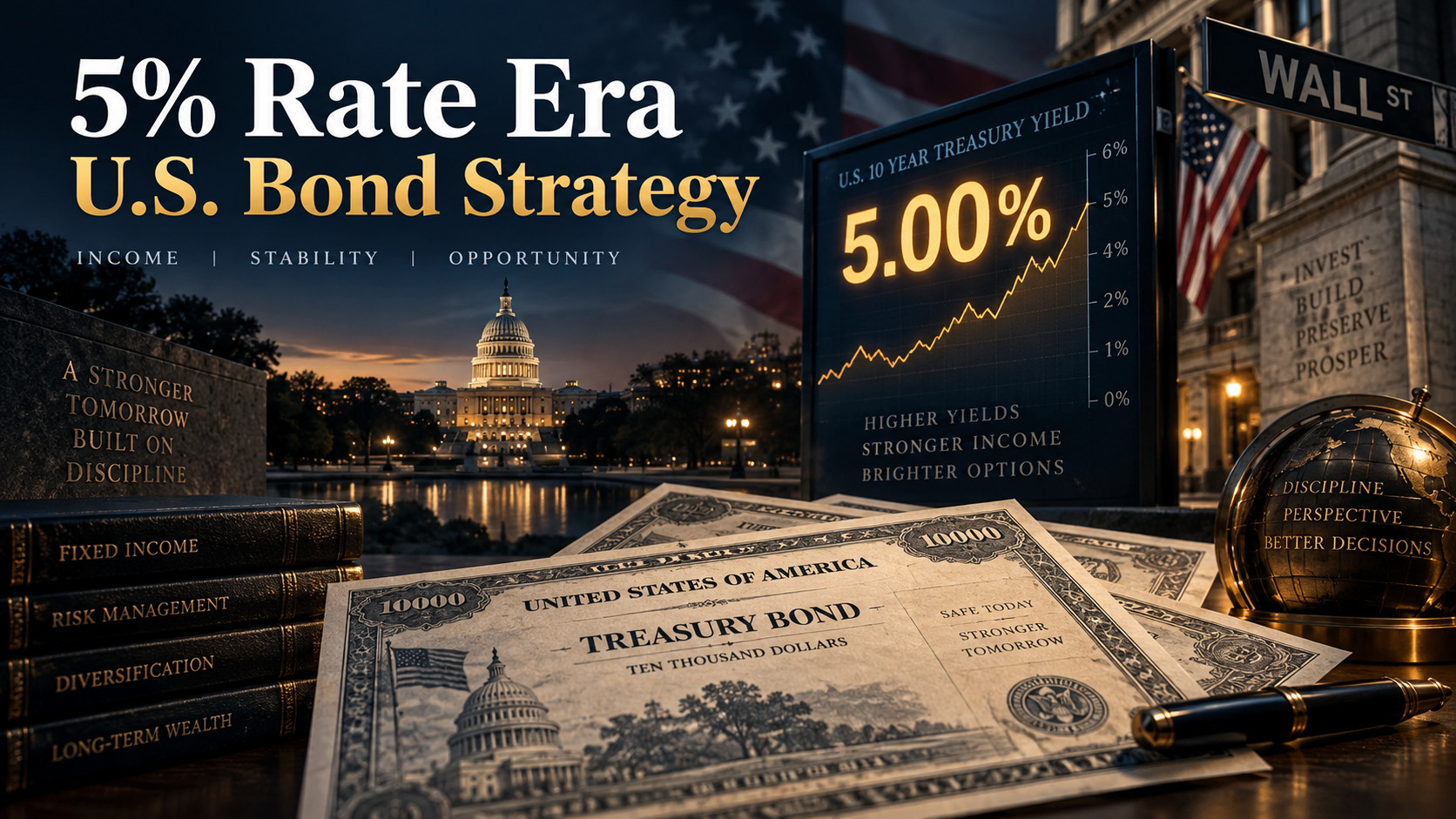
When interest rates are near 5%, how should investors think about bonds?
Should you stay in short-term Treasuries and collect attractive yields? Is it time to extend duration? Or should investment-grade corporate bonds play a larger role in a diversified portfolio?
These questions become especially important when yields are high enough for bonds to generate meaningful income without requiring investors to take the same level of risk they might have needed to accept during the ultra-low-rate era.
But a high yield alone does not make a bond attractive.
Bond investing ultimately comes down to two fundamental decisions
Who are you lending money to?
And how long are you willing to remain exposed to changes in interest rates?
The first question is about credit risk.
The second is about duration.
Understanding how these two risks interact is the foundation of bond investing in a high-rate environment.
The Bottom Line
In a 5% rate environment, successful bond investing is not simply about finding the highest yield.
It is about balancing income, credit quality, interest-rate risk, and reinvestment risk by combining Treasuries, investment-grade corporate bonds, and appropriate duration exposure.
What Are Investment-Grade Bonds?
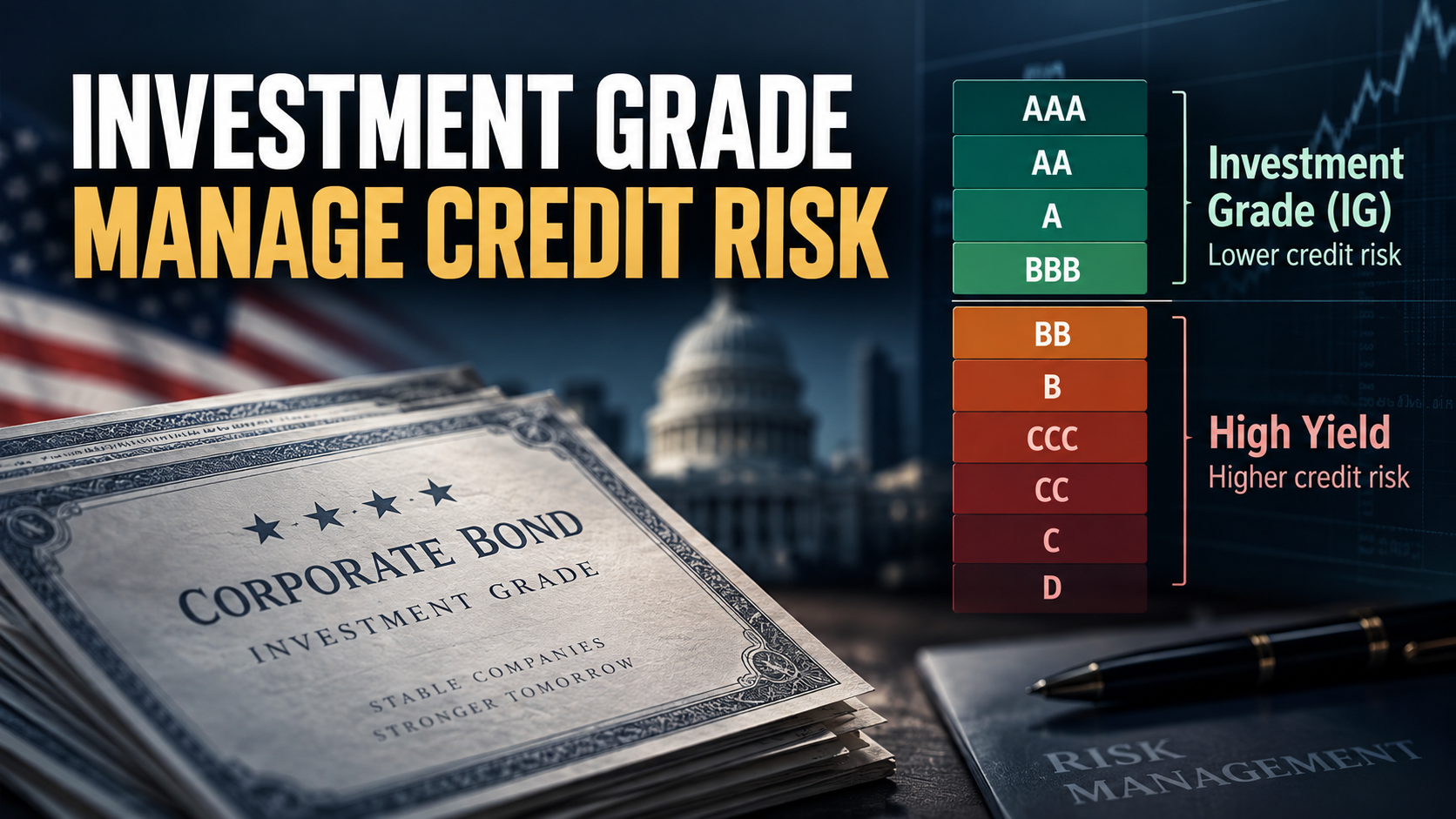
Investment-grade, or IG, bonds are debt securities issued by borrowers considered relatively likely to meet their interest and principal obligations.
For corporate bonds, the investment-grade threshold is generally
- BBB- or higher from S&P and Fitch
- Baa3 or higher from Moody’s
Bonds below these levels are generally classified as non-investment-grade or high-yield bonds.
The easiest way to think about a credit rating is this
How confident is the market that this borrower can continue paying interest and eventually repay principal?
U.S. Treasuries are backed by the federal government, while investment-grade corporate bonds are issued by companies with relatively strong credit profiles.
Both are bonds, but their risk structures are different.
Treasuries vs. Investment-Grade and High-Yield Bonds
| Category | U.S. Treasuries | Investment-Grade Corporate Bonds | High-Yield Bonds |
| Issuer | U.S. government | Higher-quality corporations | Lower-rated corporations |
| Credit risk | Relatively very low | Low, but still present | Significantly higher |
| Yield | Market benchmark | Usually above comparable Treasuries | Generally higher |
| Main risks | Interest rates and duration | Rates, duration, credit spreads | Rates plus substantial credit risk |
| Recession sensitivity | Relatively low | Moderate | High |
| Primary role | Safety and rate exposure | Income plus spread | Higher income with higher risk |
The important point is that a higher yield is not automatically a better opportunity.
Markets usually demand higher yields for a reason.
The extra income is often compensation for additional risk.
What Is Duration?
Duration is one of the most important concepts in bond investing.
It is often confused with maturity, but the two are not the same.
Maturity tells you when a bond is scheduled to repay its principal.
Duration is more useful for understanding how sensitive a bond’s price is to changes in interest rates.
For example, if a bond has a modified duration of roughly 5, a 1-percentage-point decline in yields could produce an approximate 5% increase in price, assuming other variables remain unchanged.
A 1-percentage-point rise in yields could produce a decline of roughly the same magnitude.
The actual change may differ because of convexity, coupon structure, credit spreads, and other factors.
But the core principle remains
The longer the duration, the greater the bond’s sensitivity to interest-rate changes.
In that sense, duration acts almost like interest-rate leverage inside a bond portfolio.
Why Do Bond Prices Move Opposite to Interest Rates?
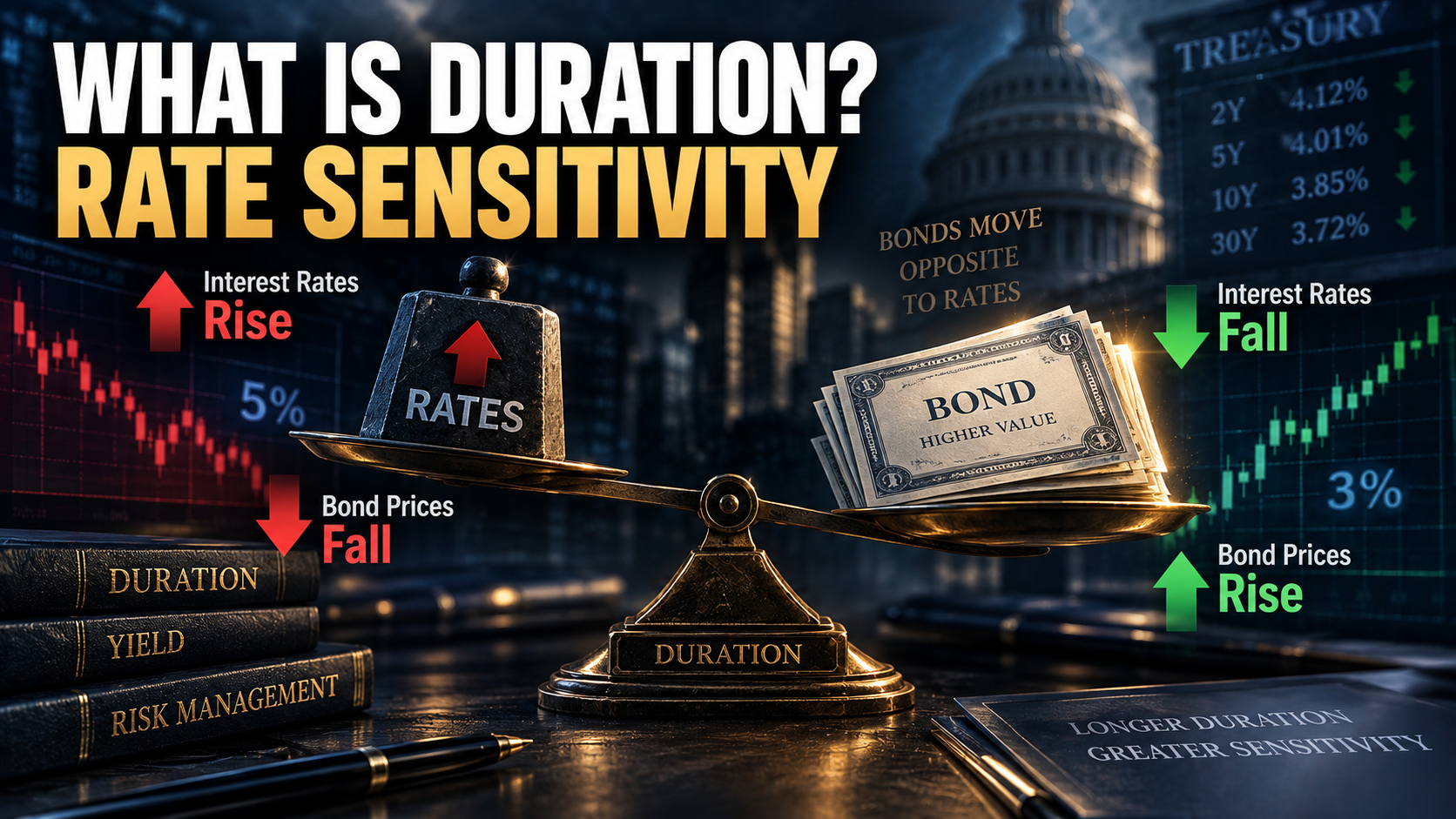
One of the most basic relationships in fixed income is that bond prices and market yields generally move in opposite directions.
Suppose you own a Treasury paying 3%.
If newly issued Treasuries with similar maturities begin offering 5%, investors have little reason to pay full price for your 3% bond.
Its market price must fall until its effective yield becomes competitive with newly issued securities.
The reverse is also true.
If market yields fall, an older bond paying a higher coupon becomes more attractive, pushing its price higher.
That inverse relationship is the foundation of duration risk.
What Changes When Rates Are Around 5%?
The bond market looks very different when starting yields are high.
During the ultra-low-rate era, Treasuries and high-quality corporate bonds often offered limited income.
Investors looking for stronger returns were pushed toward longer maturities, lower-quality credit, equities, or other risk assets.
When Treasury yields are much higher, that tradeoff changes.
Investors may be able to earn meaningful income from high-quality fixed income without moving as far out on the risk spectrum.
Investment-grade corporate bonds can add additional yield on top of Treasury rates through their credit spread.
This is one reason high-quality bonds become more relevant when absolute interest rates are elevated.
The investor does not necessarily need to sacrifice as much credit quality simply to generate income.
Bond Returns Have Two Main Components
To understand why higher yields matter, it helps to separate bond returns into two components.
1. Income
The first source of return comes from coupon payments and the yield embedded in the bond at the time of purchase.
Higher starting yields generally provide investors with a stronger income base.
2. Price Appreciation or Depreciation
Bond prices can also change after purchase.
If market yields fall, existing bonds may appreciate.
For corporate bonds, prices may also rise if credit spreads tighten.
This means a higher-rate environment can potentially provide two sources of return
income while holding the bond and price appreciation if rates later decline.
But the opposite scenario matters just as much.
If longer-term yields rise further, long-duration bonds can suffer meaningful price declines.
That is why the key question is not simply where rates are headed.
The more useful question is how much duration risk you are willing to carry if your rate outlook proves wrong.
The Core Bond Strategy in a 5% Rate Environment
1. Manage Duration Instead of Trying to Call the Exact Rate Peak
One of the most common questions in bond investing is
When will interest rates start falling?
A more useful question is
What happens to my portfolio if rates move in the opposite direction from what I expect?
Long-term Treasury yields are influenced by much more than the Federal Reserve’s policy rate.
Inflation, employment, economic growth, Treasury issuance, fiscal policy, inflation expectations, and the term premium can all affect longer-term yields.
For that reason, trying to identify the exact top in interest rates can be difficult.
Managing exposure across short, intermediate, and long durations can be more practical than making a single large bet on the direction of rates.
2. Short-Term Treasuries: Defense and Liquidity
The main advantage of short-term Treasuries is low duration.
Because their maturities are short, their prices are generally less sensitive to changes in interest rates than long-term bonds.
When short-term yields are elevated, investors may also be able to earn attractive income without accepting significant duration risk.
Short-term Treasuries can therefore serve several roles
- Limiting sensitivity to additional rate increases
- Generating current income
- Preserving liquidity
- Providing capital for future opportunities
But there is a tradeoff.
Short maturities create reinvestment risk.
3. Intermediate Bonds: Balancing Income and Reinvestment Risk
Suppose an investor buys a one-year Treasury at an attractive yield.
If rates fall substantially before that bond matures, the investor may have to reinvest the proceeds at a much lower yield.
That is reinvestment risk.
Intermediate-term Treasuries and investment-grade corporate bonds allow investors to lock in current yields for longer while avoiding some of the extreme volatility associated with very long-duration bonds.
This makes the intermediate part of the curve particularly useful for investors seeking a balance between current income and interest-rate exposure.
4. Long-Term Treasuries: More Upside From Falling Yields, More Volatility
Long-term Treasuries are often described as safe assets.
From a credit-risk perspective, that description can make sense.
From a price-volatility perspective, however, long-term Treasuries can be anything but stable.
Their longer duration makes them highly sensitive to changes in long-term interest rates.
If long-term yields fall sharply, long-duration Treasury prices can rise significantly.
If long-term yields continue rising, losses can also be substantial.
Long-term Treasuries are therefore better understood as assets with relatively low credit risk but high interest-rate sensitivity.
A Three-Stage Framework for Managing Duration
Stage 1: Rates Are Rising or High-Rate Uncertainty Remains
The priority is usually limiting duration exposure.
Short-term Treasuries and short-duration investment-grade bonds can help reduce sensitivity to additional increases in yields while still providing income.
Stage 2: Rates Appear Closer to a Peak
Remaining entirely in short-term securities can create greater reinvestment risk if rates later decline.
Investors may begin gradually extending into intermediate maturities or selectively increasing longer-duration exposure.
The objective is not to identify the exact top in yields.
It is to diversify across time.
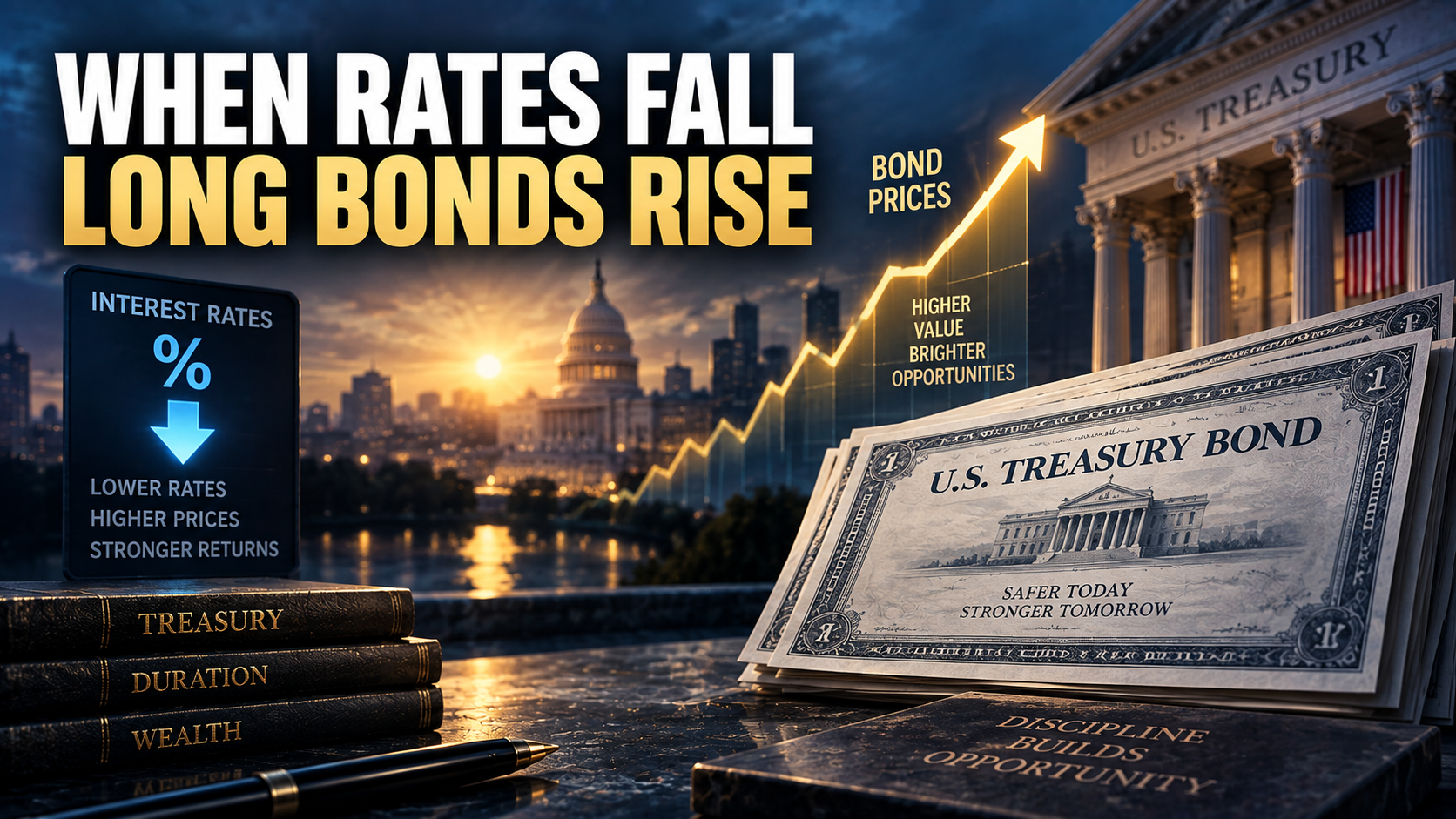
Stage 3: Rate Cuts Are Underway
Bonds purchased earlier at higher yields may become increasingly valuable as newly issued securities offer lower yields.
Longer-duration bonds may also experience greater price appreciation.
But the reason rates are falling matters.
If yields are declining because inflation is normalizing while economic conditions remain stable, both Treasuries and investment-grade credit may benefit.
If rates are falling because the economy is entering a deep recession, Treasuries may perform well while corporate credit spreads widen.
That distinction is critical.
Why Investment-Grade Corporate Bonds Matter
The key question in a high-rate environment is
Do investors need to take substantial credit risk to earn acceptable income?
When Treasury yields are already elevated, the answer may be no.
Investment-grade corporate bond yields can be thought of approximately as
Treasury yield of similar maturity + credit spread
The credit spread is the additional compensation investors demand for lending to a corporation instead of the U.S. government.
That means investors should never evaluate an IG corporate bond solely by looking at its headline yield.
They should also ask
How much extra yield am I receiving relative to a comparable Treasury?
And is that additional yield sufficient to compensate me for the company’s credit risk?
Why Credit Spreads Matter
Two corporate bonds can both yield 5% while telling very different stories.
One may yield 5% because Treasury yields themselves are high.
Another may yield 5% because investors have become increasingly concerned about the issuer’s financial health and are demanding a wider credit spread.
The first situation is primarily about interest-rate risk.
The second involves credit deterioration.
For that reason, investors should learn to separate the Treasury component of a corporate bond yield from its credit spread.
There is rarely free yield in financial markets.
Higher yields usually represent compensation for some form of risk.
Investment-Grade Bonds Are Not Risk-Free
The term “investment grade” can create a false sense of security.
IG bonds still carry several important risks.
Interest-Rate Risk
If market yields rise, existing bond prices can fall.
The longer the duration, the greater the potential impact.
Credit Risk
If a company’s earnings, cash flow, or balance sheet deteriorate, investors may demand a wider spread.
That pushes the bond’s yield higher and its price lower.
Downgrade Risk
An investment-grade issuer can lose its rating if financial conditions deteriorate.
Bonds sitting near the bottom of the investment-grade category deserve particular attention because a downgrade can push them into high-yield territory.
Liquidity Risk
Individual corporate bonds may not always trade as easily as Treasuries or large-cap stocks.
During periods of financial stress, bid-ask spreads can widen significantly.
Call Risk
Some corporate bonds can be redeemed by the issuer before maturity.
If interest rates fall, companies may choose to refinance expensive debt at lower rates.
That can remove a high-coupon bond from an investor’s portfolio earlier than expected.
How a 5% Rate Environment Can Affect Other Assets
Interest rates influence far more than the bond market.
They affect equity valuations, the relative attractiveness of the dollar, the opportunity cost of holding gold, and liquidity-sensitive assets such as Bitcoin.
| Market Environment | Treasuries | IG Corporate Bonds | Stocks | U.S. Dollar | Gold | Bitcoin |
| Long-term yields rise | Long bonds pressured | Prices pressured | Growth valuations may compress | Potential support | Potential headwind | Liquidity pressure possible |
| Long-term yields fall | Intermediate/long bonds benefit | Rate effect supportive | Discount-rate pressure eases | Potential headwind | Potential support | Liquidity expectations may improve |
| Recession fears rise | Safe-haven demand possible | Spreads may widen | Earnings concerns increase | Safe-haven demand possible | Defensive demand possible | Volatility may increase |
| Credit risk rises | Relative strength possible | Corporate bonds pressured | Risk assets pressured | Safety demand possible | Defensive demand possible | Risk-off pressure possible |
The most important question is not simply whether yields are rising or falling.
It is why they are moving.
A decline in long-term yields caused by falling inflation is very different from a decline caused by severe recession fears or financial stress.
The same move in Treasury yields can produce very different outcomes across corporate bonds, equities, gold, and other assets.
What Bond Investors Should Watch
1. Treasury Yields
Treasury yields form the foundation of U.S. fixed-income pricing.
Investors should understand where yields are across the curve and how that curve is changing.
2. Duration
How sensitive is the portfolio to a 1-percentage-point change in interest rates?
This is one of the most important questions in fixed-income risk management.
3. Credit Spreads
How much additional yield does an investment-grade corporate bond offer relative to a Treasury of similar maturity?
Is that spread sufficient compensation for the underlying credit risk?
4. Maturity Structure
Are all bonds maturing at roughly the same time?
Or are maturities distributed across several years?
A laddered maturity structure can help reduce dependence on any single future interest-rate environment.
5. Corporate Cash Flow
For corporate bond investors, earnings growth alone is not enough.
The more important question is whether the company can continue servicing its debt.
Equity investors often ask
How much can this business grow?
Bond investors need to ask a different question first
Can this company keep paying interest and repay principal when the debt comes due?
How to Think About a Bond Portfolio in a 5% Rate Environment
There is no single allocation that works for every investor.
A more useful approach is to assign different jobs to different parts of the bond portfolio.
Short-Term Treasuries: Liquidity and Resilience
Short-duration Treasuries can provide liquidity while limiting the price impact of additional rate increases.
They can also act as capital reserves for future investment opportunities.
Intermediate Treasuries and IG Bonds: The Income Core
Intermediate-duration securities can lock in attractive yields for longer while avoiding some of the volatility associated with very long maturities.
They can serve as the core income-generating portion of a fixed-income portfolio.
Long-Term Treasuries: Exposure to Falling Long-Term Yields
Long-duration Treasuries offer greater sensitivity to declines in long-term interest rates.
That can create meaningful upside if yields fall.
But the same duration also creates greater downside if yields continue higher.
The central idea is not to choose between short-term and long-term bonds as if only one can be correct.
It is to give each maturity segment a specific role within the portfolio.
What Do Wealthy Investors Look for in This Environment?
Experienced investors tend to focus less on predicting the next Federal Reserve decision and more on capital flows, cash flow, resilience, and time.
Follow the Money
When Treasury yields are high, investors may no longer need to accept substantial equity or high-yield credit risk simply to generate income.
That changes relative asset attractiveness.
Capital can move from expensive risk assets into Treasuries and investment-grade bonds.
Later, if markets begin pricing materially lower rates, some of the capital sitting in cash and short-term securities may migrate further out the yield curve.
The important question is not just
What is the 10-year Treasury yield?
It is
Where along the curve is capital moving, and how much credit risk are investors willing to accept?
Focus on Cash Flow
One of the major advantages of bonds is that their contractual cash flows are more predictable than equity returns, assuming the issuer remains solvent.
That predictability can be valuable when market valuations are uncertain.
Cash flow also provides something less obvious
Time.
An investor earning attractive income has more flexibility to wait for better opportunities elsewhere.
Focus on Asset Survivability
Higher interest rates expose weak balance sheets.
Companies with large debt loads, weak free cash flow, or significant refinancing needs can face increasing pressure as old debt matures.
Companies with strong cash generation and manageable leverage are better positioned to survive prolonged periods of high financing costs.
For investment-grade corporate bonds, investors should look beyond the rating itself and consider
- Operating cash flow
- Interest coverage
- Net debt
- Upcoming maturities
- Refinancing capacity
Think in Terms of Long-Term Portfolio Resilience
The goal of long-term investing is not simply to find the highest available yield.
It is to build a portfolio that can survive when the expected scenario does not occur.
Investors should ask themselves
What happens to my bond portfolio if long-term yields rise further?
How long can I preserve today’s attractive yields if rates begin falling?
Am I receiving enough spread to justify the credit risk in my corporate bonds?
Could the companies behind my bonds continue servicing their debt during a recession?
Am I buying bonds primarily for capital gains, or for income and portfolio stability?
Those questions are more valuable than trying to predict the exact month of the next rate cut.
Final Thoughts
Bond investing in a 5% rate environment is not as simple as saying that yields are high, therefore bonds are attractive.
Fixed-income investors must manage two very different risks.
Credit risk determines who you are lending money to.
Duration risk determines how sensitive your portfolio is to changes in interest rates over time.
Treasuries allow investors to focus primarily on interest-rate and duration exposure.
Investment-grade corporate bonds add credit spread and additional income, but they also introduce corporate credit risk.
Short-term Treasuries can provide resilience and liquidity but carry reinvestment risk.
Long-term Treasuries can benefit significantly from falling yields but expose investors to much greater duration volatility.
The goal is not to make one perfect call on interest rates.
It is to combine Treasury yields, credit spreads, duration, and cash flow in a way that can survive multiple economic scenarios.
The essence of investing is not predicting the market perfectly.
It is building a structure that remains intact when the market behaves differently than expected.
The key takeaway is simple
Bond yields tell you what return the market is offering. Credit quality and duration tell you what risks you are accepting to earn it.
This has been MasterMind.
'[Global] Success Blueprints' 카테고리의 다른 글